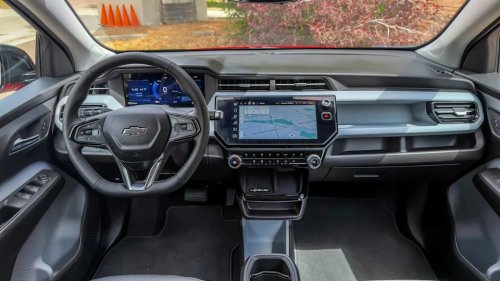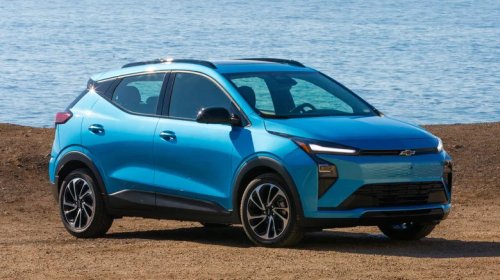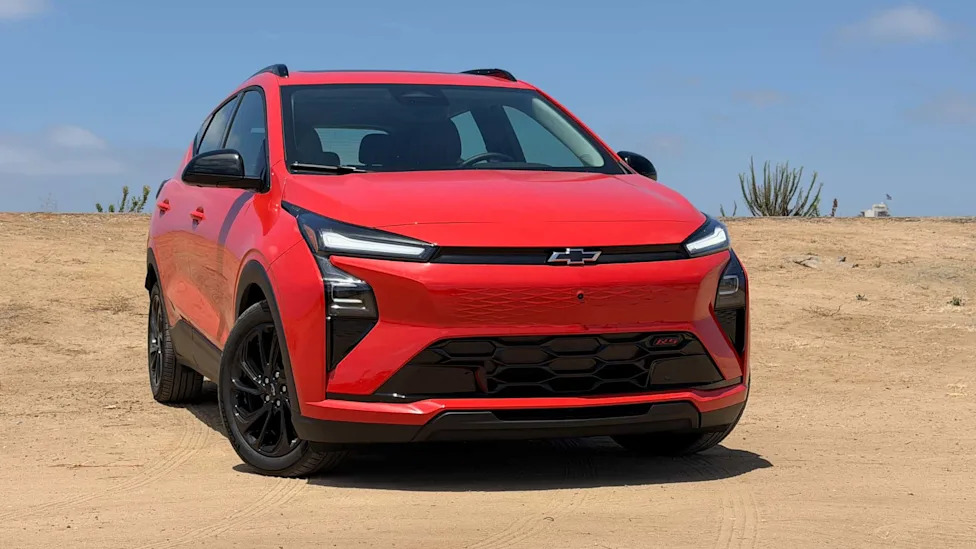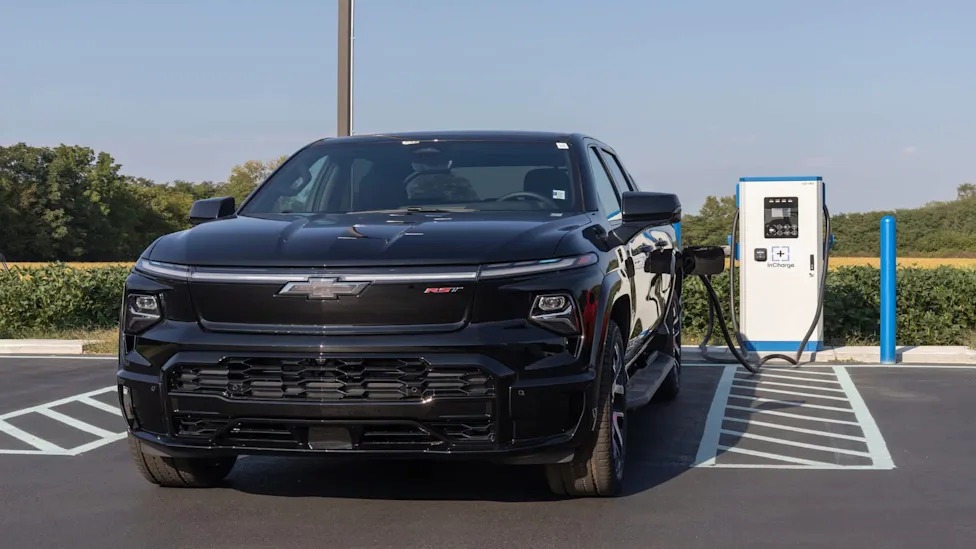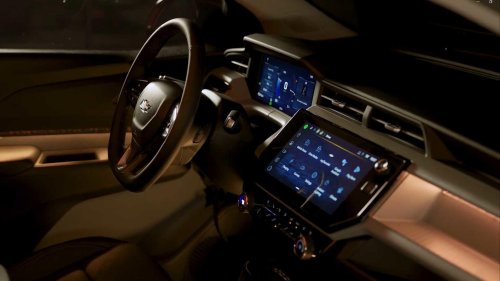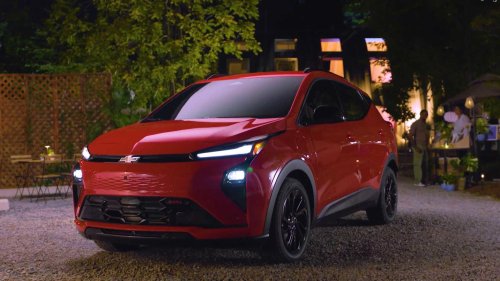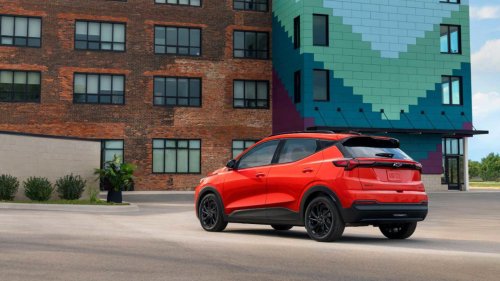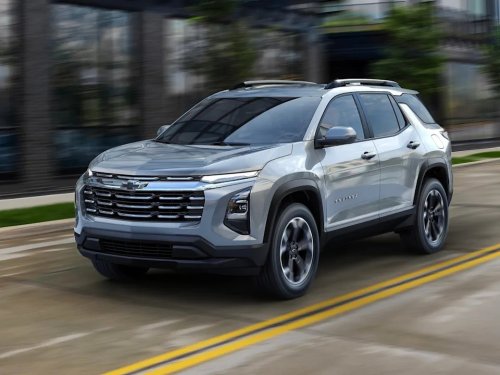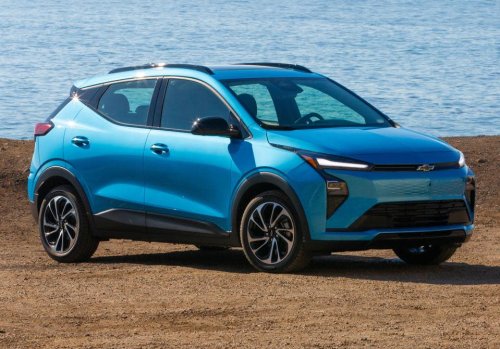
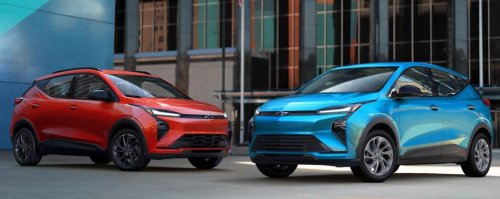
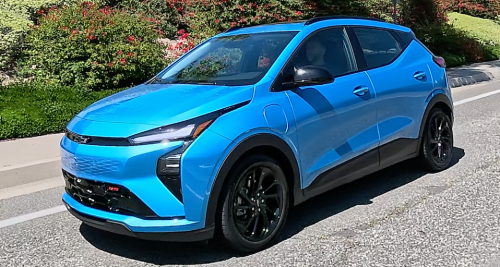

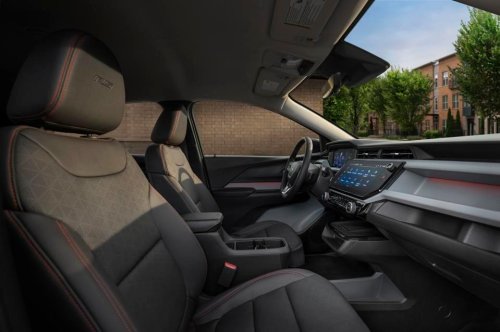
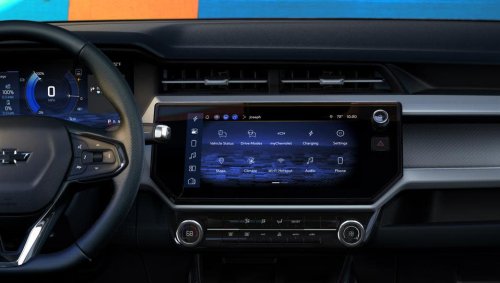
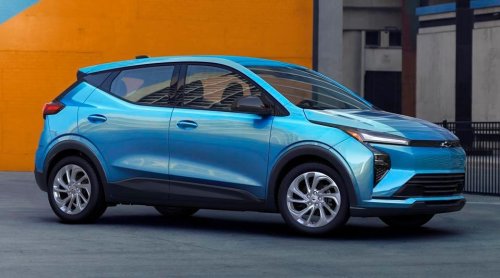



















The 2027 Chevrolet Bolt has been substantially upgraded while the price remains lowChevroletWhen the original Chevrolet Bolt launched in late 2016 as a 2017 model, it fundamentally altered the electric vehicle landscape. At the time, the EV market was sharply divided into two distinct camps: affordable but severely range-limited commuter cars, and long-range luxury status symbols. The Bolt arrived as the industry’s first truly high-volume, highly functional, and highly affordable electric vehicle. Offering 238 miles of range, it delivered more than twice the distance of a contemporary Nissan Leaf (which hovered around 100 miles) for less than half the cost of a Tesla Model S or Model X. Now the 2027 Chevrolet Bolt has returned, with a similar mission to offer a combination of range and price no other EV can match.2027 Chevrolet Bolt offers value pricingThe original Bolt was priced at an accessible $37,500 before federal and state EV incentives. It beat Tesla’s highly anticipated Model 3 to market, and cost less than a base version of that car—a promised $35,000 trim that, I suspect, was rarely built or sold. The first-generation Bolt went on to average about 20,000 sales a year and swept virtually every major automotive award. It took home the North American Car of the Year, Motor Trend Car of the Year, a spot on the Car and Driver 10Best list, and the Green Car Journal Car of the Year, among others. As the first functionally practical and genuinely affordable EV, it was a pretty big deal in 2017.The 2027 Chevrolet Bolt stays true to this mission. My press car was equipped, and priced, as follows:AdvertisementAdvertisementChevrolet Bolt RS Price: $31,600Dual Panel Panoramic Sunroof: $1,495Technology Package: $1,195 (Includes HD Surround Vision, Rear Camera Mirror, Wireless Phone Charger, Rear Pedestrian Alert, and Traffic Sign Recognition)Destination Charge: $1,395TOTAL PRICE AS TESTED: $35,685While the RS trim MSRP is $31,600 the base trim costs just $27,600, and I saw several local dealer listings offering Bolts below $25,000. In an era where the average new car price hovers well above $47,000, and many EVs easily crest the $50,000 mark, a comprehensively equipped EV for under $30,000 is a breath of fresh air.The 2027 Chevrolet Bolt is available in multiple trims and starts at under $30,000ChevroletGM killed it, but Bolt fans brought it backThe original Bolt’s journey wasn’t without potholes. The model faced a highly publicized battery recall, resulting in one of the most alarming consumer notices I can remember hearing in this industry: owners were instructed not to drive their cars, not to charge their cars, and to park them far away from their houses to avoid fire risks. Furthermore, industry analysts and insiders reported that General Motors was losing heavily on the vehicle—somewhere between $7,000 and $10,000 on every Bolt sold. Those same analysts predicted the Bolt would eventually become profitable by around 2025.Unfortunately, impatience and a shifting corporate strategy led GM to kill the Bolt entirely in 2023. By then, there were two versions of the car: the original hatchback and a slightly larger “EUV” (Electric Utility Vehicle) version introduced in 2022 that provided much-appreciated extra space. Yet, even the popularity of the EUV couldn’t keep GM from dropping th axe. GM executives announced the Bolt’s demise, pointing to the Equinox EV as the brand’s new entry-level, affordable electric option.What GM didn’t anticipate was the intense backlash from EV fans and loyal Bolt owners, who were furious. The uproar echoed the famous automotive enthusiast revolt of the late 1980s, when Ford fans successfully stopped the beloved Mustang from being transformed into a front-wheel-drive Mazda clone (which eventually became the Ford Probe). Thankfully, just as in that historic case, the consumer outcry saved a good vehicle from a bad fate.AdvertisementAdvertisementChevrolet listened, reversed course, and resurrected the nameplate. Now, the Bolt has returned. It’s based largely on the architecture of the outgoing EUV version, but the 2027 Chevrolet Bolt has been extensively upgraded, specifically addressing the pain points of the original while retaining the low-cost, high-range formula that made it a success.The 2027 Bolt offers up to 262 miles of range and a more robust LFP battery packKirk Brauer2027 Chevrolet Bolt LFP Battery AdvantageWhile the new Bolt may look familiar on the outside, underneath its sheet metal lies a series of critical updates. The biggest and most important change is the battery chemistry. The 2027 Bolt utilizes a new 65-kilowatt-hour lithium iron phosphate (LFP) battery, completely replacing the previous lithium-ion setup.Why does this matter? LFP batteries are significantly less expensive for automakers to produce, which is how Chevrolet manages to keep the Bolt’s price so low while presumably stopping the financial bleeding that plagued the first generation. More importantly for the consumer, LFP batteries are far more durable over time. They are inherently more stable, less prone to thermal runaway (also known as “FIRE” – addressing the ghosts of the old battery recall), and they can be routinely charged to 100 percent without accelerating battery degradation—making them incredibly well-suited for long-term ownership and daily use.Power comes from a single front-mounted electric motor producing a very capable 210 horsepower, with an estimated range of roughly 260 miles. While those numbers are remarkably similar to the outgoing Bolt, the technology facilitating them represents a generational leap forward.The NACS charge port gives the new Bolt access to Tesla's Superchargers and 150 kWh charging speedsKirk Brauer2027 Chevrolet Bolt and today’s charging infrastructureIf there was a fatal flaw with the original Bolt, it was its agonizingly slow charging speed. Charging is where the new 2027 Bolt makes its most dramatic improvement. DC fast charging capability jumps from a lackluster 55 kilowatts in the old model to a highly competitive 150 kilowatts in the 2027 iteration. In real-world terms, that means you can achieve a 10 to 80 percent battery pack recharge in around 25 minutes—provided you can find a working high-speed charger. And Chevrolet has enhanced charging access. The 2027 Bolt adopts a native Tesla-style NACS (North American Charging Standard) port right from the factory. This gives owners direct, seamless access to the sprawling and highly reliable Tesla Supercharger network without the need for clunky adapters. For a vehicle billed as an affordable EV, having native access to the world’s best charging infrastructure is a massive, segment-leading advantage.The 2027 Chevrolet Bolt RS has an exclusive interior with red stiching detailChevroletAdvertisementAdvertisement2027 Chevrolet Bolt still offers great space efficiencyVisually, the 2027 Bolt has gracefully evolved. The styling is cleaner, sharper, and noticeably more modern. It features updated LED exterior lighting signatures and a muscular, crossover-adjacent design that leans heavily on the proportions of the previous Bolt EUV rather than the standard, less space efficient first-generation hatch. It remains a masterclass in packaging, offering 16.2 cubic feet of cargo space behind the second row and an impressive 56.3 cubic feet of maximum cargo capacity with the second-row seatbacks folded down.Inside the cabin, the upgrades are even more dramatic. Chevrolet has completely redesigned the dashboard, bringing the Bolt firmly into the modern era. The driver is greeted by a crisp 11-inch digital gauge cluster, seamlessly complemented by an 11.3-inch central infotainment screen. Crucially, despite the influx of digital real estate, Chevy’s designers had the foresight to retain physical climate controls. This ergonomic win ensures that everyday usability isn't sacrificed at the altar of touchscreen minimalism. Overall, the cabin feels considerably more refined, utilizing better materials and delivering a far more tech-focused environment than the outgoing model.The new Bolt's Interior features an 11-inch driver information center and 11.3-inch center touchscreenChevrolet2027 Chevrolet Bolt: Tech & the CarPlay ControversyTechnology is another area where the new Bolt sees a major upgrade—though not without a touch of controversy. The infotainment system now operates on the Google Built-In platform. It is a highly capable, snappy interface that features deeply integrated Google Maps navigation, complete with intelligent charging route planning that preconditions the battery before you arrive at a plug. Furthermore, Chevrolet has finally brought its brilliant hands-free highway driving system, Super Cruise, to the Bolt (as a $3,255 option). This feature was never offered on the previous generation, and its inclusion here makes the Bolt one of the most affordable vehicles on the market with true hands-free driving capabilities.However, the elephant in the room is GM’s controversial decision to completely remove Apple CarPlay and Android Auto compatibility. Chevrolet is betting that buyers will embrace the native Google system, but for many smartphone-dependent drivers, the inability to mirror their devices will be a glaring omission and a potential dealbreaker.The 2027 Chevrolet Bolt offers a value equation few EVs can matchChevrolet2027 Chevrolet Bolt: smart move in a dumb segmentThe 2027 Chevrolet Bolt is a testament to the power of consumer demand. By reviving the Bolt, Chevrolet has smartly retained the core formula that made the original so successful: accessible pricing, functional interior space, and solid, reliable real-world range. But it’s the additions that make this vehicle a true winner. By integrating dramatically faster charging, native Supercharger access, updated and more durable LFP battery technology, and a far more sophisticated interior, the new Bolt transcends its budget-car roots.AdvertisementAdvertisementThe result is a vehicle that feels vastly more competitive for today’s cutthroat EV market, without ever losing sight of its original mission as the electric vehicle for the rest of us. In an industry constantly pushing EVs upmarket, the return of a highly competent, sub-$36,000 EV isn’t just a win for consumers; it may be exactly what Chevrolet—and the broader EV transition—needed all along. The 2027 Chevrolet Bolt feels like a fully-baked model in a half-baked field of EVs.This article was originally published on Forbes.com