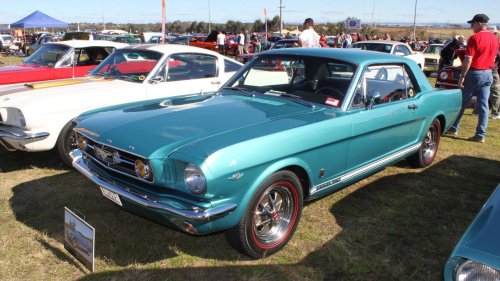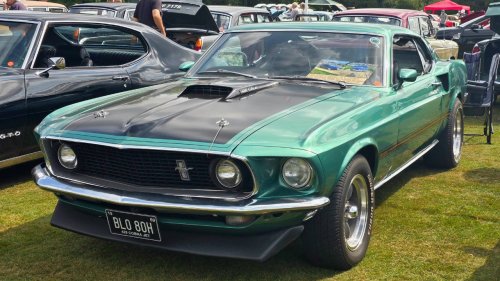


















In the mid-1990s, American performance was in an unusual place. Muscle cars like the Mustang GT and Camaro Z28 still existed, but their glory days from the ’60s and ’70s had faded. At the same time, Japanese imports were gaining momentum with lighter, high-revving engines and precision handling, while German brands like BMW and Mercedes-Benz were setting new benchmarks with their high-performance automobiles. For enthusiasts chasing real performance, the typical full-size American sedan wouldn't be classified in the realm of conversations.Most of those cars served as fleet specials, taxis, or family haulers; they were practical, affordable, and generally forgettable. These sedans were big, heavy, softly sprung, and not renowned for their speed or performance. No one associated them with the word "fast." That’s exactly why one particular sedan flew under the radar.On paper, it blended in with every other car in the grocery store parking lot. But under its hood and subtle styling sat a powertrain and chassis setup that gave it the ability to outrun some of the best-known muscle cars of its day. This car didn’t come from a performance brand or wear a track-ready badge. Yet when it hit the streets, it made a statement by keeping up with powerful muscle cars of its time. In other words, a true sleeper. The 4200-pound Chevy Impala SS Could Keep Up With A Ford Mustang GT 1994 Chevrolet Impala SS Front Three Quarter 1994 Chevrolet Impala SS Vs 1990s Muscle Cars – Performance Comparison (Source: Car and Driver, Automobile Catalog)At first glance, the eighth-generation Chevrolet Impala SS didn’t look like a performance car. It was a full-size four-door sedan that weighed over 4,200 pounds. Built between 1994 and 1996, it was based on the same B-body platform as other large GM sedans of the era. Yet, this particular variant packed something unexpected under its broad, unassuming hood.The 1994–1996 Impala SS featured a 5.7-liter LT1 V8 producing 260 hp and 330 lb-ft of torque. That was the same engine architecture used in the Corvette and Camaro Z28 at the time, albeit slightly detuned. Despite its size, the Impala SS could sprint from 0 to 60 mph in as little as 6.5 seconds. The quarter-mile came up in around 15.0 seconds at 92 mph.Now compare that to the 1994 Ford Mustang GT, a much smaller and lighter coupe. With a 5.0-liter V8 making 215 hp and around 285 lb-ft of torque, it posted a 0-to-60 mph time of about 6.2 seconds and cleared the quarter-mile in 14.7 seconds at 95 mph. On paper, yes, the Mustang GT was only marginally faster. The real surprise here is that a full-size sedan built primarily for daily driving could hang with a rear-wheel-drive, two-door performance icon from the same year.This performance gap narrows further when you factor in automatic transmission versions of the Mustang and other muscle cars. Many of those cars didn't hit peak power until the upper rev range, while the Impala SS delivered torque early and consistently. It wasn’t meant to be a track star, but in real-world scenarios, it performed surprisingly well.The Impala SS’s handling and road presence didn’t come out of nowhere either. It shared much of its hardware with another GM vehicle known for durability and control in high-stress situations. Spawned Off A Police Interceptor: The Impala SS Is Criminally Underrated 1991 Chevrolet Caprice 9C1 - Police Car NYPD Front Three Quarter 1994-1996 Chevrolet Impala SS - Engine Specs (Source: Chevrolet)The 1994 to 1996 Chevrolet Impala SS didn’t just appear out of thin air. It evolved from a serious piece of law enforcement hardware: the Caprice 9C1. Used by police departments across the country, the 9C1 was built for high-speed pursuits, brutal idling cycles, and years of punishment on public roads. General Motors saw an opportunity in that platform and ran with it.At its core, the Impala SS shared much of its DNA with the 9C1 police package. Both used the same full-size B-body chassis and rear-wheel-drive layout. They also shared the same 5.7-liter LT1 V8 engine, which in the Impala SS produced 260 hp and 330 lb-ft of torque. This engine came directly from the Corvette and Camaro of the same era, albeit with tuning adjustments suited for sedan duty. The 9C1 version, built for durability, featured the same iron block and a similarly tuned suspension, which included thicker sway bars and firmer dampers than civilian Caprice models.However, the Impala SS wasn’t just a police car in sheep's clothing. It received refinements to appeal to enthusiasts and families alike. The exterior stood out with monochromatic paint, a lowered ride height, and 17-inch aluminum wheels wrapped in performance tires. Inside, it ditched the column shifter for a floor-mounted gear selector and added more comfort features while maintaining the rugged drivetrain.Where the 9C1 focused on utility and performance under stress, the Impala SS bridged the gap between pursuit vehicle and personal muscle sedan. Weighing roughly 4,220 pounds, it could still run from 0 to 60 mph in as little as 6.5 seconds, nearly matching or beating many V8 muscle cars of the same period.This link to the 9C1 gave the Impala SS a foundation that was built for speed and endurance. It didn’t shout for attention like a Mustang or Camaro, but it had the credentials to keep up with their pace, earning its title as a true '90s sleeper. The $22,500 Chevrolet Impala SS Has Lost None Of Its Value In 30 Years 1994 Chevrolet Impala SS Front Three QuarterWhen it launched in 1994, the Chevrolet Impala SS carried a sticker price of $22,495. That placed it between everyday family sedans and more expensive muscle coupes of the time. Fast-forward to 2025, and its average used value sits at $22,507, according to Classic.com. In over 30 years, the Impala SS has effectively gained marginally in value, not including inflation adjustments. For a mass-produced American sedan, even that’s rare.Most cars lose 20 to 30% of their value in the first year and continue to depreciate steadily. The Impala SS has defied that curve. Even accounting for the lowest recorded sale at $10,250 and the highest at $38,000, the median sales data shows that clean examples consistently hold or exceed their original MSRP. Based on the original MSRP of $22,495 and the current average sale price of $22,507, the depreciation rate is effectively zero. In fact, the difference represents a 0.05% increase, which is virtually unheard of for a ’90s sedan. Average Used Sales And Value Original MSRP: $22,495 Average Used Value: $22,507 Lowest Recorded Sale: $10,250 Highest Recorded Sale: $38,000 Most Recent Sale: $18,250 The reason for this value retention isn’t hype or nostalgia alone. The Impala SS backs its reputation with substance. It came with a 5.7-liter LT1 V8 borrowed from the Corvette and other credentials that made it quicker than many muscle cars of its era.According to Hagerty, the Impala SS in 1994 was available exclusively in black with a gray interior. That first run was short, and production accumulated to just 6,300 units. In 1995, Chevrolet added two more colors; Dark Gray Green and Dark Cherry Metallic, which helped drive sales past 21,000 units. The final model year in 1996 brought updates that included a new instrument panel with an integrated tachometer, moving the shifter from the steering column to the center console. That year, Chevrolet sold more than 42,000 units. Despite its success, General Motors discontinued the entire B-body platform, ending production of rear-wheel-drive Impalas altogether.Buyers today recognize that the Impala SS offers real performance, classic American V8 character, and daily usability. It stands out as a sedan that never quite fit the mold, and its used market prices reflect that. Unlike many peers from the ’90s that have depreciated into the bargain bin, the Impala SS still commands attention in both car shows and auction listings. The data proves what fans have known for years: this is one sedan that earns its sleeper status and keeps its value while doing it.