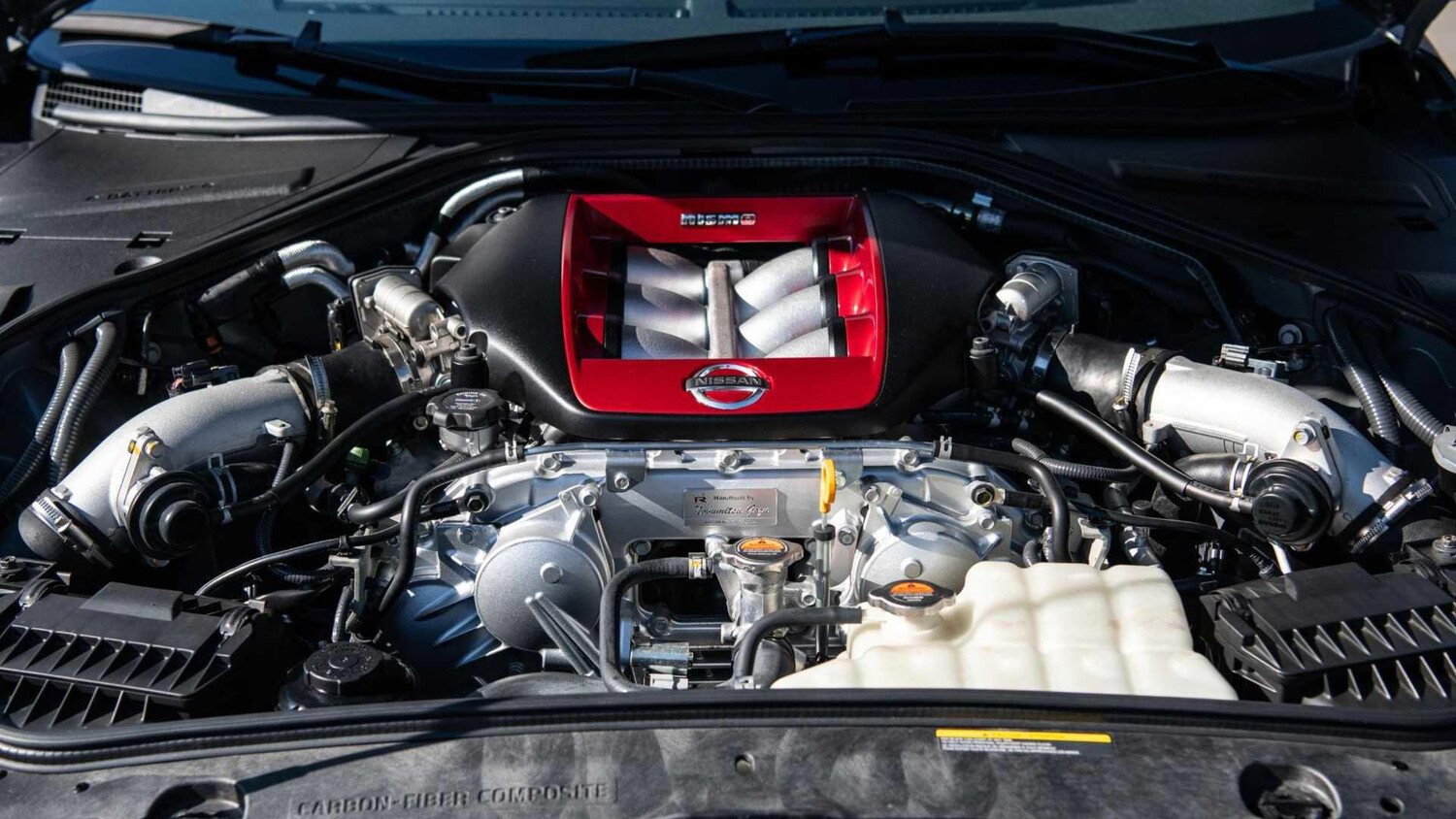
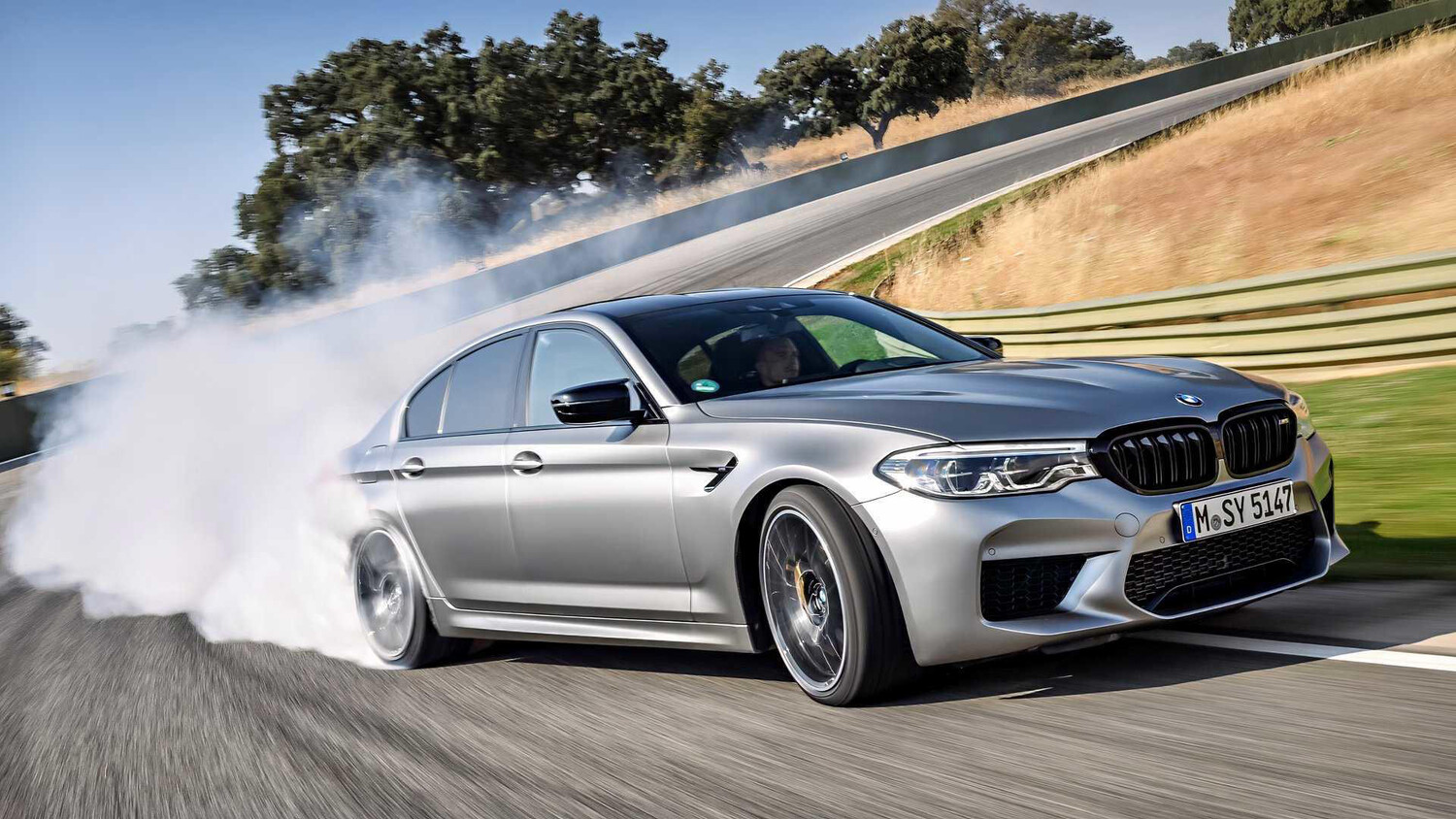
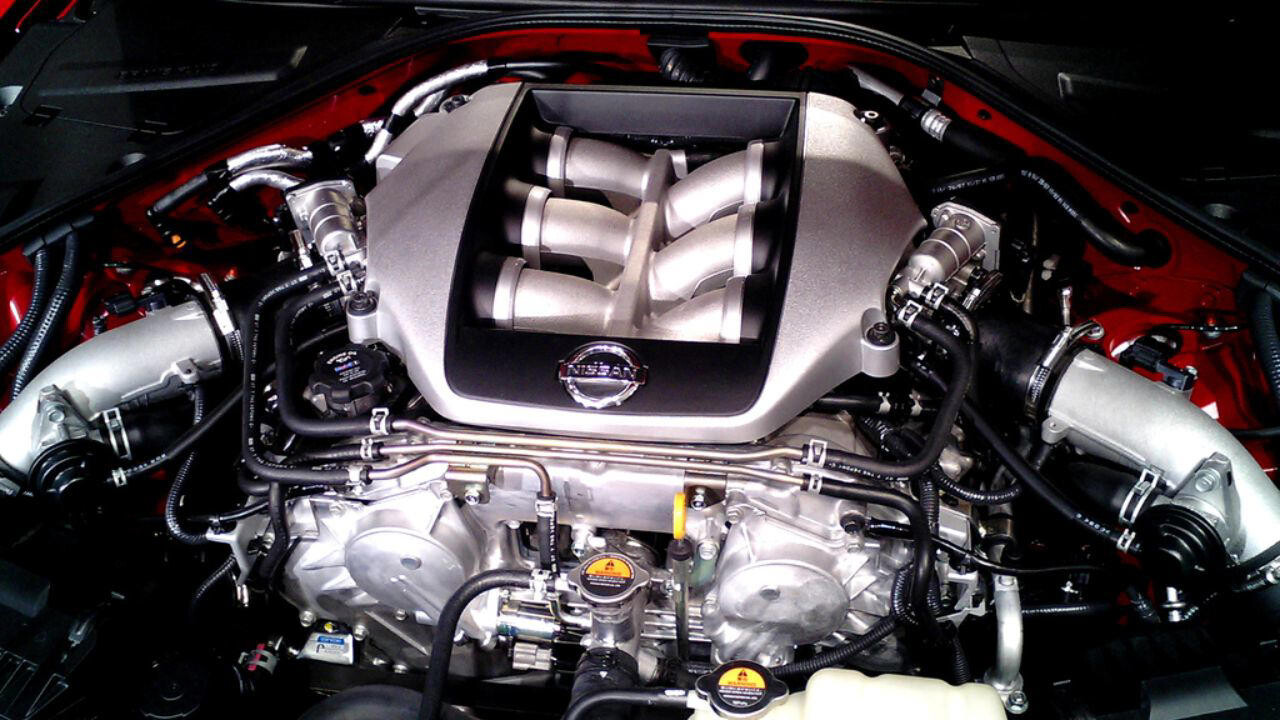
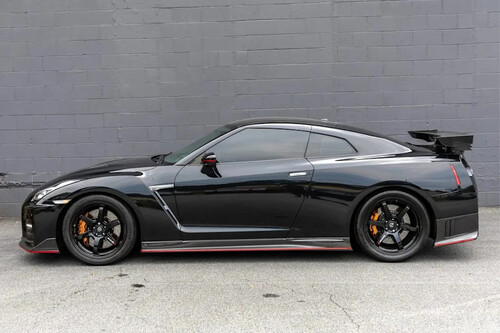
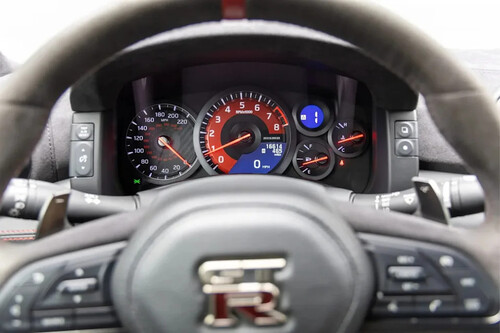
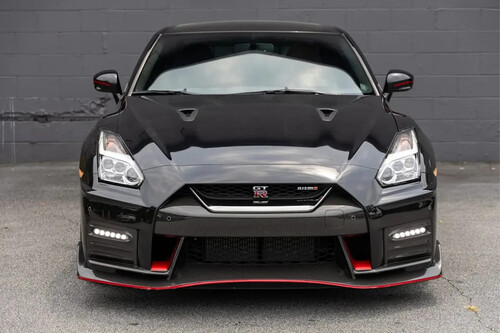
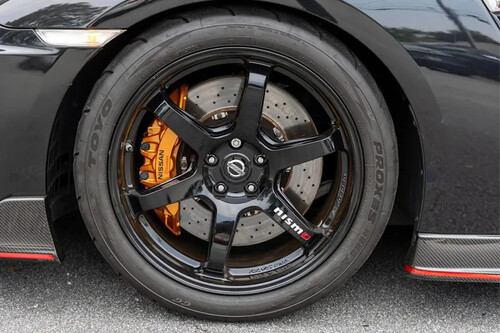
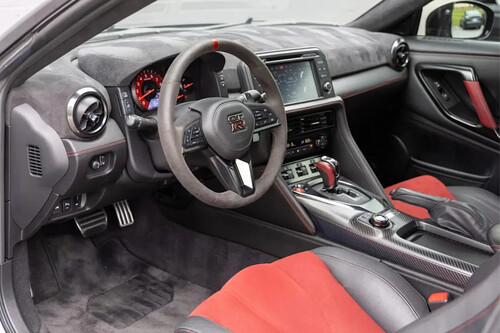
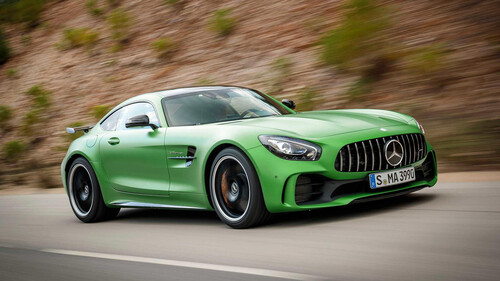
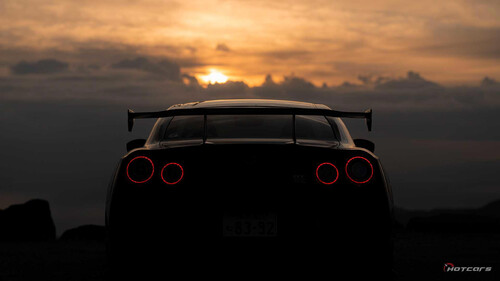
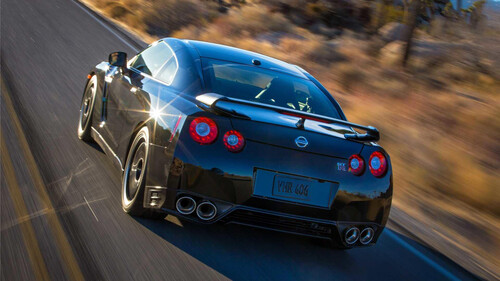
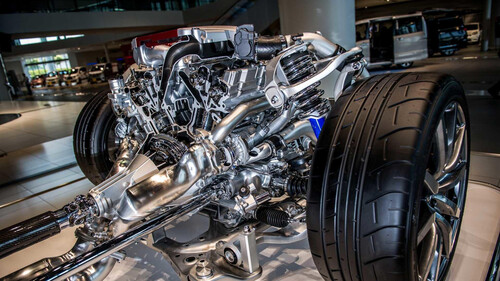
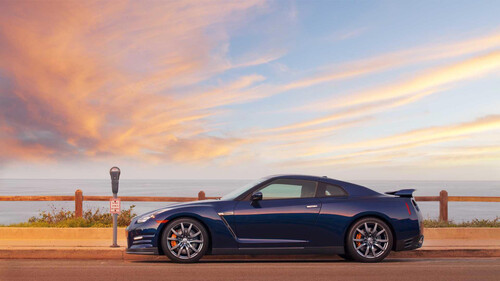
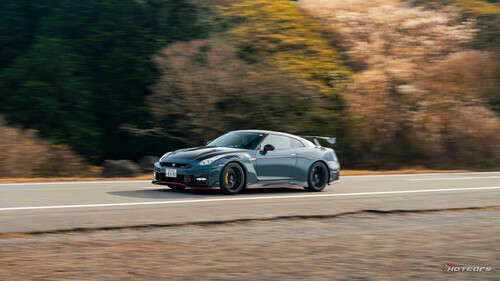
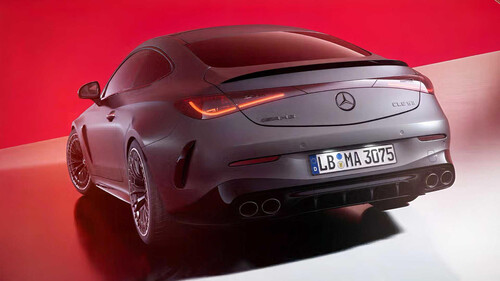
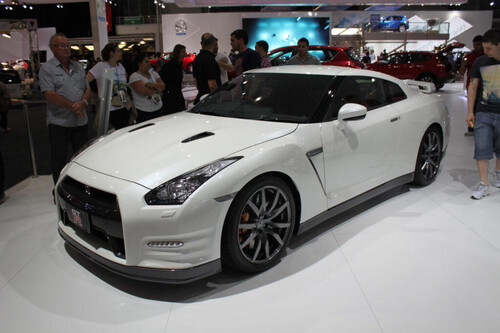
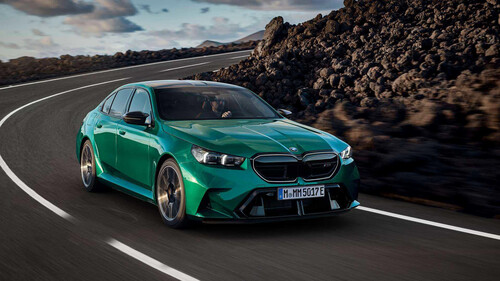
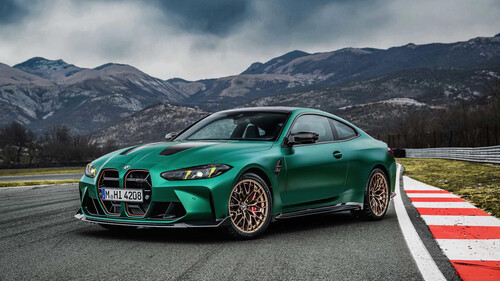
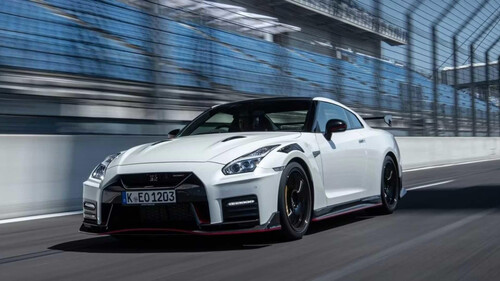
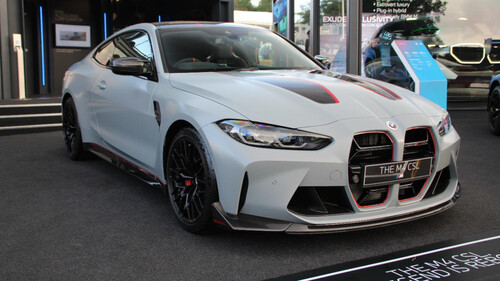
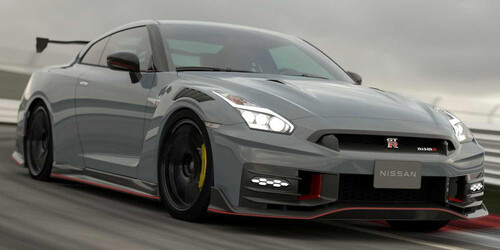
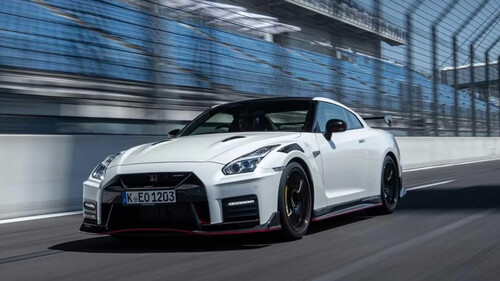
For decades, if you wanted absolute dominance, you looked toward the clinical precision of Munich or the brute force of Stuttgart. The hierarchy of the performance world was undisputed, solely built by German automakers like Mercedes or BMW.Then, a digital predator arrived from Japan with a singular, disruptive mission: to humiliate the European establishment on their own hollowed proving grounds. This unlikely challenger shattered the status quo, evolving from a budget-friendly underdog into a 600-horsepower tyrant that forced German engineers back to the drawing board. Known endearingly as Godzilla, this supercar redefined the limits of physics and traction. It didn’t just compete with the world's best; it made them nervous. Here's how. How The Nissan GT-R NISMO Challenged German High-Performance Monopoly Silverstone AuctionsThe Nissan GT-R R35 NISMO represents the absolute zenith of Japanese automotive engineering, a vehicle born from a philosophy of relentless "Kaizen" or continuous improvement. While BMW M and Mercedes-AMG often focused on balancing luxury with speed, Nissan’s motorsport division had a more singular objective: absolute mechanical efficiency. The engineering at the heart of the NISMO is a masterclass in functional aggression.Claire-Kaoru Sakai, Ayesh Seneviratne / HotCars It utilizes high-output GT3-spec turbochargers, the very same units found on Nissan’s world-class race cars, allowing the hand-built VR38DETT V6 to produce a staggering 600 horsepower and 481 lb-ft of torque. Every engine is assembled by a single Takumi master craftsman in a clean, temperature and humidity-controlled room, ensuring tolerances that mass-produced German V8s simply could not match. The Nürburgring Effect: Shuttering The 7.5-Minute Barrier A front, left hand-side perspective shot of a Nissan GT-R NISMOThe evolution of the R35 at the Nürburgring is a story of consistent mechanical defiance. Its journey began in 2007, when a production model clocked a 7:38.00 on a partially damp track, an incredible feat for a newcomer. By early 2008, the team returned with a base-spec GT-R on standard Japanese-market tires; on a dry surface, chief test driver Toshio Suzuki slashed nine seconds off that time, breaking the prestigious 7.5-minute barrier with a 7:29.00 lap.The refinement continued over the next several years, with the GT-R lowering its benchmark to 7:18.00 by October 2012. However, the ultimate realization of the platform arrived in November 2013. Just before its global debut, a GT-R NISMO, outfitted with specialized track options, weight-reduction components, and a custom-tuned suspension, hit the Nordschleife. With racing driver Michael Krumm behind the wheel, the car recorded a blistering 7:08.679, cementing the R35's legacy as one of the fastest production cars to ever lap the hallowed German circuit.For comparison, the Mercedes-AMG GT R, which debuted years later as the "Beast of the Green Hell," could only manage a 7:10.92. Whereas an F82 BMW M4 GTS set a much slower time of 7:27.88 in 2015, than the 2009 time of the standard Nissan GT-R. Even the fastest BMW around the ring is the 2023 M4 CSL G82 that was still slower than the NISMO, mustering a 7:13.497 lap.Claire-Kaoru Sakai, Ayesh Seneviratne / HotCars Beyond the Nürburgring, the NISMO team sought to dominate Japan’s own technical proving grounds. In December 2019, driver Tsugio Matsuda took a 2020 GT-R NISMO to the iconic Tsukuba Circuit, clocking a record-breaking 59.361 seconds. To put that in perspective, the car beat the previous production record by 0.3 seconds, an advantage of roughly two full car lengths at the finish line. Never stagnant, the team returned in January 2024 with the updated model year NISMO, where Matsuda shattered his own record with a blistering 59.078-second lap.Nissan The R35's dominance even extended into the realm of extreme stunts. In 2016, a specially tuned GT-R secured a Guinness World Record for the fastest-ever drift at Fujairah International Airport, UAE. The car achieved a controlled slide at a staggering 304.96 km/h at a 30-degree angle, proving that the GT-R’s engineering wasn't just about clinical lap times, but about absolute mastery over physics and high-speed control. Also proving, you can drift an all-wheel-drive car, provided you have the commitment. The R35 GT-R NISMO's Legacy In Racing Five times SUPER GT GT500 series champion (2008, 2011, 2012, 2014, and 2015) Three times SUPER GT GT300 series champion (2015, 2020, and 2022) Blancpain Endurance Series: Pro-Am Cup champion 2013 Blancpain Endurance Series: Pro Cup champion 2015 Bathurst 12 hours overall winner 2015 Five times Super Taikyu Series Champion (2014, 2016, 2018, 2019, 2022) Nissan The R35 GT-R departs the stage with an enviable legacy of global motorsport dominance. Its trophy cabinet is anchored by five GT500 class titles and three GT300 class championships in Japan’s premier Super GT series. Beyond its home turf, the platform proved its endurance on the world stage, securing a Blancpain GT Series Pro-Am class victory in 2013 and a legendary overall win at the 2015 Bathurst 12 Hour. Combined with five championship titles in the Super Taikyu Japanese endurance racing series, these accolades prove that the GT-R was a consistent, battle-hardened winner against the finest racing machinery Europe had to offer. Performance Benchmarks: GT-R NISMO Vs. The Best Of AMG And BMW Cars & BidsWhen stacked against its European rivals, the GT-R NISMO occupies a unique space where math overcomes traditional physics. On paper, contemporaries like the BMW M4 CSL and the Mercedes-AMG GT R appear formidable. The BMW, for instance, boasts a 543-horsepower twin-turbo inline-6, yet the NISMO consistently beats it where it matters: the sprint to 60 mph.Bring A Trailer Utilizing its unparalleled ATTESA E-TS all-wheel-drive system, the NISMO sprints from 0 to 60 mph in just 2.5 seconds. The BMW and the AMG GT R, despite their power, typically trail behind with times in the 3.0 to 3.5-second range, as they often struggle to put their power to the ground through rear-biased setups.The NISMO’s AWD system is unique because it treats its 3,800-pound curb weight as an asset. By using an independent rear transaxle, Nissan achieved a weight distribution that optimized mechanical grip across all four corners. While the German cars were often praised for being nimble, the GT-R NISMO was praised for being invincible. It provided a level of confidence-inspiring traction that made it a faster car for the average driver on a real-world track. The Supercar Killer Value: Performance Per Dollar Claire-Kaoru Sakai, Ayesh Seneviratne / HotCars Even more impressive was the value. At its US launch, the GT-R NISMO commanded an MSRP of approximately $149,990.While this was a jump over the standard model, it was a bargain for its performance tier. To get comparable 0–60 times from the German brands, buyers had to look at flagship models like the BMW M4 CSL or the Mercedes-AMG GT R, which often pushed past the $160,000 to $200,000 mark when equipped with performance options.The Nissan provided a raw, race-bred experience that proved speed doesn't require a European pedigree. It offered a cheat code for velocity that left the engineers in Stuttgart and Munich wondering how a V6 from Japan was consistently leaving their flagship V8s in the rearview mirror. Eighteen Years Of Evolution: Why The R35 Outlasted Every Rival Silverstone Auctions The Nissan GT-R R35 enjoyed one of the longest production runs in modern automotive history, spanning from its 2007 debut until the final unit rolled off the line in August 2025. To put this 18-year tenure into perspective, the BMW M5 cycled through three complete generations (the E60, F10, and F90) while Nissan was still refining the same R35 chassis. Some argue that the R35 got too long in the tooth. But when it came to performance, Nissan continued to incrementally refine the GT-R NISMO, that didn't only keep it relevant, but it kept elevating the benchmark, and pushing the goal post further and further away.BMW Instead of frequent, costly redesigns, Nissan engineers focused on incremental updates. By the time production ended on August 26, 2025, the GT-R's power had grown from its original 480 horsepower to 600 horsepower in the NISMO trim, with nearly every mechanical component, from the suspension bushings to the transmission software, undergoing constant optimization.A massive factor in this staying power was the robust tuning culture. The R35 was famously over-engineered; its VR38DETT engine became a legend in the aftermarket world, with tuners regularly pushing the block to 1,000 horsepower and beyond. This created a self-sustaining ecosystem of enthusiasts who preferred the proven R35 platform over newer, more restrictive European rivals. From Gran Turismo To Pop Culture Royalty Jann Mardenborough’s Nissan GT-R NISMO. Furthermore, the car’s status was cemented in pop culture. As a cornerstone of the Gran Turismo franchise and the Fast & Furious films, the GT-R maintained a cool factor that transcended its aging interior. By the time the final 2025 T-Spec and NISMO models were announced, they sold out almost instantly, proving that even after nearly two decades, the world was still not tired of Godzilla. The Dawn Of A New Godzilla: What We Know About The R36 Nissan After 18 years of defining the modern supercar, the R35-generation GT-R has officially entered the history books. Since its 2007 debut, Nissan produced approximately 48,000 units, a testament to the enduring demand for a platform that remained competitive across nearly two decades. In a world that drooled over manual-shifting rear-wheel-drive V8-powered cars as the epitome, the all-wheel-drive, DCT shifting, V6-powered R35 managed to keep the driver as important as the overload of electronics encouraged them to push the limits as far as they dare to go.The final vehicle to roll off the assembly line at the Tochigi plant in August 2025 was a Premium Edition T-Spec finished in the iconic Midnight Purple paint, a poetic nod to the heritage of the R34 Skyline. While the R35 era is over, Nissan executives have made it clear that they are already reimagining the next generation of Godzilla, ensuring the nameplate only returns when it can once again reset the industry standard. Will the Next GT-R Be Hybrid or EV? Via: Nissan The primary blueprint for this future is the Nissan Hyper Force Concept, a radical design that debuted with a theoretical 1,341 horsepower and Nissan’s advanced e-4ORCE all-wheel-control system. However, while the concept was a pure EV, 2026 industry reports indicate a significant pivot in development. Nissan engineers have found that current battery weight and thermal management are not yet authentic enough for the sustained track abuse a GT-R requires. Consequently, the R36 is now expected to debut as a high-performance hybrid. This shift allows Nissan to retain a fire-breathing twin-turbo V6 while using electric motors to push total output toward a rumored 700-plus horsepower.The holy grail for the R36 remains Nissan’s in-house solid-state battery (SSB) technology, which is currently on track for a 2028 pilot launch. These batteries offer double the energy density of traditional lithium-ion packs and significantly faster charging, potentially allowing a future electric variant to shed the weight that currently hampers EV supercars. Whether the R36 arrives first as a hybrid or waits for maturity of the solid-state battery tech, Nissan's goal remains unchanged: to build a car that joins the electric revolution only to dominate.Source: Nissan, Mercedes-AMG, BMW M