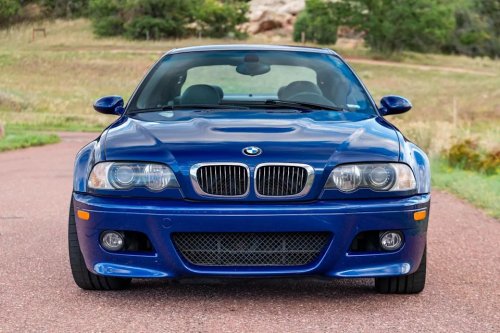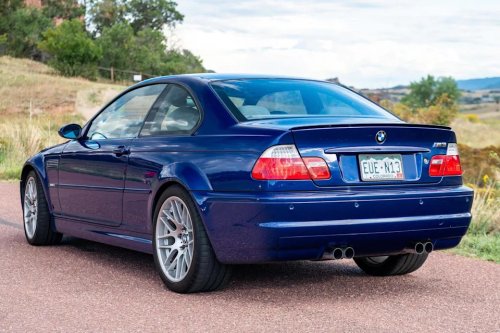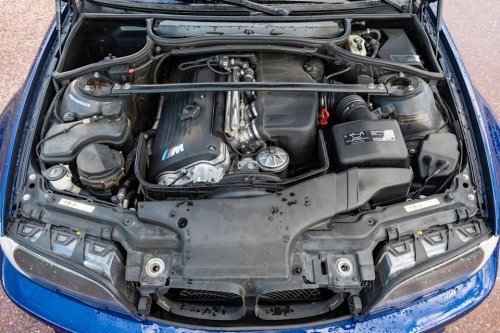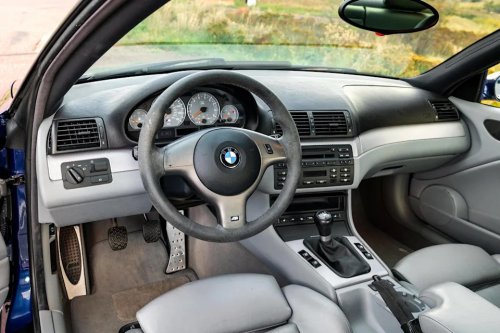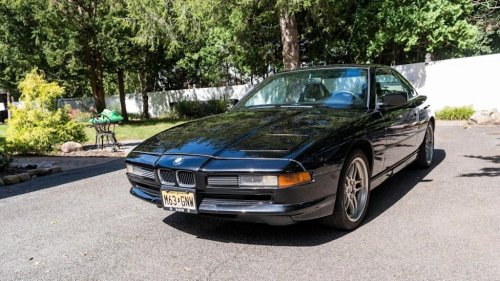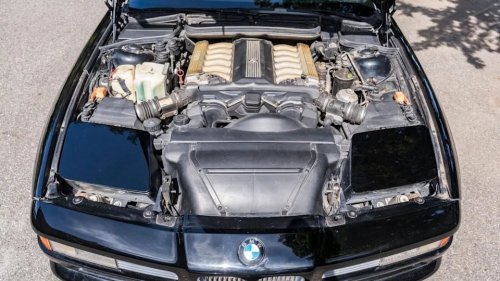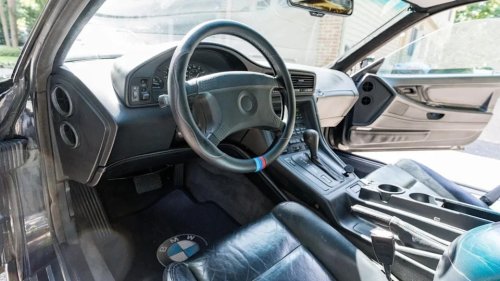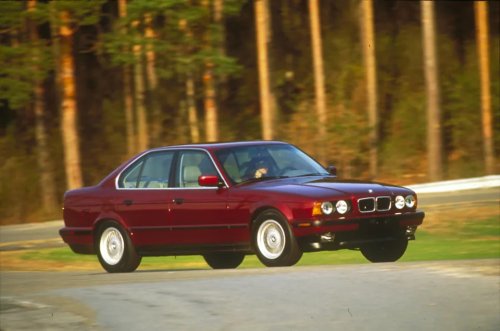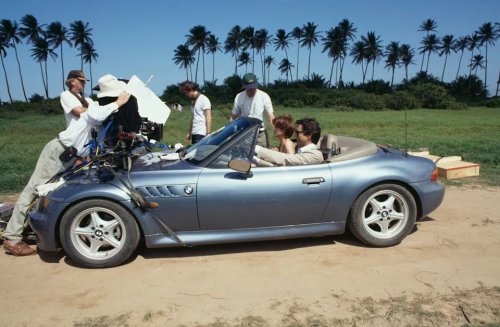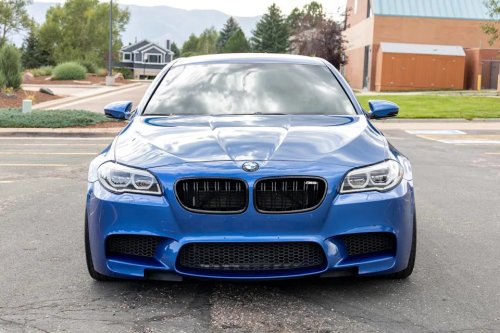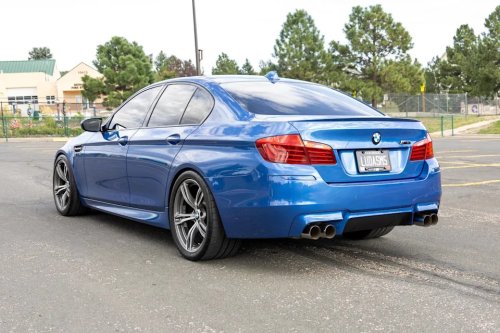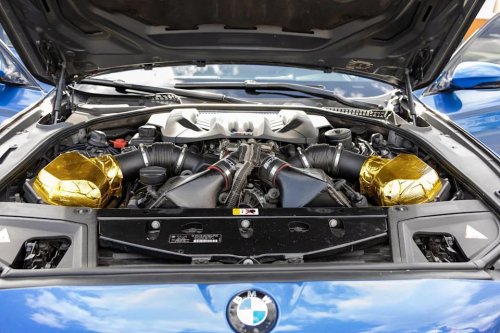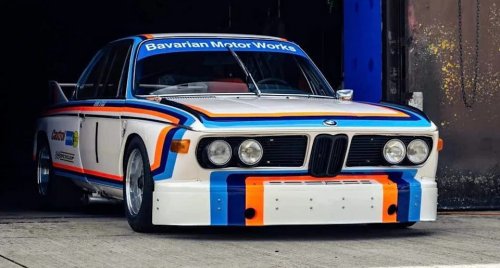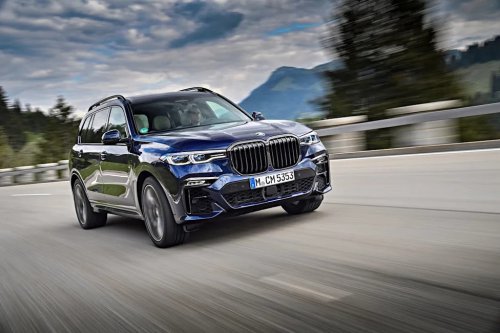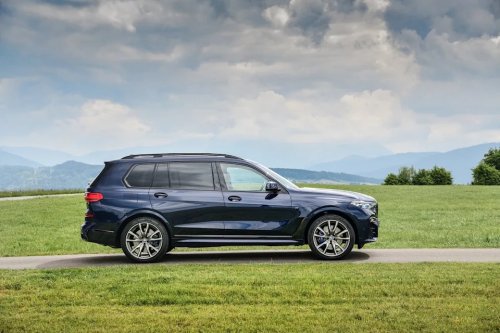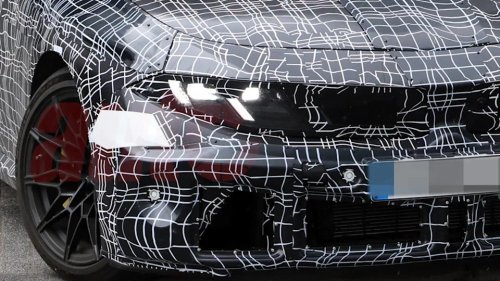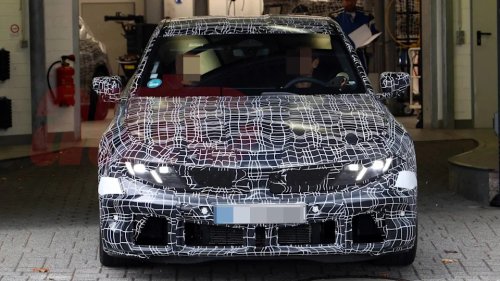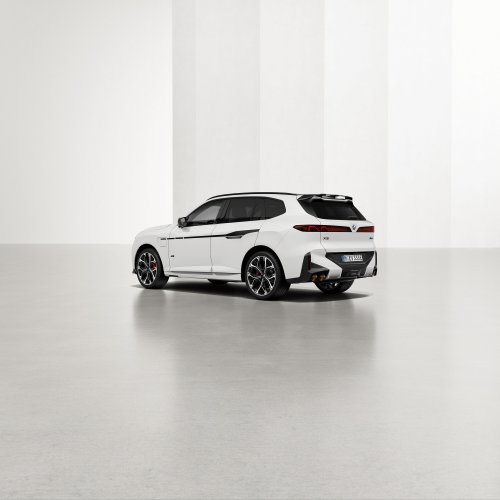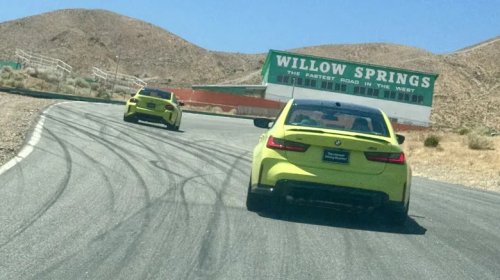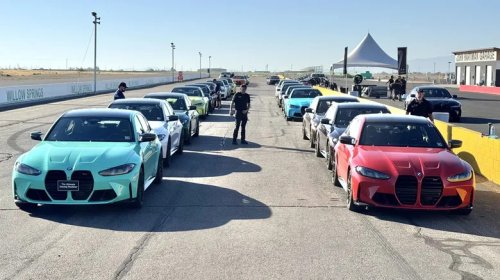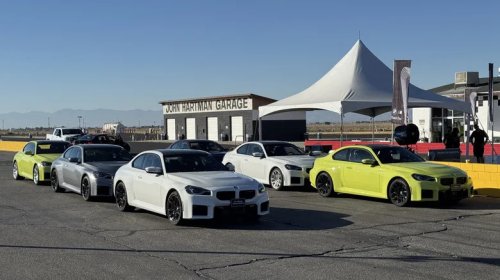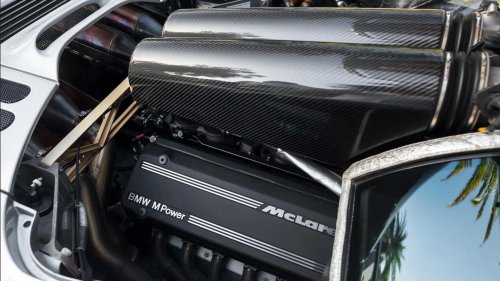
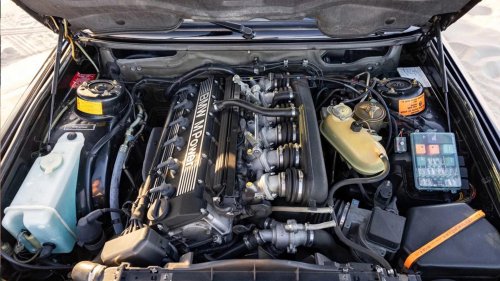
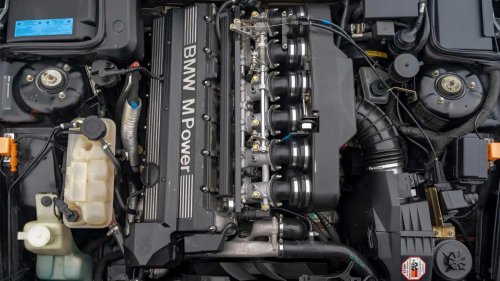
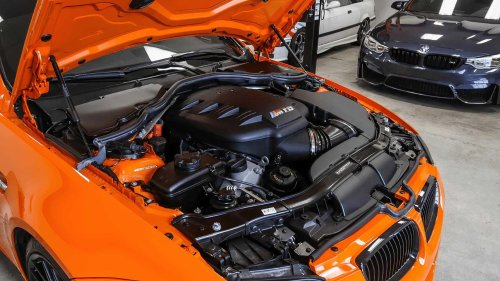
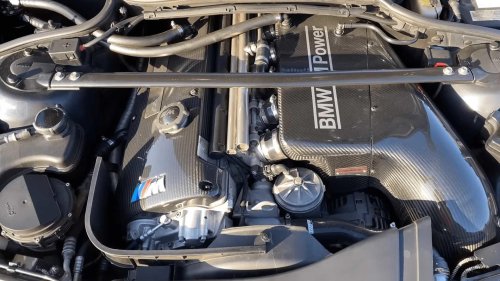
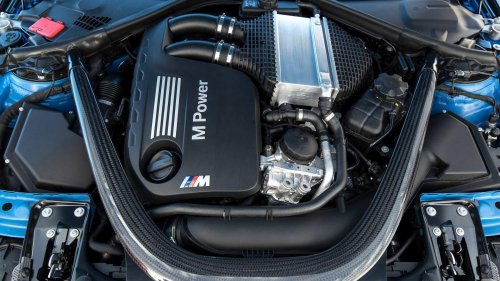
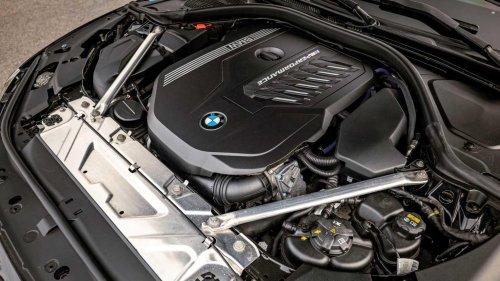
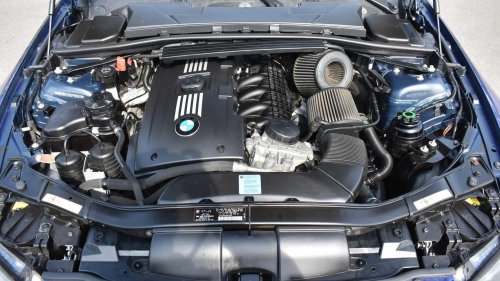
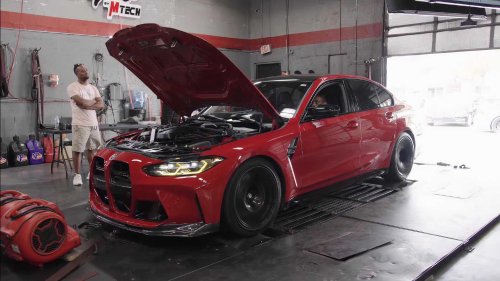



















BMW's factory output figures tell one story. The tuning community tells another. This list is not ranked by horsepower at the showroom. It is ranked by what builders and tuners have been able to extract after the car leaves the factory: the headroom above the factory number, how accessible that headroom is, and the community of documented builds that proves it is real. At the bottom sits an engine that nobody tunes but everyone reveres. At the top sits an engine that was producing 1,000 hp on stock internals within two years of launch. In between are eight engines that defined BMW tuner culture across four decades and continue to do so today. S70/2 V12 (1992-1998) - McLaren F1 618hp RM Sotheby'sPaul Rosche and the BMW Motorsport team built the S70/2 for Gordon Murray's McLaren F1 with a single requirement: make the best engine possible, with no production constraints and no cost ceiling. The result was a 6.1-liter naturally aspirated V12 with titanium connecting rods, six individual throttle bodies per bank, and a gold-lined engine bay. It was fitted to one car and one car only, never mass-produced, and never placed in another application.The S70/2 is here because no list about BMW's greatest engines can honestly exclude the one that defines the outer boundary of what the brand was capable of. No active tuning community exists and none is ever expected. The S70/2's factory output of 618 hp is the beginning and end of the conversation. It sits at the bottom of this ranking purely on tuning accessibility while sitting at the top of every other list it appears on. Nobody tunes it. Nobody swaps it. The tuner world simply acknowledges it and moves on. M88/3 (1984-1988) - BMW E28 M5, M635CSi 282 hp Bring a TrailerThe M88/3 is a road-tuned version of the motorsport M88 from the BMW M1, hand-built at the Garching facility with six individual throttle bodies, a crossflow aluminum head, and Bosch Motronic injection. European specification produced 282 horsepower. North American cars received the catalyst-equipped S38B35 derivative producing around 256 hp. The engine made the E28 M5 the fastest production sedan in the world at launch and is the originating point of everything else on this list. Current market data shows an average E28 M5 sale price of $42,500, with a record $195,810 set in March 2026 for a 9,800-mile example.Engineering reverence is universal but the active tuning community is minimal. Parts scarcity and the cost of clean donor engines keep serious builds in specialist territory. Forum documentation confirms that Hartge fitted hotter cams and reprogrammed the DME on the M88/3, extracting 330 hp at 7,000 rpm for the H5SP-24 program. Chip tuning and exhaust development offer more accessible gains at lower levels, but most owners preserve rather than build at this point in the engine's life. S38B38 (1992-1995) - BMW E34 M5 340 hp Bring a TrailerThe S38B38 is the definitive version of the S38 family and the last hand-built naturally aspirated engine ever fitted to an M5. Displacement grew to 3,795cc, equal-length stainless steel exhaust headers were fitted, and a six-speed manual arrived for the final production year. European specification produced 340 hp. North American cars retained the 3.6-liter S38B36 with lower output due to emissions equipment. Regular valve clearance adjustments and vacuum line refreshes are the maintenance requirements that separate well-preserved examples from neglected ones. Current market data shows an average E34 M5 sale price of $40,942, with a record $505,000 set in April 2026 for an exceptional low-mileage example.Real tuning potential exists but the engine's age, hand-built assembly, and parts cost place it in collector territory rather than active build culture for most of the community. The Dinan program for the related S38B36 achieved 402 bhp SAE through a stroker kit, modified camshafts, and revised DME, placing the realistic ceiling for a comprehensively built S38B38 around 400 hp. Cam upgrades, throttle body optimization, and exhaust development are the documented routes. Most owners preserve rather than build. S62B50 (1998-2003) - BMW E39 M5 394 hp The S62 is the engine that proved BMW could build a great V8. Double VANOS on both camshafts, electronically actuated individual throttle bodies, a semi-dry sump, and 394 hp from 4.9 naturally aspirated liters, all delivered exclusively through a six-speed manual. There are no turbos to fail. No SMG gearbox to replace. The S62 is mechanically robust and rewards attentive ownership. Current market data shows an average E39 M5 sale price of $37,503, though a record $397,500 was set in April 2025 for an exceptional low-mileage example, demonstrating that the ceiling on clean documented cars is considerably higher than the average suggests.Supercharger conversions are the preferred route to significant power on the S62. The ESS G1 kit produces 570 hp at 7.5 PSI with a documented installation time of eight to ten hours and no irreversible modifications to the car. Schaper Automotive's Vortech V3-based kit covers a 550 to 750 hp performance range on the same stock S62 block. The engine's more conservative tuning community relative to later platforms reflects its age and collector status more than any mechanical limitation. S65B40 (2007-2013) - BMW E9x M3 414 hp Bring a TrailerThe S65 is the last naturally aspirated V8 ever fitted to a BMW M3. Eight individual throttle bodies, an 8,300 rpm redline, and 414 hp from 4.0 liters. The engine was derived from the S85 V10 used in the E60 M5 and shares its fundamental architecture and character: high-revving, acoustically extraordinary, and utterly without turbocharged assistance. Current market data shows E90 M3 sedan examples in the $18,000 to $22,000 range in good condition, with the sedan's lower production volume relative to the coupe making clean examples increasingly difficult to find.Rod bearing replacement is the mandatory first step before any serious build. The specialist network capable of performing it correctly is large and well-established, and a properly addressed S65 is considered bulletproof by the community. 500 hp is achievable on a naturally aspirated build with the right head work and cam profiles. The platform also has a strong swap culture: a documented S65 swap into a 1995 E36 M3 by Vorshlag Motorsports, started in 2024 and completed in November 2025, confirms the community appetite for this engine well beyond its original application. S54B32 (2000-2006) - BMW E46 M3 333 hp TheSmokingTire/YouTubeThe S54 is the engine the professional tuning community has returned to most consistently for over two decades. Six individual throttle bodies, VANOS variable valve timing, an 8,000 rpm redline, and 333 hp from 3.2 naturally aspirated liters. The CSL variant extracted 360 hp from the same displacement using lighter components and a revised intake, demonstrating the architecture's factory-proven headroom. Rod bearing replacement is the standard first step on any build. Current market data shows an average E46 M3 sale price of $44,400, with CSL examples regularly exceeding $100,000.The naturally aspirated ceiling limits absolute output compared to the turbocharged platforms ranked above it, but the depth of community engagement is unmatched. The ESS Gen.4 G580 supercharger system produces 580 hp at 10 PSI, with over 1,400 S54 systems sold worldwide across more than 20 years of development. A documented build confirmed 640 hp on the ESS supercharger kit before the owner switched to a turbo setup targeting 900 hp. Two decades of documented builds from specialists confirm this as one of the most thoroughly understood naturally aspirated platforms in the BMW tuner world. S55B30 (2014-2020) - BMW F80 M3, F82 M4 425 hp BMWThe S55 is the first M3 engine to support the JB4 piggyback tune in a way that made meaningful power gains accessible to daily drivers without requiring a full engine build. Twin-turbocharged, 425 hp stock, and the direct successor to the S54 in the M3 lineage. The crank hub failure is the known issue: a crank hub lock kit is the standard preventative measure fitted as routine on any serious build and the mandatory cost-of-entry step that the N54 and B58 ranked above it do not require. F80 M3 examples in good condition currently sit in the $48,000 to $55,000 range, with low-mileage manual examples at the upper end.Current tuning data confirms 600 hp is achievable on the stock S55 block with upgraded turbos and fueling support. With the crank hub addressed, the platform has proven reliable well beyond that mark. It ranks fourth rather than higher on this list purely because of that prerequisite fix, which adds a cost and complexity step that separates it from the more immediately accessible platforms above it. B58B30 (2015-present) - BMW M240i, Z4 M40i, Toyota GR Supra 382 hp Bring a TrailerThe B58 is the most accessible high-power BMW tuning platform available in 2026. A single-turbo 3.0-liter inline-six producing 382 hp in M Performance trim, with JB4 and Bootmod3 both fully supported and a development ecosystem expanded considerably by the Toyota GR Supra application from 2019. The GR Supra crossover introduced the B58 to an entirely new tuning community, doubling the available maps, parts, and documented build data overnight. The M240i is the sweet spot for buyers who want the B58 in a rear-wheel-drive package at accessible pricing, with good condition examples currently sitting in the $38,000 to $46,000 range.Current tuning platform data confirms 600 hp on stock internals with fueling upgrades, and meaningful gains are available at every stage of build without exotic components. A simple JB4 or Bootmod3 tune with no hardware changes delivers a significant step from factory output. The B58 ranks third rather than higher on this list because the N54's pioneering role and its lower barrier to entry give it the edge on raw accessibility, but the B58 is the more modern, more refined, and better-supported platform in 2026. 2. N54B30 (2006-2016) - BMW 335i, 135i, 1M Coupe 300 hp Bring a TrailerThe N54 is the engine that built the modern BMW tuner market. The first turbocharged BMW inline-six of the modern era, it was the platform around which the JB4 was developed, creating a community of documented builds, calibrated maps, and shared data that remains one of the most comprehensive in the enthusiast segment. The 1M Coupe application, using the N54 with additional cooling and a more focused chassis, has become a significant collector car in its own right. The N54 is one of the highest-value performance platforms in the used market, with 135i and 335i examples available from $9,000 to $14,000, making it the cheapest path to 500 hp in a RWD BMW.Independent tuning documentation confirms 500 hp on stock internals with supporting modifications as routine. The JB4 piggyback tune makes meaningful gains accessible to any owner at stage one without requiring an engine build. Examples beyond 600 hp on upgraded turbos are well-documented across the community. The N54 ranks second rather than first purely because the S58's stock-internal ceiling and the scale of its community development in a shorter timeframe represent a step change that the N54, for all its historical importance, cannot match. S58B30 (2019-present) - BMW G80 M3, G82 M4, G87 M2 453 hp That Racing Channel/YouTubeThe S58 is the current undisputed platform king in the BMW tuner community. Its connecting rods come from BMW's S64 M4 GTS V8 engine. The pistons are forged Mahle M142P alloy slipper-skirt design. The crankshaft is nitrocarbonized 42CrMoS4 steel. BMW left a substantial amount of headroom in the factory calibration, and a simple ECU tune with no hardware changes delivers over 100 whp extra on 93 octane. Current market data shows 2021 G80 M3 examples in good condition at $59,200, with 2023 examples reaching $66,000 to $78,500.The community confirmed 1,000 hp on stock internals within two years of the engine's launch. A documented 1,000 bhp G80 M3 build using PureTurbos hybrid turbochargers and flex fuel recorded 889 wheel hp and a 9.33-second quarter-mile at Santa Pod in the UK. The current record stands at 1,600 whp. No engine on this list has closed the gap between factory output and demonstrated ceiling more completely, or more quickly, than the S58.Sources: Classic.com, BMW Blog, MyE28 Forum, ESS Tuning, Schaper Automotive, PistonHeads, Bimmerlife, BMW Tuning, Bimmer Tech, Bimmerpost, R44 Performance, Autolab Performance, Grassroots Motorsports Kelley Blue Book, BMW