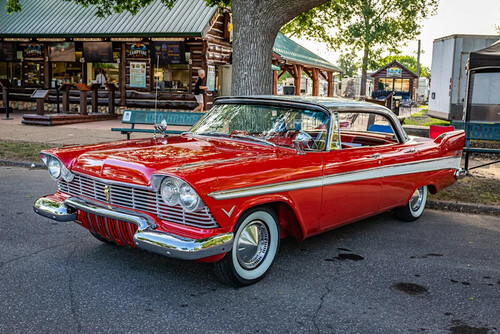
Mercury’s 1957 Turnpike Cruiser added gadgets like it was building the futureMercury treated the 1957 Turnpike Cruiser as a rolling technology showcase, stuffing it with gadgets that tried to turn midcentury highway driving into an experience from the future. The car mixed wild styling with a dashboard full of switches, vents, and dials that promised comfort, performance, and entertainment at a level few rivals could match. It was a bold attempt to define what modern motoring should feel like, even if the market was not quite ready to follow it all the way. Mercury’s space-age flagship The Mercury Turnpike Cruiser was introduced as a series of high-end models within Mercury, positioned as the division’s top offering and intended to sit above more conventional sedans in price, equipment, and visual drama. Period descriptions frame the 1957 version as Mercury’s space-age flagship, with sweeping rear fins, heavy chrome, and a complex front end that made the car stand out even in crowded Detroit showrooms already filled with flamboyant metal inspired by rockets and jet aircraft. Contemporary coverage of Mercury’s space-age flagship describes a front end packed with stacked lighting, a massive grille, and intricate trim that signaled the car’s premium status before any gadgetry even came into play. The Turnpike Cruiser name itself was chosen to evoke the new high-speed toll roads and interstate routes that were reshaping American travel, positioning the car as a machine built for long-distance comfort and high-speed stability rather than just city traffic. Born from concept car theatrics The 1957 Mercury Turnpike Cruiser did not appear in a vacuum. It carried over visual and functional ideas from a concept car that previewed Mercury’s design direction, and the production model retained many of the concept’s most dramatic touches. Among them was a wraparound windscreen that Mercury marketed as a “Skylight” feature, a dual-curve glass treatment that pushed into the roofline and gave the cabin a panoramic, almost aircraft-like feel. Enthusiast histories explain that the production Turnpike Cruiser kept the wraparound “Skylight” dual-curve windshield and other show-car elements that made it look more like a motor show prototype than an ordinary family car. One detailed rundown of the 1957 Mercury Turnpike notes that this model was Mercury’s top of the line and that the wraparound glass was central to its futuristic look. The result was a car that seemed to have driven straight off an auto show stand and onto the new turnpikes opening across America. Powertrain built for turnpike speeds Under the hood, Mercury backed the Turnpike Cruiser’s visual ambition with serious power. For 1957 the Turnpike Cruiser was fitted with a 368 cubic inch V8 that sat at the top of Mercury’s engine range. This big overhead-valve unit was intended to give the heavy, gadget-laden car the sort of effortless high-speed performance that buyers expected from a premium highway cruiser in the late 1950s. Factory specifications for the 1957 Turnpike Cruiser describe this 368 cubic inch V8 as the standard engine, paired with automatic transmission and a range of rear axle ratios aimed at both brisk acceleration and relaxed highway cruising. Mercury promoted separate “Performance” and “Cruising” driving themes, and the Turnpike Cruiser’s mechanical package was tuned to deliver both, aligning the powertrain with the car’s broader promise of future-ready long-distance travel. An interior obsessed with gadgets The interior of the Turnpike Cruiser was where Mercury’s gadget obsession really came to life. Designers created a cabin packed with switches and controls that tried to anticipate every need a driver might have on a long highway run. To improve visibility, they used a flat-top instrument panel that sat low in the driver’s line of sight, paired with that distinctive wraparound glass and thin roof pillars to open up the view ahead. According to a detailed description of the interior of the, the car featured a unique control panel set into the dashboard that grouped many of these innovations together. Mercury used roof-mounted switches for some functions and integrated a complex ventilation system that worked with vents at roof level rather than relying only on cowl vents. The same account notes that the car incorporated specialized controls that shut off certain electrical circuits when the ignition was off, an early nod to managing the growing electrical load created by all those power accessories. Roof-level ventilation and “seat-o-matic” comfort Comfort technology was a central part of the Turnpike Cruiser pitch. Mercury promoted a new ventilation system that combined roof-level air intakes with interior ducts to deliver fresh air more evenly through the cabin. Promotional literature for the 1957 Mercury Turnpike Cruiser describes “important new Mercury firsts” that included this roof-level ventilation, which was intended to keep occupants comfortable without the drafts associated with open windows at highway speed. One period brochure for the 1957 Mercury Turnpike explains that the ventilation system worked with roof-level intakes and outlets that could be controlled from the dash. A contemporary road test added that the driver could tailor seat position through separate fore-and-aft and up-and-down adjustments using dials on the dashboard, which allowed a more precise fit than simple sliding tracks. A separate test report described how “You select the seating position that suits you best by setting two dials on the dash, one for fore and aft, one for up and down movement,” highlighting how Mercury turned even seat adjustment into a small piece of gadget theater. Power everything and a futuristic control pod The Turnpike Cruiser’s control pod was surrounded by power features that were still rare in the mid-1950s. Power steering and power brakes were part of the expected equipment list for a car at this level, but Mercury went further, offering power windows, power seats, and power-operated ventilation controls that reinforced the sense of operating a machine from a control center rather than a simple steering wheel and pedals. Descriptions of the Turnpike Cruiser test mention how the driver interacted with these systems through a cluster of knobs and dials that sat within easy reach. The effect, especially when combined with the wraparound “Skylight” glass and low cowl, was that of a spacecraft-inspired cockpit that fit neatly into a 1957 Detroit culture fascinated with rockets and satellites. A later video history of the car notes that in 1957 Detroit was living in a dream of the future, with sweeping curves, tail fins, and spacecraft inspired dashboards that reflected America’s obsession with technology and exploration. Color, chrome, and the culture of optimism The Turnpike Cruiser’s gadgetry did not exist in isolation. It was part of a broader styling package that used bright colors, two-tone paint, and heavy chrome to broadcast optimism and prosperity. One enthusiast description of the 1957 Mercury Turnpike calls the car a “Gorgeous Classic Car The 1957 Mercury Turnpike Cruiser Convertible is a classic Amer icon,” and highlights how its bold color combinations and power features captured the boundless possibilities of the future. That same account lists other features such as power seats and elaborate trim that worked with the gadgets to sell a complete vision of modern travel. Within that context the gadgets were not just functional extras. They were physical expressions of a culture that believed technology could solve nearly any problem, from driver fatigue to stale cabin air. The Turnpike Cruiser’s cabin became a stage where that optimism played out in chrome levers, roof vents, and illuminated dials. From showroom to Indianapolis 500 pace car Mercury did not simply rely on showroom traffic to showcase its futuristic flagship. The company took the Turnpike Cruiser to the racetrack, where it served as the official pace car of the Indianapolis 500 in 1957. That role put the car in front of a national audience and associated it with speed, engineering prowess, and the glamour of top-level American motorsport. Accounts of the 1957 Mercury Turnpike describe how the convertible version of the Turnpike Cruiser paced the Indianapolis 500 and carried dignitaries around the track. The same enthusiast discussion notes that the Mercury Turnpike Cruiser had a passenger capacity of six, which meant that the pace car could comfortably carry officials and guests while still showcasing its gadgets and trim to the grandstands. Another summary of the Mercury Turnpike Cruiser observes that these cars are best known for their role as pace cars and that surviving examples are often restored to match the original pace cars as closely as possible. Why the Turnpike Cruiser struggled in the market Despite its high profile and futuristic features, the Turnpike Cruiser did not become a long-term sales success. Later analysis of the model’s history argues that the car failed spectacularly in commercial terms, even as it captured the imagination of enthusiasts. One video history titled “Why the 1957 Mercury Turnpike Cruiser Failed So Spectacularly” explains that in 1957 Detroit was living in a dream of the future, with sweeping curves, tail fins, and spacecraft inspired dashboards that reflected America’s fascination with technology, yet buyers sometimes found the most extreme designs too busy or impractical. The Detroit and America focused analysis argues that the Turnpike Cruiser’s sheer size, weight, and complexity limited its appeal. The car’s elaborate gadgets could be intimidating or seen as potential maintenance headaches, and its styling divided opinion even in a market that loved fins and chrome. In addition, Mercury occupied a middle ground between Ford and Lincoln, which sometimes made it harder to justify a very expensive Mercury when buyers could step up to a full luxury brand or save money with a better-known mainstream model. A global footprint in enthusiast memory While the Turnpike Cruiser’s production run was short, its influence and mystique spread far beyond American showrooms. The car’s distinctive shape and gadget-filled interior have been documented in multiple languages, reflecting how enthusiast communities around the world continue to study and celebrate it. International entries on the Mercury Turnpike Cruiser, including pages in German, Hebrew, Italian, and Polish, show how this very American artifact of 1950s optimism has become a global curiosity. Those multilingual references often draw on the same core technical data and design descriptions that appear in English, including the car’s role within Mercury, its 368 cubic inch V8, and its unique interior layout. They also reflect the way the car’s story has been preserved through enthusiast research and donations that support shared resources such as Mercury Turnpike Cruiser archives. Together they help keep the Turnpike Cruiser visible to new generations who may never have seen one in person. The Turnpike Cruiser as a preview of modern cars Viewed from the present, the Turnpike Cruiser’s gadgetry looks less like a curiosity and more like an early preview of the feature arms race that defines modern automotive design. Roof-level ventilation anticipated today’s complex climate control systems that distribute air through multiple zones and vents. Power seats with multi-axis adjustment foreshadowed the memory seats and ergonomic tuning that are now standard in many family cars. A dashboard packed with specialized switches and indicators predicted the digital control centers that dominate contemporary cockpits. More from Fast Lane Only Unboxing the WWII Jeep in a Crate 15 rare Chevys collectors are quietly buying 10 underrated V8s still worth hunting down Police notice this before you even roll window down