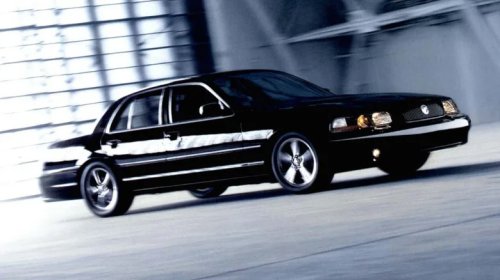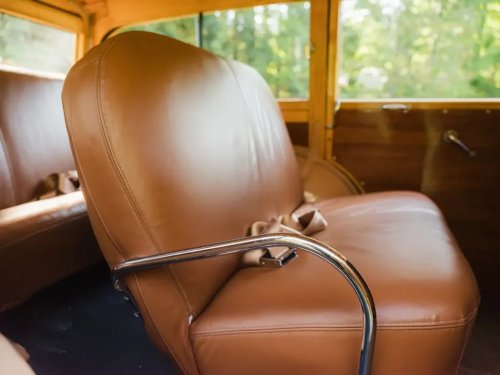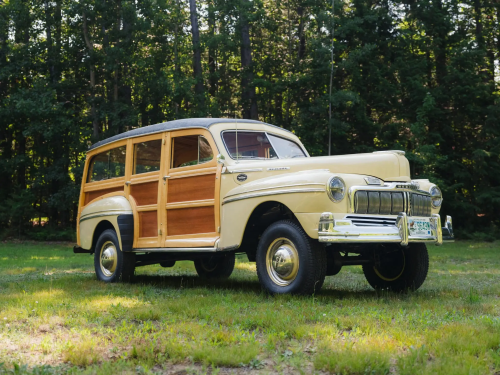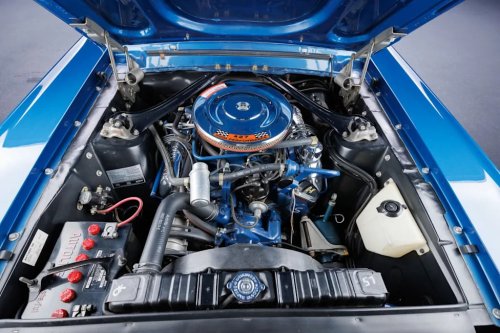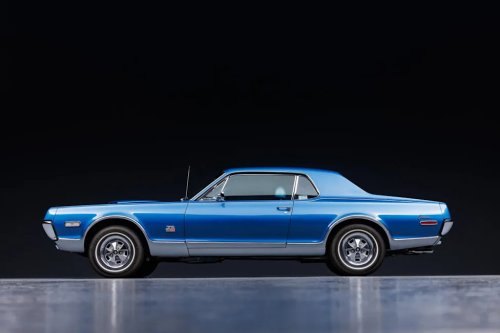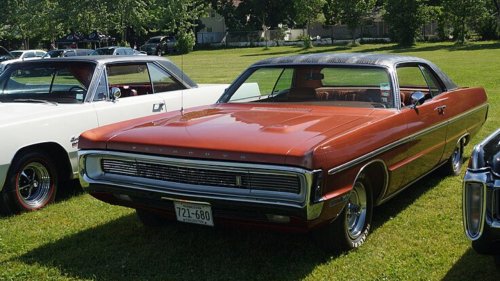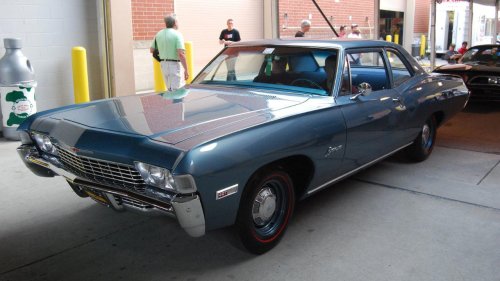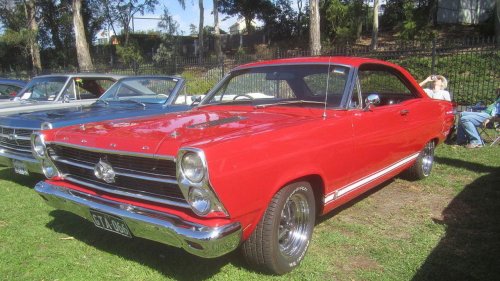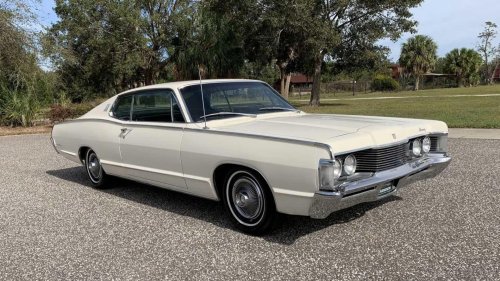
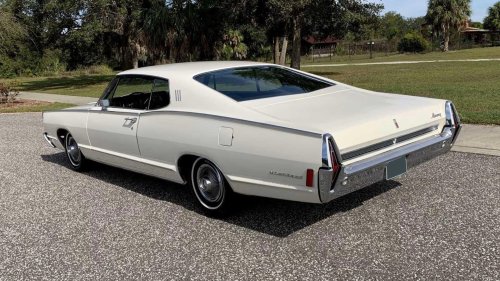





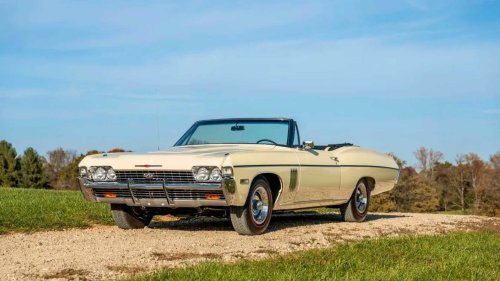





















With the debut of the first Pontiac GTO in 1964, the American muscle car wars were officially on. Thanks to the GTO's incredible sales record, numerous American automakers were keen to get in on the muscle car action. Of course, some of the more famous models to fit the description are nameplates like the Chevrolet Chevelle SS, the Oldsmobile 442, and the Ford Torino Talladega. In the grand scheme of things, though, there were many more still.For example, Mercury - a subsidiary of Ford - had its own muscle cars on offer. The ones we typically think of are models like the Cyclone and the Cougar. However, there was another muscle-bound Mercury. The Monterey lacked exciting trim names like "GT" or "SS", but it packed a whopping punch underneath its hood. When properly optioned, the 1968 Mercury Monterey could give even the Chevrolet Impala SS a thorough run for its money. Hidden In Plain Sight Mecum Quick Facts About The 1968 Mercury Monterey Offered a 428 CID big-block V8 Based on the Ford Galaxie Adopted some of its styling from the Lincoln Continental Could be had in either a two- or four-door configurations Constituted the Monterey's sixth generation By 1968, the Monterey name had already been in use for 18 years. Back in 1950, its debut year, the Monterey was positioned in Mercury's lineup as the top-grade version of the Mercury Eight. The Eight, a hardtop model, competed with other hardtop models produced by Chrysler and General Motors, as the Post-War car scene was beginning to ramp up considerably regarding forward-thinking design during this time.Mecum Fast-forward those 18 years, and the Monterey became solidified in Mercury's lineup as their flagship model, with a basic platform shared with both the Ford Galaxie and the Lincoln Continental. Because the Mercury was positioned as a sort of intermediate option in terms of luxury, as it sat between the Galaxie and the Continental, its main competitors were other American brands like Buick, Oldsmobile, and, to a lesser extent, Dodge.Mecum However, while the models that the Monterey was competing with in 1968, such as the Oldsmobile 88 and the Buick LeSabre, were more focused on providing smooth rides and were less focused on making tons of power, Mercury took the Monterey in a different direction, at least partially. That's because, in 1968, Mercury offered Ford's 428 CID V8 for use within the Monterey. The engine package could be had with either a two-barrel or a four-barrel carburetor.Mecum With a gross horsepower rating of over 350 ponies, the Monterey suddenly found itself within the sights of other, powerful full-size cars like the Chevrolet Impala SS, and left most of the competing full-size Oldsmobile and Buick engine configurations in the proverbial dust. However, it's worth noting that Oldsmobile did offer a four-barrel 455 CID ultra-high compression "Super Rocket" V8 option producing 365 horsepower for 1968 88 models. However, the Monterey equipped with the 428 CID big-block was more than capable of keeping up with both the hot Olds 88 and the sport-tuned Chevy Impala SS, but no one knew it. Detailed Specs & Features AutoEvolution.comUnfortunately, while some other models from the Ford company at the time offered Cobra Jet big-block V8s, the '68 Monterey had to make do with a non-Cobra Jet version. It wasn't all doom and gloom, though, as the hot Monterey still received a healthy dose of power from its 428. The motor, part of the Monterey's Q-Code powertrain package, was based on Ford's Interceptor engine line, which was a grouping of motors available for purchase in cars outfitted for police use.Original buyers had a choice between two transmissions. The first was a standard three-speed automatic, with an optional four-speed manual transmission on offer, as well. Some rear-end gearing options available were 3.00:1 and 3.25:1, with the latter being more common. While it was discontinued mid-way through the model year, Mercury did offer a sports package coined "S-55" for the '68 Monterey. The upgrade included things such as a dual-outlet exhaust and a stiffer suspension.We outline the 1968 Mercury Monterey 428 CID four-barrel's detailed engine and performance specs in the table below:*Specs courtesy of AutoEvolution.comMecum Inside, the Monterey was about the same as you'd expect for a late '60s full-size car. Depending on the trim, cloth, vinyl, or both materials were available in the cabin. In base trim, there were crank windows and a heater. As upgrades, you could add an air conditioning system and bucket seats with a center console. A tachometer was also an optional feature. Wood-effect trim surrounding things like the instrument cluster and the dashboard was standard, as well, along with a healthy dose of sound-deadening material.Mecum Current Pricing Mecum Luckily, because Mercurys outside the Cougar aren't typically thought of for their muscle car prowess, the Monterey doesn't fetch nearly the same premium as some of its competitors, like the Impala SS, do these days. According to Hagerty, the '68 Monterey pulls in an average of $15,470 per sale, although this number takes all engine options into account. Because the 428-optioned Monterey is such a rare find, accurate pricing is virtually impossible to find, but you can bet a good example will cost more than Hagerty's average. One Of The '68 Monterey's Main Competitors HemmingsArguably, one of Chevy's most famous models to ever come out of the mid-century automotive market was the Impala. What started as a regular full-size car quickly became one of Chevrolet's most sought-after models, beginning in 1959 with its iconic '50s styling. Shortly after, the Impala gained an SS badge in 1961, and once Pontiac released the GTO, the Impala SS became Chevy's hot full-size car for the masses, and a cheap one at that.Hemmings For the 1968 model year, Chevrolet offered the Impala SS with a choice between three engines. At base level was a 327 CID V8, with a 396 CID V8 making up the mid-range option. However, our Mercury Monterey with its 428 CID V8 wouldn't compete with those two, and so the Impala SS's top-of-the-line mill was responsible for fending off the contender from Ford. The mill, a 427 CID big-block V8, was responsible for warding off the Monterey, along with a slew of other competitors in the market at the time.Hemmings When it comes to power output, the '68 Impala SS427 produces a total of 385 horsepower and 460 lb-ft of torque when equipped with the L36 version of the 427 CID V8. But there was a way to get even more power out of the Impala SS427. To achieve this, original buyers had to select the L72 engine option, which bumped the 385-horse figure up to 425, with a total of 40 horsepower added. This was achieved thanks to tweaks to the engine's compression ratio, raising it to 11.0:1. The L72 mill also received square port heads, solid lifters, and a Holley carburetor.So, in the end, while the '68 Monterey could keep up with the Impala SS with the L36 engine package, the L72 option blew it out of the water. However, there is quite a lot to still be happy about. That's because the hottest '68 Impala SS, the L72, typically sells for close to $100,000 for an example that's in good shape. A 428-equipped Monterey may sell for nearly a third of that price, meaning you can get into one of those much easier than an L72-equipped Impala SS.