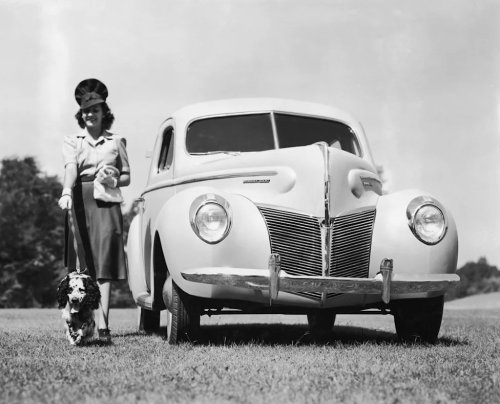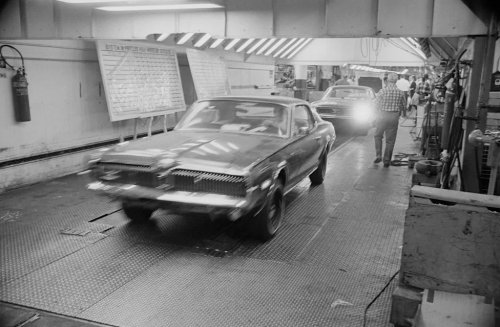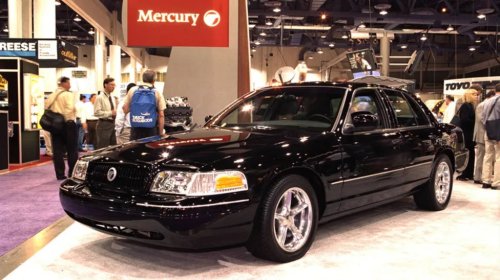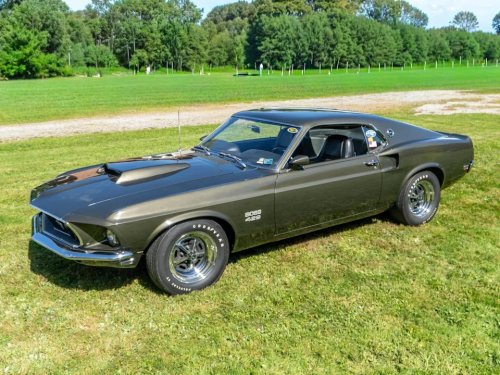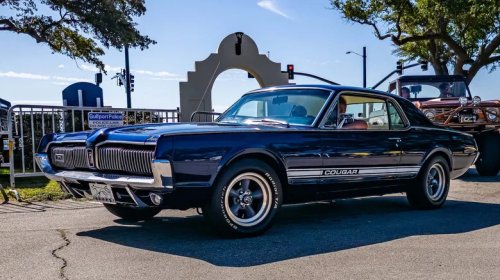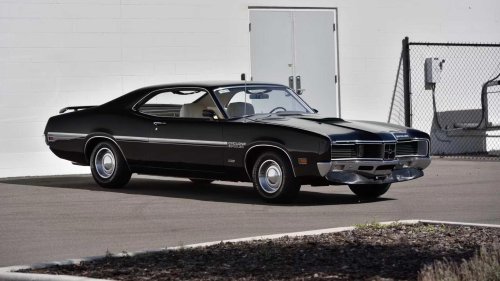



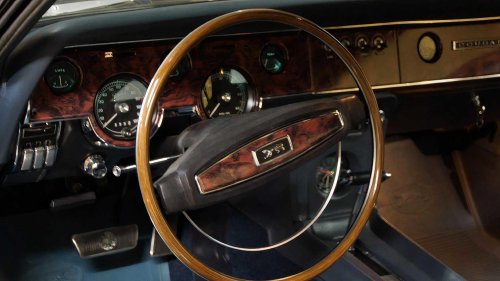























Ford originally launched its Mercury brand in 1938 under the direction of Edsel Ford and Ford Sales Manager Jack Davis. Named for the winged god of commerce in Roman mythology, it was intended to represent “dependability, speed, skill, and eloquence.” Accordingly, Mercury slotted in between everyday Fords and upmarket Lincolns in the Blue Oval’s lineup, intended to be a premium yet approachable option—until its eventual discontinuation in 2011.When it comes to muscle cars, though, Mercury often gets conflated with Ford, sometimes discounted as little more than a front fascia swap and a different set of badges. Whether because of the immense shadow cast by iconic pony cars like the Mustang or the absence of Mercury performance vehicles today, the brand doesn’t get nearly the credit that it deserves. Sure, Mercury models shared many Ford components, but there are some big differences between the two marques’ muscle cars.From target markets to design language to interior finishings, Mercury and Ford muscle cars from the golden era followed parallel but distinct paths. To help set the record straight, we’ve rounded up what we consider to be 10 of the biggest differences between the two brands in the context of their classics. Mercury Offered More Upscale Styling Mercury Cyclone Spoiler - 1When Edsel Ford and Jack Davis originally conceived Mercury in the 1930s, upscale styling was central to their vision for the brand. Accordingly, Mercury models (especially in the early years) typically boasted distinct bodies with different dimensions to those of their Ford stablemates.In the context of golden era muscle cars, this meant giving models like the Cougar its iconic electric razor grille, hideaway headlights, and more premium trim options than the Mustang. Though the Cyclone Spoiler offered a similarly aggressive shape to the Torino, it had its fair share of unique features as well. Along with an imposing "gunstock" grille and some tapered fenders, it was also distinguished by hidden lamps starting in 1970. Interestingly enough, Larry Shinoda supposedly designed the central hole in the grille to facilitate quick cam changes on the drag strip. Ford Gave The Mustang A Fastback Roof Mecum Auctions Although Ford based the first-generation Mercury Cougar on its wildly popular Mustang platform, the feline pony car never left the factory with a fastback roofline. Upon its debut in 1967, it was solely offered as a two-door hardtop in base and XR-7 trims. In 1969, Mercury added a convertible option to the Cougar line, but the car remained a notchback while the Mustang gained sharper Sportsroof options.Even after the addition of the performance-focused Cougar Eliminator package, Mercury's Cougar stuck to its coupe style. Then, with the onset of the malaise era, the pony car jumped platforms completely— first to the Torino, and subsequently to the Fairmont, the Thunderbird, and eventually even the Mondeo. Mercury Was Known For Being Quieter And Smoother Mecum Auctions In keeping with the brand's elevated image, Mercury muscle cars often featured longer wheelbases, more spacious interiors, and improved sound insulation compared to Ford products. As a result, they were usually heavier, but the added weight made a difference in both ride quality and sound.Take the first-generation Cougar, for example. Though the Mustang's wheelbase measured 108 inches, Ford gave the Mercury muscle car an even longer 111-inch wheelbase, and the body itself measured 8.7 inches longer tip to tail. What's more, the Cougar featured an extra 123 lbs of sound insulation, and its suspension was tuned for a softer ride with more forgiving rubber bushings. Ford Had The Twister Specials MecumThough Ford had originally made an agreement with American Raceways International (ARI) to sell a run of limited-edition Mustang pace cars, the company's bankruptcy forced the Blue Oval to find an alternative means of fulfilling its orders. Accordingly, Ford sold a run of exclusive Mustangs in 1970 known as the Twister Specials. With vibrant paint, a 351 or a 428 Cobra Jet V8, and unique tornado graphics, they're desirable items—especially because just 96 examples rolled off the line.That year, Ford also introduced the Torino Twister Special, building the model in the same Kansas City, Missouri assembly plant as its pony car sibling. Though Ford had experienced an engine shortage that meant some Mustangs received a 351, all Torino Twister Specials were equipped with either a 429 Cobra Jet or Super Cobra Jet V8. As an even rarer option, only 90 were built in total, and those that survive today fetch hefty sums. Mercury Cars Came Equipped For Entry-Level Luxury Bring A Trailer In the FoMoCo lineup, the Blue Oval positioned Mercury above its own offerings but below its top-shelf Lincoln marque. Accordingly, the brand was intended to offer buyers an entry-level personal luxury experience on-par with the likes of Buick and Oldsmobile. In contrast to Mustangs and Torinos that also offered economical inline-sixes, many Mercury models almost exclusively offered V8s.Moreover, many features that were optional items on Ford cars were standard fare throughout the Mercury line. Along with conveniences like self-adjusting brakes, directional signals, and backup lights, Mercury cars boasted leather upholstery, refined center consoles, and more external ornamentation. In fact, Ford first offered an electronically-operated sunroof option on the Cougar in 1968, letting ASC handle the aftermarket installation. They Named Certain Colors Differently Bring a Trailer As was the case with other automakers existing under the same parent company (like Dodge and Plymouth), Ford and Mercury muscle cars offered many of the same color options, though they were named differently depending on the brand. For instance, Ford offered a series of iconic bright hues known as Grabber Blue, Grabber Orange, Grabber Green, and Grabber Yellow. Mercury, on the other hand, elected to name these same options under its "Competition" colors designation. Despite the difference in naming conventions, they shared the code designation.It's worth noting that the FoMoCo changed the names of several colors from year to year. So, even though Mercury introduced Calypso Coral as an option on the Montego in 1968, it was renamed Competition Orange in 1969. Moreover, the color actually had its origins in the 1965 Mustang option Poppy Red, and the Blue Oval eventually marketed it as both Vermillion and Medium Coral. They Took Different Approaches To NASCAR Aero 1969 Ford Torino Talladega Front Three QuarterDuring the NASCAR aero wars of the late 1960s and early 1970s, Chrysler and Ford were battling it out bumper to bumper, looking for any kind of competitive edge that would result in more race wins. Having gotten wind of Dodge's redesigned Charger 500, Ford followed suit and gave its Torino a slippery body style called the Torino Talladega. As the Blue Oval was also fielding Mercury cars on the track, the Cyclone received its own wind-cheating design in the form of the Spoiler II.Despite the similarities between the two cars, Ford and Mercury took different approaches to their aerodynamic revisions. In the case of the Talladega, this meant adding 15.5 inches to Torino's nose and giving it a 30-degree slope. When it came to the Cyclone Spoiler II, however, Mercury took things a step further, giving it 19.5 inches of new sheet metal and an even steeper 35-degree nose. The Cougar Got Ford's 427 FE V8 Mecum While the first-generation Ford Mustang and Mercury Cougar shared many of the same engines and transmissions throughout their production, there were some options that were unique. For instance, upon the introduction of the Cougar GT-E performance package in 1968, Mercury fitted its hottest cat with a low-riser version of its venerable side-oiler Ford 427 FE V8. At 390 horsepower, it made for quite an upgrade over the lesser 289 and 390-powered models.Interestingly, though Ford first introduced the engine on its Galaxie 500 for NASCAR competition, the V8 never made its way to the Mustang. Instead, the Blue Oval's pony car received the 428 Cobra Jet and Super Cobra Jet, with the largest option eventually being the legendary Boss 429. Ford Muscle Cars Received The Shaker Hood Via: Mecum AuctionsLarry Shinoda designed Ford's first production shaker hood, and it initially appeared on the 1969 Mustang 428 Super Cobra Jet before the feature was extended to the Torino in 1970. The Blue Oval technically called the option "Ram Air" rather than an outright shaker hood, and it only offered the functional scoop on the R-code versions of the 428 SCJ. Q-code Mustangs received a standard scoop.By contrast, Ford never made the shaker package an option on its Mercury-badged vehicles. Instead, Cougars and Cyclones incorporated an integrated, static hood scoop. In the case of the former, only the Cougar Eliminator and those cars optioned with the R-code 428 SCJ received the scoop. When it came to the Cyclone, the Spoiler received the scoop (along with a rear wing), though the Spoiler II did not. Fords Were Built In Much Larger Quantities Ford Because of the brand's higher price point back in the day, Mercury muscle cars aren't nearly as common as their Ford counterparts. For instance, even though sales of the first-generation Cougar totaled some 437,000 units, those numbers paled in comparison to the Mustang. In 1967 alone, Ford sold 467,000 examples of its pony car. Moreover, throughout the same four-year period, more than 1.25 million buyers put their names down for a Mustang.The disparity is even greater when you consider the Cyclone in comparison to the Torino. During the Mercury's nine-year production run from 1964 to 1972, a total of 74,286 buyers purchased a Comet Cyclone, a Mercury Cyclone, or a Mercury Montego Cyclone. By contrast, Ford's Torino even managed to outsell the Mustang at one point during its production, with sales climbing as high as 496,645 units in 1972.