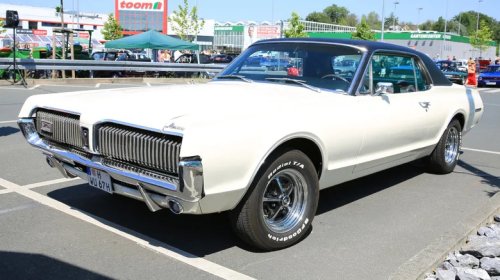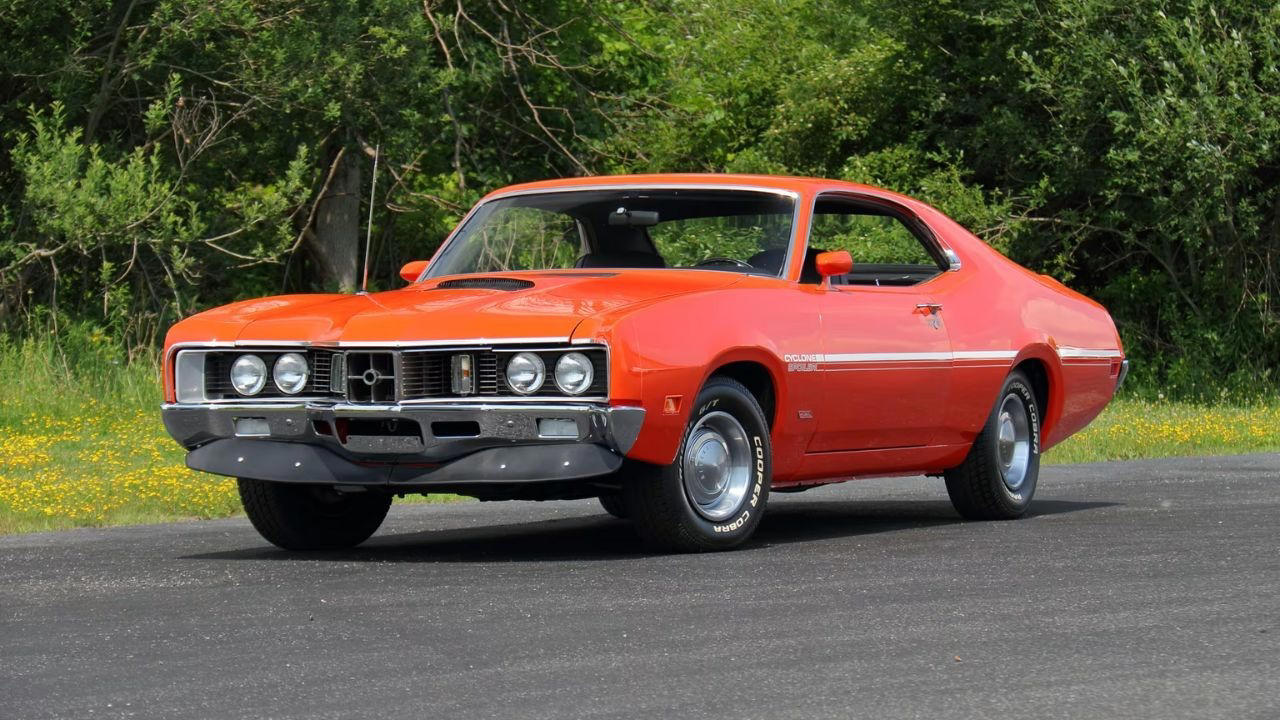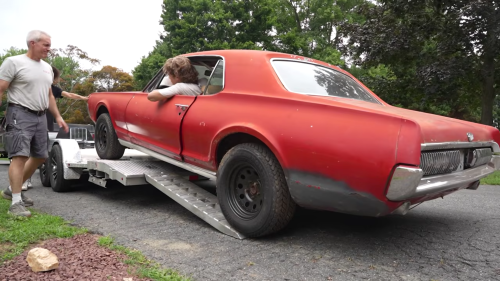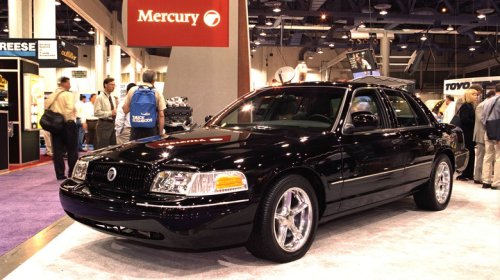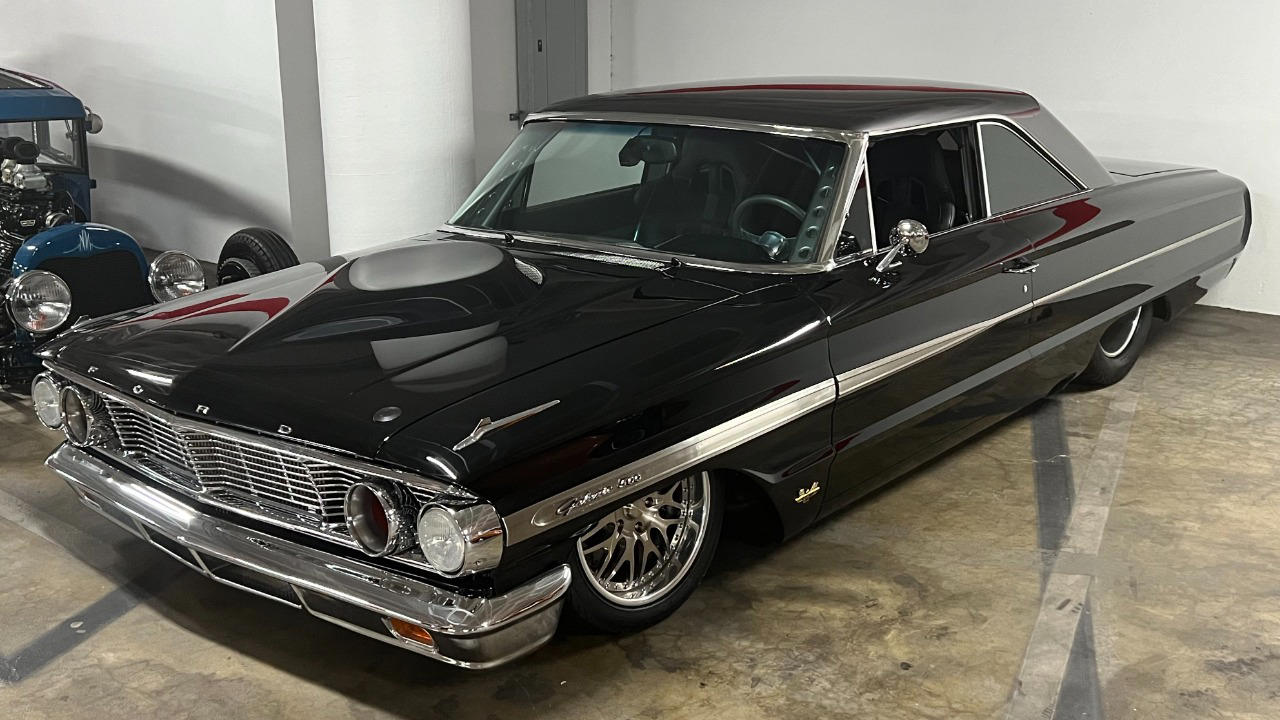



















1964 Mercury Park Lane vs 1964 Ford Galaxie one held its value betterFor collectors weighing a 1964 Mercury Park Lane against a 1964 Ford Galaxie, the question is no longer which one won on the boulevard in period. The real contest now is which full-size classic has rewarded owners with stronger values over six decades of aging, racing nostalgia, and shifting tastes in American iron. Both cars came from the same corporate family, shared big-block muscle, and chased NASCAR glory. Yet their market trajectories have diverged, shaped by production volume, image, and how many have survived in desirable condition. The evidence points to one model holding its value more consistently, while the other delivers broader liquidity and headline-grabbing auction highs. Two big Fords, two different missions The Park Lane was created as the flagship of Mercury, positioned as a more luxurious alternative to the volume Ford line. Contemporary descriptions of The Park Lane emphasize that it sat at the top of the Mercury range and shared a luxury focus with the four passenger Thunderbird while still using a traditional full-size chassis. That meant more trim, more sound deadening, and a price tag aimed at buyers who wanted comfort as much as speed. By contrast, the Ford Galaxie occupied the mainstream full-size slot. It was the big family Ford that could be ordered as a plain sedan or as a flashy performance car. A period buyer could choose a modest six-passenger cruiser or step up to the higher performance 1964 Ford Galaxie 500, with the same basic body shell serving everything from taxi duty to drag strips. Within that shared corporate strategy, the Park Lane and Galaxie were siblings with distinct personalities. The Mercury leaned into luxury, while the Ford leaned into ubiquity and motorsport visibility. Those roles would later shape how each car aged in the collector market. Rarity and image: why the Park Lane feels special Today, collectors see the 1964 Mercury Park Lane for its distinctive styling and relative scarcity among full-size luxury cars of the era. Guides that profile the Mercury Park Lane enthusiasts emphasize that it stands apart visually, with crisp lines and upscale trim that differentiate it from the more common Ford bodies. One standout configuration, the Mercury Park Lane Marauder Convertible Mercury, blended that luxury with serious performance intent. In period, the Marauder name also appeared on Mercury’s NASCAR efforts, and a separate discussion of the 1964 Mercury Marauder in NASCAR circles shows how the brand tried to go head-to-head with the era’s most legendary stock cars. That competition heritage, even if less famous than Ford’s, adds a layer of credibility to the Park Lane’s sporty variants. Surviving examples illustrate how collectors value originality. A listing of a 1964 Mercury Park Lane describes the car as Original and Highly Original, with 86k mi, Automatic, and located in Dearborn, MI, USA. That kind of language signals that the market pays a premium for cars that retain factory finishes and equipment, especially when tied to the brand’s home territory in Dearborn. Even outside pure performance trims, the Park Lane carried a premium image. One report on a low-mileage car notes that the 1964 Mercury was an expensive purchase when new, with a price tag of $3,413 for the four-door hardtop and fastback body styles. That figure, cited for a Park Lane that also offered more powerful units including the famous 428, shows how Mercury aimed directly at buyers willing to pay for an upscale badge and extra power. Earlier experiments such as the Breezeway roofline on big Mercury cars, described as one of the more unusual ideas to come out of Dearborn in the 1960s, reinforced the brand’s willingness to be different. A later junkyard find of a Breezeway Park Lane in Dearborn, celebrated as a favorite oddball feature by enthusiasts, underlines why the name still resonates among fans of distinctive design. The Galaxie’s broad reach and racing halo If the Park Lane traded on exclusivity, the Galaxie traded on ubiquity and motorsport success. The 1964 Ford Galaxie was the final refinement of a platform that had arrived for 1960, built on a thoroughly conventional chassis that made it robust and familiar to mechanics. That practicality, combined with a wide range of trims, helped the car sell in large numbers. Performance versions, especially the 1964 Ford Galaxie 500, cemented the model’s reputation. Guides for the Galaxie highlight how the 64 G series enjoyed the limelight beyond racetracks, appearing in celebrity garages and even serving as pace cars. That exposure helped the car become a cultural touchstone, not just a family hauler. Contemporary owners still debate the merits of the Ford Galaxie 500 against Mercury’s performance offerings. In one enthusiast exchange that compares a Ford Galaxie 500 with a Mercury Marauder, one contributor admits liking Both but leaning on the Marauder, and another recalls buying a similar Mercury in 1975. The fact that the discussion centers on a 500 trim shows how strongly that designation still carries weight among fans. Values data confirms that the Galaxie’s broad appeal has translated into a healthy, if varied, market. A survey of 1960 to 1964 Galaxies notes that the average value for Galaxies listed with Hagerty in 2023 is about $21,800. That figure, drawn from a large sample of cars, indicates that collectors can still get into this big Ford for reasonable money, even as top-tier examples climb. At the high end, the Ford Galaxie market has produced some eye-catching results. A summary of auction performance reports that the highest recorded sale price of a Ford Galaxie is $410,000 for a 1964 Ford Galaxie 500 on Dece 2022. That sale, tied to the 500 badge, shows how rare specifications, provenance, or racing links can push an otherwise mass-market model into six-figure territory. More typical pricing appears in retail listings. A snapshot of Ford Galaxie Classic pegs 1964 Ford Galaxie Pricing at Low $6,495, Average $31,952, and High $84,000. Those numbers illustrate a wide spread between driver-quality cars and show-level builds, but they also confirm that the Galaxie enjoys a deep, active marketplace. How the numbers stack up today Direct valuation tools for the 1964 Mercury Park Lane are less widely publicized than for the Ford, which is a reflection of production volume and data availability. A dedicated valuation guide for the 1964 Mercury Park Lane Base allows users to Show more, Find more values, Search for prices of other cars, trucks, vans and motorcycles, and browse Common Questions such as How much is a 1964 Mercury Park Lane worth. While specific dollar figures are not quoted in the available summary, the existence of a dedicated entry confirms that the model has sufficient market activity to justify tracking. Individual sales and listings help fill in the picture. The previously noted Original and Highly Original Mercury Park Lane Convertible in Dearborn, MI, USA demonstrates that collectors are willing to pay for authenticity, especially when combined with a desirable body style and Automatic transmission. Another profile of a Mercury Park Lane Marauder Convertible Mercury describes it as the brand’s full-size performance offering for 1964, combining luxury appointments with serious power. Cars that combine those attributes often command a premium within their model family. On the Ford side, valuation data is more granular. The Galaxie section of Hagerty’s market analysis, which reports that the average value for Galaxies is about $21,800, reflects a wide range of body styles and conditions. Additional coverage notes that Despite its capability, the Galaxie is not as popular a canvas for customization as the Impala. While not all Hag examples are blue-chip collectibles, the model’s breadth keeps the average in accessible territory. Past sales for the 1964 Ford Galaxie 500 reinforce that spread. One record for a Ford Galaxie 500 Country Sedan lists a sale at $32,550, another 1964 Ford Galaxie 500 XL crossed the block at $102,600, and a third 1964 Ford Galaxie 500 example sold for $55,125. Those three figures, $32,550, $102,600, and $55,125, show how trim level, body style, and condition dramatically affect value within the same model year. Price guides for the 1964 Ford Galaxie 500 2 Door Sedan, compiled under Used Ford Galaxie 500 2 Door Sedan Ratings, Values, Reviews and Awards, give shoppers another benchmark. Combined with the retail ranges of Low $6,495, Average $31,952, and High $84,000 cited for 1964 Galaxies on the open market, they confirm that the Ford enjoys a deep bench of buyers and sellers across the value spectrum. Which one has really held its value better To judge which car has held its value better, it helps to consider three factors: original price, current typical values, and the shape of demand. The Park Lane started from a higher base. With examples priced at $3,413 for four-door hardtop and fastback versions, Mercury asked buyers to pay more than they would for a comparable Ford. That premium bought luxury trim, extra sound insulation, and the option of more powerful units including the famous 428. From a pure percentage standpoint, a Park Lane that now trades at a strong mid five-figure price would represent a healthy return relative to its original sticker. However, the available data suggests that Park Lanes do not regularly reach the same headline numbers as the very best Galaxie 500s. The Ford side has documented sales such as the $410,000 1964 Ford Galaxie 500, as well as multiple 500 variants selling at $32,550, $55,125, and $102,600. Even if those are outliers, they show that the top of the Galaxie market has climbed very high. Average values tell a different story. With the average value for Galaxies around $21,800, the typical Ford sits in a mid-market band. Many cars trade between the Low $6,495 and Average $31,952 range, with only a fraction approaching the High $84,000 mark. That pattern reflects a car that was built in large numbers and survives in many conditions, from tired sedans to concours coupes. The Mercury Park Lane, by contrast, is described as relatively rare compared with other luxury full-size cars of the period. Enthusiast histories remark that Park Lane never achieved the fame and recognition of names like Galaxie or Cougar, and one commentator even calls that a shame while praising Mer for building an interesting flagship. That lower profile has kept prices from exploding across the board, but it has also prevented the model from being dragged down by a sea of low-value examples. In practice, well kept Park Lanes, especially convertibles and Marauder variants, tend to punch above their weight. Their combination of low production, upscale image, and links to Mercury’s performance program (including the 1964 Mercury Marauder that entered NASCAR with high expectations) give them a loyal following. When these cars appear in Original and Highly Original condition, they attract serious attention. For the average owner who bought new in 1964 and held on, a Park Lane likely delivered a steadier preservation of value relative to its higher initial cost, particularly in upscale trims. The Galaxie, especially the 500 performance versions, has produced some spectacular wins for those who happened to own the right car, but the broader population of Galaxies has remained more modest in value. More from Fast Lane Only Unboxing the WWII Jeep in a Crate 15 rare Chevys collectors are quietly buying 10 underrated V8s still worth hunting down Police notice this before you even roll window down