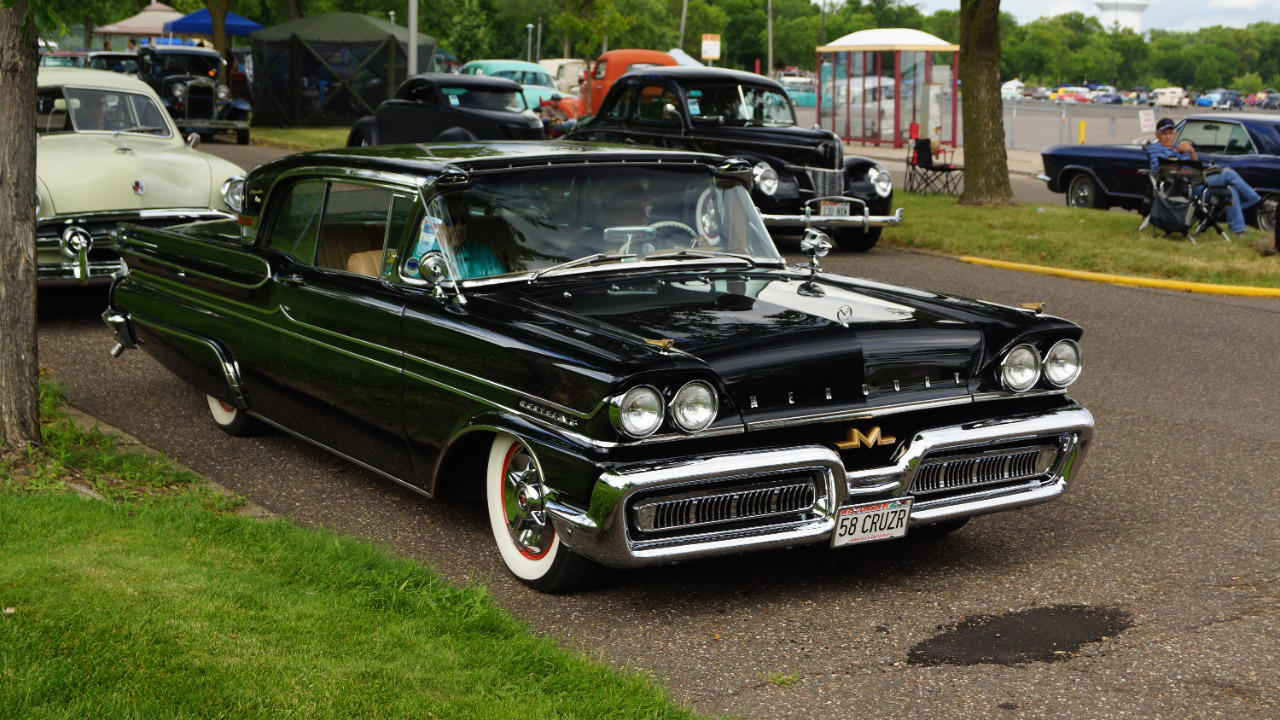



















How the 1958 Mercury Turnpike Cruiser leaned into excessThe 1958 Mercury Turnpike Cruiser arrived at the peak of Detroit’s chrome age, when subtlety ranked far below spectacle. As Mercury’s flagship, it did not simply participate in that culture of excess; it treated extravagance as a design brief. The result was a car that fused space age fantasy, experimental engineering, and unapologetic size into one of the most distinctive American machines of the late 1950s. From concept fantasy to highway flagship The Turnpike Cruiser did not appear out of thin air. Mercury had already used the name on the 1957 flagship, itself closely linked to the XM concept car of 1956. That showpiece previewed a move to larger, more dramatic bodies as the 57 M Mercurys were pushed closer in size and price to Lincolns, with the Turnpike at the top of the line. By 1958, Mercury treated the model as a rolling statement about where its premium ambitions could go. Positioned above Mercury’s other offerings, the Turnpike Cruiser effectively served as a halo for the entire division. Contemporary commentary on the 1957 version described a rolling celebration of space age ambition, packed with futuristic touches and lavish trim. The 1958 car inherited that mission but also had to respond to a shifting marketplace in which Mercury sought more separation from Ford and a closer kinship with Lincoln-level luxury. That context helps explain why the 1958 Turnpike Cruiser shared showroom space with the Mercury Park Lane and, according to period descriptions, reflected Mercury’s push into the premium market. The Park Lane and the Turnpike Cruiser pursued the same goal in different ways. The Park Lane leaned on traditional luxury cues, while the Turnpike Cruiser doubled down on visual drama and high-tech experimentation. Styling that turned the highway into a stage The Turnpike Cruiser’s bodywork did not attempt to blend into traffic. Accounts of the 1957 and 1958 cars highlight a dramatic, forward-leaning front grille that projected aggression even at rest. Its profile carried distinctive tailfins and a sleek, elongated silhouette that signaled speed more than practicality. Enthusiasts have compared the overall effect to a Buck Rogers vision of motoring, with fins, antennae, and sculpted surfaces that would not have looked out of place in a pulp science fiction illustration. Chrome played a central role in this visual theater. Owners and historians describe the 1958 Turnpike Cruiser as drenched in brightwork, with heavy accents tracing the fender lines and side panels. One detailed discussion of the 1958 model singles out its chrome accents and unique trim as key to its presence, along with a distinctive script emblem that proudly spelled out Mercury. The car did not simply wear a badge; it announced its brand in sweeping cursive on the body. Roof and glass design further reinforced the sense of excess. The Turnpike Cruiser used a compound-curve windshield that wrapped around the front corners, which created visibility benefits but also raised ventilation challenges. To address this, Mercury added rooftop ventilation intakes that fed fresh air into the cabin. Perched above the windshield, the intakes became a styling signature in their own right and made the roofline look more like a jet canopy than a conventional sedan top. Gadgets, comfort and the pursuit of futuristic luxury The Turnpike Cruiser’s exterior spectacle set high expectations for what waited inside. Mercury responded with a cabin that treated the driver less as a commuter and more as a command pilot. Period descriptions of the Turnpike Cruiser family point to a suite of power features that went beyond the typical electric windows and seats of the era. On related Mercury Turnpike Cruiser models, equipment lists included a power rear window, a retractable rear antenna, and Seat O Matic memory seats that could be adjusted to preset positions. The 1958 Turnpike Cruiser followed the same philosophy of surrounding occupants with technology that suggested the boundless possibilities of the future. Controls clustered around the driver, and the dashboard integrated push buttons, levers, and indicator lights in a way that looked closer to an aircraft than a mid-decade family sedan. Even small details contributed to the impression of abundance. Contemporary enthusiasts discussing the 1958 Turnpike Cruiser point to model-specific trim pieces, bespoke steering wheels, and elaborate two-tone interiors. Designers seemed determined to ensure that no surface looked ordinary. From the scalloped fins to the sculpted door panels, the Turnpike Cruiser treated ornamentation as standard equipment. Power to match the attitude Visual drama would have rung hollow if the Turnpike Cruiser lacked muscle. Mercury avoided that problem by pairing its flagship with serious engines. While the 1957 version was limited to the Lincoln Y block engine, Mercury offered the bigger Ford MEL mill in 1958. That change opened the door to one of the most interesting powerplants of the period, the Super Marauder V8. Enthusiast and historical sources describe the Super Marauder as part of the MEL family, which stood for Mercury Edsel Lincoln. One detailed account of the 1958 Mercury Turnpike Cruiser Super Marauder Tri Power specifies 430 cu in, 400 HP of MEL (Mercury Edsel Lincoln) engine. Another description of the Super Marauder notes that it carried 430 cubic inches and 400 horsepower in 1958 and that Mercury’s Super Marauder V8 remains a relatively obscure item in Motor City car lore. That combination made the Super Marauder one of the first American production engines to reach the 400 horsepower threshold, and it was available in the Turnpike Cruiser. Dealers and collectors have highlighted the rarity of these powertrains. One listing for a 1958 Mercury Turnpike Cruiser calls out a Rare Super Marauder Tri Power Engine and repeats the 430 figure while emphasizing the tri-power carburetion setup. This focus on numbers and configuration shows how the Turnpike Cruiser’s excess extended under the hood. The car did not simply look like a space-age rocket; in its most potent form, it accelerated like one by late 1950s standards. Engineering quirks and the price of ambition Building such an extravagant car required compromises and creative problem-solving. The compound-curve windshield that gave the Turnpike Cruiser its panoramic view also complicated airflow. According to technical descriptions, Mercury added rooftop ventilation intakes to address the way the glass shape affected cabin ventilation. Those intakes, along with the scalloped fins and other sculpted surfaces, created a complex body structure that was expensive to produce. The Turnpike Cruiser’s size and weight also reflected Mercury’s decision to chase Lincoln levels of presence. The 57 M Mercurys had already moved closer to Lincolns in both dimensions and pricing. The 1958 Turnpike Cruiser continued along that path, which placed it in a challenging position when consumer tastes began to shift away from the heaviest and most ornate cars. Unverified based on available sources, but broader market trends in the period suggest that such extremes soon faced headwinds. Those same quirks have since become part of the car’s appeal to modern enthusiasts. Video documentation of a 1958 Mercury Montclair Turnpike Cruiser taken from an abandoned state to a first drive shows how much effort is required to revive such a complex machine. The presenter, identified as Mick, expresses clear affection for the car even as he navigates its idiosyncrasies. The Turnpike Cruiser demands attention in restoration just as it did on the showroom floor. Legacy of a chrome age icon Among collectors and historians, the Turnpike Cruiser has come to symbolize a particular moment in American automotive culture. Social media posts that spotlight the 1957 and 1958 cars describe them as bold, futuristic, and luxurious, with unique styling that stood out even in an era already saturated with fins and chrome. One enthusiast group calls the 1958 Mercury Turnpike Cruiser a bold and futuristic car that epitomized late 1950s automotive design and innovation. That legacy rests on more than nostalgia. The Turnpike Cruiser condensed the priorities of its time into one object. It chased highway comfort with advanced seats and ventilation, flaunted technological optimism through gadgets and power accessories, and pursued status with size, brightwork, and a headline-grabbing engine like the Super Marauder. Where some rivals hinted at progress, the Turnpike Cruiser broadcast it from every angle. More from Fast Lane Only Unboxing the WWII Jeep in a Crate 15 rare Chevys collectors are quietly buying 10 underrated V8s still worth hunting down Police notice this before you even roll window down