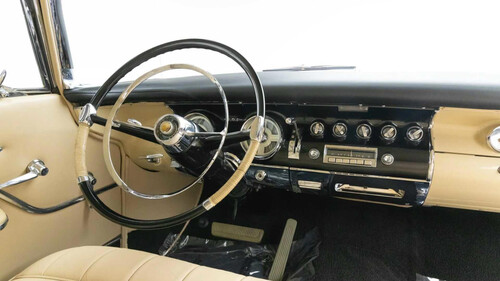
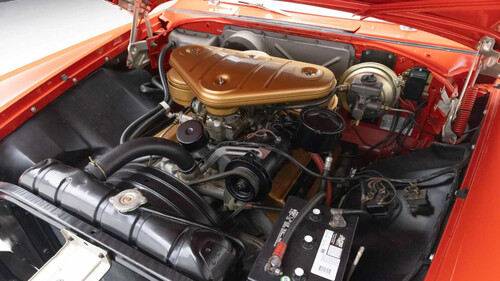
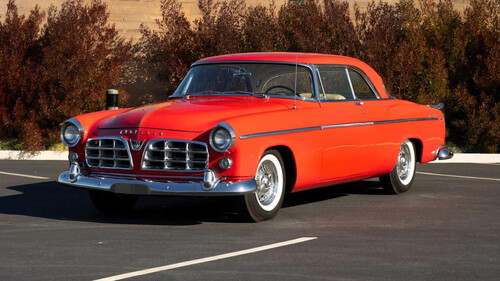
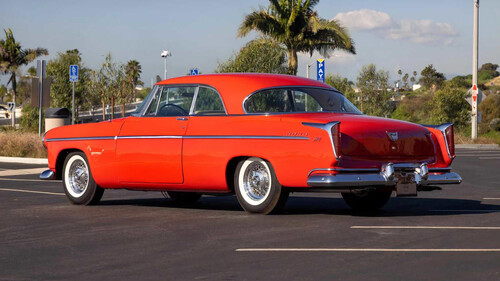
The 1957 DeSoto Adventurer offered performance but long-term support faded quicklyThe 1957 DeSoto Adventurer arrived as a glamorous, high-powered flagship that could run with the quickest American cars of its era. Yet within a few short years, the brand that built it was gone, and factory support for this halo coupe and convertible thinned out just as fast as the chrome was starting to pit. The story of the 1957 Adventurer is a case study in how bold styling, serious performance, and limited production can create an instant icon, while quality troubles, corporate missteps, and a short corporate lifespan quietly erode long-term confidence for owners and collectors. Virgil Exner glamour on a mid priced badge De Soto had spent decades as a medium-priced make in the Chrysler hierarchy, slotted between Dodge and Chrysler divisions both in price and status. The brand filled a niche between the Dodge and Chrysler buyers who wanted more flash than a Dodge but could not quite stretch to a Chrysler. That positioning set the stage for a stylish flagship that could pull shoppers into showrooms. Design chief Virgil Exner provided the spark. When De Soto adopted his so-called Forward Look themes, one enthusiast described how De Soto suddenly, with the 1957 De Soto Adventurer Coupe Sensible wearing dramatic fins, a sweeping profile, and heavy chrome. Sitting at the top of the range, the Adventurer was marketed as the most exclusive expression of that new design language. The Adventurer name itself had already been introduced as a sub-series of the top-level DeSoto Fireflite. According to a detailed model history, it was introduced as a, then evolved into a distinct high-performance line. By 1957, the Adventurer badge signaled the most expensive and most powerful De Soto a buyer could order. Limited numbers and big performance Exclusivity was not just a marketing line. A collector car listing notes that only 300 Adventurers were built for the 1957 model year, a figure that has helped turn surviving cars into prized showpieces. Another enthusiast post on a 1957 Desoto Adventurer with 343cid engine options emphasizes that it was regarded as one of the most iconic and desirable cars of the 1950s, known for its bold styling, powerful engine, and luxurious features, and repeats that reputation for the 343cid engine options cars. Under the hood, the Adventurer delivered real muscle for its time. Enthusiast descriptions of the 1957 Desoto Adventurer with 343cid engine options highlight the car’s strong acceleration and high-speed capability for a big American coupe. Period specifications show that De Soto engineers were determined to give their halo model performance that could stand beside the best from Detroit, not just pretty sheetmetal. Contemporary owners and historians repeatedly describe the 1957 DeSoto Adventurer as one of the finest automobiles DeSoto ever built. A tribute from a basketball camp account calls it one of the, praising its bold styling, powerful engine, and luxurious features. That mix of speed and opulence is central to its enduring appeal. Inside the cabin, a clear view and luxury cues The Adventurer’s interior matched its exterior drama. Reports on the 1957 DeSoto Adventurer describe a curved windshield and swept-back A-pillars that provide a particularly clear view of the road, especially compared with modern cars that have thicker roof structures and more enclosed cabins. One detailed driving impression emphasizes that curved windshield and, which adds to the sense of lightness in what is otherwise a large, heavy car. Luxury features were part of the Adventurer formula from the start. Period descriptions and enthusiast posts point to upscale trim, special color schemes, and generous chrome inside and out. The Adventurer was not a stripped performance special. It was a fully equipped prestige model designed to lure buyers who might otherwise have shopped a top-level Chrysler or a premium competitor from another brand. Quality problems that showed up early For all its visual drama and performance, the 1957 Adventurer was also a product of a rushed development cycle and cost pressures inside Chrysler. A detailed retrospective notes that early cars leaked and rattled, and torsion bars sometimes snapped while parked. The same account describes how early cars leaked, while Chrysler struggled to sort out the flaws. These issues were not unique to De Soto, but they hit especially hard on a halo model that carried a premium price. Buyers who had been promised cutting-edge engineering and glamorous styling instead found water leaks, squeaks, and suspension failures. In a segment where word of mouth mattered, that kind of experience could quickly tarnish a model’s image. Chrysler’s torsion bar front suspension, a technical highlight on paper, became a liability when components failed unexpectedly. The fact that torsion bars could snap while the car was parked undermined confidence in the basic safety of the chassis. For a big, powerful coupe intended for high-speed travel, that kind of mechanical uncertainty was especially damaging. Adventurer as a symbol of De Soto’s ambitions The Adventurer line also reflected a broader strategy inside Chrysler Corporation. DeSoto had been positioned for years as a mid-priced brand that could compete with the likes of Oldsmobile and Mercury. A detailed brand history notes that DeSoto was a medium-priced make offered by Chrysler between 1928, slotted between Dodge and Chrysler. The Adventurer was meant to give that division a true aspirational product that could draw attention to the rest of the lineup. Internal competition complicated that plan. The DeSoto filled a price and status niche between Dodge and Chrysler, but corporate managers also had to protect the image of the higher-margin Chrysler models. As styling and mechanical packages converged across the corporation, it became harder to justify keeping a separate DeSoto line alive, even with a flagship like the Adventurer on the books. One detailed look at the brand’s demise points out that although DeSoto enjoyed a relatively long tenure as a successful mid-priced line for Chrysler Corporation, its ultimate demise came when corporate leadership decided to simplify the range. The analysis of downfall of the stresses that internal overlap and changing market conditions undercut the rationale for a separate DeSoto division. Brand cancellation and the support problem The end came quickly. A video history of the brand states that on November 30th 1960 after 32 years the name Dotto was officially discontinued, highlighting that the company had built cars under that name for exactly 32 years. The same narrative frames the decision as a paradox, because DeSoto had set sales records shortly before the axe fell. Other accounts echo that abrupt finish. One enthusiast history notes that DeSoto was a great brand, but the story came to an end in November when production stopped and the division was wound down. The brand history that describes DeSoto as a medium-priced make offered by Chrysler between 1928 and 61 underlines how short the gap was between the 1957 Adventurer’s debut and the end of the marque. For Adventurer owners, the corporate decision had immediate consequences. Once DeSoto was gone, long-term factory support for its low-volume flagship became more fragile. Parts availability depended on shared components with Dodge and Chrysler, dealer networks were consolidated, and specialized trim or Adventurer-specific pieces became hard to source. The same internal overlap that had helped justify canceling the brand limited the incentive to keep unique DeSoto parts in production. From new car to rare collectible The limited production run and early cancellation of the brand have had a double-edged effect on the 1957 Adventurer’s legacy. On one hand, rarity and styling have made it a coveted collectible. A collector listing for a 1957 Desoto Adventurer convertible highlights that only 300 Adventurers were built for that model year, and that this scarcity contributes to its status as a collector car rarity. Enthusiasts often rank it alongside or even above more common icons like the 57 Chevy in terms of presence and exclusivity. On the other hand, the same factors that make the Adventurer special on a show field complicate ownership. The early quality issues, the torsion bar failures, and the lack of a surviving factory support network mean that restorers must rely heavily on specialist suppliers, parts cars, and custom fabrication. Owners who want to keep an Adventurer on the road today are effectively compensating for both the car’s original flaws and the corporate decision to walk away from the DeSoto name. One enthusiast piece that compares the Adventurer to a 57 Chevy notes that early cars leaked and rattled, and that Chrysler struggled to sort out the flaws. At the same time, the same account praises the driving position, visibility, and styling, underscoring the tension between the Adventurer’s strengths and its weaknesses. That duality helps explain why the model inspires such passionate advocacy among its fans, even as it demands more effort to maintain than some contemporaries. How enthusiasts remember the Adventurer Modern coverage often frames the 1957 Adventurer as a hidden gem from the fin era. Enthusiast communities on social media share images of restored cars, highlight the Virgil Exner styling, and trade stories about sourcing rare trim pieces. A post on the 1957 De Soto Adventurer Coupe Sensible describes how De Soto suddenly came over all glamorous when it adopted Exner’s Forward Look, capturing the sense of surprise that a previously conservative brand could produce something so flamboyant. Video features add another layer of mythology. One clip describes a 1957 Dodto Adventurer named after a Spanish conquistador, playing up the sense of exploration and treasure hunting that surrounds the search for surviving examples. The narration that mentions the Dodto Adventurer named leans into the idea that finding and restoring one is like discovering automotive gold. At the same time, brand historians remain clear-eyed about the corporate context. Analyses of the DeSoto story emphasize that the division was squeezed by internal competition, that its mid-priced niche became harder to defend as market tastes shifted, and that Chrysler Corporation ultimately chose to focus its resources elsewhere. The Adventurer is remembered as a high point in styling and performance that could not by itself save the brand. Why long term support faded so quickly The 1957 Adventurer’s support problems were not simply a matter of corporate neglect. They were baked into the car’s positioning. As a low-volume, high-specification model built by a division that would be canceled only a few years later, it never had the scale or staying power of a mass-market icon like the 57 Chevy. The Adventurer’s reliance on unique trim, special paint schemes, and specific performance parts made it especially vulnerable once DeSoto disappeared. More from Fast Lane Only Unboxing the WWII Jeep in a Crate 15 rare Chevys collectors are quietly buying 10 underrated V8s still worth hunting down Police notice this before you even roll window down