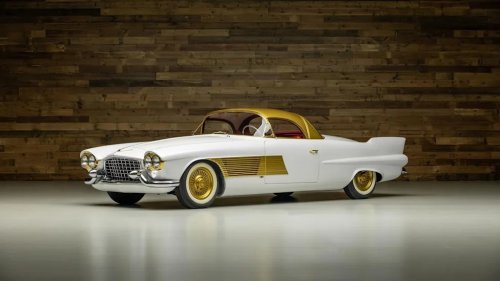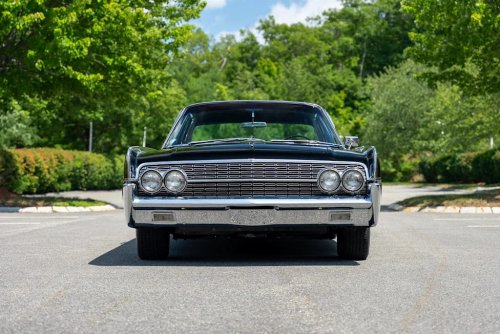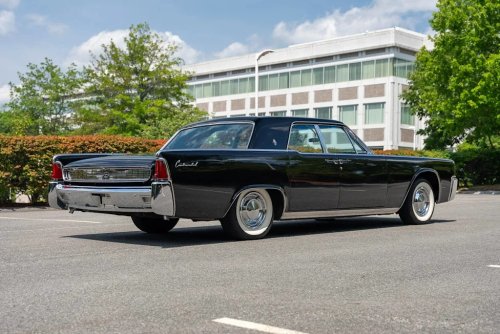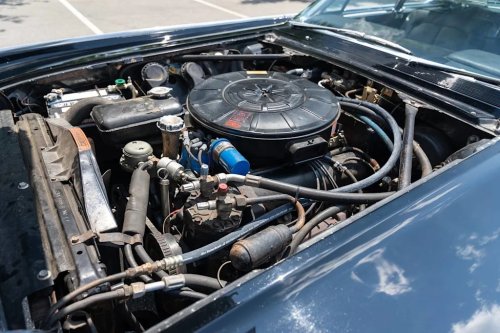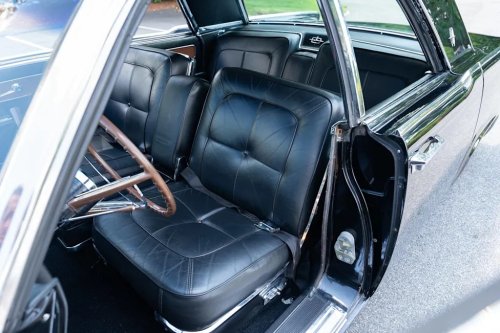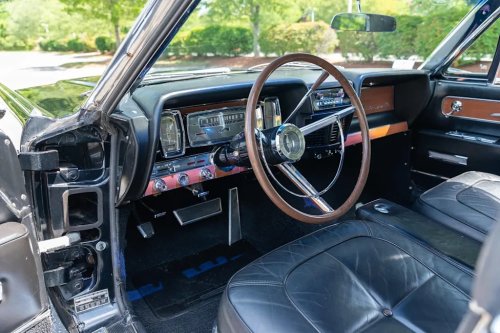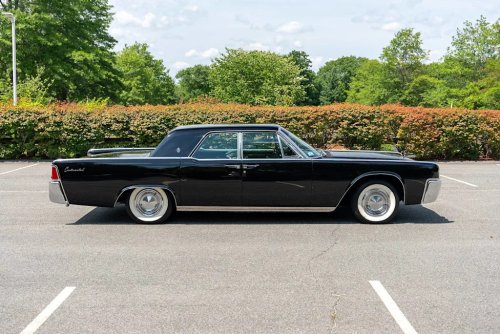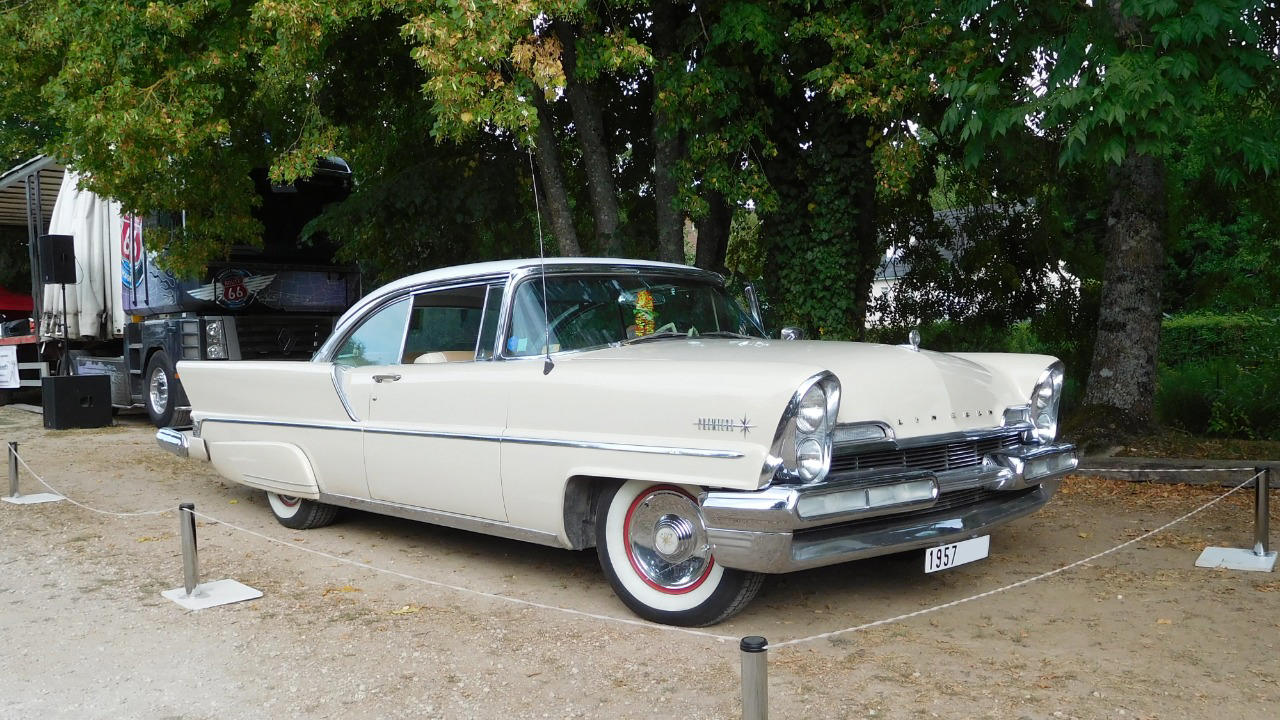



















How the 1957 Lincoln Premiere chased Cadillac head-onThe 1957 Lincoln Premiere arrived as Detroit’s luxury arms race reached full intensity, and it did not come to play a supporting role. Longer, lower, and more extravagant than its predecessor, it was engineered and styled to confront Cadillac directly at the top of the American luxury hierarchy. In doing so, it revealed how far Ford was prepared to go to challenge a rival that many buyers already treated as the default symbol of success. Cadillac’s grip on American luxury By the mid‑1950s, Cadillac had secured a reputation that bordered on monopoly in the premium market. Contemporary observers described Cadillac as the undisputed ruler of the luxury segment in the American automobile industry, a position that turned its name into shorthand for the best of almost anything. Within that lineup, the Cadillac Eldorado, built by the Cadillac Motor Car Division of General Motors, sat at or near the top of the brand’s product line and embodied this prestige. For Ford, any serious move upmarket had to confront that reality. Buyers who wanted the grandest domestic luxury car usually started with Cadillac showrooms, and the Eldorado in particular signaled the kind of flamboyant, high‑content flagship that set expectations for the entire class. Against that backdrop, Lincoln’s leadership understood that a half‑measure would not change perceptions. The company needed a car that matched Cadillac in size, presence, and technology, then tried to exceed it. From failed mutiny to renewed offensive Lincoln had already tested those ambitions with the 1956 Lincoln Premiere. Period commentary framed that earlier effort as a mutiny inside Ford, a bold attempt to overthrow what some critics called a Cadillac tyranny of luxury. The 1956 car introduced the Premiere nameplate and announced that Lincoln wanted a place at the same table as Cadillac’s most lavish offerings. Yet the experiment did not fully succeed. Enthusiasts later described the 1956 Lincoln Premiere as Ford and a Failed Mutiny Against Cadillac, a tacit admission that Cadillac’s dominance survived the first assault. Styling on the 1956 model leaned conservative compared with its rival’s more daring forms, and the car struggled to dislodge deeply ingrained buyer habits. That outcome set the stage for a much more aggressive response in 1957. Stretching the tape measure: size, stance, and structure The 1957 Lincoln Premiere did not hide its intentions. One contemporary description called it a chrome‑draped cruiser that turned up the heat on Cadillac, and the raw dimensions backed up the claim. Built on a 126‑inch wheelbase, the car occupied a footprint that signaled authority before the engine even started. The figure, cited explicitly as 126 inches, placed the Lincoln firmly among the largest luxury cars of its day and gave designers the canvas they needed for long, unbroken body lines. Compared with the 56 model year, Lincoln stylists moved away from the earlier car’s relative restraint. Commentary from enthusiasts noted that anyway the car was sliced, the 1957 version was not as conservative in appearance as it had been in 56, yet the added garnishes did not overwhelm the basic form. The result was a body that looked more modern and more assertive, in keeping with the brand’s determination to stand shoulder to shoulder with Cadillac in any parking lot or hotel driveway. Underneath, Lincoln was already on a trajectory that would culminate in some of the largest unibody luxury cars ever built. Later analysis of Lincolns and Continentals described how, by 1960, these models had adopted unitized construction and achieved the distinction of being the largest unit body car made. That move toward structural innovation framed the 1957 Premiere as part of a broader engineering push, even if the 1957 car itself still relied on more traditional methods. Design theater: chrome, glass, and mid‑century glamour Visual drama was central to Lincoln’s counterattack on Cadillac, and the 1957 Premiere delivered it in abundance. The car’s exterior leaned into the era’s fascination with chrome, using brightwork to emphasize the long fenders and accentuate the low roofline. Observers described the 57 Lincoln Premiere as a chrome‑draped cruiser, a phrase that captured both the car’s sheer ornamentation and its sense of motion. The cabin presented an equally theatrical experience. With the Robotic self‑locking power top folded and stored under its factory Naugahyde boot, the Premiere convertible still showcased a sweeping wraparound windshield that pulled occupants forward into the view ahead. That glass, combined with a low cowl and thin pillars, created a panoramic effect that aligned with mid‑century ideas of jet‑age travel and open horizons. Even when the top was raised, the car projected a sense of effortless command. Contemporary accounts praised the Lincoln for absorbing road disturbances with weighty aplomb, a quality that mattered as much to status‑conscious buyers as exterior styling. The combination of visual spectacle and genuine isolation from rough pavement spoke directly to customers who expected their luxury car to glide rather than merely drive. Luxury content and the technology race Equipment levels on the 1957 Lincoln Premiere targeted Cadillac directly. The model sat at the top of Lincoln’s range, and later marketplace descriptions positioned the 1957 Lincoln Premiere as a hallmark of mid‑century American automotive luxury and design. Positioned as Lincoln’s top‑tier offering, it was explicitly aimed at buyers who might otherwise have chosen Cadillac or Imperial in the premium market. Power assists and electric conveniences were central to this pitch. The so‑called Robotic power top automated what had once been a manual chore, while power windows, power seats, and other features aligned the Lincoln with Cadillac’s most fully optioned cars. The focus on technology was not purely about comfort; it also signaled that Lincoln could match Cadillac’s reputation for innovation. Ride quality formed another front in this competition. Reports on the 1957 car highlighted how its suspension and sheer mass combined to smooth out broken pavement, a trait that mirrored Cadillac’s long‑standing emphasis on a cushioned, almost floating feel. In this respect, Lincoln was not trying to differentiate itself so much as to prove that it could equal the benchmark. Market positioning and the Cadillac comparison In the showroom, the 1957 Premiere carried itself as Lincoln’s definitive statement of intent. One enthusiast sale listing referred to a 57 Lincoln Premiere convertible and reminded prospective buyers that, in 1957, the Premiere was the top-of-the-line luxury vehicle for the brand. That status mattered because Cadillac buyers were accustomed to the idea that the Eldorado represented the summit of domestic luxury. Lincoln wanted the Premiere to occupy the same mental space. The comparison was not only internal. Marketplace descriptions stressed that the 1957 Lincoln Premiere competed directly with Cadillac and Imperial in the premium market, a rare instance of a manufacturer openly naming its intended rivals. By aligning itself with those two nameplates, Lincoln signaled that the Premiere belonged in the same conversation as the Cadillac Eldorado and Chrysler’s most opulent models. The strategy fit into a longer pattern. Later commentary on a 1960 Lincoln sedan described how that car tried to out‑Cadillac Cadillac, a phrase that captured the brand’s willingness to measure success in terms set by its chief rival. The 1957 Premiere can be seen as an early and especially vivid expression of that mindset, one that used size, style, and lavish equipment to close the perceived gap. Legacy of a determined challenger Looking back, the 1957 Lincoln Premiere stands as more than a glamorous artifact of tailfin‑era design. It represents Ford’s clearest attempt in that period to confront Cadillac head‑on, with a car that matched its rival in presence and ambition. The 126‑inch wheelbase, the chrome‑laden bodywork, the Robotic power top under its Naugahyde boot, and the emphasis on serene ride quality all served a single purpose, to persuade buyers that Lincoln could deliver the same sense of achievement that had long been associated with Cadillac. More from Fast Lane Only Unboxing the WWII Jeep in a Crate 15 rare Chevys collectors are quietly buying 10 underrated V8s still worth hunting down Police notice this before you even roll window down