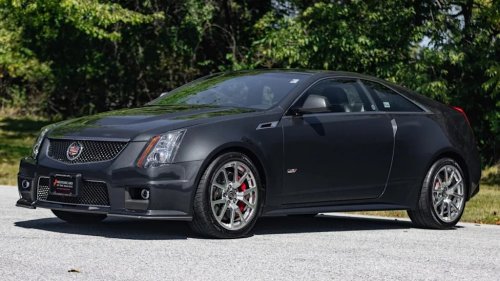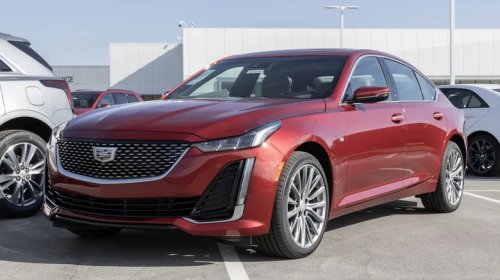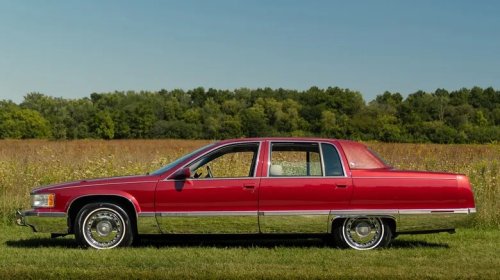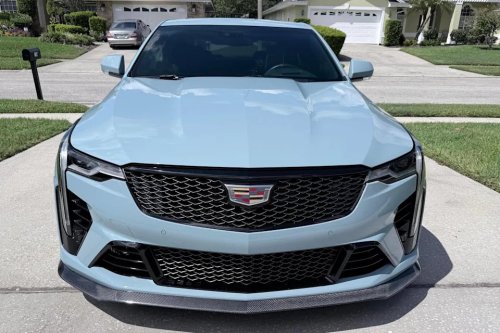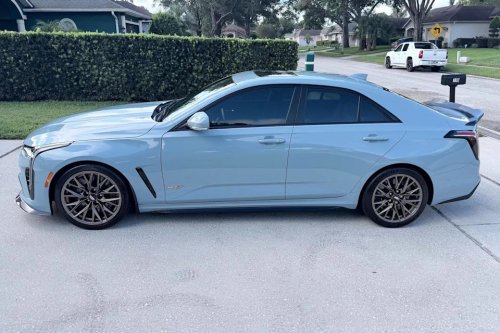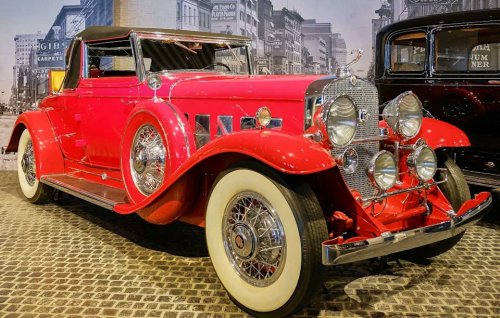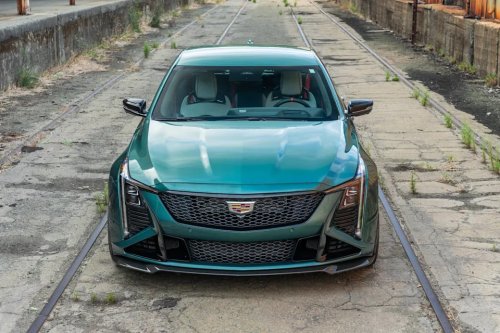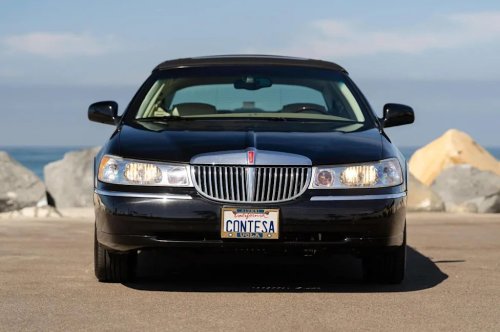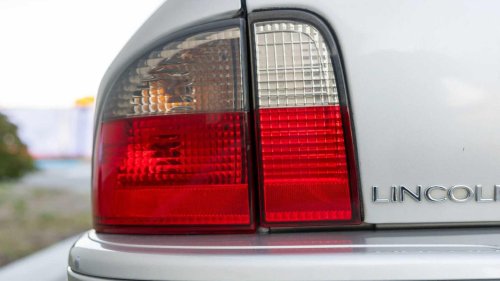
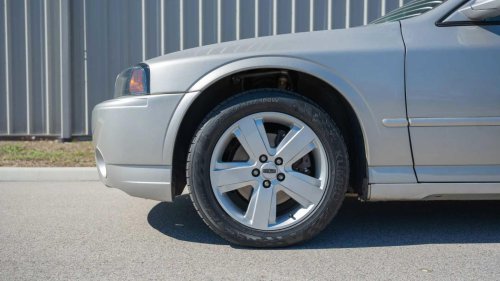
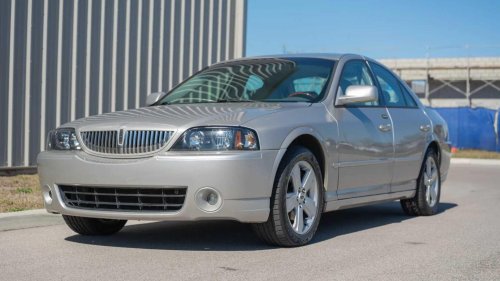
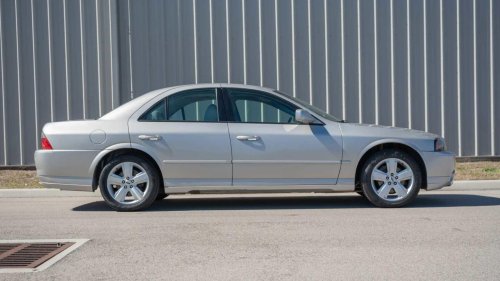
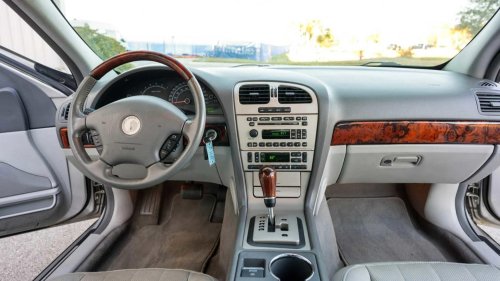
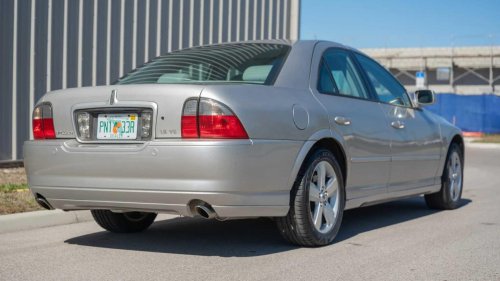
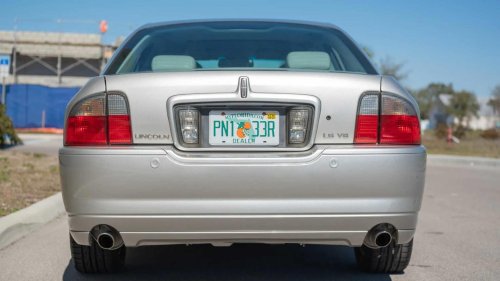



















In the early 2000s, the American luxury sedan battle looked like it had a clear winner. One manufacturer arrived with sharp new styling, a renewed performance identity, and the kind of press coverage that made the competition look like it had stopped trying. Lincoln was not supposed to be in this conversation.The brand had spent years selling comfortable, conservative cars to an aging buyer base, and its reputation for sport was essentially zero. But quietly, in the background, it had already built something: a rear-wheel-drive sport sedan with a platform co-developed in Britain, a near 50/50 weight distribution, suspension geometry refined at the Nurburgring, and an independent test result showing it could out-corner a BMW 540i. Almost nobody noticed then. Almost nobody remembers now. In The Early 2000s, Cadillac Stole Lincoln's Audience Bring a Trailer The first-generation Cadillac CTS arrived for 2003 and immediately changed the conversation around American luxury sedans. The Art and Science design language was polarizing and impossible to ignore, the rear-wheel-drive Sigma platform gave it genuine sports sedan credentials, and the marketing positioned the brand as a credible alternative to BMW and Mercedes-Benz for the first time in decades. The CTS with the 3.6-liter V6 produced 255 horsepower, posted a 0-60 time of approximately 6.7 seconds, and drew the kind of enthusiast press coverage that Lincoln had not seen since the Mark VIII. Motor Trend's comparison tests were talking about the CTS, not the Lincoln. The cultural narrative of the early 2000s American luxury sedan was being written around one car, and it was not the one Lincoln was building.The irony is considerable. At the exact moment, Cadillac was winning the conversation with a car designed to challenge European sports sedans, Lincoln already had a rear-wheel-drive platform in production. It had already developed its suspension at the Nurburgring. It had already posted a result beating a BMW 540i in controlled handling tests. The car had been on sale since 2000. It was named Motor Trend's Car of the Year that year, and by 2003, when the CTS was getting all the attention, Lincoln was already in the process of refreshing it with more power and more features to compete harder. The audience had already moved on before the fight was properly joined. Lincoln Had Already Built The Answer Bring a Trailer The platform beneath Lincoln's sport sedan was the Ford DEW98, co-developed within Ford's Premier Automotive Group specifically to underpin a new generation of luxury performance cars. The Jaguar S-Type used the same platform, as did the Ford Thunderbird. What the DEW98 brought to Lincoln was a genuinely sports-car-derived suspension geometry, a near 50/50 front-to-rear weight distribution that most front-wheel-drive luxury sedans could not match, and the dynamic foundation for a car that could be tuned to handle rather than merely cruise. The engineers did not tune it softly. They developed and refined the suspension at the Nurburgring, a fact Lincoln was advertising in full-page print campaigns in major automotive publications in 2003, pointedly noting that the work took place six years before Cadillac used the circuit for the CTS's own development.The equipment list reflected an ambition Lincoln had not previously demonstrated. An industry-first ten-speaker THX-certified audio system was offered on top trim levels. A touchscreen DVD satellite navigation system was available years before this technology was standard in the segment. Push-button electronic parking brake. Heated and cooled front seats. The near 50/50 weight distribution was advertised alongside the manual transmission in the same print campaigns that emphasized the car's sport credentials. Lincoln was building a sports sedan for a younger buyer it had never previously targeted. The problem was not the product. The problem was that the CTS had arrived, and the conversation had already been decided. Meet The 2003-2006 Lincoln LS V8 Bring a TrailerLincoln called it the LS V8. The test results called it a Cadillac killer. During period testing, a 0-60 time of 6.8 seconds was recorded, bettering the base 3.2-liter CTS V6 of the same era. The 280 hp 3.9-liter DOHC V8, a short-stroke variant of the Jaguar AJ-V8, produced 87% of its peak torque at just 2,000 rpm, which gave the car an accessible, punchy delivery that suited both daily driving and spirited use.Lincoln's own AMCI-certified testing of the 2003 LS V8 against the 2003 BMW 540i confirmed the Lincoln out-cornered, out-slalomed, and produced better handling performance on both wet and dry pavement, a result Lincoln publicized in its marketing materials for the 2003 model year. The LS V8 was named Motor Trend Car of the Year for 2000. It was also nominated for the North American Car of the Year. The 3.6-liter CTS that arrived in 2004 with 255 hp and a tested 6.4-second 0-60 time changed the straight-line comparison, but by that point the LS had already been doing the work for three years. The Platform Lincoln Shared With Jaguar Bring a Trailer Why It Lost The Battle Despite Winning On Paper Bring a Trailer Ultimately, the transmission is the honest answer to why the LS V8 failed to convert its engineering into lasting reputation. The five-speed automatic was criticized in period reviews for indecisive shift quality, slow downshift response, and a light-throttle behavior that felt hesitant relative to European alternatives. Lincoln compounded this by dropping the manual transmission option for 2003, precisely the refresh year that brought the improved V8, meaning that the car lost its most enthusiast-oriented configuration at the same moment it became most competitive on power.The CTS-V arrived in 2004 with 400 hp from a Corvette-sourced V8 and a six-speed manual, and reset the American sport sedan conversation entirely in one model year. The LS had no equivalent response. Ford discontinued it after 2006 with no successor, and the Lincoln brand subsequently retreated into crossovers and the Town Car. The sport sedan Lincoln had spent years developing and refining disappeared from the range, and the brand has never returned to anything like it since. What A Lincoln LS V8 Is Worth Today Bring a TrailerPricing tells the story of a car the market has essentially forgotten. A 2006 Lincoln LS V8 in good condition is available for around $5,000, representing a car that originally sold for $39,945 and has simply depreciated to the floor. Current market listings show 42 used Lincoln LSes with an average asking price of $6,613, ranging from $2,500 to $12,995.The BMW 330i from the same era, a car the LS V8 out-cornered in independent AMCI testing, holds its value at roughly double the LS price in comparable condition. The CTS trades above the LS at every condition tier. The car that matched or beat both in documented testing sits below both in the current market. That gap is driven entirely by badge recognition and the absence of continued production, not by any meaningful difference in what the car was capable of delivering when new. The Sport Sedan Lincoln Built And Then Forgot Bring a Trailer The Lincoln LS V8 won Car of the Year in 2000. It out-cornered a BMW 540i in controlled testing. It posted 0-60 times matching the base CTS V6 from a naturally aspirated V8 that produced 87% of its torque from 2,000 rpm. It was developed on a platform shared with Jaguar, refined at the Nurburgring, and sold with an industry-first THX audio system and a near 50/50 weight distribution that most of its competitors could not match. Lincoln then discontinued it with no successor and walked away from the sport sedan segment entirely.Cadillac's CTS got the cultural credit because it arrived at the right moment, made a louder statement, and had a manufacturer behind it willing to keep building on that identity through the CTS-V and beyond. The LS had the engineering. What it did not have was the follow-through. The sport sedan Lincoln built and then forgot is available right now for under $5,000, and it is still the same car it was when it was beating BMWs in 2003.Sources: Edmunds, Motor Trend, Bring a Trailer.