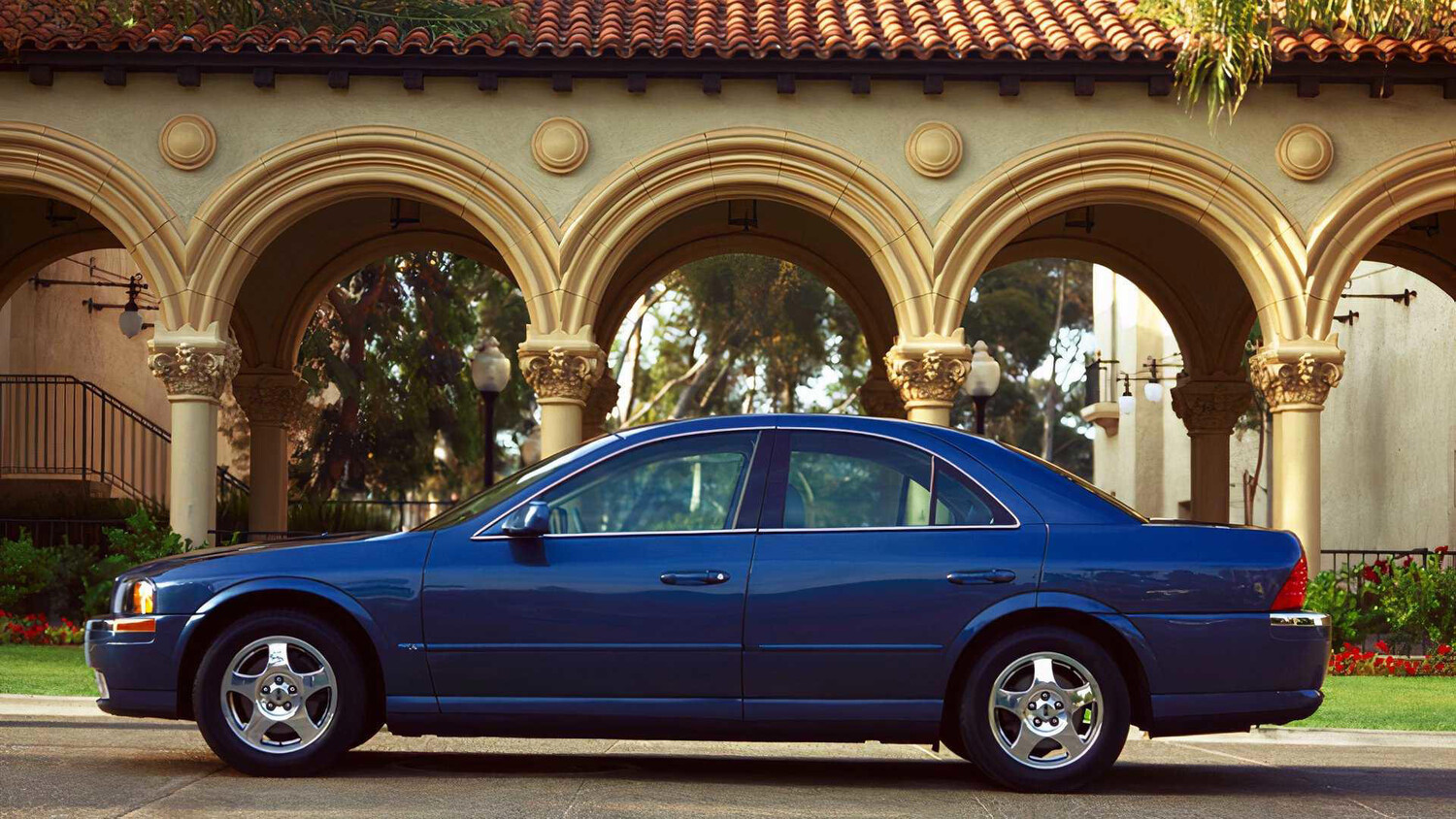
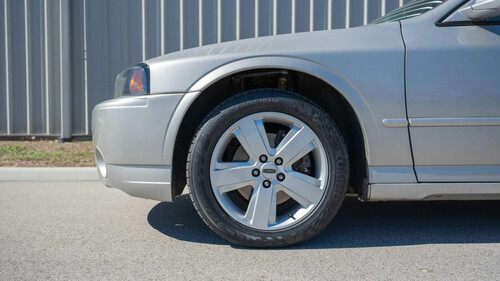
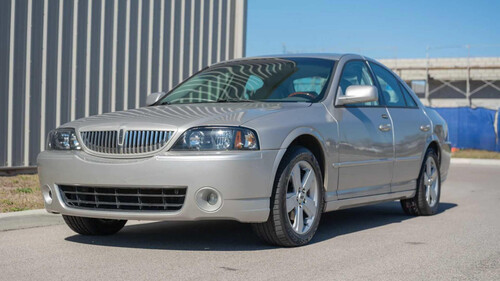
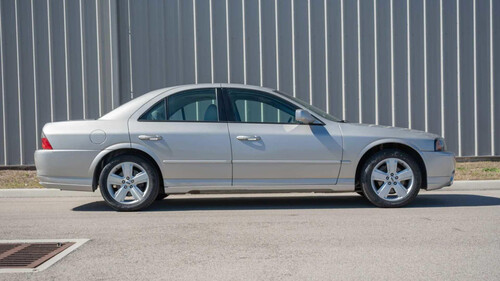
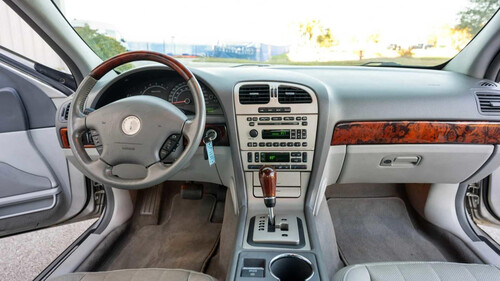
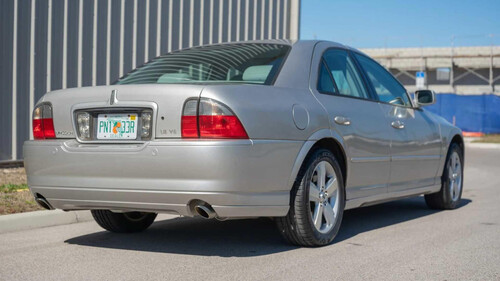
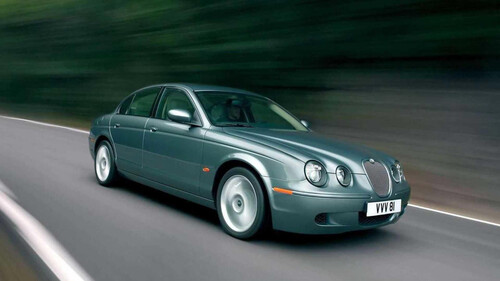
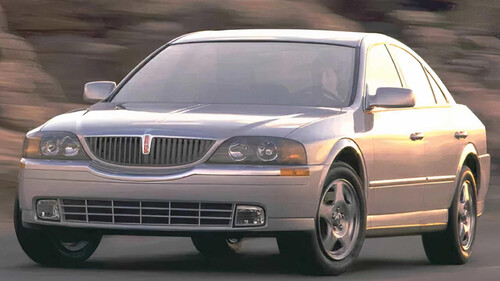
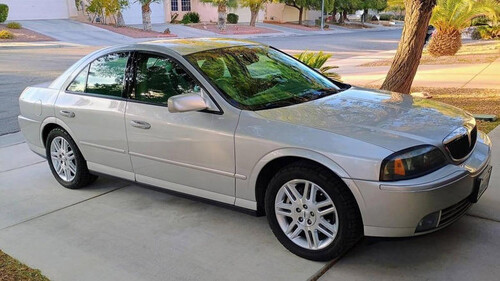
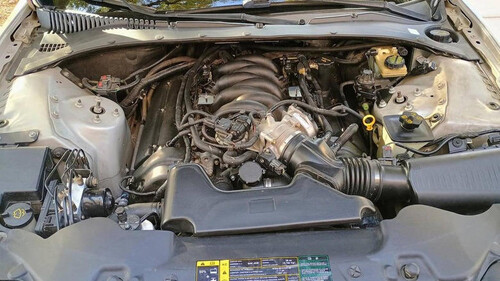
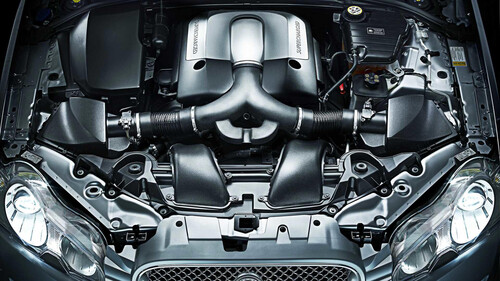
Jump LinksThe LS Made Use Of Jaguar's Engines The LS Didn't Really Know What It WasWhen it comes to ensuring profits look as juicy as possible at the end of the year, most auto manufacturers try to cover as many eventualities as possible. This involves tailoring the model lineup to as wide a range of buyers as possible, which maximizes the chances of selling the most metal. The luxury sector is a particularly lucrative arena, primarily due to the higher margins possible from these machines.This is especially true when you can use the underpinnings and parts from cheaper cars, which can nicely buff up your profit margins. Ford has been a key exponent of this approach with its luxury Lincoln brand over the years, with the marque's models utilizing platforms and components borrowed from its Ford mothership. The LS sedan was the manufacturer's way of offering a luxury car combined with a sports sedan, though the result would ultimately prove a failure. The LS Is Related To Jaguar LincolnLincoln has a rich history of crafting huge land yachts and soft luxury sedans, primarily in an attempt to get the better of vehicles produced by key rivals such as Cadillac and Chrysler. The LS was the brand's turn-of-the-millennium midsize luxury sedan riding on Ford's then-new DEW98 platform. Having been jointly developed by Ford and its British subsidiary Jaguar, the foundations made their debut in 1999 with the latter's new S-Type. A year later, Ford tasked Lincoln with building a luxury sedan capable of taking on German rivals such as the BMW 5 Series and the Mercedes-Benz E-Class. The LS Made Use Of Jaguar's Engines LincolnIt wasn't just the underpinnings that the LS shared with the S-Type, either. They also used some of the same powerplants. The base version was equipped with a 210-horsepower 3.0-liter AJ V6, though it was enhanced to produce 220 hp for the 2002 model year. Higher-end variants got a 3.9-liter AJ V8, which kicked out 252 hp to the rear wheels. While based on Jaguar's V8, the 3.9-liter variant was built by Ford at its Lima factory and never appeared beneath a Jaguar's hood. The LS received a thorough refresh for the 2003 model year, and the same was true of the engines.While the V6 was upgraded to produce 232 hp, the V8 was revised to send a handy 280 hp to the rear axle. Alongside providing more power, the units were also more fuel-efficient. Most cars were available with a five-speed automatic transmission, though a six-speed manual unit was briefly offered with the V6 between 2000 and 2002. The LS was envisioned to combine the luxury touches expected from a Lincoln and the road-holding ability of a proper sports sedan. The use of the Jaguar-infused platform was a clear signal of intent in achieving this. The LS Manual Failed To Find Favor With Buyers LincolnDespite Lincoln's best efforts, the LS ultimately failed in its quest to leave a mark on the upmarket sports sedan sector. There were a couple of reasons for this, and one of the primary ones was chronic unreliability. The automatic transmission found in earlier models was known to suffer from internal solenoid failure, which usually led to a very costly gearbox replacement.Both engines also had their fair share of problems, with coils being the main concern. They tend to last only around 40,000 miles before needing to be replaced, which is pretty costly given there are eight of them to source for the V8. Some of the engine's plastic cooling components are also known to wear out faster than is ideal, leading to a coolant leak and, if left unaddressed, eventual engine overheating. These problems caused the car's reputation to slip early on and permanently damaged people's trust in the machine, even though many of these issues were largely resolved in later examples.The thing is, the manual transmission didn't suffer from the same issues as the auto, and provided a more engaging drive. Although, Lincoln could barely pay anyone to take one of its hands. The LS Didn't Really Know What It Was LincolnAnother key issue facing the LS was its identity. The car was widely praised for its impressive handling, but it lacked the exterior and interior aesthetic needed to set the sedan apart as a sportier car. It looked like a typical luxury cruiser and lacked the spark of a 5 Series. The issue was that the suspension didn't provide the same level of comfort expected from a traditional Lincoln, which meant that the brand's loyal customers weren't all that impressed by it either.The lack of suitors who saw the LS as a strong alternative to a 5 Series was clear, seeing as it is thought the marque sold fewer than 3,000 manual cars. This low demand led to the variant's death after just three years on sale.By trying to combine two opposing aims, Lincoln left the LS in a strange middle ground that meant it never really appealed to anyone. As a result, despite managing to shift over 50,000 units in its first year on sale, this figure dropped quickly over the subsequent half-decade. Having offloaded fewer than 20,000 cars in 2005, Lincoln elected to kill off the LS after the 2006 model year. The LS's Failure Is The Used Market's Gain LincolnWhile the LS's unpopularity didn't fill Lincoln's bank account as hoped, those looking to pick up a used bargain can have a capable sports sedan on their hands that works well as a daily driver thanks to a luxurious cabin and a decent ride. The much rarer V6 manual LS is tough to find, but these examples are worth relatively little despite their exclusivity. Expect to hand over around $6,000 for one with higher mileage or closer to $10,000 for a nicer example.The average price of the automatic model currently stands at just over $6,000, which will net you a lower-mileage example of the pre-facelift LS and a higher-mileage facelift machine. Aside from the improved engines and revised exterior styling, the newer cars feature an electronic handbrake and an upgraded audio system. If you want a lower-mileage later car, expect to spend closer to $8,000-$10,000, with the V8 models sitting at the higher end of that bracket. Just be sure to thoroughly inspect the car and its service history before you hand over your hard-earned cash, as you don't want to waste the money you've saved on fixing an engine or transmission issue you initially overlooked. If You Want To Make A Statement, Get A Jaguar Designed To Be One JaguarShould the LS's rather forgettable styling fail to get your insides tingling, then perhaps opting for the more opulent Jaguar experience would be better suited. The S-Type is tuned to be softer and more compliant than the LS, making it the ideal alternative if you like the LS but find it a little too sporty. The British beast would also draw more attention as you drive along, though admittedly that oval grille and rounded headlight combo is an acquired taste. That said, seeing the Jaguar emblem proudly extending from the hood is a glorious experience.Since it shares a similar engine and transmission lineup with its American cousin, you'd need to look out for the same kinds of issues. It's not the best-built car in history either, so be sure to examine the cabin fixtures and fittings thoroughly. They're also pretty cheap, with their average value sitting at a shade under $7,000, so you have a clear choice between them for very similar money. Opt for the LS if you want a more involving driving experience from your midsize luxury sedan, and go for the S-type if you prefer its retro styling and a softer, more compliant ride.Sources: Lincoln.