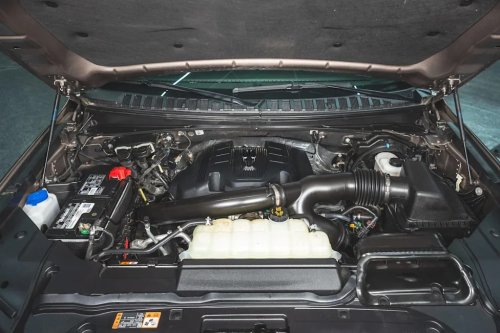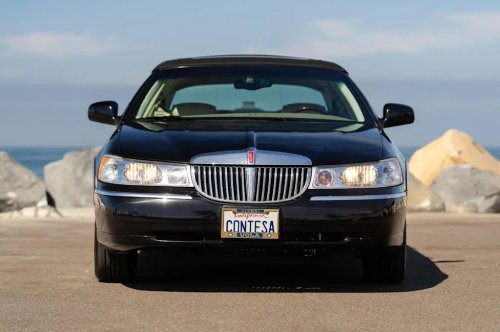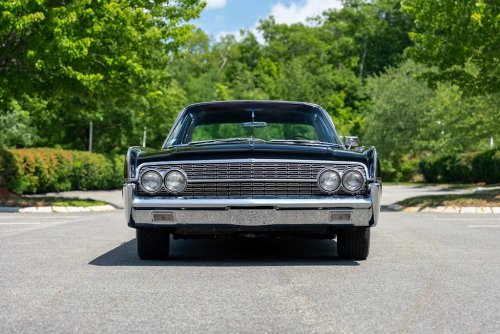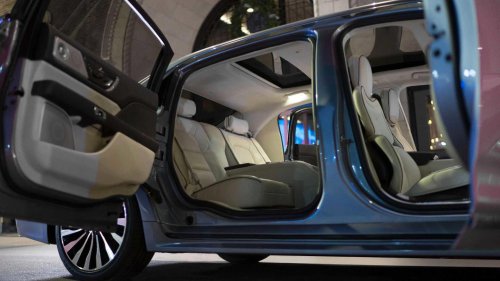
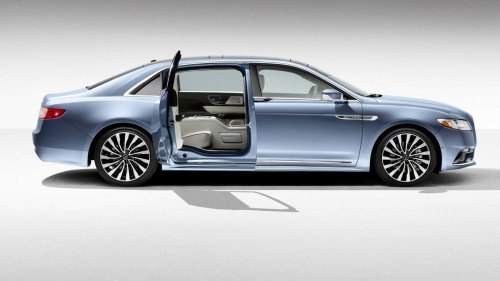
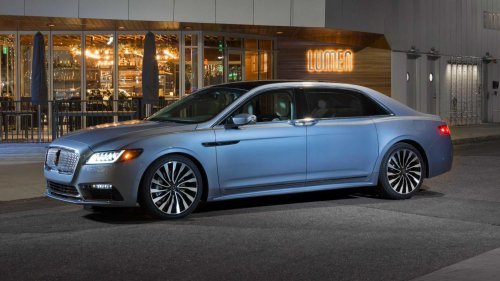
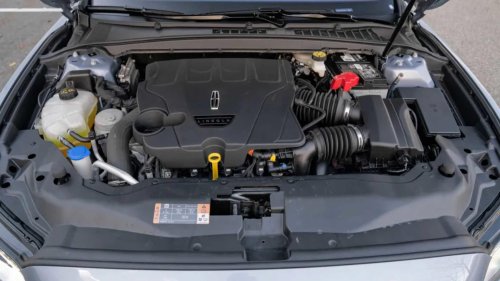
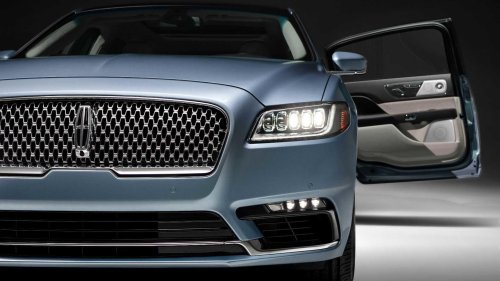
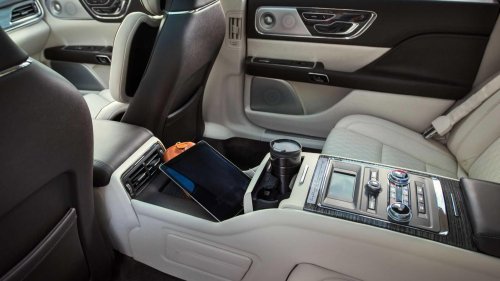
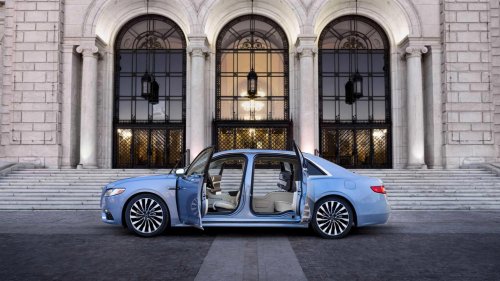
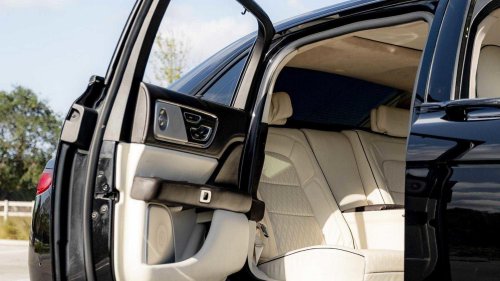



















Jump LinksThe 2020 Lincoln Continental Coach Door Edition is a member of a rather sad club. It was a modern sedan that conjured memories of big American luxury even as the market spurned it. As a bigger and bolder version of the regular 2017 to 2020 Lincoln Continental, it wasn't alone in trying to extend the theme. Cadillac and Chrysler were also in that game, but this particular car took it to another level and would add a definitive period to the luxury sedan conversation. A Coach-Built Detail Explains Why The Last Continental Still Matters LincolnThe final Lincoln Continental edition was always going to be something of an event, but Lincoln wanted to make sure that it went out with all guns blazing. And so, the company planned the Coach Door Edition to mark the Continental's 80th anniversary properly and set out to remind people what the Lincoln name actually meant.The company started with the Continental Black Label sedan and added six inches to the wheelbase, stretching the rear passenger area. Engineers then reintroduced rear center-opening “suicide” doors of the type that used to feature on some of Lincoln's most famous sedans, bringing in Cabot Coach Builders for the specific design and engineering. The rear doors opened to 90 degrees, with electronic safeguards that prevented opening unless the transmission was in park.LincolnThe Coach Door Edition certainly helped to up the ante in Lincoln's ongoing war with its German competitors. But many would argue that its edge lies more in the distinctive design than in the vehicle's chassis or hardware.The base Continental already had plenty of presence, coming in at 201.4 inches long with a 117.9-inch wheelbase. It had the long hood, formal roofline, and chrome-accented shape that you might imagine in an old-school American luxury sedan. It also had available 30-way Perfect Position seats, Revel Audio stereo, and rear-seat amenities to give it some extra personality.But in the end, it would fall to the Coach Door Edition to turn the modern Continental from a quiet, slightly misunderstood sedan into a rolling statement of the brand's storied history. Why the Continental Earns The Last Classic Label, Despite Cadillac And Chrysler Lincoln In the late 2010s and early 2020s, Lincoln, Cadillac, and Chrysler were competing to be the last to produce an American luxury sedan. To be pedantic, the Chrysler 300 would probably win the argument, as the Cadillac CT6 faded out of the US marketplace around the same time as the Continental. And the Chrysler 300 stayed in production longer, all the way up to the end of 2023.The Cadillac CT6, in V form, came with a 4.2-liter Blackwing twin-turbo V8 producing 550 hp and 640 lb-ft of torque. This was a very ambitious flagship performance model, featuring a 10-speed automatic transmission, magnetic ride control, Super Cruise availability, and an agile chassis. Meanwhile, the final Chrysler 300C featured a 6.4-liter Hemi V8 that produced 485 hp and 475 lb-ft of torque, presenting a strong argument in the muscle sedan category.All this meant that the Continental was not, in fact, the final American sedan to carry luxury credentials. But you could argue that the Coach Door Edition was the last major American luxury sedan to lean so heavily into the very notion of luxury. The Cadillac CT6 was more of a tech-forward driver's flagship, while the 300 was really all about V8 attitude and full-size value. And against both of those, the Continental was clearly still trying to be a proper American luxury sedan in the classic interpretation of the theme. The 400-HP Twin Turbo V6 Gave This Imposing Vehicle More Than Nostalgia Bring a Trailer In such a bulky and heavy vehicle like this Continental, the engine had to step up to the plate, and Lincoln’s 3.0-liter twin-turbo V6 did just that, producing 400 hp at 5,750 rpm and 400 lb-ft of torque at 2,750 rpm. The Continental also came with all-wheel drive and a six-speed SelectShift automatic for extra drivability. While those figures may not have given the Continental any sports sedan credibility, they certainly gave it the effortless pull and thrust you’d expect from a flagship Lincoln.This Continental could reach 60 mph in 5.3 seconds in independent testing in 3.0-liter twin-turbo AWD form, and the heavier Black Label car took an additional 0.3 seconds to reach that speed, on the way to a governed 147 mph.Lincoln also offered a 3.7-liter option and a twin-turbo 2.7-liter V6. The 3.0-liter car seemed to have the right character, with just enough power and capability to make the Continental feel expensive without pretending that it was a track weapon.Of course, the Continental as a concept was always living on borrowed time, as the market was clearly moving away from sedans altogether. And so in July 2020, the company confirmed that Continental production would end by December, because the full-size premium sedan segment was collapsing in the American market. Current Values Split The Market In Two Lincoln Today, the regular Continental represents a serious bargain in the used-luxury market. According to CarBuzz Marketplace, prices vary from around $18,000 for a 2020 Sedan 4D to $32,000 for the Black Label Sedan 4D, against original MSRPs of around $46,000 and $70,000, respectively. Much, of course, depends on their mileage and the capabilities and attention span of previous owners.But the Coach Door Edition is in a completely separate market, as these can go at auction for more than $100,000, although $80,000 to $90,000 seems to be the ballpark. This places them well above ordinary Continental values, and seems to confirm that collectors are treating the coachbuilt cars very differently from the rest of the pack.The pricing discrepancy also suggests that the final Continental is living two separate lives. You can still find regular 3.0T AWD cars as typically depreciated luxury sedans, and those should have real appeal for people who want comfort and rarity. But Coach Door cars fall into a different bucket altogether, as relatively modern curiosities that have collector status. Faults To Check Before Buying Lincoln If you do your due diligence carefully, you'll be able to uncover some of Continental's weak points before you go shopping. And to start with, it's important to remember that much of this car's appeal lies in its electronic convenience features.A case in point is the electronic door latch, which was the subject of a 2017-2019 vehicle recall. The National Highway Traffic Safety Administration said that an intermittently functioning electronic door latch with a pawl motor could fail to latch the door fully upon closing, potentially allowing the door to open while driving. Owners ought to know in advance that something is amiss, as the interior lighting might give them a clue, or specific error messages might appear on the dashboard.LincolnA separate recall affected some 2017 to 2020 Continentals with the 360-degree camera system in place. In this case, a coating issue with the rearview camera lens resulted in a progressively foggy or cloudy image. That turned into a relatively simple fix at a Ford or Lincoln dealer with a simple camera swap.Turning to the mechanics, it's important to focus on the 2.7-liter or 3.0-liter EcoBoost engines over potential oil pan leaks. Some 2018 to 2019 Continental models required an oil pan replacement, and a separate technical bulletin suggested a revised design altogether, with a press-in-place gasket rather than full RTV sealing.These are some of the areas to consider if you're thinking about a used Continental, and you should certainly ensure that the previous owner has fully complied with their recalls. If so, you could get a used version with a clean rear camera image, a dry engine, fully functional electronic latches, and working soft-close operation.Bring A Trailer So, in summary, the final Lincoln Continental was never meant to save the American luxury sedan, as consumers in that segment preferred SUVs. The last Continental did feel different from competing Cadillacs or Chryslers, though, as those other pretenders were making a very different kind of statement in their particular corners.But with the Coach Door Edition, Lincoln certainly made one bold and final case for a dying American ceremony. And as soon as you’d open those rear coach doors, you’d discover a grand entrance for a segment that was already on its way out.