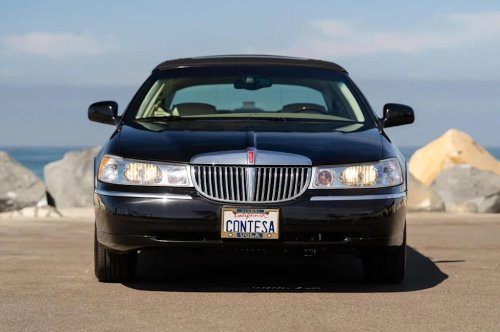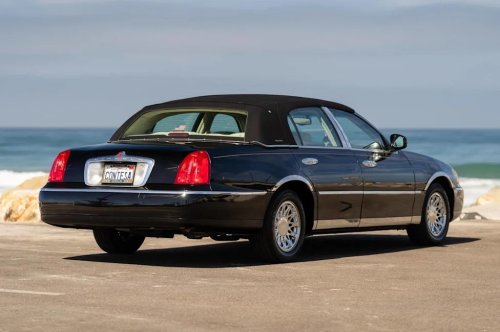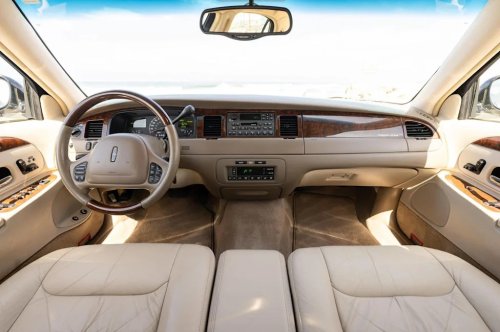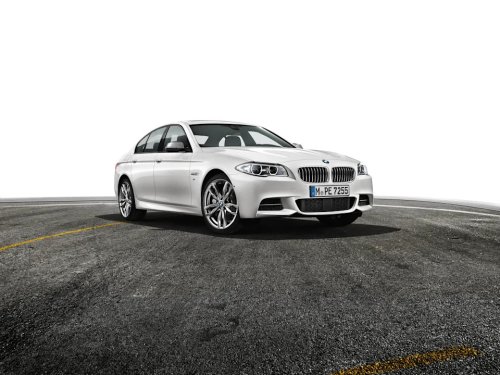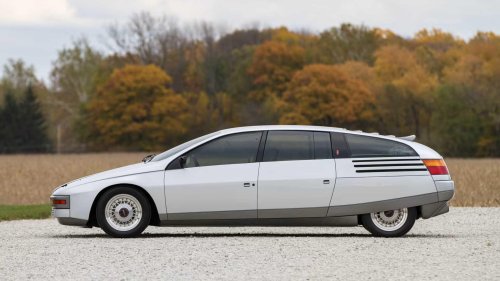
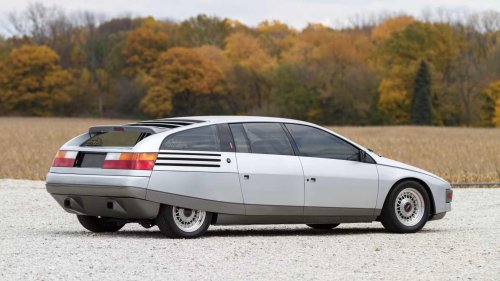
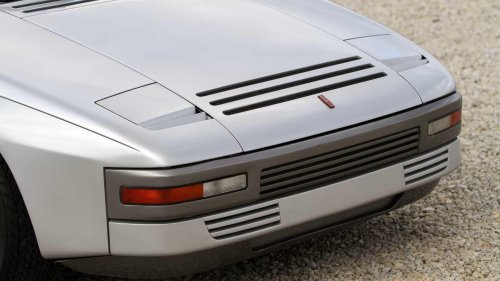
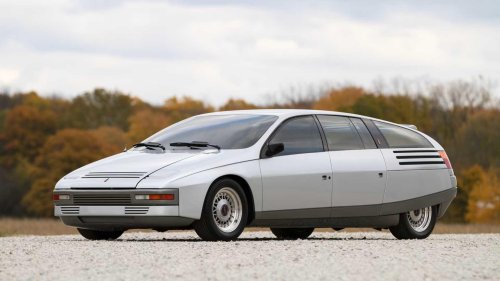
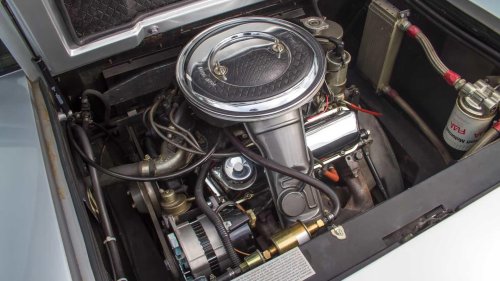
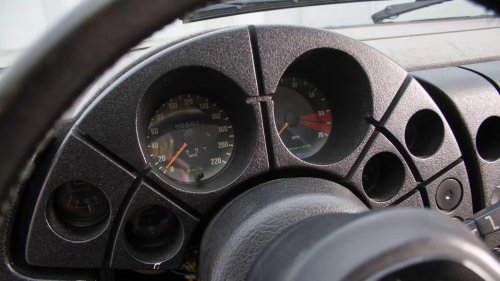
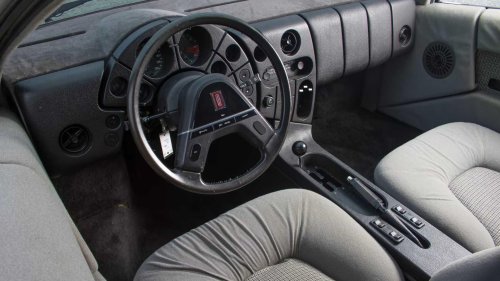
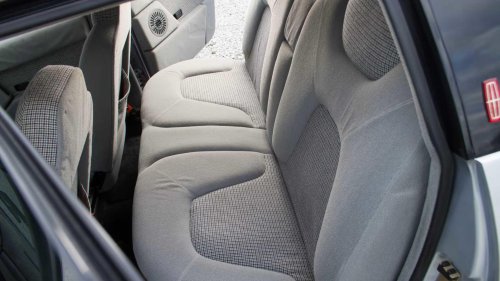
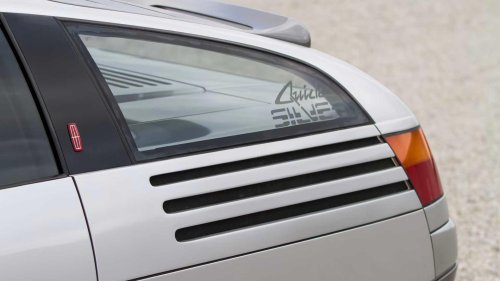
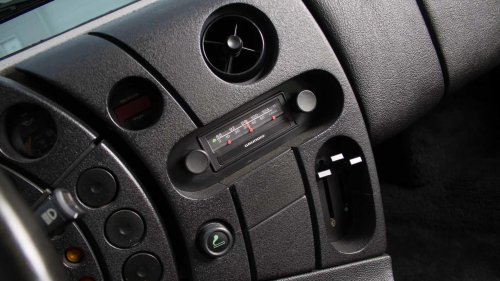



















When it comes to outlandish and futuristic concept cars, the period of time between the mid-1970s and the late 1990s was their heyday. It seemed as though nearly all automakers involved on a world scale were obsessed with out-gunning each other when it came to their concept cars. At a time when Back to the Future and, a bit later, Cyberpunk were made famous, it was no surprise that the automotive design industry followed these design trends.Even automakers you wouldn't necessarily expect to join in on the space-age fun were giving it a go. Take Lincoln, for example, Ford's esteemed luxury subsidiary. In the early 1980s, Lincoln was quite busy building models like the Town Car, a soft and plushy flagship sedan designed for those who were getting on a bit. The Town Car's design was nothing short of old-school, worlds apart from Lincoln's space-coded concept car.The model, coined the Quicksilver, debuted just a couple of years after the Town Car, and it was meant to show the world that Lincoln could lead in both automotive design and sportiness. Should Lincoln have put the Quicksilver into production, the then-unreleased BMW M5 would have had quite the odd-looking adversary to contend with. The Quicksilver Mecum Lincoln Quicksilver Concept Key Points Introduced in 1983 First unveiled at the Geneva Motor Show Designed with aerodynamic performance in mind Features a rear-engined layout Never intended for mass production In the years leading up to the introduction of the Quicksilver, Lincoln was, reportedly, interested in injecting a small amount of fresh, European styling into its old-school, formal, and boxy models. To see how such a Lincoln would look, Ford hatched a plan. In essence, the Detroit giant contracted Ghia, an Italian design studio under Ford's financial wing at the time, to pen an all-new concept that would have blown the old-timey Lincoln look straight out of the water.Mecum And the new shape really blew the marque's older aesthetic out of the water. The new model shared exactly zero body components or other styling cues with other, mass-produced Lincoln models. The only similarities were the badges. While the Quicksilver had styling similarities to a wagon, it was actually a sedan featuring something called a Kamm-type rear end. The addition of body-colored louvers further enhanced its wannabe-wagon look, despite the decidedly sedan-like function. The Quicksilver's Development Mecum The Quicksilver was part of a collaboration between Ford and Ghia that went beyond just financial convenience. At the time, the two companies were firmly involved in a series of design studies, many of which focused on aerodynamic design, something that's extremely evident in the Quicksilver's looks. It was also somewhat related to Ford's Probe series of concept cars, of which there were five spanning the years between 1979 and 1985.In addition to its aerodynamic shape, the Quicksilver was also meant to be just slightly sporty, an adjective you'd never pair with Lincolns of the time. Rather than have the engine mounted over the front axle, Ford and Ghia decided it would be best if the layout were mounted in the rear, leaving the front end free for use as a frunk. This also meant the Quicksilver would have better rear-end traction, as having a heavy lump of motor sitting over the rear wheels would help keep them planted on the pavement.1983_lincoln_quicksilver_concept_frontOnce the Lincoln Quicksilver was introduced in 1983, its popularity in the automotive world soared. Throughout the remainder of the 1983 auto show circuit, the Quicksilver was, reportedly, the most popular Lincoln model on display. In fact, the concept was so well-loved that it stayed in rotation until 1986. However, despite a huge amount of popularity, as well as sales potential, Ford never gave the Lincoln Quicksilver the green light for production, preferring to keep the machine's legacy as purely a striking concept intact. The Quicksilver's Detailed Specs & Features Mecum Living underneath the Quicksilver's rear engine cover was a 2.8-liter V6 belonging to Ford's Cologne engine family, a name derived from its production location in Cologne, Germany. The grouping of mills can trace its roots back to 1962, and remained in production for 49 years. The Quicksilver's version wasn't particularly powerful, and came up short when compared to the 1985 BMW M5's power output of up to 286 horsepower.However, one of the model's shining aspects in terms of performance was its aerodynamics. When measured in a wind tunnel, the Lincoln Quicksilver managed to achieve a drag coefficient of 0.30, one of the lowest measurements at the time. Because the Lincoln concept was so air-flow-oriented, its fuel economy was, allegedly, very good. Its chassis was sporty, as well, being derived from the AC ME 3000, a British-built sports coupe. At the time, Ford had a financial interest in AC, hence its decision to utilize the ME 3000's underpinnings. Its transmission was a five-speed manual unit, and it boasted rear-wheel drive.Mecum While detailed specs are few and far-between, we'll lay out some figures pertaining to the Quicksilver concept in the table down below:*Specs courtesy of CarDesignNews.comMecumInside the Quicksilver, things were just as futuristic as its exterior. Its dashboard had a circular design to it, meant to center around its seemingly-normal Lincoln-branded steering wheel. A full complement of instruments sat in front of the driver, including a tachometer, speedometer, and various temperature, voltage, and pressure gauges. Its seats, of which there are five in total, feature the same sort of plushy, over-stuffed look that you'd expect from a Lincoln from this time period.Mecum Being that the Quicksilver was built in the early 1980s, things like touchscreen navigation, cooled seats, or head-up displays are nonexistent. Instead, things are rather normal in terms of kit. Even its rearview mirror is run-of-the-mill, and would be at-home in something like a Ford F-150. However, the point of the Quicksilver wasn't to give passengers a dazzling experience. Instead, it was meant to show the world where Ford and Lincoln wanted to go, and what both companies were capable of when its designers - and Ghia - were allowed to let their hair down a bit. The Quicksilver Had Its Issues MecumWhile we may view the Lincoln Quicksilver concept with a healthy dose of nostalgia nowadays, many people at the time didn't subscribe to the hype surrounding the idea in the automotive world. In many people's view, the Quicksilver was much too European for the average American's design tastes. One of the biggest offenders of this over-Europeanization was its sloping rear end, as it took on the same sort of shape seen on cars like the Citroën SM.Not to mention, the machine's appearance was simply un-Lincoln-like. The look did not foster any brand recognition, despite being peppered with red Lincoln badges. In a way, because of the Quicksilver's blend of American and Italian styling, it seems that some thought the car had lost any aspect of a personality.MecumBecause of these negatives, Ford decided it was best not to produce the Quicksilver. While the concept was never intended for mass production, its sheer amount of initial popularity, reportedly, sparked some initial talks about production within Ford's back rooms. These discussions never amounted to anything. The public cooled to the Quicksilver, and the whole thing was forgotten by the late 1980s. This Lincoln Quicksilver was part of a private collection before being sold in January 2014.