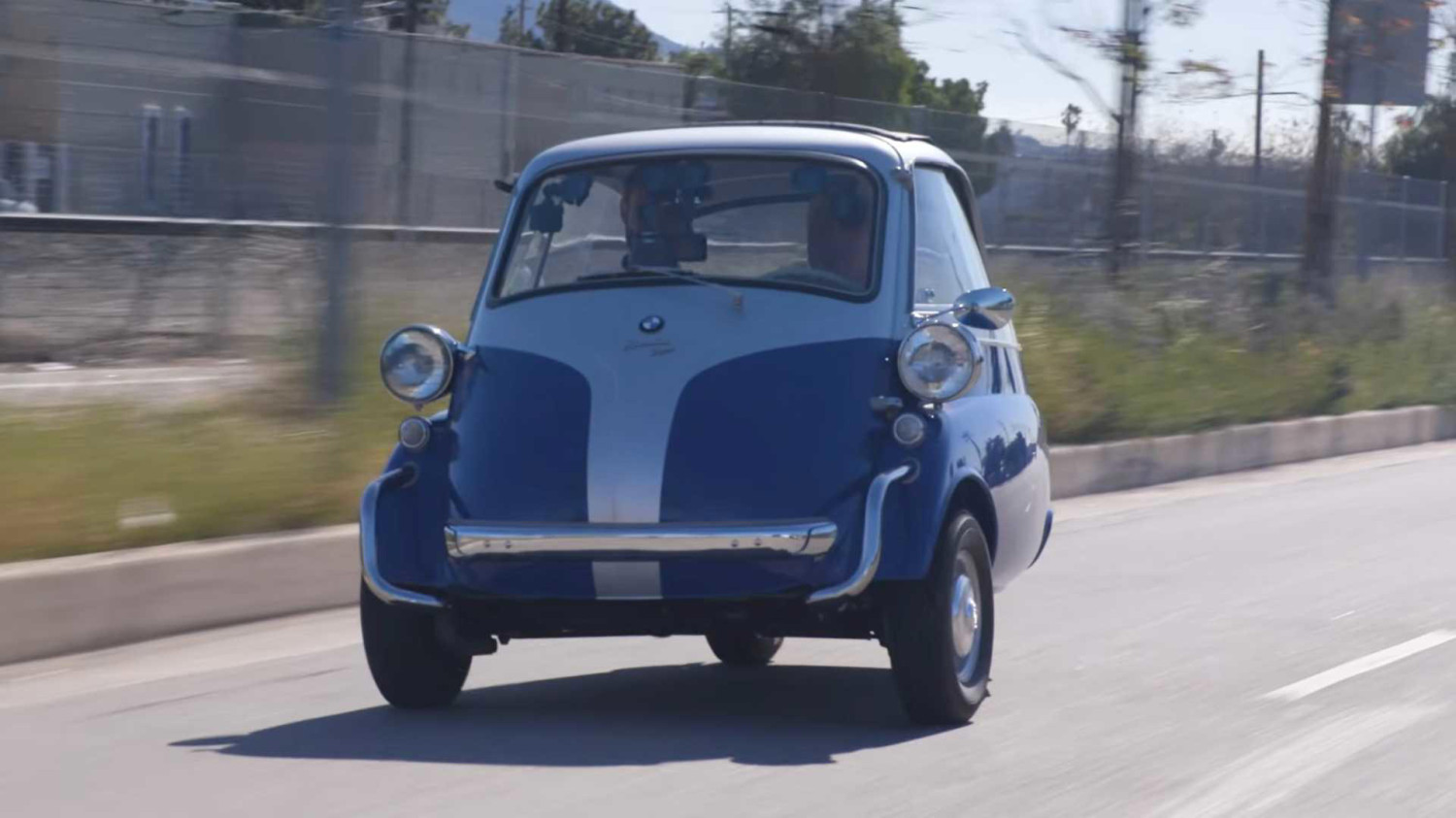
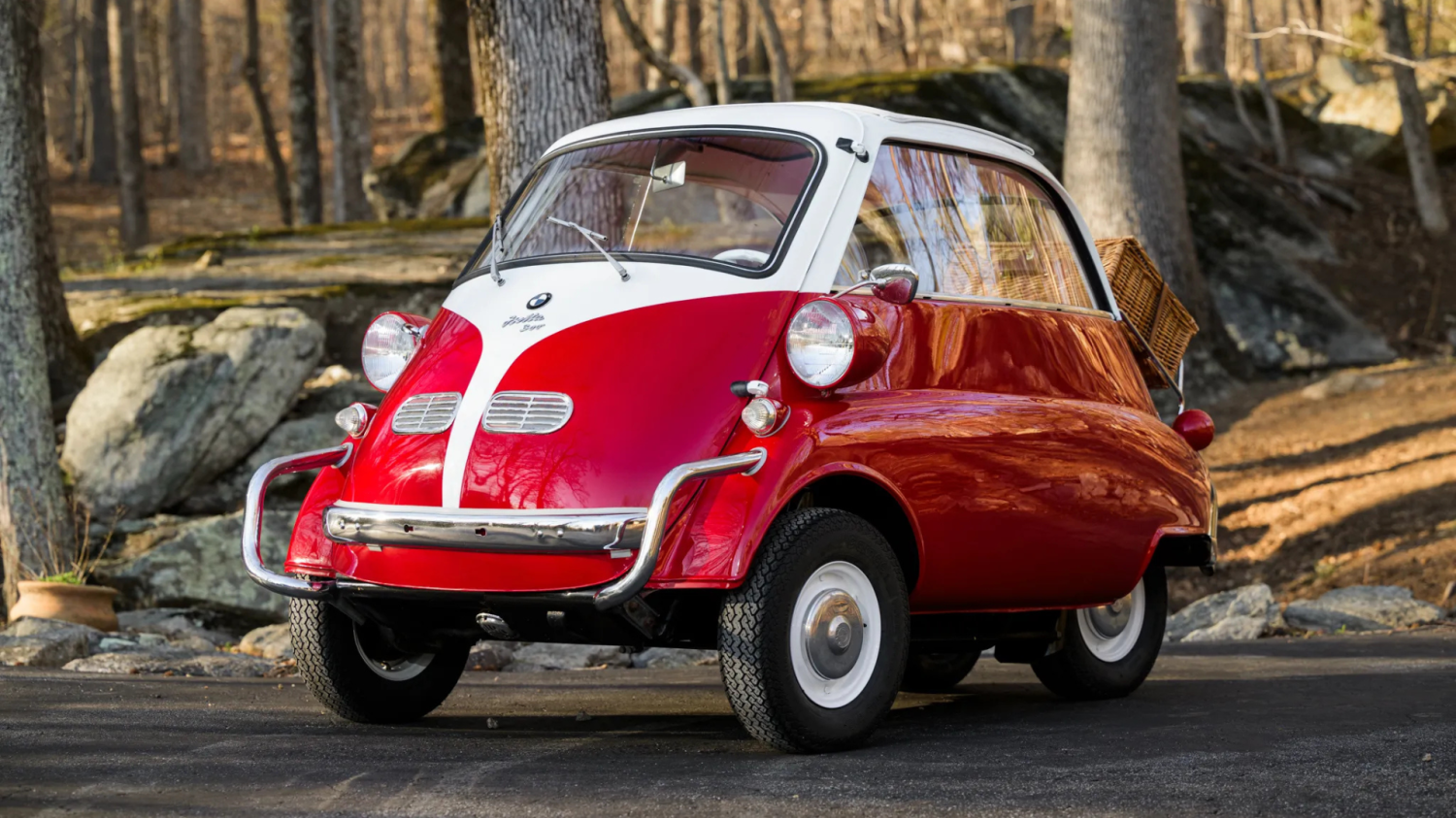












The 1958 BMW Isetta 300 may be one of the smallest cars ever to wear the BMW badge, but its impact on automotive history is enormous. Featured on a recent episode of Jay Leno's Garage, the quirky “Big Block” Isetta showcased the unlikely vehicle that helped rescue BMW from financial ruin in the years following World War II. With its distinctive front-opening door, motorcycle-derived engine, and unmistakable bubble-car styling, the Isetta became a symbol of practical transportation for a recovering Europe and laid the foundation for BMW's future success. The Big Block Bubble Car That Saved BMW Jay Leno's Garage / YouTubeLong before BMW became known for luxury sedans, performance coupes, and high-powered motorcycles, the company was struggling to survive. Faced with post-war restrictions and a devastated economy, BMW licensed the Italian-designed Isetta and re-engineered it with German precision. The 1958 BMW Isetta 300 earned its “Big Block” nickname from its larger 298cc single-cylinder engine, producing a modest 13 horsepower.via Bring A TrailerWhile tiny by modern standards, the microcar proved reliable, affordable, and immensely popular, helping BMW sell more than 160,000 units and generate the revenue needed to develop the vehicles that would define the brand. Jay Leno Takes the Tiny Legend for a Spin Joined by owner Danny Patlin, Jay Leno explored the Isetta’s unusual engineering before taking the compact classic onto the streets of Los Angeles. Despite its diminutive size and modest power, the bubble car impressed with its comfort, charm, and surprising usability. From its refrigerator-inspired front door and chain-driven rear axle to its motorcycle-based drivetrain, every aspect of the Isetta reflects an era when ingenuity mattered more than horsepower. The test drive proved that while the Isetta may not be fast, it delivers something many modern vehicles cannot, and that's pure smiles per mile.