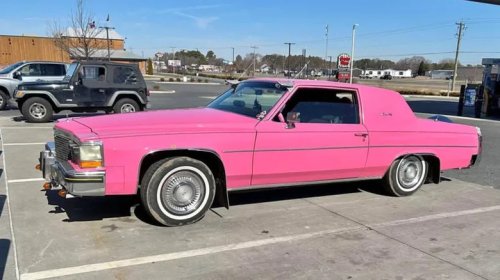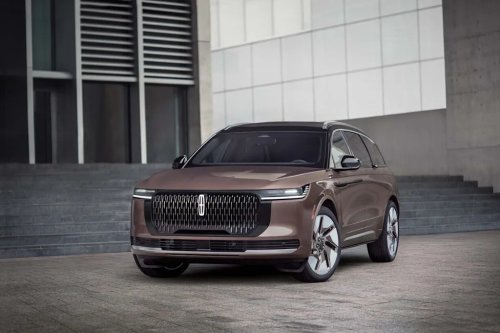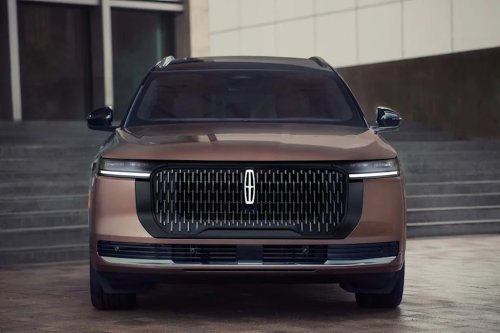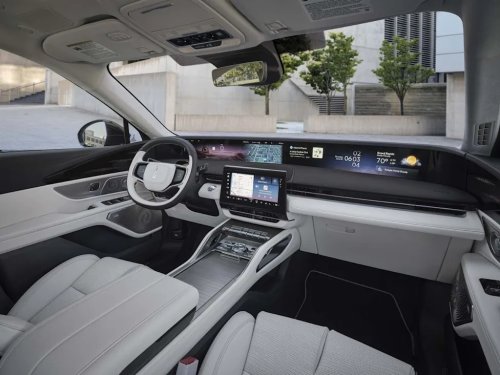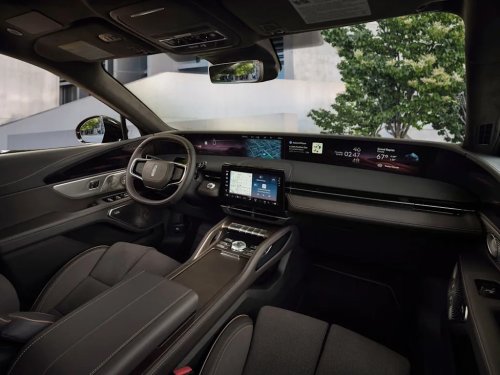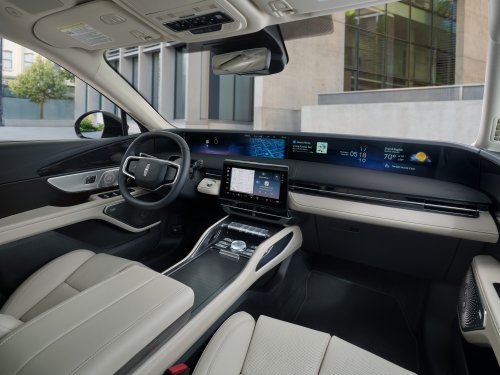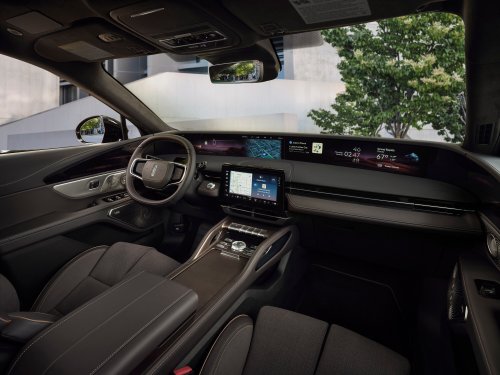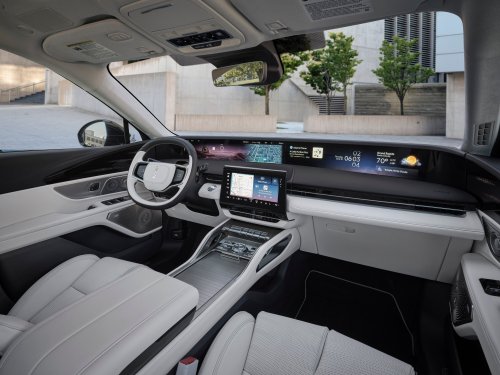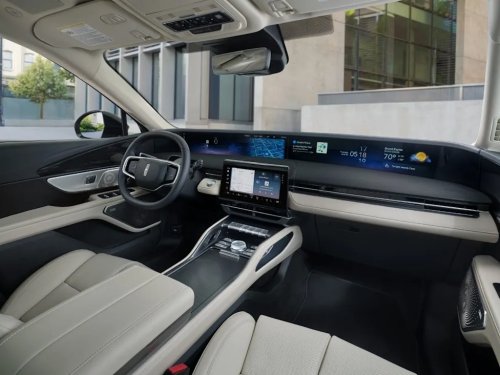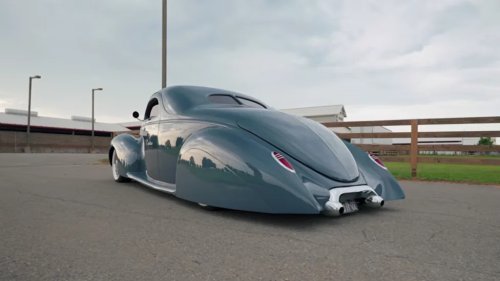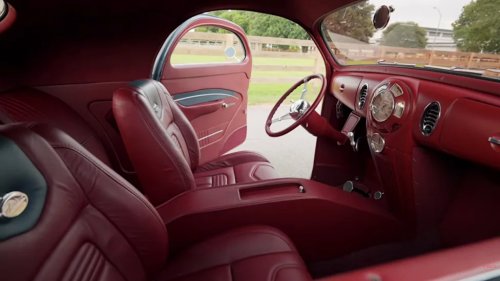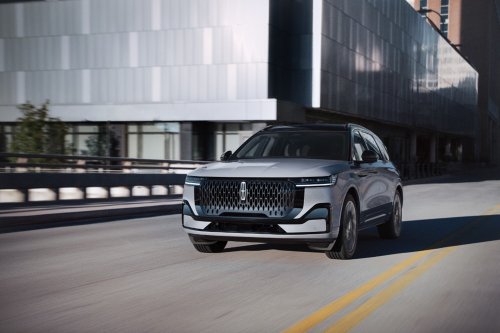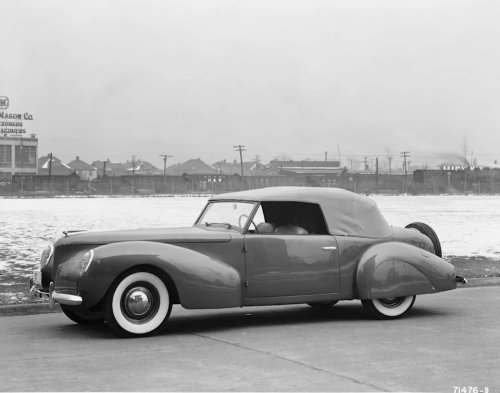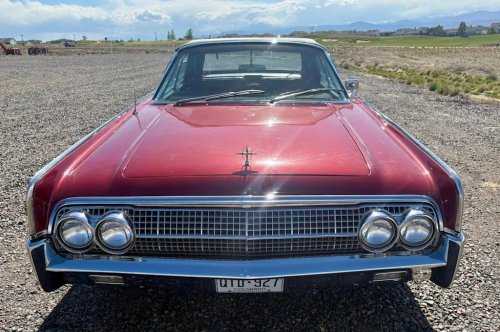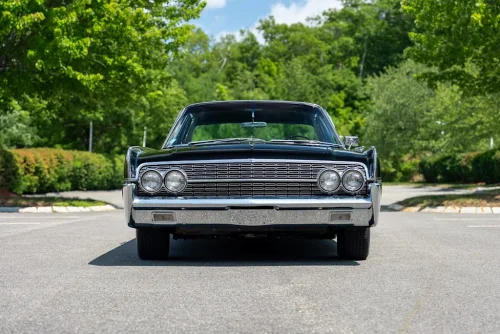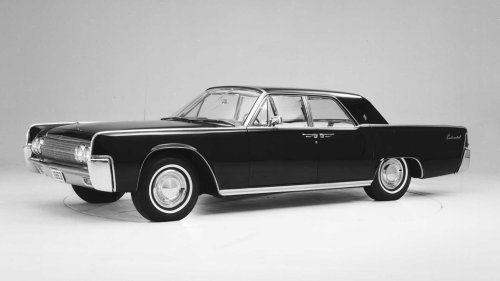
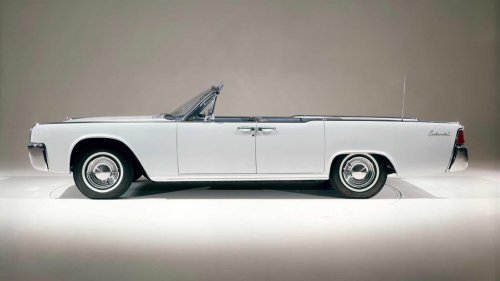
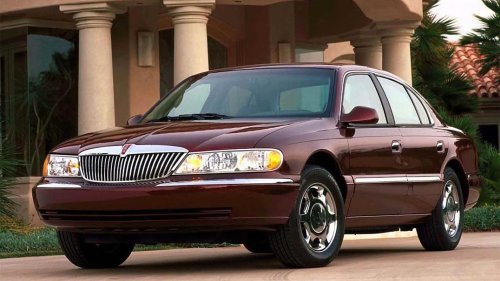
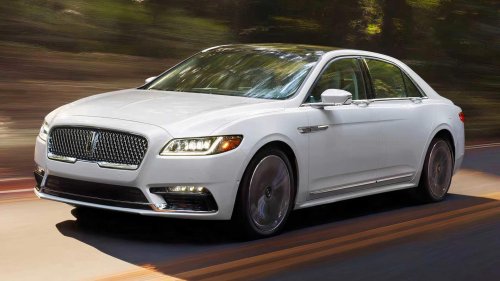
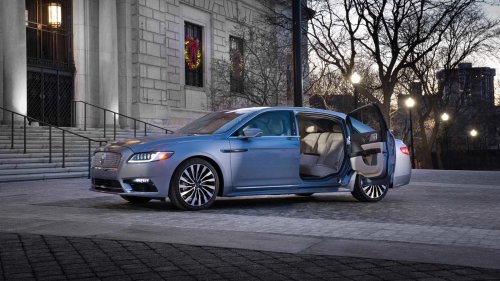
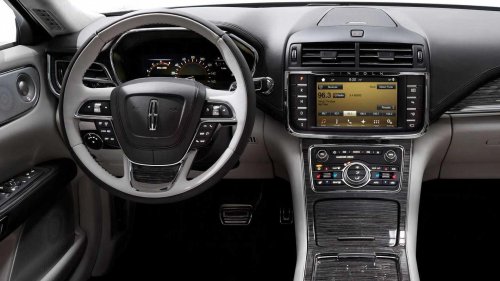
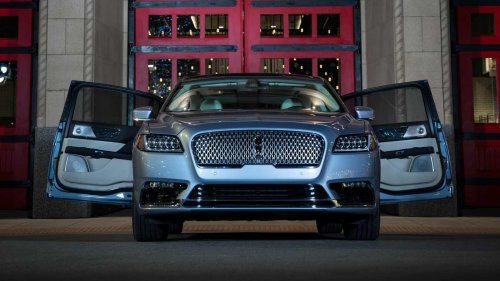
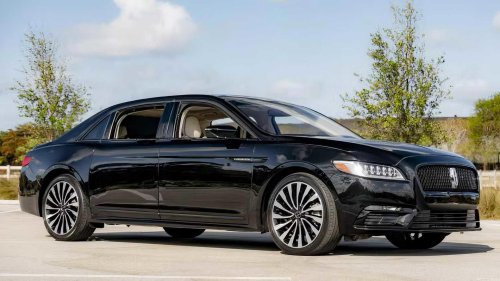



















Two luxury sedans in the world bear the Continental name. One is made by a British ultra-luxury brand that's part of the Volkswagen Group, while the other is from an American luxury brand whose pricing is more competitive and more accessible. Today, we're talking about the latter and why this vehicle has already been forgotten.The Lincoln Continental has a very rich history. It was first produced in 1940, but its production life cycle wasn't continuous. Unlike some nameplates, there were multiple years when this iconic American sedan wasn't in production. Such is the case with its final tenth generation, because there was a 14-year gap between it and the prior generation. The question now is: why has the Lincoln Continental been forgotten, and is there a compelling case for Lincoln to revive the nameplate? The History Of The Continental Lincoln The Lincoln Continental was produced across nine different decades with ten generations in total. As mentioned, its production lifespan wasn't continuous, as it encountered multiple pauses, which also explains why this vehicle has had mixed success. Based On A Vehicle For Edsel Ford Lincoln The original 1940 Continental was heavily based on the Lincoln-Zephyr. At the time of conceptualization, the Continental was supposed to be Edsel Ford's personal vehicle. Edsel Ford was the son of Henry Ford, and he commissioned the Continental for his vacation in March 1939 so that he could attract potential Lincoln customers during his trip. The reason for the Continental nameplate is that the vehicle was influenced by European "continental" design cues, such as the rear-mounted spare tire.The Continental would then be Lincoln's longest-running nameplate, though not necessarily continuous. The Continental originally featured a 4.8-liter V-12 from the Zephyr, but it would be the first and the last time that this vehicle used such an engine. By the second generation, Ford decided that the Continental would be its own sub-brand of sorts, and it would be called the Continental Mark II. This generation had very modern styling for its time, due to the low-slung body. The third-generation model introduced a new unibody design, but the vehicle had a lower starting price as a way to better compete with competitors like the Cadillac Eldorado. From Distinct To Blending In The Background Lincoln The earlier years of the Lincoln Continental represented the pinnacle of American luxury. Sure, there was Cadillac, but it was the Continental that set the tone for what the American dream stood for. Things got a bit less interesting for the Continental when the sixth-generation model was introduced in 1980. This model was so uncompetitive that it only lasted for a single model year. As with many American automakers at the time, the 1973 Oil Crisis led to the introduction of strict fuel economy standards, which heavily favored compact and efficient Japanese cars.In 1982, the seventh-generation Continental downsized into a midsize luxury sedan. It was also modern, featuring components like air springs. This Continental also got one of the industry's first uses of a digital gauge cluster, while an auto-dimming rearview mirror was also a big deal at its time. However, since its transition into a midsize luxury sedan, the Continental not only went downmarket, but it also lost a lot of distinction. It now sat below the Lincoln Town Car, and this led the vehicle to an existential crisis—particularly in the 2000s, when it was competing too closely with the Town Car. The Continental would cease production in 2002 until its modern reincarnation 14 years later. The Continental's Modern Reincarnation Lincoln In the fall of 2016, the 2017 Lincoln Continental went on sale for its tenth generation. The Continental also marked the return of model names in the Lincoln lineup, at a time when all of its models had the three-letter naming scheme as it replaced the MKS. Setting the Tone for the Brand Lincoln With the revival of using actual names, as well as rocking a new design language, the 2017 Continental set the tone for what we now see from the brand today. At the time, Lincoln had a bow wave grille, but the Continental featured a rectangular mesh grille that was then spread across the entire Lincoln lineup. The Continental also had simple lines and elongated proportions, while the E-Latch electronic door handles were integrated into the car's chrome window trim for a cleaner side profile. At the back, the 2017 Lincoln Continental had one of the earliest uses of a full-width LED taillight design, right before almost every other automaker started using this design motif.Marking its final year in 2020 was the release of the limited-production Coach Door Edition model. This model also celebrated the 80th anniversary of the first one-off Continental in 1939, which was meant to be Edsel Ford's personal vehicle. The Coach Door Edition is six inches longer than the standard Continental, and the rear-hinged doors are installed by Cabot Coach Builders—a Ford Qualified Vehicle Modifier (QVM). Only 80 units were sold in the United States—a number that reflects the 80th birthday of the Continental nameplate. Interior That Puts Comfort Above All Else Lincoln As for the interior, the Continental likewise set the tone for every Lincoln interior moving forward. Leather and wood surround the interior, though in some areas, like the sheer amount of chrome, these details look chintzy rather than premium in execution. The wood is so shiny that it's hard to tell if it's faux wood, though rest assured, it is actual wood. One of the interior's highlights is its sheer space. Measuring just a touch longer than German midsize luxury equivalents, the Continental sits somewhere between midsize and full-size. As an option, buyers could also select the Perfect Position Seating, whose 30-way adjustment means that you're sure to find a seating adjustment that fits your body type.Those at the back are treated to copious amounts of legroom and headroom—the latter in particular being a highlight due to the scalloped rear ceiling. Other features worth mentioning include the SYNC 3-based infotainment system, which came with Apple CarPlay and Android Auto, a digital gauge cluster, and a PRND electronic button shifter that's vertically stacked right beside the infotainment system. Let's just hope you won't mistake these buttons for any of the infotainment controls. Leading To Its Demise Lincoln Unfortunately, the tenth-generation Lincoln Continental only lasted for three years. It never even reached the mid-cycle facelift stage. This is where we'll get to explore why the Continental failed to be a successful model, even if this is the vehicle that helped Lincoln establish its current brand identity. SUVs Reign Lincoln Lincoln said that the Continental's discontinuation is due to the decline in sedan sales. This is in line with the overall strategy of Ford, wherein SUVs and crossovers have become the group's focus. Even in Europe, Ford has discontinued all of its passenger cars in favor of taller vehicles.It is worth noting, however, that its major competitors sold in far higher numbers. At its peak in 2017—its first full year of sales—the Lincoln Continental sold fewer than 15,000 units in the United States, which isn't a great figure next to other midsize German luxury sedans like the BMW 5 Series. In that same period, BMW sold 40,658 units of the 5 Series, so you can see how much our market loves German luxury sedans. How Much It Costs Today Bring A Trailer As a used purchase, the Lincoln Continental is a massive bargain. The vehicle wasn't in high demand when new, and that remains the case even as a used purchase. Cars that don't have high demand often have a lower market value, but it's also dictated by other factors, such as how much supply is available of a certain model and, more importantly, reliability. The good news is that the Continental is a bargain in 2026 as a used purchase. According to Kelley Blue Book, a 2020 Lincoln Continental has an average resale value of $18,950, though, compared to the highly-popular BMW 5 Series, the two models have the same resale values.However, for an equivalent 2020 BMW 5 Series to reach its $18,950 resale, it would have depreciated 40 percent in three years, versus the 2020 Lincoln Continental, which depreciated slightly less at 34 percent in the last three years. The Continental has a lower starting price when new than the 5 Series, which also explains its slightly slower depreciation pace. Now, when it comes to repair bills, RepairPal estimates that, based on their data, the Continental has an average annual repair cost of $513, which is lower than the $739 average of the segment. That's far lower than the BMW 5 Series' average of $968 as well, so in terms of repair and maintenance, you're better off with the Continental.