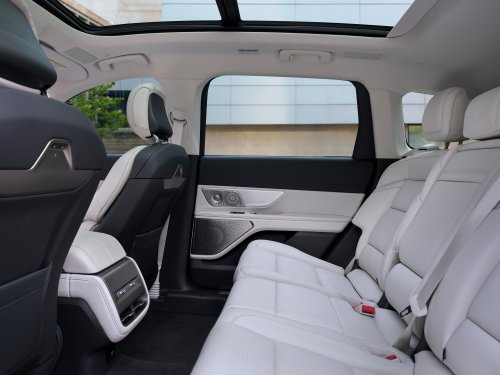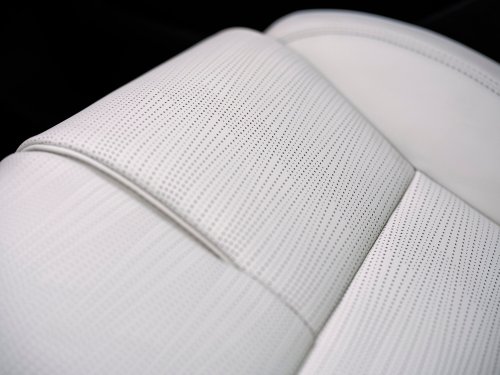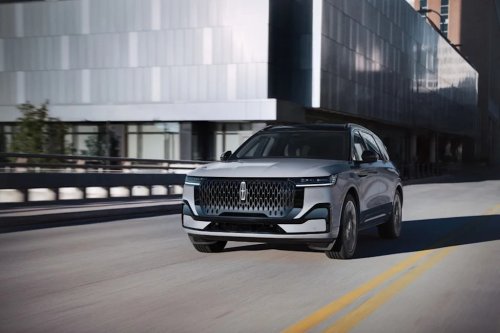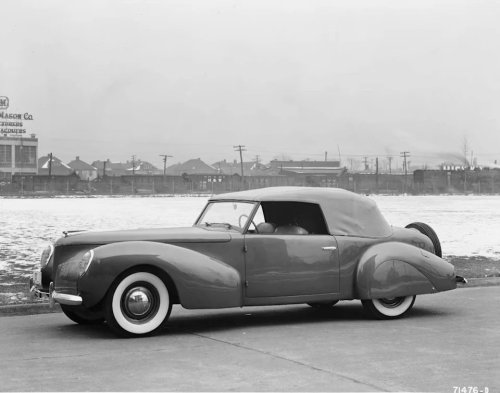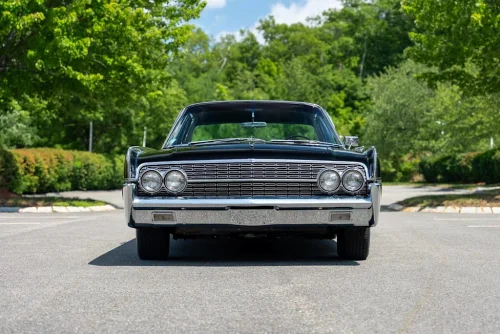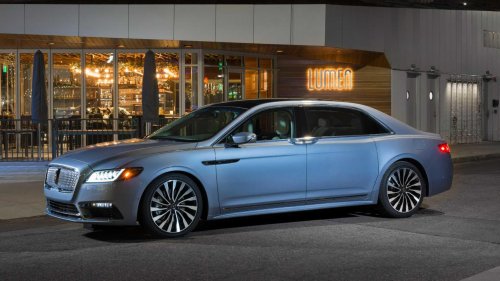
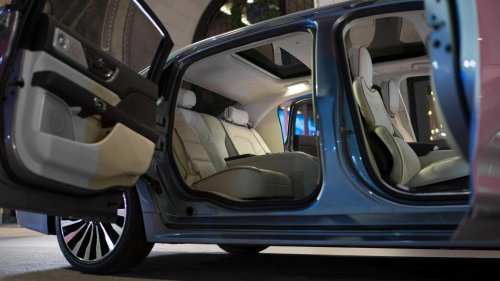
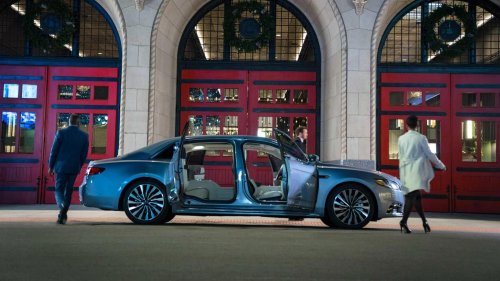
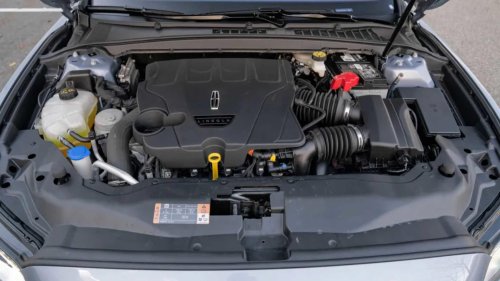
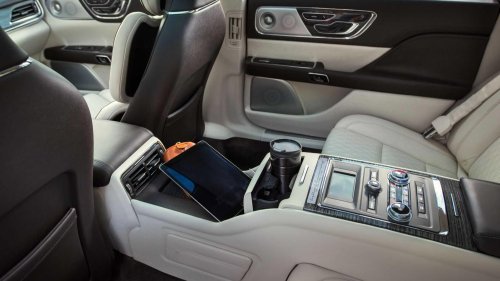



















Continental is probably the name most people associate with Lincoln, and this sedan has long been a stalwart offering on the luxury side of the market. However, the Continental's star started to fade as the country shifted sharply toward SUVs and this type of car no longer made as much sense as it once did.So, Lincoln – facing those tough headwinds in the mid-2010s – tried to breathe life into the Continental with a flagship Coach Door Edition.This would be far more than just a loaded Conti with a commemorative badge, but feature center-opening rear doors that harked back to the most famous 1960s Continentals. The result was undoubtedly something expensive and rare and while it may have been a little strange, it was still deeply American.Those qualities may not have made it such an obvious hit at the time, but they do make a used Continental Coach Door Edition quite interesting now. Lincoln Gave The Continental A Proper Final Gesture LincolnAs sedans grew in stature, Lincoln knew that the writing was on the wall for the Continental. However, the company still wanted to send this model out with a bang. So, after Lincoln refreshed the base Continental for 2017, it then suggested a 2019 Coach Door Edition as a dramatic way to say goodbye to the Continental name itself.Some may have seen that as needless posturing in the face of market inevitability, but others wanted to laud Lincoln for its approach. After all, the Continental name has never been ordinary, with the badge tracing back all the way to Edsel Ford's 1939 personal luxury vehicle.The Continental became a revered name over the decades and even popularized the idea of center-opening doors through the 1961 edition. And all that heritage helps explain why Lincoln decided to move ahead with the Coach Door Edition and why it represented a lot more than just simple novelty. The Doors Were The Hook, But It Was All About Presence Lincoln The very name of this vehicle draws proper attention to the feature that most people recall, and those coach doors certainly added an element of ceremony to an already handsome Continental. The importance of this feature goes far beyond the mechanics of how it operates, dramatically changing the way that the car presents itself and making a mark on the "future classics" argument.Lincoln turned to Cabot Coach Builders for the conversion. Cabot used a Continental Black Label sedan, structurally reinforcing the rear passenger cabin while adding six more inches. The rear doors could open to 90 degrees but for safety purposes they could only operate if the driver had placed the six-speed automatic transmission in park.This was a clear distinction between the modern Coach Door Edition and the original 1960s concept. That early idea may have helped coin the phrase "suicide doors," but now, execution was far more sophisticated.Lincoln produced only 80 units of the 80th-anniversary Coach Door Edition in 2019 and planned 150 vehicles for the 2020 model year. And that certainly gives the modern Coach Door Edition a good dose of of rarity to help underline its historical significance. Coach-Built Changes Went Deeper Than Door Hinges Lincoln Cabot Coach Builders did more than simply style Lincoln's new offering, as it engaged in significant structural, body, and interior work. The fully assembled Black Label cars rolled into Cabot's facility in Haverhill, Massachusetts, where the company performed its cut-and-stretch work. But then the engineers really had to go to town, modifying the roof, floor, rocker structure, sunroof system, doors, glass, driveline, exhaust, underfloor shielding, and interior trim.Lincoln wanted to retain the importance of the B-pillar for side-impact protection and insisted on a conversion approach that worked around the existing safety architecture rather than tinkering with a critical part of the body.And these changes all helped to make the Continental Coach Door Edition a very different proposition to the base Continental. Quite apart from the obvious external aesthetics, this vehicle now had a rear cabin experience that was notably distinct, offering something that a normal Continental could never replicate.That rear compartment featured Bridge-of-Weir leather, fold-away tray tables, and a full-length rear seat center console. Passengers would also discover a tablet holder and charger, embedded navigation, Sync 3 infotainment, and a 19-speaker Revel audio system.The driver could take advantage of the vehicle's collision-mitigation braking system, blind spot monitoring, lane keeping assist, adaptive cruise control, and heads-up display. And the full package made the Coach Door Edition a well-rounded proposition. It clearly blended old-world ceremony with modern-day driver assistance tech and everything else that you'd expect in a late-model luxury car. Underneath, This Was A 400-hp Lincoln Flagship Bring a Trailer On the surface, most of the conversation may have been about the coach doors, but there was plenty to love about this vehicle's mechanical packaging as well. Lincoln fitted a 3.0-liter twin-turbo V6 rated at 400 hp with 400 lb-ft of torque when running on premium fuel. The vehicle also came with a six-speed SelectShift automatic transmission with paddle shifters and all-wheel drive.CarBuzz conducted a review of the standard 2020 Continental and referred to it then as “a modern relic”. It described a large, quiet, traditional American luxury car that was unashamedly old school. The Continental was never trying to be a razor-edged German sports sedan, and the Coach Door Edition leaned further into that distinction.Those reviewers felt that the Continental was good at its job without trying to be something it was not, and it certainly wasn’t a true athletic rival to a Cadillac CT6 or BMW 7 Series. Instead, this was a sedan that seldom lost its composure, could competently cruise once it got up to speed, and had plenty of old-school charm.The 2020 Coach Door Edition made a great deal of sense as an executive cruiser, but it certainly wasn’t a corner carver by any stretch of the imagination. It could get to 60 mph in 5.5 seconds, and this gave it enough performance to be brisk. But it didn't need some kind of performance transmission system and was perfectly fine with its six-speed automatic. It was all about comfort, presence, and adequate everyday motoring as it interpreted luxury in its own uniquely American way. Depreciation Now Makes An Interesting Argument Lincoln When it was new, the pricing of the Coach Door Edition moved it into tricky territory. You'd need to pay $115,470 for a 2020 version before you considered any add-ons, accessories, or destination, and this was deep into serious luxury territory, quite a long way ahead of normal Continental prices. And that didn't make it an overnight hit, even if it did have a tiny production run and those spectacular coach doors.Depreciation has cast a different light on the Coach Door Edition today, and it's certainly not in the same value pool as ordinary used Continentals. It's in a higher collector-adjacent space, and Coach Door cars are in a different conversation from base or even Black Label Continentals. This presents a clearer argument for the Coach Door, focusing attention on its rarity, end-of-an-era status, and high-end build instead.The base 2020 Lincoln Continental has an average value of around $16,940, according to the CarBuzz Marketplace, while the Black Label edition sits at around $27,776. By comparison, used Coach Door examples are much more expensive, with one selling for $82,500 at Bring A Trailer, and another low-mileage version going for $104,777.Most importantly, buyers will need to be careful when measuring the difference between a used Continental and a used Coach Door Edition. They shouldn't forget that low-volume luxury cars can be costly to repair, and any unique coach-built trim or associated body parts will not be as straightforward to procure or fit as standard Continental components. That said, there may well be some low-mileage, well-documented cars with good histories and carefully preserved interiors to tempt people in the open market. And a used Coach Door Edition is most certainly a specialty car, not just a used Lincoln sedan with some funky doors.Lincoln never intended the Continental to be a world-class sports sedan, but it was a perfect base for a specialty coach-built version. This meant that builders had plenty of relaxed cruising character, power, comfort, and old-school charm to work with. And they came up with something visually memorable and historically connected, to say a proper goodbye to the badge.Certainly, future classic status isn't guaranteed for the Coach Door Edition, but the ingredients all seem to be there. And while this edition wasn't entirely rational when Lincoln introduced it, it’s surely one of the more interesting modern American luxury cars you can buy today.