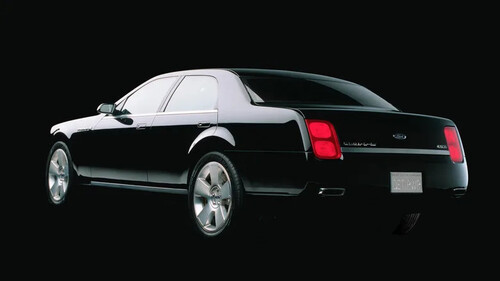
Many things make Batman the best superhero, and the Batmobile is chief among them. Sure, the others can fly, run at super speed, and all of that, but none of them are rolling in a sick whip. The Batmobile isn't just any other hot ride, either. It's a bona fide hotrod with all sorts of gadgets and features that have it ready to throw down anytime, anywhere.While your favorite version is probably one of the more modern renditions, the one that appeared in the 1960s TV series is largely considered the first true Batmobile to appear on screen. Its radical bodylines and fiberglass lid made for a futuristic look that set the tone for the Batmobile in every on-screen appearance it'd make from then on. What if we told you it was based on a real car that Lincoln built, though? Not only that, but the Batmobile you see Adam West’s Batman ripping around in really isn't that far from the base car’s original design. Lincoln Futura Concept Car Gotham GarageBelieve it or not, the Batmobile that appeared in the Batman TV series that ran from 1966 to 1968 is actually a concept car that Lincoln built a decade earlier. No, it's not a clone or tribute. It's actually thevery same car that Lincoln built in 1955. It had been customized for the show, but it really isn't as far removed from the original design as you might expect.In the early 1950s, Lincoln’s Head designer, Bill Schmidt, was out diving during his vacation. He came upon a shark that understandably left a major impression on him, just not in the same way it would for most people. Rather than leaving him with a fear that kept him from going swimming again, the encounter gave him an idea for a car. Lincoln Futura Concept Car Highlights Designer Bill Schmidt took inspiration from a shark when designing the car Only one was ever built, with the car failing to go into production The concept car was hand-built by Ghia of Turin, Italy Schmidt drew inspiration from the beast’s aggressive appearance and shaped a car with long sweeping body panels and pronounced accents. He crafted a grille resembling a large, gaping mouth between hooded headlights, like eyes. The final product was dubbed theLincoln Futura, which perfectly embodied what 1950s car design was all about.The Futura lived beyond the drafting table. Lincoln commissioned Carrozzeria Ghia of Turin, Italy, to hand-build it, which cost them about $250,000. The folks at Carrozzeria Ghia were truly masters of their craft, though, and their labor was worth the expense. The car was finished with a special pearlescent White paint that used ground fish scales for iridescence. In every sense of the word, it was a work of art. Becoming The Batmobile Futura Batmobile CloneThe Lincoln Futura had a brief but impactful presence in the automotive industry. It never went into production, but its visionary design made plenty of waves. Still, it was dubbed impractical and shelved. In 1959, the Ford Motor Company sold the Lincoln Futura concept car to George Barris of Barris Kustom Industries for just $1. Lincoln Futura Specs Unlike Ford executives, Barris saw the potential of the Lincoln Futura. However, he did ultimately decide to make a few tweaks to it. While it was definitely a radical and futuristic-looking car, it needed a bit of extra work to meet the Caped Crusader's demands.If you compare the original Futura design to the Batmobile, you can see Barris didn’t change much in terms of the car’s general shape. That’s not to say it’s completely untouched. The hood, grille, and hooded headlights were all reworked. He also opened up the wheel wells a bit and integrated flares into the body lines. There’s no denying that it’s been customized, but it really doesn’t feel that far from Schmidt’s original vision. If you dialed back the ’60s Batman flare, Barris’s touches look like a refreshed Futura that Lincoln might have produced to adapt to evolving trends.Yes, even the fiberglass shielding for the cockpit is part of the original concept. As for the gadgets, lights, and turbine, that's all Barris's work. Of course, he also painted it black and gave it the Bat-symbol on the side. 1950s Ford may be cool, but not that cool. The Lincoln Futura Was The First True On-Screen Batmobile, But Not The First Bring a Trailer Barris's Batmobile is as quirky as the series it appeared in, with all sorts of "Bat-" gadgets and gizmos to complement West's groovy dance moves. As easy as it is to poke fun at it, we really do need to tip our hats to the ‘60s Batmobile. It set the bar for what Batman’s ride should be for film and set things in motion that would ultimately lead to the incredible versions featured in the latest films, which gearheads absolutely go nuts over.The Futura wasn't the first Batmobile, though. It wasn't even the first one to appear on screen. Technically, the Batmobile originally appeared in the 27th issue of Detective Comics back in 1939. Interestingly enough, the name “Batmobile” wasn't coined until 1941 in the #48 edition of Detective Comics.The first time the Batmobile appeared on-screen was in 1943, in the limited-run series presented by Columbia Pictures, in the form of a 1939 Cadillac Series 75 convertible. And it was just that, a convertible. There was no extra flare declaring the Dark Knight was coming to put a hurting on some evildoers. The same is true for the 1949 Mercury convertible used for the next on-screen appearance of the Batmobile.Things were different for comic book versions of the Batmobile, which were closer to what would appear in beloved movies and television shows later on. Barris's design might not be as menacing as the Charger-esque Batmobile featured in the 2022 film The Batman, but hadn't he and his crew turned the Futura into a Batmobile that was truer to the comic book visions than its predecessors, we might never have landed where we are today. Not Its First Role For Film Bring a Trailer Now, some of you are hung up on the fact that Barris actually took a concept car and turned it into the Batmobile. And to answer your burning question: Yes, there was only one Lincoln Futura concept car ever built, and it was used in the TV show.Before you tear into the late George Barris for defacing a one-of-a-kind car, you should know a lot of concept cars like the Futura meet the crusher when the executives are done with them. It's a sad and uncomfortable truth for a lot of the insane car designs that were brought to life. Hadn't it been for Barris Kustom Industries, that may have been the fate of the Futura as well.Not only that but, beingused as the Batmobile wasn't the first time the Futura appeared on film. In 1959, it made its Hollywood debut in the film It Started With A Kiss. Barris had arranged it so, and the car had actually been repainted red for the film because the original white paint job didn't photograph well. After this, the car sat, forgotten about, until it was revived as the Batmobile. While making a car as unique as the Futura and cutting it up will still make many car nuts squirm, it did ultimately live out a much longer, more impactful life than many of its peers. Barris even made three clones of the Batmobile, technically multiplying the number of Futuras that grace the world with their presence. Just One Of The Dark Knight’s Insane Fleet Members Bring a Trailer While the original Batmobile is no longer the car of choice for films, it is still alive and well. It didn't just disappear into the ether or take up a role in another Hollywood film. It is still in full dress, just waiting for Batman to call on it once more.Barris kept the car in his personal collection all the way until 2013. He never actually signed it over to the production studio; he simply leased it to them for the show. When it was time for it to find a new owner, it hit the auction block at Barrett-Jackson, where it shook the world.The Gavil price plus all the fees brought the selling price of the Futura Batmobile to an astonishing $4,620,000. In 2024, the new owner listed the car for sale once again on Barrett-Jackson with an asking price of $5,000,000. Thankfully, you can buy clones for much cheaper if you didn’t inherit generational wealth from the Wayne legacy.