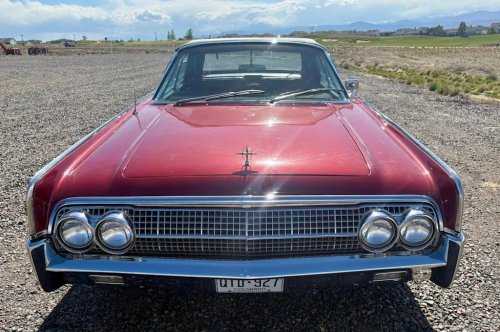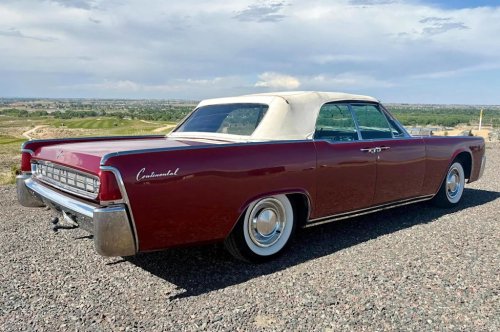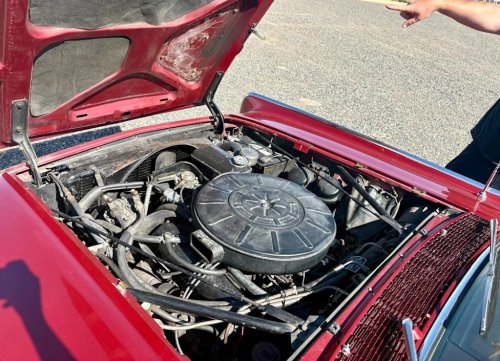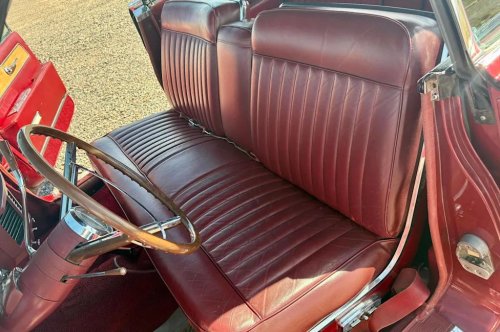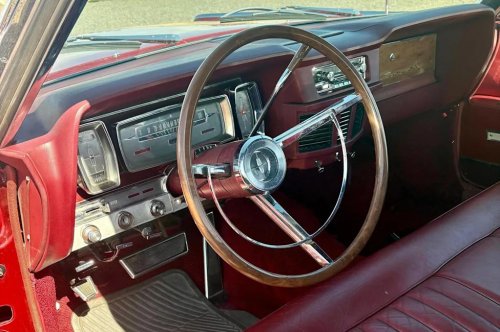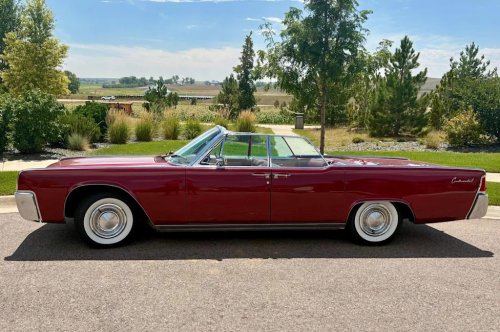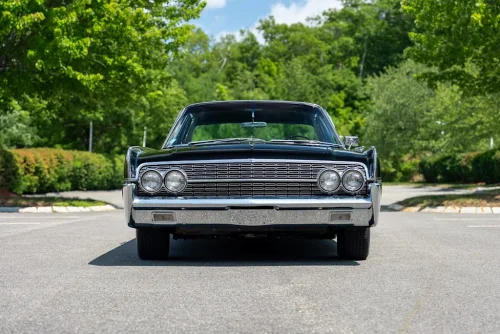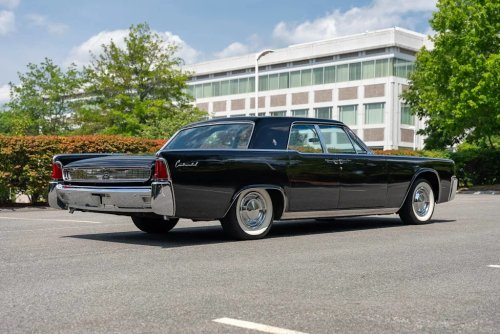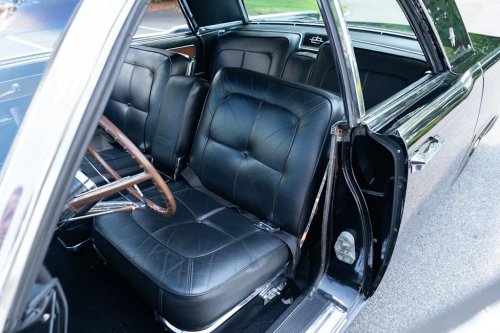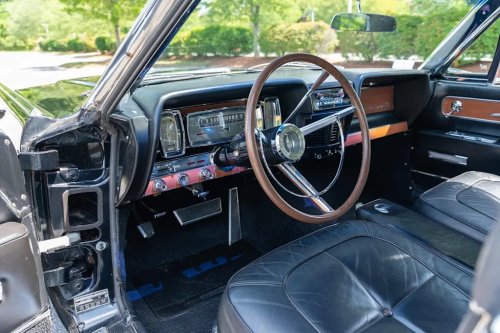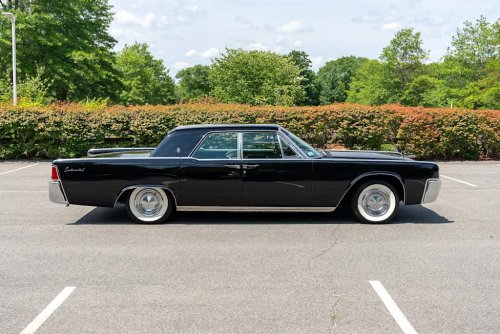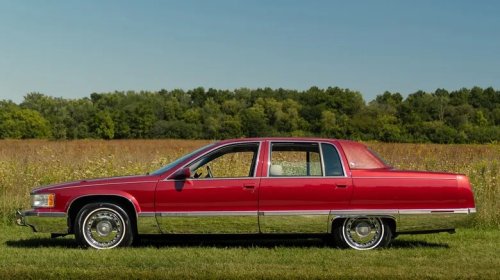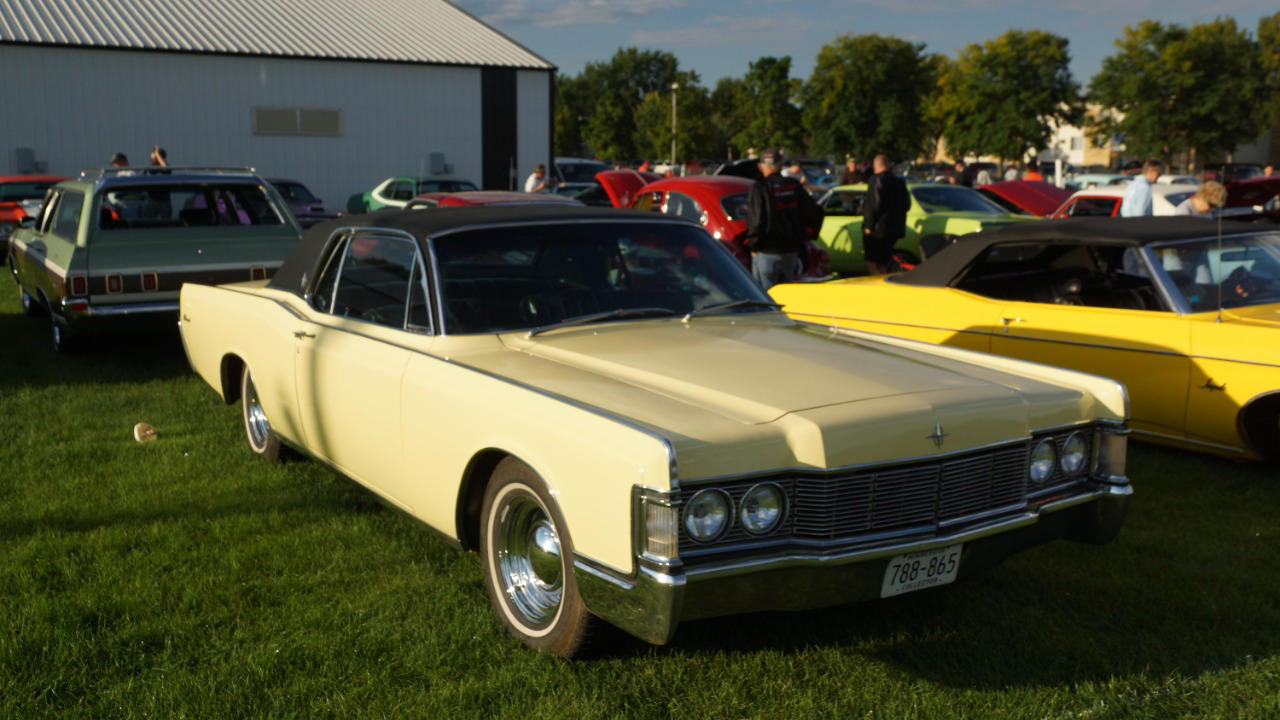























1968 Cadillac Fleetwood vs 1968 Lincoln Continental one still feels timelessLuxury sedans rarely age gracefully, yet the 1968 Cadillac Fleetwood and 1968 Lincoln Continental still carry a presence that makes modern crossovers look anonymous. Both were flagship statements from Detroit at the height of the full-size era, but only one truly feels outside of time rather than simply of its time. The contrast between Cadillac spectacle and Lincoln restraint explains why one car now reads as a period piece while the other still looks ready to glide into a valet line. Two visions of American prestige in 1968 By 1968, Cadillac and Lincoln were not just selling cars, they were selling two different ideas of success. Cadillac leaned into glamour, chrome and sheer road presence. The 1968 Cadillac Fleetwood Brougham carried forward styling and engineering that the company saw as already perfected, so Cadillac did not alter its popular product in any major way for that model year. The message was clear: the formula worked, and buyers wanted familiarity with a bit of annual polish. Lincoln took a different route. The fourth-generation Lincoln Continental had arrived earlier in the decade with clean, almost architectural lines and a focus on dignity over flash. Commentators looking back on the 1968 Lincoln Continental four-door sedan describe it as one of America’s most distinguished motorcars and part of what they call The Continental Life. That phrase captures how the car was marketed not just as transportation but as a calm, tailored environment for people who wanted status without spectacle. Contemporary enthusiasts still frame the rivalry as a choice between two animals that share the same habitat but hunt in different ways. In one discussion of late sixties luxury coupes, the Lincoln Continental is described as more understated, with a design that emphasized elegance and dignity over flash and prioritized subtle Luxury Features. Cadillac, by contrast, pushed visual drama and a sense that the car itself was an event. Size, stance and the way these cars occupy the road Dimensionally, the 1968 Cadillac Fleetwood and 1968 Lincoln Continental were both enormous, but they wore their size differently. The Continental rested on a 126-inch wheelbase with a length of 224-inches, figures that underline how much real estate it occupied. That same comparison notes that the Mark III that followed rode a 117-inch platform, which shows how Lincoln later tried to tighten the footprint without abandoning luxury. Cadillac answered with its own extended-wheelbase sedans and limousines, and the Fleetwood sat at the top of that pyramid. The long hood and formal roofline signaled hierarchy as clearly as any badge. Where the Cadillac used creases, chrome strips and fender lines to accentuate length, the Lincoln Continental treated its size as something to be visually controlled. Flat body sides, thin pillars and a relatively low beltline made the Lincoln read as a large object that had been carefully edited rather than simply scaled up. Enthusiasts who encounter a 1968 Lincoln Continental in person often comment first on sheer footprint. One owner who documented the purchase of a 1968 Continental on video described it as the biggest engine car he had ever had and, just by looking around it, a pretty large vehicle, a reaction that matches what anyone feels when standing next to one in a suburban driveway. Another video walkaround of the same car at about the 40 second mark simply lingers on the slab sides and the seemingly endless hood, reinforcing the idea that this is a car that defines its surroundings rather than blending into them. Yet the Lincoln’s restraint keeps that size from turning into caricature. The car does not bristle with fins or stacked lamps. Instead, it presents a nearly unbroken shoulder line and a simple, almost austere grille. That discipline is a major reason the shape still looks current, especially compared with the more ornate Cadillac. Cabin philosophies: flash versus quiet confidence Inside, the two cars reveal the philosophies of their makers even more clearly. Cadillac interiors at the time were about sensory impact. Plush fabrics or leather, bright metal trim and a dashboard that wrapped around the driver were all meant to convey that the owner had bought the most lavish American sedan available. The Fleetwood Brougham layered on additional touches, from extra-thick carpeting to power conveniences that turned the cabin into a rolling living room. Lincoln took a different approach. The 1968 Lincoln Continental sedan is described in period retrospectives as one of the finest American luxury sedans, and that praise focuses heavily on the way it balanced comfort with restraint. One detailed look at the car highlights how the Lincoln Continental used high quality materials without over-decorating the surfaces. Switchgear was substantial but not ornate, and the dashboard favored straight lines over curves. Owners who have lived with both brands often describe the Lincoln cabin as a place of calm. In enthusiast forums that compare 1961 to 1969 Continentals, some contributors argue that Truth be told Lincoln design produced some of their best work from the mid-fifties on, and that the interiors of these cars represent Lincoln at its most confident. That confidence shows in small decisions, such as the choice of muted colors instead of jewel tones and the way the instrument panel seems to float rather than wrap aggressively around the driver. The result is that the Lincoln interior feels less like a time capsule and more like an early draft of modern luxury design. Remove the analog radio and the column shifter, and the underlying shapes would not look out of place in a contemporary high-end sedan. The Cadillac cabin, by contrast, is pure late sixties in every detail, from the script badges on the dashboard to the sheer volume of chrome. How each car drives and the way that shapes its legacy On the road, both cars were built for comfort and quiet, not for back-road agility. Yet the way they deliver that comfort influences how modern drivers perceive them. Contemporary comparisons of late sixties Cadillac and Lincoln products often focus on coupes like the Eldorado and the Mark III, but the core impressions carry over to the sedans that shared their mechanical DNA. In one such assessment, writers asked How the original contenders for the crown have stood the test of time and had Sandy Edelstein and Scott King buy and drive examples of each car to find out. They found that the Cadillac felt more isolated from the road, with steering and suspension tuned to erase feedback, while the Lincoln delivered a slightly more connected experience. Those differences map neatly onto the brands’ images. Cadillac wanted owners to feel that they floated above the traffic around them, and the Fleetwood delivered that sensation with soft springs, overboosted steering and abundant sound insulation. Lincoln, while hardly sporty, built the Continental with a bit more structure in the chassis and a steering feel that, by the standards of the era, gave the driver some sense of what the front tires were doing. Modern owners of 1968 Lincoln Continentals echo that impression. In a video where an enthusiast buys his first classic car, a 1968 Lincoln Continental, he remarks that despite the size and the biggest engine he has ever owned, the car is surprisingly manageable to maneuver. That reaction suggests that the Lincoln’s driving experience translates more easily to modern expectations than the more floaty Cadillac setup. Powertrains were not a weakness for either brand. Cadillac’s big V8s delivered effortless torque, and the Fleetwood’s automatic transmission was tuned for smoothness. Lincoln’s large displacement engines provided similar thrust, and the Continental’s gearing prioritized quiet highway cruising. The difference is not in capability but in character. Cadillac’s powertrain reinforces the sense of a car built to impress passengers, while Lincoln’s feels like it was tuned to keep the driver relaxed and in control. What enthusiasts say now: two different kinds of admiration Decades later, the way enthusiasts talk about these cars reveals which one has escaped its era more successfully. In a discussion that pits a 1968 Eldorado against a Continental, one participant sums up the comparison by saying there are Two different animals!! But the Lincoln is always a stunning machine. That comment, attributed to Marty Villa and captured in early February, underlines how even among people who love both brands, the Lincoln Continental commands a particular kind of respect. The same thread begins with Marty Villa and the remark Very common on this site, for some unknown reason, which hints at how often this Cadillac versus Lincoln debate resurfaces among fans. Elsewhere, owners and admirers describe the fourth-generation Continental as Lincoln’s finest work. In a long-running conversation about 1961 to 1969 Continentals, one contributor writes that Truth be told Lincoln design produced some of their best work from the mid-fifties on and singles out the slab-sided sedans as an all time positive example. That sort of language is not just nostalgia. It reflects a growing recognition that the Continental’s design anticipated the clean, unadorned look that would dominate luxury cars decades later. Cadillac still enjoys deep loyalty. In groups devoted to classic American cars, posts about a 1968 CADILLAC ELDORADO COUPE describe how this 1968 Cadillac Eldorado is powered by a 472ci V8 mated to a three-speed Turbo Hydra automatic transmission, and they list features including steering, front disc brakes and power windows. That level of mechanical specification appeals to collectors who value engineering detail and period-correct technology. The same circles often share images of Fleetwood sedans with pride, celebrating their role as status symbols in their day. Yet when the conversation shifts from historical importance to timeless appeal, the tone changes. Enthusiasts who park a 1968 Lincoln Continental next to modern cars often remark on how it still looks surprisingly contemporary, particularly in darker colors with minimal brightwork. The Cadillac Fleetwood, with its more elaborate trim and ornamentation, reads more clearly as a classic car. Both reactions are positive, but they are not the same kind of admiration. Why the Continental feels timeless and the Fleetwood feels classic Timelessness in car design usually comes down to proportion, restraint and clarity of purpose. On those measures, the 1968 Lincoln Continental has an edge that grows with every passing year. The car’s long hood, short deck and straight body sides create a shape that is easy for the eye to understand. There are no fins, exaggerated curves or gratuitous creases. The grille is simple, the lamps are integrated rather than stacked, and the overall effect is calm. That calmness is what allows the Continental to sit comfortably in a modern context. Park one outside a contemporary hotel, and it looks intentional rather than ironic. The same cannot quite be said for the 1968 Cadillac Fleetwood. The Fleetwood’s design is handsome, but it is firmly rooted in late sixties tastes. The abundance of chrome, the more complex front end and the visual weight over the rear wheels all signal a specific moment in American style. More from Fast Lane Only Unboxing the WWII Jeep in a Crate 15 rare Chevys collectors are quietly buying 10 underrated V8s still worth hunting down Police notice this before you even roll window down