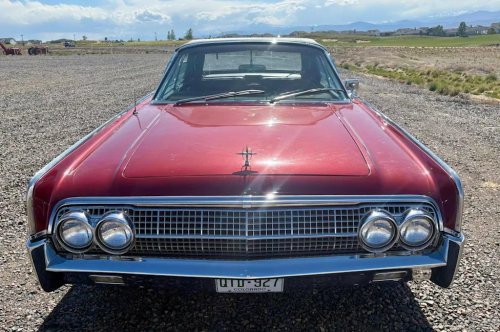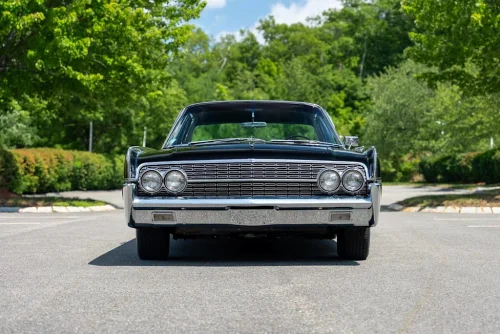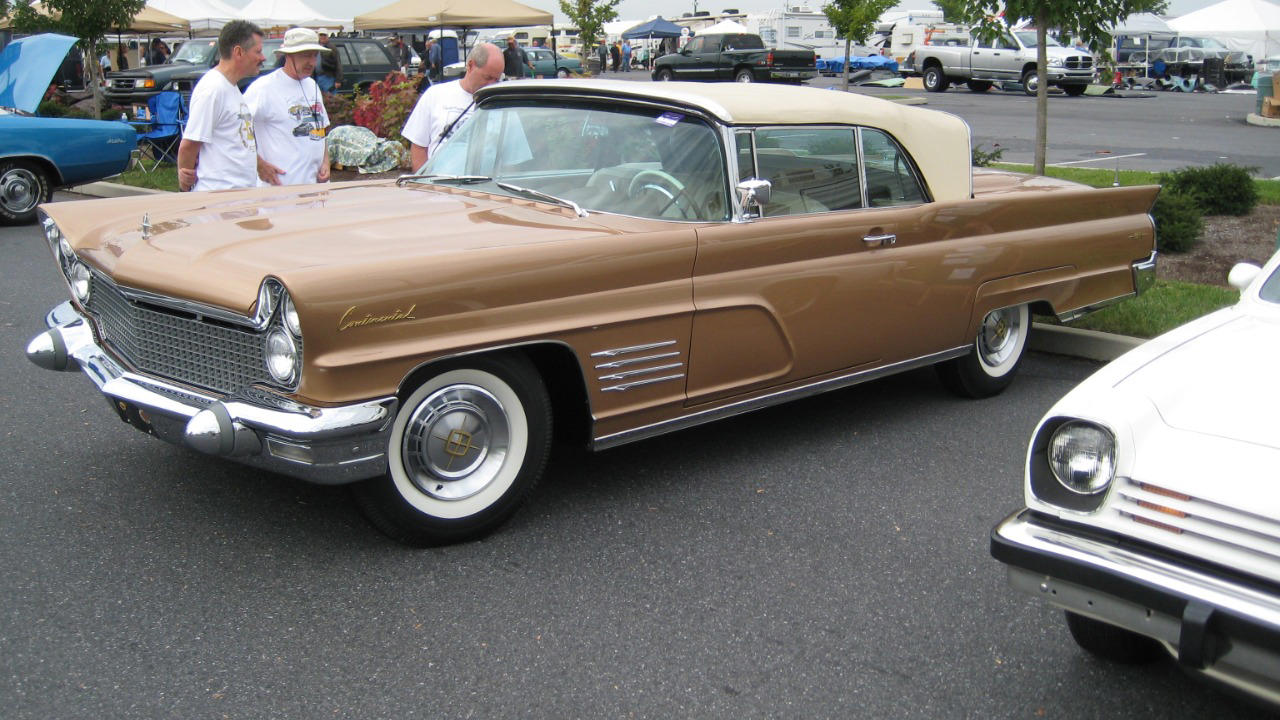



















Thinking about a 1960 Lincoln Continental here’s why ownership isn’t always smoothThe 1960 Lincoln Continental still stops people in their tracks, a rolling monument to late‑fifties excess that arrived just as American tastes were about to turn. Its presence is undeniable, but living with one can feel very different from admiring it at a show. Between complex power features, a massive 430 cubic inch V8 and limited parts interchangeability, ownership can be as demanding as it is glamorous. For buyers drawn only to the gleaming chrome and intricate grille, that gap between fantasy and reality can be jarring. The Continental can be a deeply satisfying classic, but only if an owner goes in with clear eyes, realistic budgets and a willingness to learn how a very big, very complicated luxury car from 1960 actually behaves. Why the 1960 Continental is so tempting The appeal starts with the styling. Contemporary descriptions of the 1960 Lincoln Continental note how “They were loaded with power assists and conveniences and dramatically, even flamboyantly, styled with demure fins, an intricate grille, and a long, low profile” that still looks theatrical on modern roads. That mix of drama and elegance, captured in a period comment that simply begins with “They,” is central to why collectors keep circling these cars. Inside, the car served as an “Ownership Experience” benchmark for the well heeled. Period guides describe how the 1960 Lincoln Continental could be a daily driver for executives or a show stopping weekend cruiser, with a cabin filled with power seats, power windows and elaborate trim that positioned Lincoln as a peer to Cadillac. Later commentary on 1961 to 1969 models, including a reader who preferred Lincoln cars after “63” because of improved convertibles and better space, shows how the brand kept chasing that same luxury ideal into the next decade. Under the hood, the Continental relied on the MEL big block family, and owners of later cars have noted that while “You will not lay rubber in the Continental, the MEL engines will cruise all day long.” That observation, credited to Cashman in a buyer discussion, captures the car’s character: it is built for steady, unhurried travel, not drag strip heroics. The big engine, and the big bills that follow The 1960 Lincoln Continental used a 430 cubic inch V8, a specification that still impresses on paper. Parts catalogs list “CID” as “430” and describe the “Block Type” as “V” with “Cylinders” at “8” and a “Cylinder Head Type” of “OHV.” That combination delivers the kind of low speed torque that suits a nearly 5,000 pound luxury car, but it also means a lot of metal, a lot of moving parts and a lot of potential wear after six decades. When that engine needs serious attention, owners do not walk into a corner shop for a quick fix. A dedicated supplier sells a “Deluxe engine rebuild kit” specifically for the late 1960 Lincoln 430. The existence of a tailored kit, marketed with that exact displacement in mind, underlines how specialized the powertrain has become. Rebuilding such an engine is not only about gaskets and bearings; it is about finding a machine shop that understands period tolerances and a mechanic willing to wrestle with a huge cast iron block. Even routine components carry a reminder of scale. One catalog listing for the 1960 Lincoln Continental shows a “Sway Bar Link Kit” priced at “$11.99” and a head gasket set at “$259.99.” Those figures, “$11.99” and “$259.99,” are not outrageous in isolation, but they hint at how quickly costs add up when every system in the car is oversized. Fluids, belts and ignition parts all have to serve a 430 cubic inch engine that was never designed with modern efficiency in mind. Parts are available, but not always simple Support for the 1960 Lincoln Continental is better than casual observers might expect, but it is scattered. A dedicated catalog groups “1960 Lincoln Continental” components in one place, from engine internals to suspension and brake pieces, which helps owners identify correct part numbers. Another listing for “1960 Lincoln Continental Parts” at a national chain shows that at least some service items can be sourced through mainstream channels. For items that fall outside routine maintenance, owners often turn to online marketplaces. One large auction site maintains a category for “Parts & Accessories for 1960 Lincoln Continental” that ranges from trim pieces to used mechanical components. That secondary market is essential when a rare switch or piece of chrome fails, but it also introduces risk, since the quality of used parts can vary widely. Search aggregators show individual “product” listings for 1960 Lincoln Continental components, including specific part numbers that surface via shopping results. One such search result highlights a particular “product” tied to the model, while another “product” listing connects buyers to a different supplier. These search tools help fill gaps, but they also reflect a reality: owners must be comfortable cross referencing multiple sources, checking fitment notes and sometimes gambling on lightly documented parts. Complex power features mean complex problems Beyond the engine, the 1960 Lincoln Continental is packed with power equipment that was advanced for its time. Later owners of early sixties cars have described how “There is more stuff: power seats and windows,” and that observation applies even more strongly to the 1960 models, which were positioned as technology showcases. That complexity shows up most clearly in the convertible top and window systems. In a technical discussion of a 1960 Lincoln Continental convertible, one owner explains that “They have adjustment concerns also” and that “There are circuit breakers that can fail and they are on the ground side of each motor.” Those comments highlight two recurring challenges. First, the mechanisms require precise adjustment to move heavy glass and fabric in sequence. Second, the electrical design relies on multiple circuit breakers and relays that can quietly fail after decades of heat and corrosion. Owners of later cars echo similar frustrations. One forum participant who once owned a “64 convertible” described it as “a fine car to drive and show” but also recalled the need to “watch out for” certain systems that aged poorly. Another enthusiast, who restored “90%” of a “61 sedan,” mentioned that the bar for reliability in that era was not very high and that the car had even more “power seats and windows” than some rivals. These experiences, tied to “64” and “61” models, are not identical to the 1960 car, but they illustrate how Lincoln’s commitment to powered convenience created maintenance headaches across the decade. Modern owners sometimes turn to online video guides for help. A clip labeled “Fix This Issue On Your Lincoln Continental + More Tips,” which includes an on screen reference to “Oct” in its description, walks viewers through diagnosing specific electrical faults. Another upload of the same material, accessible through a slightly different link, reflects how owners rely on shared troubleshooting knowledge to keep these elaborate systems working. Electrical gremlins and the cost of diagnosis Electrical issues on a 1960 Lincoln Continental can be especially tricky because of how many systems are interlinked. The convertible top, windows, seat motors and even some lighting functions share power feeds and grounds. When a circuit breaker on the ground side fails, as one owner described in the convertible discussion, the symptom might be a dead window, a stuck top or both. Diagnosing those faults requires more than a test light and guesswork. Owners often need wiring diagrams, patience and sometimes specialized tools to trace current through decades old connectors. The presence of multiple “circuit breakers that can fail” means that a simple blown fuse is rarely the end of the story. For many buyers, this is where the romantic idea of a classic Lincoln collides with the reality of intermittent faults that can consume entire weekends. Some enthusiasts on general car forums, including a Quora thread that begins “What should you be careful of when shopping for a 1960s era Lincoln Continental,” warn prospective buyers to budget for electrical work and to inspect every power function before purchase. One contributor recounts driving a car to southern “California” after cleaning it up, then handing it over to a relative, a reminder that these cars often change hands within families and carry long histories of improvised fixes. Driving experience: serene, but not exactly efficient On the road, the 1960 Lincoln Continental can feel remarkably composed for its size. Owners of early sixties models report that while a Continental will not “lay rubber,” the MEL V8 “will cruise all day long.” That relaxed behavior suits the car’s mission as a highway cruiser, particularly when combined with a soft suspension and generous sound insulation. Fuel economy is another matter. A reader who commented on later Lincoln models singled out “the horrible fuel use” as a major negative, even while praising improvements in wheelbase and interior room. The 1960 car, with its 430 cubic inch engine and heavy structure, is unlikely to fare better. Prospective owners should expect consumption that would shock a modern crossover driver and plan their usage accordingly. Handling reflects the era’s priorities. These cars were set up for straight line comfort rather than sharp cornering. Replacement components like the “Sway Bar Link Kit” priced at “$11.99” are cheap insurance against further softening, but no amount of fresh hardware will turn a 1960 Lincoln Continental into a sports sedan. The goal is to preserve its original character, not to transform it into something it never was. Rust, structure and the reality of age Structural concerns are another recurring theme in owner discussions. While the provided sources focus more on mechanical and electrical topics, general classic car experience suggests that any sixty plus year old unibody or semi unibody luxury car will have rust risks. Enthusiasts in AACA forums caution buyers of sixties Continentals to inspect floors, rocker panels and suspension mounting points, especially on convertibles where body flex can accelerate corrosion. One Facebook discussion of later Lincoln history notes that “Suicide doors were the only door option for the Continental from 1961 to 1969, except for the two door coupe introduced in 1966.” That comment, anchored to a broader look at Lincoln’s shift away from unit construction in 1970, reminds readers that the 1960 model sits at a crossroads. It predates the famous “Suicide” door design of the 1961 car, yet it shares the same philosophy of building a large, complex luxury body that required significant engineering resources. By 1970, Lincoln moved to body on frame construction, in part so that “many more components could now be shared with the big Ford & Mercury” and to reduce production costs. That shift, described in a retrospective that also notes how Lincoln passed the 100,000 sales mark in “73” and approached 200,000 by “79,” underscores how unusual the 1960 Continental really is. It comes from a time when Lincoln was willing to invest heavily in bespoke structures, which makes preservation more challenging today. More from Fast Lane Only Unboxing the WWII Jeep in a Crate 15 rare Chevys collectors are quietly buying 10 underrated V8s still worth hunting down Police notice this before you even roll window down The post Thinking about a 1960 Lincoln Continental here’s why ownership isn’t always smooth appeared first on FAST LANE ONLY.