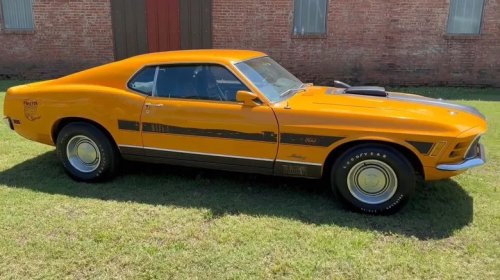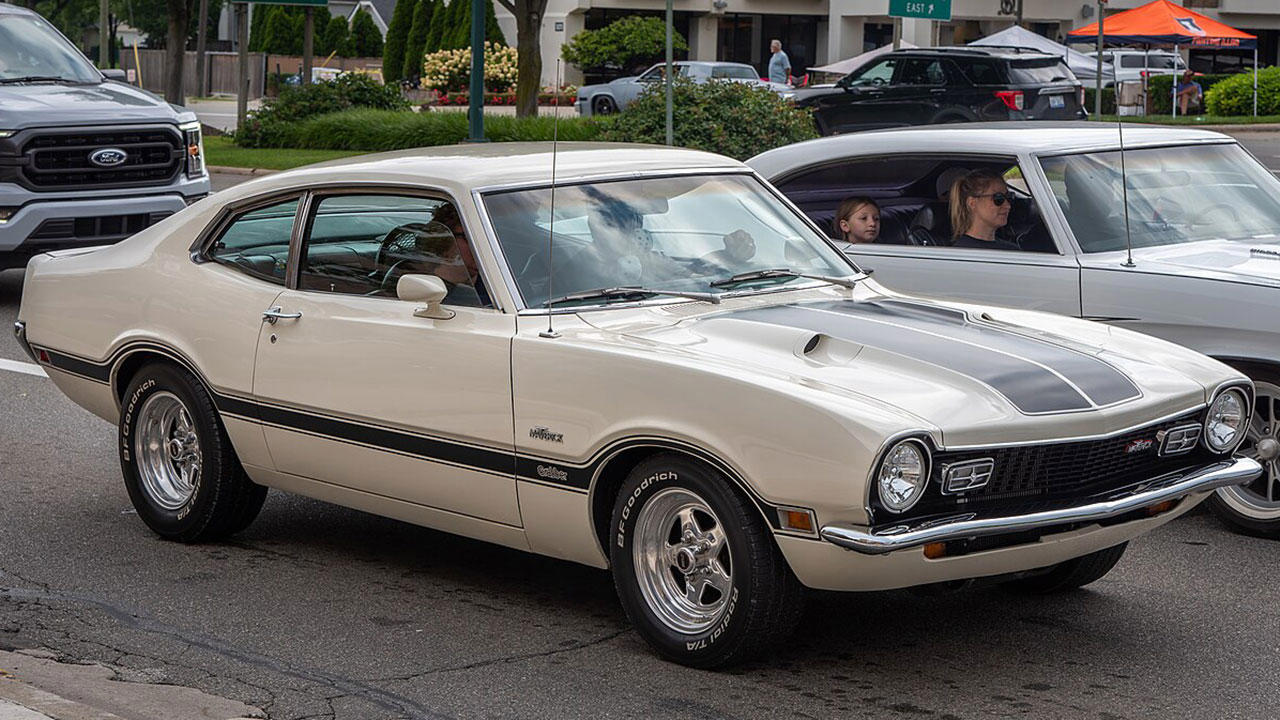



















The 1971 Ford Maverick was affordable but not always built for the long haulThe 1971 Ford Maverick arrived as a bare‑bones compact that promised style and basic transportation at a price many families could finally reach. It delivered on that brief, but the car’s cost cutting and light construction meant longevity was never its primary mission. More than half a century later, the 1971 Maverick’s story is a mix of bargain brilliance and the compromises that kept it from feeling truly durable. Born to be cheap, not timeless The Maverick was conceived inside Ford as a simple answer to rising import competition and growing demand for smaller cars. Company planners wanted something that could be built quickly on existing mechanical ideas, sold cheaply and, if necessary, replaced rather than preserved. Internal thinking around the project framed the Maverick as basic transportation that was not expected to last a lifetime, a philosophy reflected in period marketing and in later retrospectives on its history, specifications and. Lee Iacocca, then an executive vice president at Ford Motor Company and widely described as the father of the Ford Mustang, was closely associated with the company’s push into stylish but affordable cars. The Maverick followed that formula in a stripped‑down way. It borrowed some of the long‑hood, short‑deck proportions that had worked on the Mustang but sat on a simpler chassis with less expensive materials and minimal trim. In effect, Ford offered a compact that looked modern enough in the driveway yet was engineered with a short ownership horizon in mind. Design philosophy: simple lines, simpler hardware Period design studies, including the 1970 Ford Maverick Estate Coupe concept, show how Ford’s studios tried to stretch the basic shape into multiple body styles. That particular estate coupe never reached production, but the work reveals how much the Maverick’s architecture was meant to be flexible and cheap to adapt. The design philosophy centered on stamping efficiency, limited brightwork and a cabin that could be trimmed with vinyl and plastic rather than expensive fabrics or complex shapes. Under the skin, the 1971 Maverick relied on proven, almost conservative hardware. The front suspension used straightforward components, the rear sat on leaf springs, and the steering system prioritized cost over precision. This approach kept showroom prices low and maintenance simple, but it also left the car feeling crude compared with more sophisticated rivals as the decade wore on. Owners who remember these cars often describe them as honest but basic, a reflection of Ford’s own positioning around simple design philosophy rather than long‑term refinement. Powertrains that outlasted the body Where the Maverick often surprised critics was under the hood. Enthusiasts and former owners frequently point out that the powertrains were usually fine. One detailed account of ownership experience notes that pre‑1973 models were pretty rugged mechanically, with the inline‑six engines in particular regarded as nearly unkillable when given basic care. That same perspective, drawn from a discussion by a driver who studied at the University of Western Ontario and graduated in 1995, reinforces how the car’s mechanical simplicity made it easy to keep running, even if the rest of the vehicle aged poorly, as reflected in a widely cited dependability discussion. Real‑world mileage stories back that up. One long‑term owner named Micah kept a Maverick on the road for 35 years and drove it 220,000 miles before finally letting it go. By that point, the car had been through multiple rounds of repairs and upgrades, and little original remained beyond some basic structure and hardware. Another owner recalled a 1970 Maverick whose body rusted out at about 200,000 miles while the engine was still serviceable enough to keep. These examples highlight a pattern: the drivetrain could soldier on for decades, but the shell around it was often the weak link. On the road: light, loose and a bit crude Driving impressions from the period and from later owners paint a consistent picture. Compared with newer cars, an old Maverick tends to understeer, with heavy steering and a lot of body movement over rough pavement. One driver who compared an older Maverick with more modern vehicles described noticeable cowl shake on rough roads and brakes that felt marginal by current standards, similar in some ways to an early Mustang. That comparison, preserved in a discussion of how the Maverick stacked up in day‑to‑day reliability and handling, underlines how the car’s simple suspension and steering layout limited its composure even when everything was in good repair. Performance versions did exist. The Maverick Grabber package, offered around 1971, added cosmetic flair and could be paired with stronger engines and upgraded suspension pieces. Period reviews and later enthusiast write‑ups mention that performance‑oriented buyers could opt for upgraded suspension packages and wider tires for improved handling. Even then, the basic structure remained the same, and the car never fully shook its reputation as more of a straight‑line cruiser than a corner carver. Rust: the enemy of longevity Ask anyone who lived with a 1971 Maverick for more than a few winters and one problem comes up repeatedly: rust. The older a Ford Maverick is, the more susceptible it becomes to rust, and this was a significant issue on early cars. Common trouble spots included the floorpans, rocker panels, wheel arches and lower fenders, areas where thin metal and minimal rustproofing left the structure vulnerable. A detailed breakdown of common problems with the Ford Maverick stresses how corrosion can turn an otherwise running car into a safety concern, especially when frame rails or suspension mounting points are affected, an issue that specialists in off‑road and parts supply see regularly in their work on rust issues on. Owners’ stories echo that diagnosis. The Facebook post about the 1970 Maverick engine describes a body that simply rusted away around the drivetrain. Similar anecdotes from long‑time enthusiasts mention patch panels, improvised repairs and, eventually, the decision to retire the car because the cost of welding exceeded the value of the vehicle. In climates with heavy road salt, a Maverick could look tired within a decade, even if the engine still started every morning. “Good reliability, horribly dated” Online forums and communities that trade memories of 1970s cars tend to describe the Maverick in strikingly similar terms. One widely shared comment sums it up as good reliability, adequate power, not sporty at all and horribly dated by the end of its run. That mix of praise and criticism captures the car’s split personality. On one hand, the mechanical package was simple enough that “not much could go wrong that had not been perfected in prior decades.” On the other, safety, refinement and styling moved quickly during the 1970s, and the Maverick’s unibody and interior did not keep pace. Contemporary owner reviews of the 1971 model from North America tell the same story in more personal detail. Drivers appreciated the low running costs and the fact that the car would usually start and run with minimal fuss. Complaints focused on rust, noise, lack of crash protection by later standards and a general sense that the car felt disposable. For many families, that was acceptable, because the Maverick was often a first car, a commuter or a temporary solution rather than a treasured heirloom. From commuter car to drag strip sleeper Although the Maverick was never marketed as a full muscle car, its light weight and available V8 engines caught the attention of racers. In an era sometimes described as the end of the golden age of muscle cars, one new Ford model was brought in to breathe some speed back into showrooms, and the Maverick played a supporting role in that story. Enthusiast videos and histories point out that drag racers loved the V8 economy car combination, since a relatively cheap Maverick shell could be paired with stronger Ford small‑block engines to create a quick quarter‑mile machine. That subculture gave some Mavericks a second life far beyond what Ford’s planners likely imagined. Cars that might have gone to the crusher instead became weekend racers, stripped of interior trim and fitted with roll cages and slick tires. In that context, the car’s lack of long‑term corrosion protection mattered less than its low purchase price and straightforward engine bay. The same traits that limited the Maverick’s appeal as a durable family car made it attractive as a blank canvas for budget performance projects. A Vermont survivor and the enthusiast eye Not every Maverick was condemned to the rust belt. In one enthusiast video, presenter Steven Yant stands in the wilds of Vermont with a 1971 Ford Maverick and walks through its quirks and charms. The setting is a reminder that survivors exist in pockets where owners either protected the cars or where road salt was less aggressive. Yant’s walkaround highlights how the Maverick’s simple lines and compact size still look appealing to some eyes, especially when contrasted with the bulk of many modern vehicles, a perspective that comes through clearly in his Ford Maverick overview. Enthusiasts who seek out these cars today often approach them with realistic expectations. They know to inspect the underbody carefully, budget for rust repair and accept that many interior pieces will be brittle or sun‑damaged. Parts availability has improved thanks to reproduction catalogs and specialist vendors who list Maverick components alongside more famous nameplates such as Camaro, Nova and Impala. Model‑specific menus for classic parts show that the Maverick now sits within a broader ecosystem of supported vintage Fords, even if it remains a niche interest compared with the Mustang. How owners remember living with one Firsthand accounts from people who drove Mavericks when they were simply used cars, not collectibles, help explain why the model still inspires loyalty. Some recall learning to drive in a no‑frills 1971 sedan, appreciating its thin pillars and good visibility. Others emphasize how forgiving the car was mechanically. Oil changes, brake jobs and tune‑ups could be handled in a driveway with basic tools. A Quora contributor who compared the Maverick with newer cars mentioned that while the handling felt dated and the steering heavy, day‑to‑day reliability was acceptable as long as maintenance stayed current. At the same time, those memories often come with caveats. Several owners describe interiors that felt cheap even when new, with hard plastics and vinyl that cracked under sun exposure. Safety expectations have also shifted. Lap belts, minimal crash structure and a steering column that did not match modern energy‑absorbing designs leave the Maverick far behind current norms. For drivers who now commute in vehicles with multiple airbags and electronic stability control, the idea of daily driving a 1971 compact can feel more romantic than practical. More from Fast Lane Only Unboxing the WWII Jeep in a Crate 15 rare Chevys collectors are quietly buying 10 underrated V8s still worth hunting down Police notice this before you even roll window down The post The 1971 Ford Maverick was affordable but not always built for the long haul appeared first on FAST LANE ONLY.