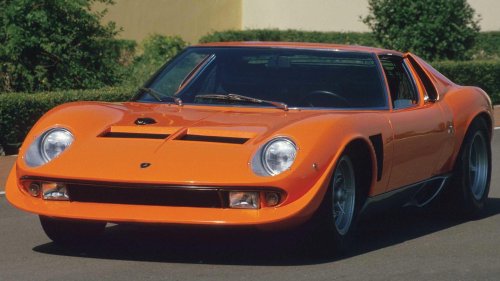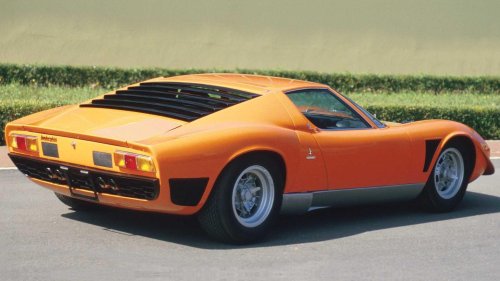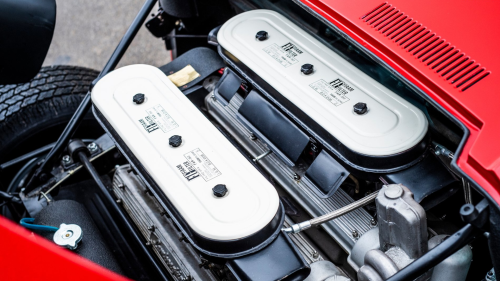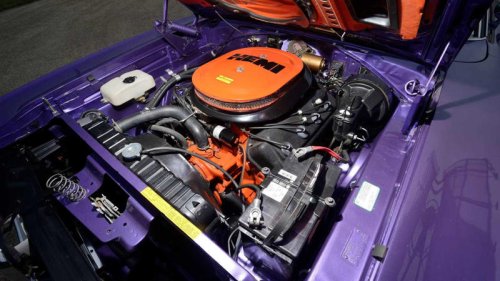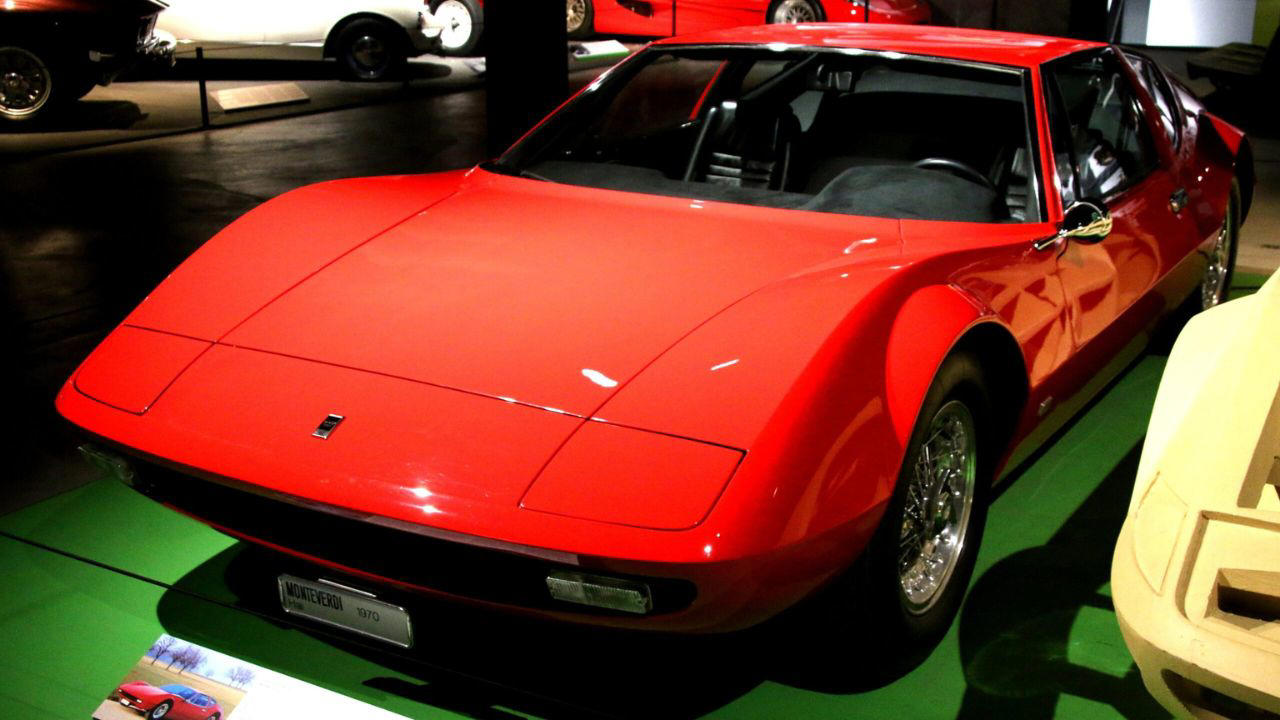


















The 1970 Monteverdi Hai 450 offered extreme performance that few ever experiencedAmong the wildest performance cars of the 1970s, the Monteverdi Hai 450 might be the one most enthusiasts have never seen in person. Conceived as a Swiss-built mid‑engine supercar with American V8 power, it promised speed that rivaled the era’s best while remaining almost entirely out of public reach. Its tiny production run, complex backstory, and ambitious engineering left a ghostly footprint that fascinates collectors and historians more than half a century later. Today the Hai 450 stands as a case study in how a small manufacturer could chase world‑class performance, briefly touch greatness, then virtually disappear from mainstream memory. What happened The Hai 450 emerged from Monteverdi, a boutique Swiss marque founded by Peter Monteverdi that had already built a reputation for luxurious grand tourers using American engines. By 1970 the company wanted something more radical than its front‑engine high‑speed coupes. Its answer was a low, wedge‑shaped, mid‑engine sports car that would carry the name Hai, the German word for shark, and the number 450 to signal its claimed top speed in kilometers per hour. Power came from a Chrysler‑sourced 7.0‑liter Hemi V8, a huge engine even by muscle‑car standards. Period figures for the Monteverdi specification generally quoted around 450 horsepower, a level that put the Hai directly in the firing line of contemporary exotics such as the Lamborghini Miura and the early Ferrari Berlinetta Boxer. The combination of a mid‑mounted American big‑block, a steel tube chassis, and a sharply folded body made the Hai 450 one of the most extreme performance concepts of its day, even among the decade’s many experiments in speed. Unlike some concept specials that stayed on the stand, the Hai 450 was presented as a road‑going car that wealthy buyers could actually order. Monteverdi showed the car publicly and spoke about limited production, signaling that the company intended to move beyond its comfortable niche of elegant GTs into the rarified space of full‑bore supercars. The purple prototype, often photographed with its dramatic gullwing‑style engine cover raised, became the unofficial poster car for this ambition. Reality was less generous. Most sources agree that only a handful of Hai 450s were ever completed, with figures typically ranging from two to four original examples, followed later by a small number of continuation or replica cars. Exact numbers remain contested, in part because Monteverdi was a tiny operation that did not publish detailed production records. What is clear is that the car never reached anything close to serial production and that genuine period‑built Hais are among the rarest performance machines of the 1970s. The Hai also faced the same headwinds that buffeted the entire high‑performance segment as the decade progressed. Stricter emissions rules, a shifting insurance climate, and the oil crisis made it increasingly difficult to sell extremely powerful, thirsty sports cars, especially for a small manufacturer without the resources to reengineer engines for multiple markets. Monteverdi continued to build other models, including luxury four‑wheel‑drives, but the Hai remained a tantalizing side project rather than a core business line. With so few cars built and Monteverdi itself operating on the fringes of the mainstream industry, the Hai 450 slipped into obscurity as newer supercars took the spotlight. Modern lists of forgotten exotics often place the Hai alongside other short‑run 1970s rockets, such as the Iso Lele or the De Tomaso Pantera variants, as a car that promised outrageous performance yet barely brushed the consciousness of ordinary drivers. One such overview of 1970s performance cars that faded from view highlights how the Hai’s specification and rarity make it a textbook example of this pattern. Surviving examples, when they appear at specialist events or in private collections, reveal how serious the original engineering effort was. The chassis layout, with its mid‑engine configuration and low center of gravity, reflects contemporary racing practice more than luxury touring tradition. The bodywork, with wide haunches and deep air intakes, shows how Monteverdi aimed to combine Italian‑style drama with Swiss attention to detail. Yet for most enthusiasts, the Hai 450 exists only in photographs and scattered reports, rather than as a car they might encounter on the road or even at a typical concours. Why it matters Although the Hai 450 never reached meaningful production, its significance lies in what it reveals about the supercar arms race of the early 1970s. At a time when Lamborghini, Ferrari, Maserati, and De Tomaso were pushing the limits of power and speed, a small Swiss firm believed it could match them by pairing American muscle with European chassis tuning. The Hai represents a crossroads where different performance traditions met: Detroit displacement, Italian‑style mid‑engine packaging, and Swiss boutique craftsmanship. The choice of a Chrysler Hemi V8 was not just a matter of convenience. Monteverdi had already used American engines in its GTs, valuing their reliability, torque, and relatively low cost compared with bespoke European V12s. In the Hai 450, that philosophy reached its most extreme form. The car effectively transplanted the heart of a drag‑strip bruiser into a low, mid‑engine chassis more commonly associated with racing prototypes. This hybrid approach foreshadowed later supercars that would also rely on large‑capacity V8s rather than exotic multi‑cylinder engines, proving that raw performance did not require a twelve‑cylinder badge. The Hai also matters because it shows how fragile the supercar dream can be for small manufacturers. Monteverdi had the design talent and engineering connections to create a credible rival to the best from Italy and Germany. What it lacked was the capital, regulatory infrastructure, and global dealer network needed to build and support such a car in meaningful numbers. The gap between the Hai’s promise and its reality illustrates how difficult it is to move from showpiece to sustainable product, especially in a period of economic and regulatory turbulence. From a cultural perspective, the Hai 450 captures the optimism and excess of its era. The late 1960s and early 1970s saw designers chase ever more dramatic shapes, with sharp wedges, pop‑up headlights, and vast glass areas. The Hai’s low nose, broad rear deck, and aggressive stance fit squarely into this visual language. Beneath the styling, it also reflected a belief that technology and engineering could keep pushing performance upward without serious compromise. That belief would soon collide with fuel shortages and environmental concerns, which makes the Hai feel like one of the last expressions of a more carefree performance mindset. Collectors and historians view the Hai as an important missing link in the story of European supercars. It sits between the early mid‑engine pioneers like the Miura and the more standardized, professionally produced supercars that emerged later in the decade. Where companies such as Ferrari gradually industrialized their mid‑engine ranges, Monteverdi’s attempt remained artisanal and fragile. The contrast highlights how only a few brands managed to turn radical prototypes into long‑term commercial success. The car’s obscurity also shapes how enthusiasts think about automotive history. Mainstream narratives often focus on a handful of famous models, which can make the evolution of performance seem more linear than it really was. The Hai 450 reminds readers that the 1970s were crowded with experiments from small firms that tried to bend the rules of what a road car could be. Some, like De Tomaso, carved out a lasting niche. Others, like Monteverdi, left behind a handful of cars and a trail of stories that require more effort to uncover. In a market where rarity and backstory drive value, the Hai’s near invisibility adds to its allure. A supercar that almost nobody has seen, built by a company that no longer exists, with performance figures that rivalled the giants of its day, becomes a kind of automotive folklore. Auction appearances and museum displays turn into events precisely because they give physical form to a car that many people know only from a few grainy images and short technical summaries. The Hai 450 also has a quieter influence on how modern boutique manufacturers approach their projects. Companies such as Pagani and Koenigsegg have shown that it is possible for a small team to build world‑class hypercars, but they have done so with far more attention to regulatory compliance, customer support, and long‑term branding than Monteverdi could muster. The Hai’s fate, where a brilliant idea could not overcome structural limitations, serves as a cautionary example of what happens when engineering ambition outpaces business capacity. What to watch next Interest in obscure 1970s performance cars has grown as collectors search beyond the usual blue‑chip names. This shift has already brought more attention to marques such as Iso, Jensen, and De Tomaso, and the same pattern is beginning to lift awareness of Monteverdi. The Hai 450, with its combination of rarity and extreme specification, is well positioned to benefit from this renewed curiosity about forgotten exotics. One area to watch is how museums and private collections choose to present the Hai in the context of broader supercar history. When a Hai appears alongside more familiar icons such as the Miura or the Lamborghini Countach, it invites comparisons that often favor its technical ambition, even if its production story was far less successful. Curators who frame the car as part of a wider wave of experimentation can help audiences understand that the 1970s were not just about a few headline models but about a crowded field of contenders, some of which never got a fair chance. Another factor is the continuing appetite for detailed historical research. As archives are digitized and enthusiasts track down former employees and owners, more precise information about cars like the Hai tends to surface. Production numbers that once seemed vague can become better documented, and engineering details that were only hinted at in period brochures can be reconstructed. For the Hai 450, whose story is riddled with small inconsistencies and gaps, this kind of work may clarify how many genuine cars exist and what variations separate early prototypes from later builds. The market for continuation and recreation cars also has implications for the Hai’s legacy. In recent years, several brands have licensed or unofficially inspired new builds of classic supercars, sometimes using original tooling or period‑correct components. If interest in Monteverdi continues to rise, there may be pressure to create new cars that echo the Hai’s design and layout, either as faithful recreations or as modern reinterpretations. Such projects can help keep a name alive, but they can also blur the line between original artifacts and later tributes, which matters greatly to historians and serious collectors. There is also a broader trend in how enthusiasts evaluate performance. Modern supercars deliver acceleration and speed that far exceed anything imagined in 1970, yet many collectors are increasingly drawn to cars that feel raw and analog rather than clinically fast. The Hai 450 fits this preference perfectly. With a large‑displacement naturally aspirated engine, a manual gearbox, and minimal driver aids, it offers an experience that is intense, demanding, and deeply mechanical. As more drivers seek this kind of engagement, the appeal of cars like the Hai is likely to grow, even if only a tiny number of people ever get to drive one. More from Fast Lane Only Unboxing the WWII Jeep in a Crate 15 rare Chevys collectors are quietly buying 10 underrated V8s still worth hunting down Police notice this before you even roll window down