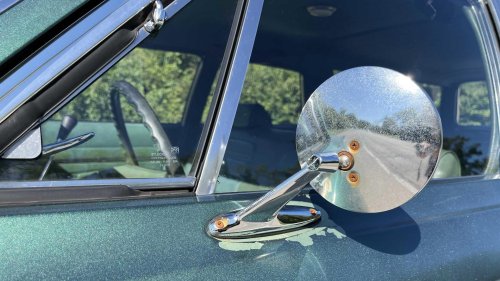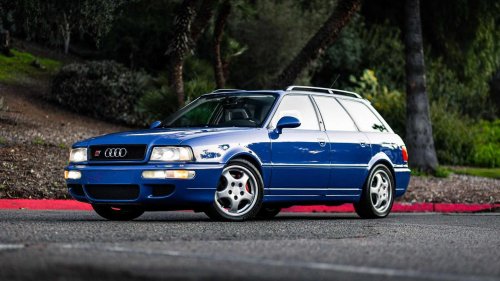
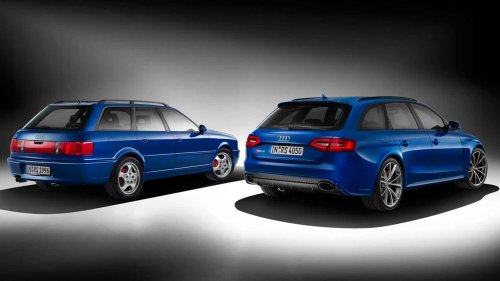
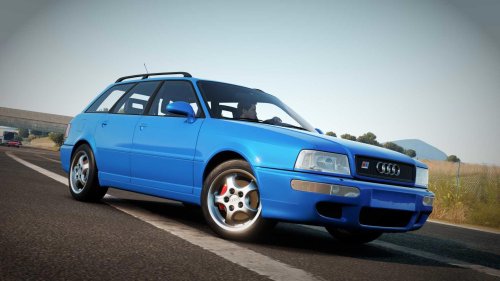
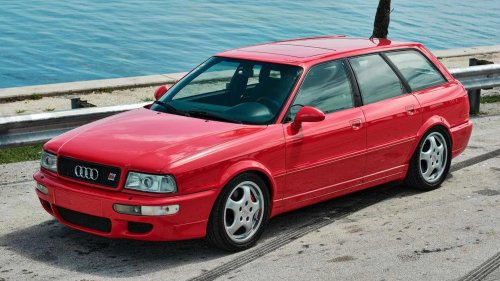
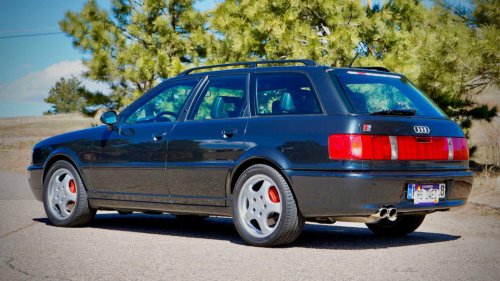
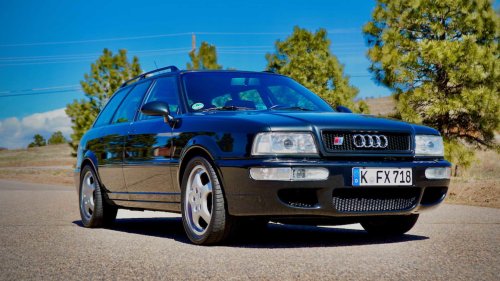
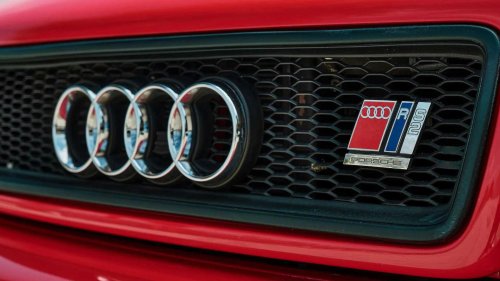


















There’s a certain type of car that only really makes sense once you experience it. On the surface, it looks like something built for errands, road trips, and carrying way more stuff than you probably need. It’s practical, understated, and easy to ignore, and that's what makes it fun these days.Back in the early ’90s, performance cars were pretty predictable. Two doors, aggressive styling, and a badge that made it obvious what you were getting. Wagons didn’t belong anywhere near that conversation because they were built for space and comfort, not speed. But that’s exactly why this Audi worked. It didn’t try to look fast, and once you realized it was fast, it was too late. The Audi RS2 Avant Started As A Normal Family Wagon Cars & BidsAt its core, the Audi RS2 Avant started life as the Audi 80 Avant, which was about as straightforward as it gets. It was a practical, five-door wagon with enough room for passengers, cargo, and everything in between. Nothing about the base car suggested it was heading toward anything performance-focused.AudiEven in RS2 form, it didn’t try to change that too much. The styling stayed subtle with slightly wider wheels, a more aggressive stance, and a few small details that hinted something was different. It still read as a normal wagon. That’s what makes it work. You got some real rear seat space, a functional cargo area, and a useable layout for groceries and road trips. It doesn’t sacrifice any of that to chase performance, it just adds performance on top of it.Fun Fact: The Audi RS2 Avant was never officially sold in the United States, which is why most examples you see today are imported under the 25-year rule. Porsche Turned The RS2 Avant Into Something Else Entirely This is where the story changes. Audi didn’t build the RS2 alone. It brought in Porsche, and that decision is what pushed this car into a completely different category. Porsche handled key parts of the development, including engine tuning, suspension setup, and portions of the assembly. Final production even took place at Porsche’s Rossle-Bau facility. You can see that influence in the details. The brakes were sourced from Porsche, the wheels matched Porsche designs of the time, and even the side mirrors came from the 911.Via www.youtube.comMore importantly, it changed how the car actually drives. The suspension is tighter, the response is sharper, and the whole thing feels more focused than you’d expect from something with this shape. It still works as a daily driver, but there’s a level of precision here that you don’t get in a typical wagon from this era. The RS2 Avant Delivered Performance No One Expected Bring a TrailerThe numbers are what completely change how you look at the RS2. Up to this point, it still reads like a slightly upgraded wagon. Once you start digging into the performance, it stops fitting into that category altogether.For 1994, this wasn’t just quick for a wagon. It was quick compared to real performance cars. A 0–60 time in the high four-second range put it right in the middle of cars people were actually buying for speed, not practicality. And because it came from something that still looked like a normal Audi wagon, that gap between expectation and reality feels even bigger.Bring a TrailerPerformance SpecificationsA big part of that comes down to how the car puts its power down. The Quattro all-wheel-drive system gives it a level of traction most cars at the time couldn’t match. You don’t get the hesitation or wheelspin you’d expect from a rear-wheel-drive setup. It just hooks and goes, which is how it ended up being quicker to 30 mph than a McLaren F1. That sounds exaggerated, but it’s really just a traction story.Then there’s the engine itself. The turbocharged inline-five has a very specific character. It’s not smooth in the way a V8 is, and it doesn’t rely on high revs to make power. Instead, it builds and then hits with a noticeable surge once boost comes in. That delivery is what makes the car feel faster than the numbers suggest, especially in real-world driving.Fun Fact: The side mirrors were taken directly from the Porsche 911 (993), making them one of the easiest ways to spot a real RS2. The RS2 Avant Created Audi’s RS Performance Line Bring a TrailerThe RS2 was the first car to wear Audi’s RS badge, and it set the template that still defines those cars today. Turbocharged engines, all-wheel drive, and real-world usability all work together in one package. That formula carried over into everything that followed. The RS4, the RS6, and the rest of the lineup all build on what started here. More power, more technology, but the same core idea. You don’t have to give up practicality to get performance.Bring a TrailerWhat the RS2 proved is that there’s real value in that combination. It showed that a car could do both without feeling compromised. That’s something a lot of brands are still trying to get right. Wagons had really fallen off the wagon (if you will) over the last decade, but they have suddenly made quite a resurgence.America doesn't always get them, but BMW, Audi, Mercedes, and others have slowly reintroduced this body style to their lineup, even if it's just in small numbers. Audi announced an A6 Avant turbo wagon last year, and even the RS 3 Competition Limited Sportback recently. There's also a plug-in hybrid 2027 RS6 Avant in the works, but we don't have all the deets yet. It’s Now One Of The Most Important Performance Wagons Ever Built Looking at it now, the RS2 feels a lot more significant than it probably did at the time. When it launched, it wasn’t positioned as some groundbreaking moment for the industry. It was a limited-run performance wagon that most markets didn’t even get. But in hindsight, it set the tone for an entire category.It introduced the RS badge, proved that all-wheel drive could work in a serious performance application, and showed that practicality didn’t have to come at the expense of speed. That combination is everywhere now, but back then, it wasn’t a given. The RS2 helped normalize it.Bring a TrailerFun Fact: Early RS2 models were only offered in Nogaro Blue, which later became one of Audi’s most recognizable performance colors. Recent Market Values Values have been trending up, and that’s not surprising. Production was limited to fewer than 3,000 units, and it holds a clear place in Audi’s history as the first RS model. On top of that, you have the Porsche connection, which adds another layer to the story. What’s interesting is that the concept still holds up. Performance wagons are more common now, but this was one of the first to really get it right. It didn’t feel like a compromise or a niche experiment. It felt complete.That’s why it works so well with this title. It looks like a normal wagon, and for a lot of people, that’s all it will ever be. But once you look closer, or better yet, drive one, it becomes obvious this was something very different.