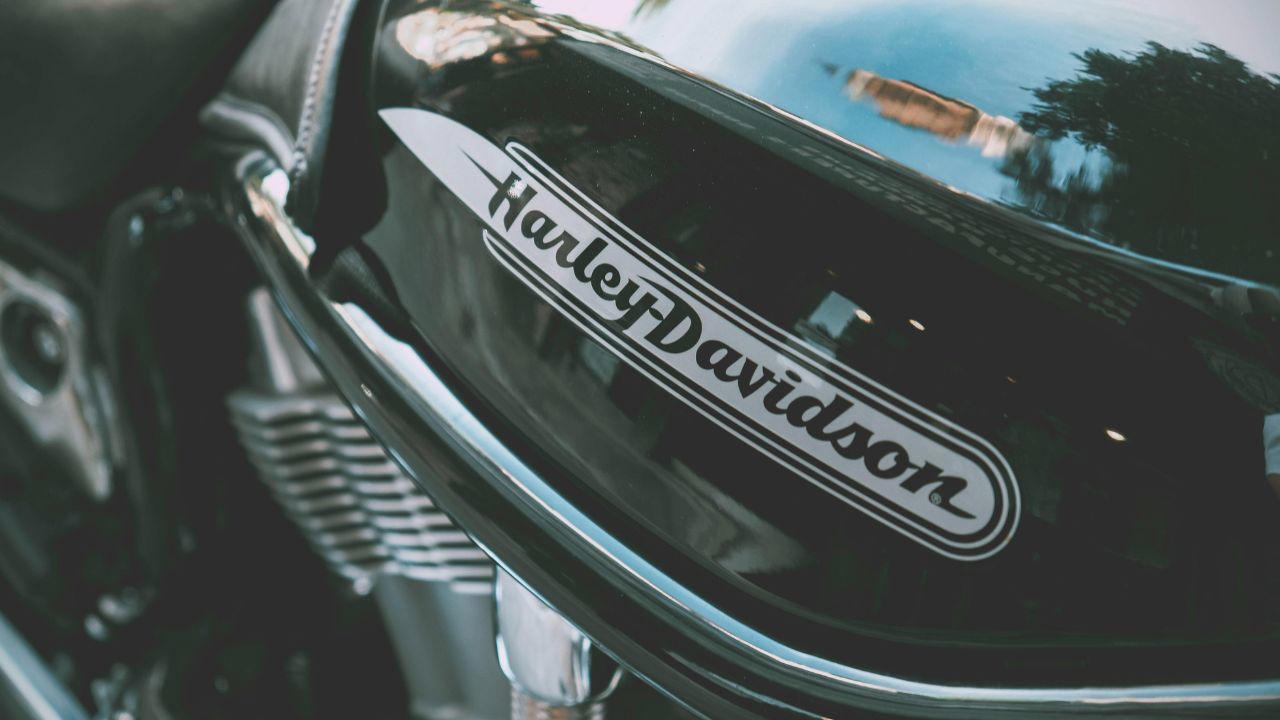
Harley-Davidson secretly built a wild superbike you never got to rideYou know Harley-Davidson for air-cooled cruisers and long-haul touring rigs, not for a shrieking superbike that could trade punches with Ducati on a racetrack. Yet in the 1990s, the company quietly built a radical machine that almost no one outside the paddock ever touched. The VR1000 was a full-blooded racer with a 135 horsepower V twin and a chassis to match, but you could not walk into your local dealer and buy one. Instead, you watched from the sidelines while a tiny batch of road-legal specials went to a few insiders and a distant registration office in Poland. If you care about how brands reinvent themselves, or you simply love oddball engineering, you owe it to yourself to understand the superbike Harley-Davidson kept just out of your reach. How you ended up with a Harley superbike at all Your story with the VR1000 really starts in the late 1980s, when Harley-Davidson engineers began work on a high performance, liquid cooled engine specifically to enter superbike competition. According to a detailed factory account, Harley and Davidson staff kicked off that engineering push in 1988 as the first step toward a modern racer that kept the V twin layout but abandoned air cooling and pushrods for something far more aggressive. The result was the VR1000, which appeared on track for testing in 1993 and then for full AMA Superbike competition in 1994. Instead of the traditional big twin you associate with the Motor Company, you were suddenly looking at a purpose built race engine, a project that insiders described as helping Harley and Davidson people adopt completely different ways of thinking about their motorcycles. Inside the company, the VR program was not just about trophies. Senior figure Willie G. Davidson framed it as a way to learn new technologies and give customers something to cheer about at the track, even if the bike itself would never become a mass market product. The quad cam heart that did not sound like Milwaukee If you could have rolled a VR1000 into your garage, the first thing you would notice is that the engine looks nothing like a big air cooled cruiser motor. The race unit was a liquid cooled, quad cam V twin with a displacement just under a liter and a layout that put it in direct contention with contemporary European superbikes. One detailed technical breakdown describes it as a 996 cc, 60-degree V twin with double overhead cams and four valves per cylinder, an architecture that pushed Harley and Davidson engineering into the same conversation as Ducati. Output figures drive that point home. The motor produced a claimed 135 horsepower at 10,000 rpm, a number that put it shoulder to shoulder with Ducati’s 916 SP at the time. For a brand whose street bikes rarely flirted with five digit rev ceilings, that 10,000 rpm redline and 135 horsepower peak represented a complete break with tradition. You were no longer talking about lazy torque and early shift points. You were talking about a screamer that wanted to live at the top of the tach. Riding impressions from insiders reinforce how alien it felt. One veteran described the VR1000 as “God’s Own Voice,” a machine that used bespoke internals, including unique pistons, to create a sound and character unlike any previous Harley and Davidson product. If you are used to the syncopated rumble of a big twin, the VR1000’s hard-edged bark would have felt like stepping into another brand altogether. A chassis that belonged on the front row The engine was only half of what you missed. The chassis wrapped around it was a pure race tool. Reports on the VR1000’s hardware point to a hand built frame, top shelf suspension and brakes, and a compact, aggressive riding position that placed you over the front wheel rather than sunk into a saddle. Weight figures varied over the life of the project, but the bike was competitive with other AMA Superbikes of the era, and the geometry was tuned for quick turn in and stability at triple digit speeds. To meet the series rules, Harley had to build a limited number of road going versions that mirrored the race bike. The AMA rule book required that Superbikes be “as sold for normal highway use,” which forced Harley to think about lights, mirrors, and registration for a machine that had never been intended as a commuter. The solution they found meant you, as a typical American rider, were kept at arm’s length. Why your VR1000 would have had a Polish passport Homologation is where the VR1000 story gets strange. The company built 50 of these VR1000 superbikes, half for the track and half for the road. That 50 unit run satisfied the minimum production requirement, but there was a problem. There was no way the VR1000 would pass strict emissions tests in America, or in markets like Australia, if Harley tried to sell it as a normal street bike. Instead, Harley-Davidson found a loophole. The road going VR1000 was only considered street legal in Poland, a market where the registration hurdles were lower for this sort of specialty machine. For homologation purposes, that Polish paperwork was good enough. In practical terms, it meant that if you wanted a road legal VR1000, you were looking at a machine with foreign documents and a very unusual path to your local roads. Dealers did not line up to stock them. You could not just wander into any old Harley dealership and put a deposit on a VR1000. The bikes were offered in tiny numbers, often to collectors or insiders who understood what they were getting. For most riders, the closest you came was seeing one in a glass case or on a race trailer. Track record: the superbike that never delivered a win On paper, you might expect a 135 horsepower, 10,000 rpm V twin to start racking up trophies. Reality was harsher. Across its competitive life in AMA Superbike, the VR1000 never won a single race. That blunt assessment has become part of Harley lore. You were not watching a dark horse that shocked the field. You were watching a brave experiment that struggled with development, funding, and reliability against established rivals. Commentary from period observers calls the VR a curious case of a successful company trying something different for them, then not fully committing. The bike showed flashes of speed in the hands of talented riders, yet it rarely finished up front and often suffered from mechanical issues that undercut its promise. For you as a fan, it was a lesson in how hard it is to jump into top level roadracing without decades of experience. The Motor Company eventually pulled the plug. The factory effort was retired in the early 2000s, and the Harley flag did not return to a roadracing paddock until later one make series built around other models. By then, the VR1000 had already slipped into myth. From flop to cult object you will probably never own If you measure success by wins, the VR1000 failed. If you measure it by the way collectors chase it today, the picture looks very different. Auction reports describe the model as one of Harley’s biggest flops at the time, yet now a desirable classic. When a 1994 example crosses the block, you are looking at a bike that is “not just any old Harley dealership” special, but an ultra rare homologation racer that serious buyers fight over. Production numbers explain part of that appeal. Only 50 were ever built, with roughly 25 dedicated to the track and 25 to the road. That makes each surviving machine a key piece of Harley and Davidson history. Social posts from dealers and collectors highlight specific chassis numbers, such as #25 of 50, as if they are fine art pieces rather than motorcycles. Why this secret superbike still matters to you More from Fast Lane Only Unboxing the WWII Jeep in a Crate 15 rare Chevys collectors are quietly buying 10 underrated V8s still worth hunting down Police notice this before you even roll window down


















 +16 others