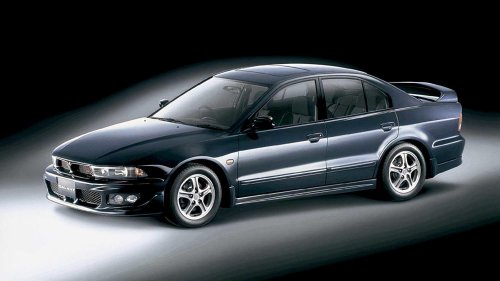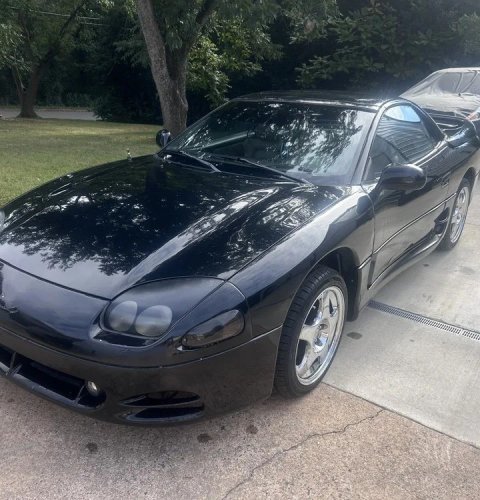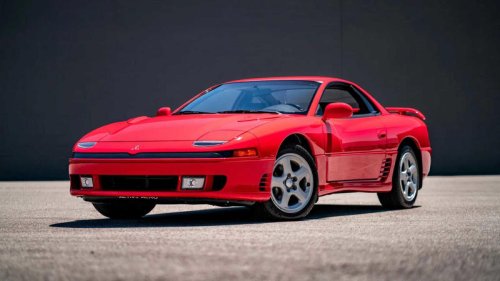
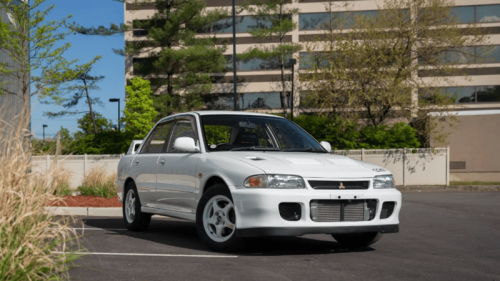
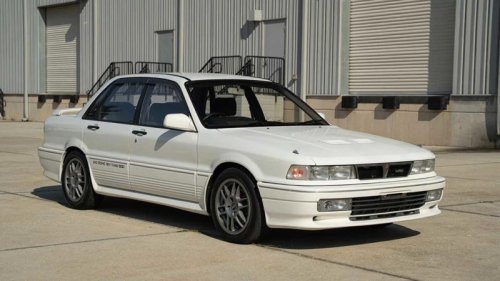
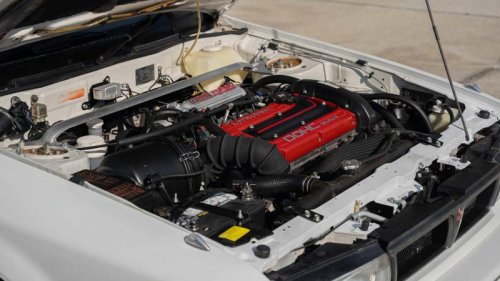
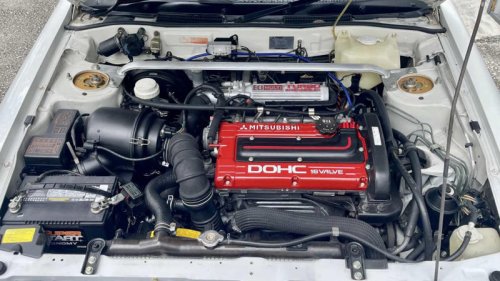
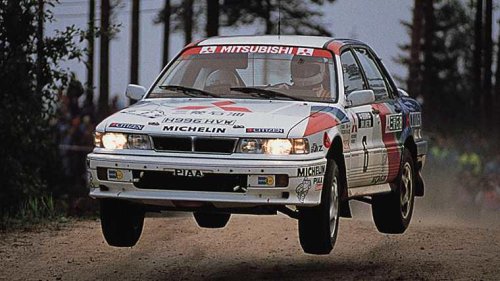
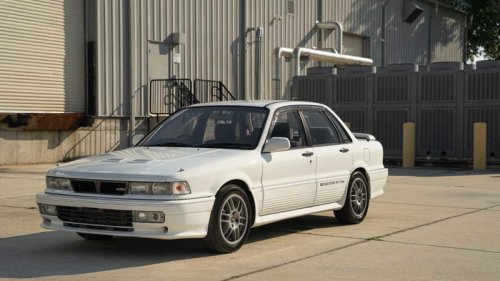
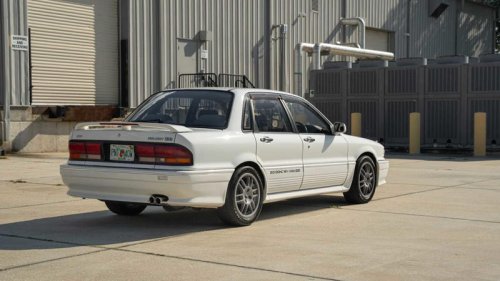



















In the late 1980s and early 1990s, the automotive world stood at a fascinating crossroads. The industry was just beginning to embrace the digital age as electronic fuel injection became standard and early anti-lock braking systems started appearing in several mass-market vehicles. Most drivers still viewed performance through a purely mechanical lens, focusing on raw displacement and simple hardware.However, while history books often credit later icons as the true pioneers of high-tech automobiles, one Japanese manufacturer was already years ahead of the curve. Long before advanced electronics became the industry norm, Mitsubishi released a sophisticated performance vehicle that functioned like a ground-breaking supercomputer on four wheels. The Technological Vanguard: Mitsubishi's Highly Advanced Sports Cars Of The 90s Bring A Trailer When automotive enthusiasts discuss the golden era of Japanese performance, Mitsubishi is often at the center of the conversation. The brand earned a reputation for building cars that felt like they were designed by aerospace engineers rather than traditional mechanics. Most people immediately point to the legendary 3000GT VR-4 or the iconic Lancer Evolution series as the primary examples of this high-tech philosophy.The 3000GT was a monster of the 1990s, boasting active aerodynamics and electronically controlled suspension that made it feel like a spaceship for the road. Meanwhile, the Lancer Evolution became a global phenomenon by using sophisticated computer-aided differentials to dominate rally stages and street races alike. These models made high-tech performance a household name, proving that software and sensors were just as important as horsepower and torque.Bring A TrailerHowever, the DNA of these famous machines did not appear out of thin air. While the world was marveling at the digital dashboards and active spoilers of the 1990s, a much quieter revolution had already taken place. There was a hidden ancestor that laid the groundwork for everything Mitsubishi would eventually achieve.This four-door sedan served as the ultimate laboratory for the company, integrating cutting-edge performance technology years before those features became the industry standard. It was a vehicle that bridged the gap between old-school mechanical grit and the new world of electronic precision.While the 3000GT and the Evo eventually took the spotlight, they were essentially standing on the shoulders of an underrated pioneer. This vehicle proved that Mitsubishi was thinking about the digital future long before the rest of the world caught up, creating a blueprint for the modern performance car. The Galant VR-4: A Pre-Digital Masterpiece Via: Bring a Trailer The true origin story of Mitsubishi’s high-tech dominance begins in 1987 with the arrival of the Galant VR-4. On the outside, it looked like a conservative, four-door family sedan, but underneath its unassuming bodywork lived the most advanced drivetrain of its time. Mitsubishi equipped the car with a revolutionary suite of features known as the Dynamic Four system.This was a holistic approach to vehicle dynamics that sought to give the driver total control regardless of the road conditions. At the heart of this system was a full-time all-wheel-drive setup that utilized a viscous coupling unit. This allowed the car to distribute power between the front and rear wheels with incredible smoothness, ensuring maximum grip on slippery gravel or wet pavement.Adding to its futuristic concept was a four-wheel steering system, a feature that was almost unheard of for a production sedan in the late 1980s. At higher speeds, the rear wheels would turn slightly in phase with the front wheels to improve stability during lane changes and cornering. This mechanical intelligence was powered by the legendary 4G63T engine.Via: Bring a Trailer This 2.0-liter, turbocharged, dual overhead cam powerhouse featured 16 valves and provided the explosive energy needed to make the most of the advanced chassis. What made the Galant VR-4 truly special was how all these components worked in harmony. It was a coordinated ecosystem that acted as a primitive precursor to the modern torque-vectoring and stability control systems we use today. By combining a high-output turbo engine with active steering and sophisticated power distribution, Mitsubishi created a pre-digital masterpiece that offered a level of competence and safety that few other manufacturers could match at the time. From Road To Rally: Cementing The Legacy Via: Bring a Trailer The advanced technology found in the Galant VR-4 was designed to survive the most brutal racing environments on the planet. Its true potential was revealed on the world stage when Ari Vatanen made an immediate impact during the car’s 1988 RAC Rally debut. From that point on, the Galant became a force to be reckoned with.Between 1989 and 1992, the vehicle secured six World Rally Championship victories, proving that its complex all-wheel-drive and steering systems could handle extreme conditions. The car’s success extended far beyond the WRC circuit. In 1992, Erwin Weber drove a Galant VR-4 to win the European Rally Championship, marking the first time a Japanese car ever claimed that prestigious title. Across the Atlantic, the car found similar success in the United States, where Tim O'Neil captured the 1992 SCCA Pro Rally Production GT title using a factory-backed model. World Rally Championship (WRC) Wins 1989 1000 Lakes Rally (Finland): Driven by Mikael Ericsson and Claes Billstam. 1989 Lombard RAC Rally (Great Britain): Driven by Pentti Airikkala and Ronan McNamee. 1990 Rallye Côte d'Ivoire Bandama: Driven by Patrick Tauziac and Claude Papin. 1991 International Swedish Rally: Driven by Kenneth Eriksson and Staffan Parmander. 1991 Rallye Côte d'Ivoire Bandama: Driven by Kenjiro Shinozuka and John Meadows. 1992 Rallye Côte d'Ivoire Bandama: Driven by Kenjiro Shinozuka and John Meadows. Championship Titles and Other Successes European Rally Championship (ERC): Erwin Weber and Manfred Hiemer won the 1992 title in a Galant VR-4, marking the first time a Japanese car won this championship. SCCA Pro Rally (USA): Tim O’Neil won the 1992 National Production GT title driving a factory-backed Galant VR-4. He also secured an overall win at the Capitol Forest Stages Pro Rally that same year. Asia-Pacific Rally Championship (APRC): The car was a dominant force, winning the series title with drivers Kenjiro Shinozuka (1988) and Ross Dunkerton (1991–1992). Mitsubishi Motors This era of competition served as the ultimate laboratory for Mitsubishi. While the Galant was incredibly capable, the engineering team realized that the platform was a bit large for the increasingly tight and technical rally stages of the 1990s. They decided to take the entire high-tech powertrain—the turbocharged engine and the sophisticated drivetrain—and transplant it into the smaller, lighter Lancer chassis.This transition resulted in the birth of the Lancer Evolution. The Galant VR-4 was the direct technical predecessor that allowed the Evo to become a legend. It established the winning formula of a compact, four-wheel-drive, four-wheel-steer platform that would eventually dominate the sport for a decade. Without the pioneering work done on the Galant, the Evolution series as we know it simply would not exist. The Hidden Gem of Today’s Market Via: Bring a Trailer In a world where Japanese performance cars from the 1990s are reaching astronomical price tags, the Galant VR-4 remains a shocking exception. While cars like the Subaru Impreza 22B can reach six-figure sums and a clean Lancer Evolution often requires a $30,000 entry fee, the VR-4 is a remarkable bargain.Current market data from Classic.com shows that the average price for these machines sits at a very accessible $12,916. For those looking at JDM imports, particularly the 1996 to 2002 models, high-quality examples can often be found for under $10,000. This price gap is hard to ignore, especially considering that the VR-4 offers much of the same mechanical soul and rally heritage as its more expensive siblings.Via: Bring a Trailer The Galant is the ultimate sleeper. To the untrained eye, it looks like a standard vintage sedan, but to those who understand its history, it is a sophisticated piece of engineering. Most collectors are still focused on the flashy body kits of the Evo or the 3000GT, meaning the VR-4 is still a hidden gem that people are largely unaware of. It represents the smartest way to own a genuine piece of Mitsubishi’s racing pedigree without paying a massive premium for a famous nameplate.In many ways, the Galant VR-4 is the quintessential "IYKYK" car. It was a machine that brought the high-tech future to the late 1980s before the rest of the automotive world was ready to handle it. It remains a testament to a time when Mitsubishi wasn’t just building cars, but was actively redefining what was possible on four wheels.Sources: Mitsubishi, Bring a Trailer, Classic, WRC