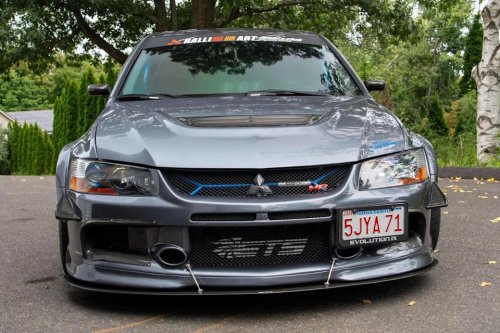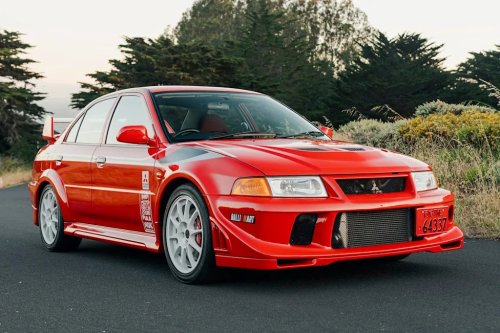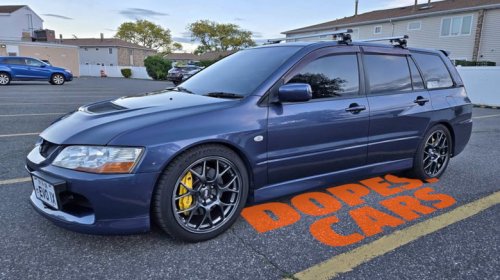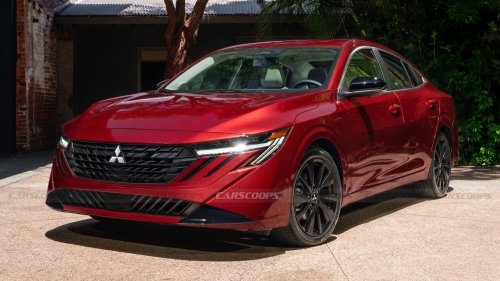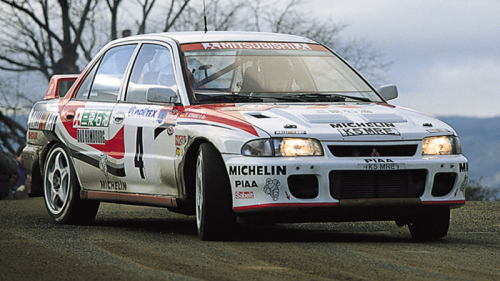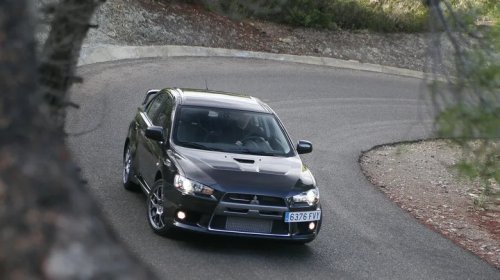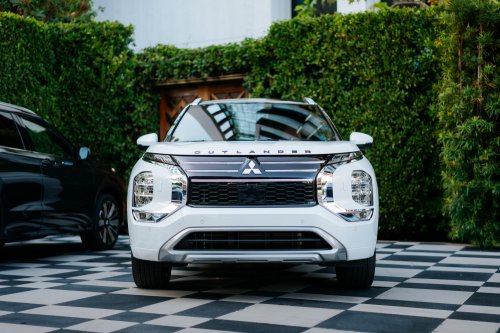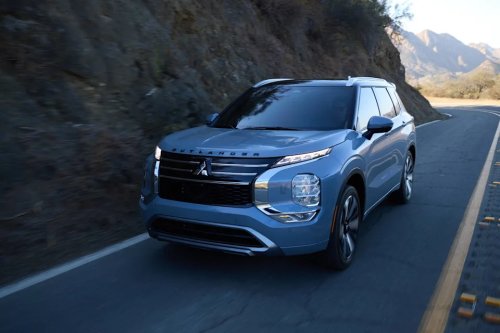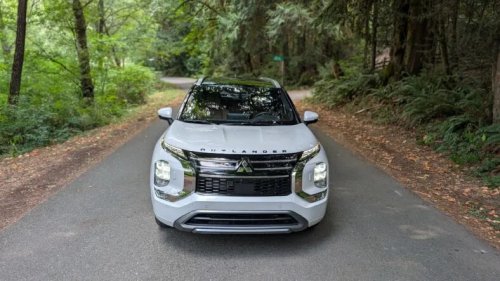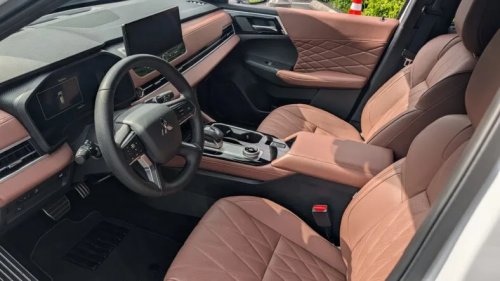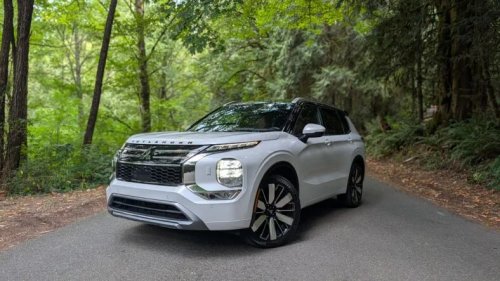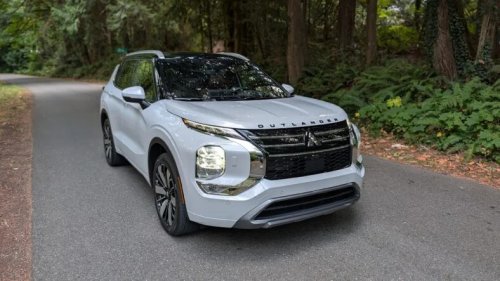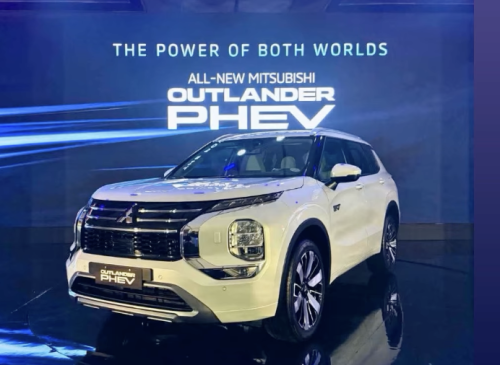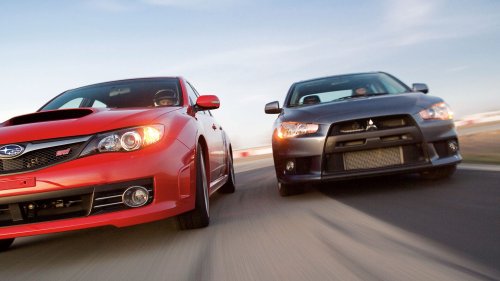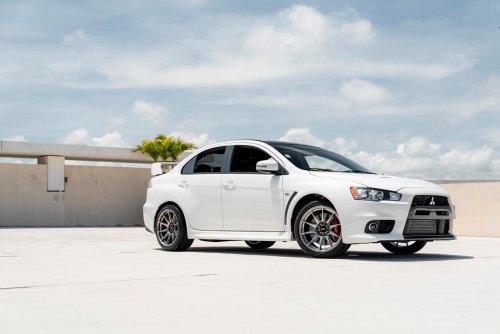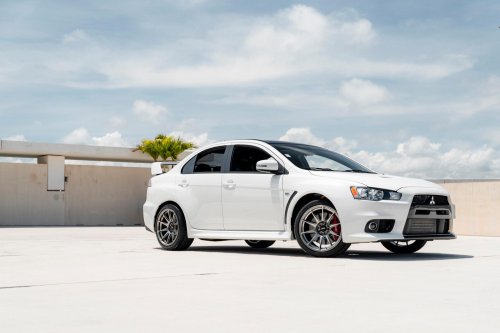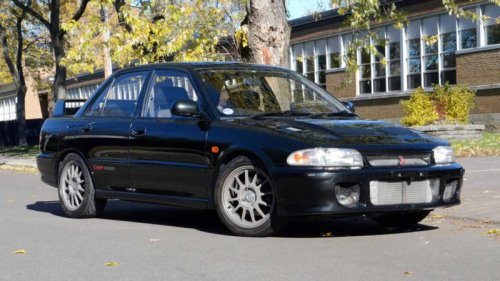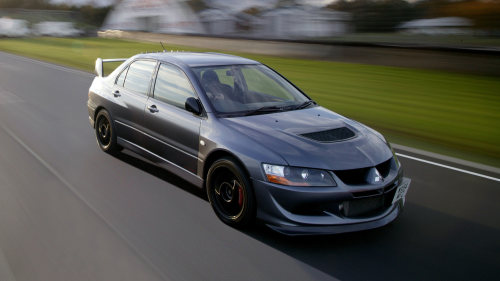
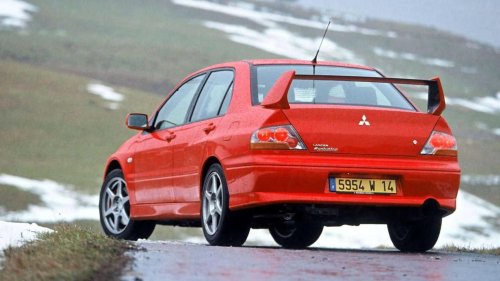
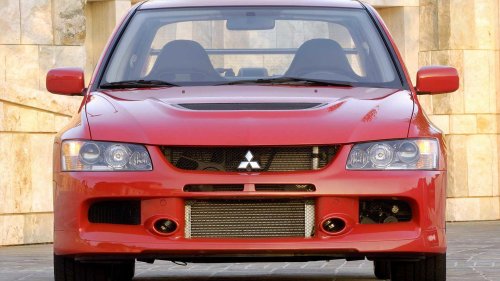
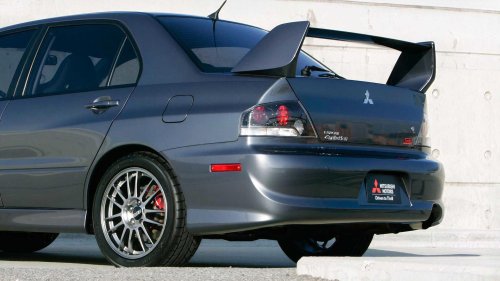
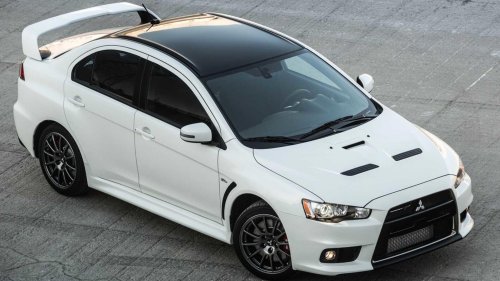



















For over two decades, one of the most breathless and thrilling automotive tussles was which technologically advanced Japanese sports sedan was best. In one corner, you had the Subaru Impreza WRX STI, and in the other lurked the Mitsubishi Lancer Evolution. Both machines did battle on the rally stages of the world as they clashed in the World Rally Championship, and also on normal roads in standard production form.Sadly, both models are no longer with us. The Evo was the first to be carted off for retirement, with the tenth-generation variant axed in 2015 due to falling sales and the reality of tightening emissions regulations. Don't despair though, as you can always pick up one of the three versions of the car offered in the US by trawling the used market. Mitsubishi's Evo VIII Was The First To Arrive In The States Mitsubishi The first Lancer Evo to be sold natively in the US was the VIII generation, and was released for the 2003 model year as a response to Subaru bringing the Impreza STI WRX stateside a few years earlier. It retained the same turbocharged 2.0-liter inline-four engine as its predecessor, and was available with 271 horsepower in US spec. Other markets, such as the United Kingdom, offered the car in several different power outputs, though the same modifications to get this extra grunt are available via aftermarket avenues for American owners.Still, even the base power level was enough to get it to 60 mph in five seconds. It lacked some of the toys of the full-fat JDM versions, with a notable exclusion being active yaw control. Base versions also lacked a helical limited-slip differential, though more expensive trims did get this addition. Original Evo VIII Models Are Holding Their Value Extremely Well Mitsubishi Only 12,846 examples of the Evo VIII ever made it across the Atlantic, making it a pretty rare species of sports sedan. Many of these ended up being modified by their owners too, making it pretty difficult to find a tidy, unmolested machine. They are out there, but expect to pay around $45,000 for one with even middling mileage. Cars sporting around 20,000 miles or less on the clock can easily achieve north of $50k. High-milers still manage to attract north of $25,000, demonstrating the interest enthusiasts hold for these cars at all levels. The Evo IX Built Upon The Solid Foundations Of Its Forerunner Mitsubishi Mitsubishi took an evolutionary, rather than revolutionary, approach with the 2006 Evo IX, with the car looking very much the same from the outside. It was very similar underneath too, with a tweaked version of the 2.0-liter engine found in the VIII. Changes included a new turbocharger that increased peak power to 287 hp, as well as the addition of Mitsubishi's MIVEC variable valve timing system. The latter boosted low-end torque, made the engine more responsive in general, and also more fuel efficient. The car was made slightly lighter, thanks to the addition of lighter bumpers and an aluminum roof.The vehicle was also made to be a little softer, so that it would be better suited to normal road driving than its rawer predecessor. It still retained the excellent active center differential though, which alters the amount of power sent to each wheel to help make the most of the grip available. While the VIII has a reputation for feeling more alive, the IX is the one to go for if you prefer to use the car on an everyday basis. The trim levels also carried over, with the base GSR spec being afforded a five-speed manual gearbox, while the higher-end MR got a six-speed unit and extras like forged BBS alloys and a Bilstein suspension setup. The Evo IX Isn't Much More Affordable, If You Can Find An Unmolested Example Mitsubishi High mileage versions of the IX tend to go for around the same amount of money as the VIII, though original specimens usually attract higher figures. Only 8,201 Evo IX's ever made it to the US, making it an even scarcer commodity. Lower mileage and unmodified examples are worth more than equivalent Evo VIII offerings, with a good illustration of this being a 2006 Evo IX MR sporting 23,000 miles on the clock. The car sold for a hefty $66,400 through auction, though a delivery miles machine went for way more than even this. The silver number, which had only covered 461 miles during its life, secured $161k. An Evo X Is The Most Realistic Way Of Getting One For Less Than $40k Mitsubishi The most popular version of the Evo in the US was the final X version, which was produced between 2008 and 2015. Just over 22,000 specimens were brought into the country during this period, and as a result, they're the most affordable of the three models to grace the US with their presence. The Evo X is notable for being the first US-sold Evo with active yaw control, though the 2.0-liter engine only produced a few extra horses than the IX's unit did. This was met with criticism from fans of the model, as the X tipped the scales at a good 300 pounds heavier.This meant that it got to 60 mph around half a second slower, which isn't exactly progress. Mitsubishi also continued its push to make the model more refined, with extra safety equipment and enhanced build quality being a key focus for the new car. To this end, it was also afforded a more modern, rounded design that more closely resembled other sports sedan rivals. The Evo X was still a capable track weapon, though it offered a more sterile driving experience when compared to the IX, a theme that runs through many modern performance cars versus their older counterparts. Plenty Of Cheaper Evo X Options Can Be Found On The Used Market That said, this added everyday usability makes it easier to justify as a main car, rather than a secondary vehicle that has to sit around waiting in the garage until the weekend. CarBuzz's Marketplace reports that the average sale price for the manual model currently stands at just $30,647, considerably less than either of its forerunners. Cars equipped with the faster-shifting twin-clutch six-speed unit have an average of $28,531. There's Still An Appetite For The Evo Within Mitsubishi MitsubishiWhile the Evo doesn't look to be making a return anytime soon, there are signs that Mitsubishi could be putting the building blocks in place for a possible new version in the medium to long term. Firstly, after many years in exile, its Ralliart brand is slowly being built up, first as a trimline but now possibly as a full-fat performance arm once more. The segment chief engineer of the Mitsubishi Outlander, Kentaro Honda, told Australian publication Drive that the company was exploring options to potentially produce a performance version of the SUV. The vehicle is influenced by a variant of the car that the marque races in the Asia Cross Country, and this could be the first of other performance models should it materialize and perform well from a sales standpoint.There's also an Evo-shaped fire that still burns brightly within Mitsubishi, namely in the mind of renowned engineer Kaoru Sawase. The Japanese designed the S-AWC all-wheel-drive system that featured prominently in the Evo series, and he explained to Drive that “We have a dream, of course, for Lancer Evolution.” Naturally, Mitsubishi would first have to develop either an all-new Lancer from scratch, as the model went out of production entirely in 2024, or a dedicated Evo platform to make this dream a reality. Plus, the world also needs to make up its mind when it comes to the direction of vehicle propulsion. Should these elements become clearer, Mitsubishi could work out whether a new Evo could work in today's society.Considering the reverse course many manufacturers are taking when it comes to electric vehicle technology in recent years, nothing's impossible. Let us hope, please.