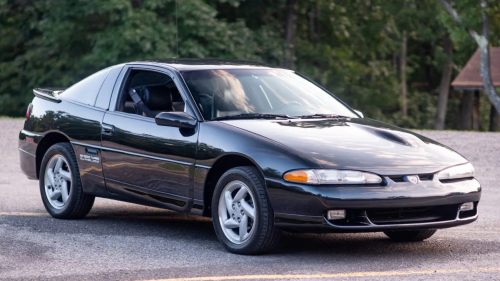
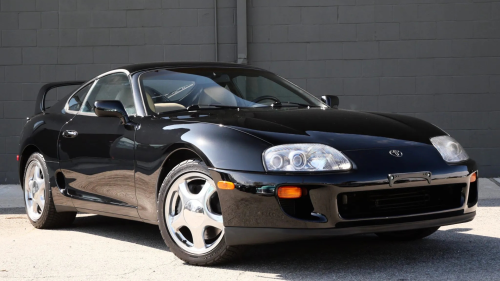
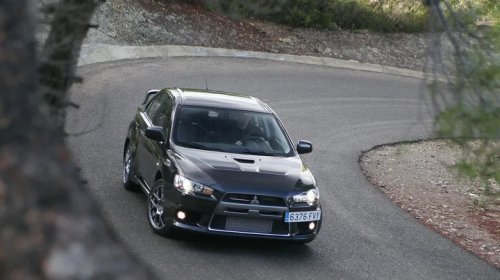
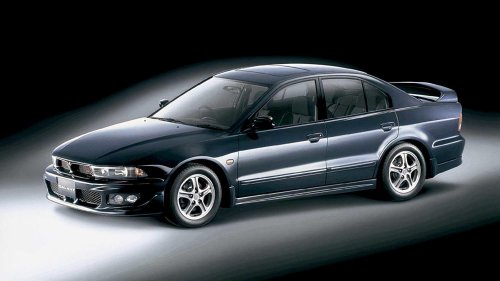
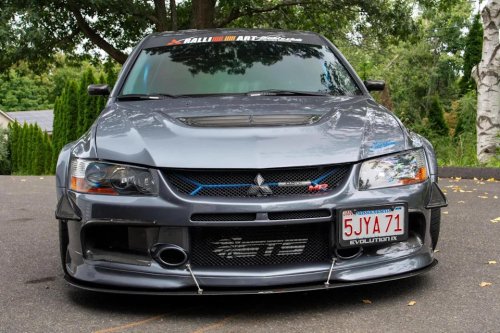
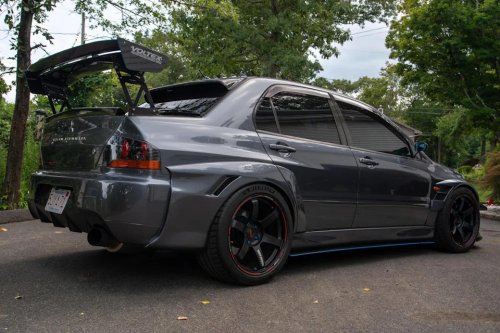
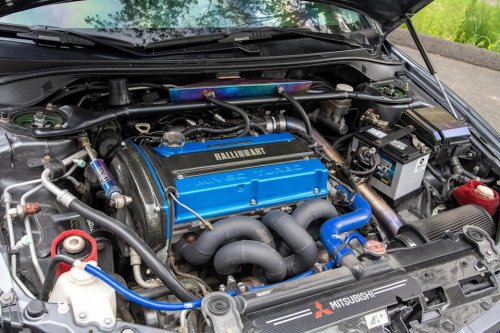
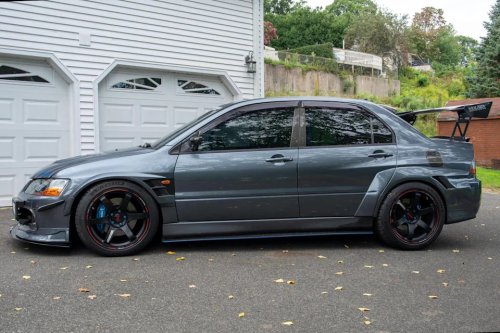
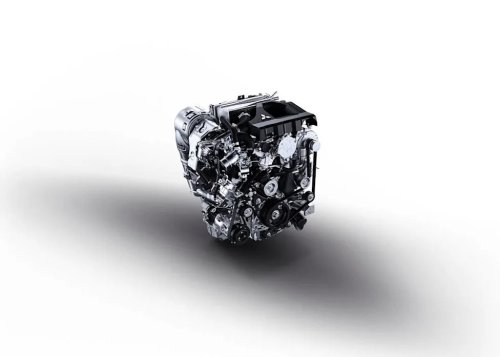
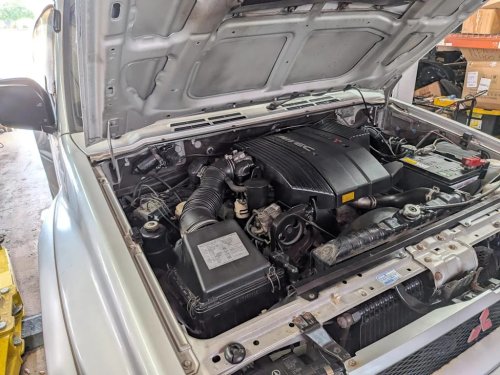
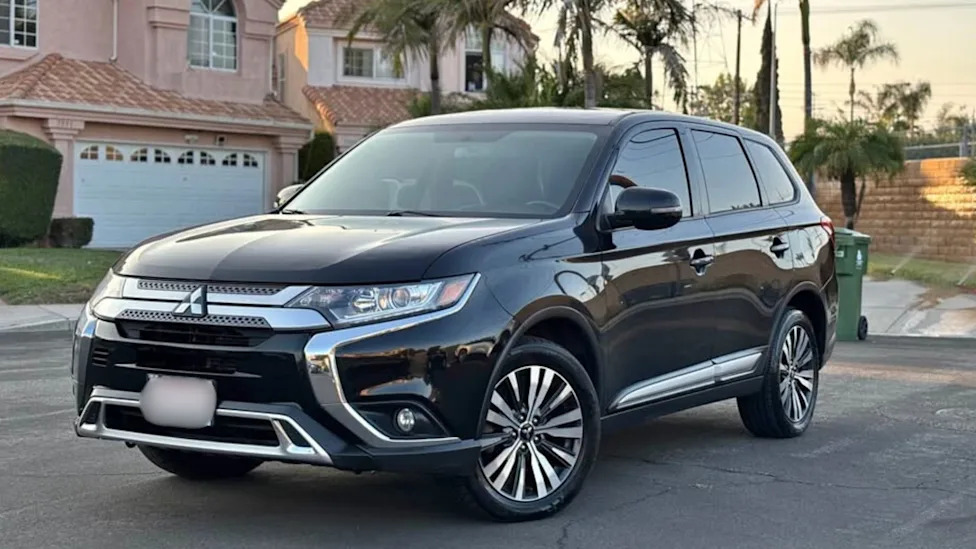
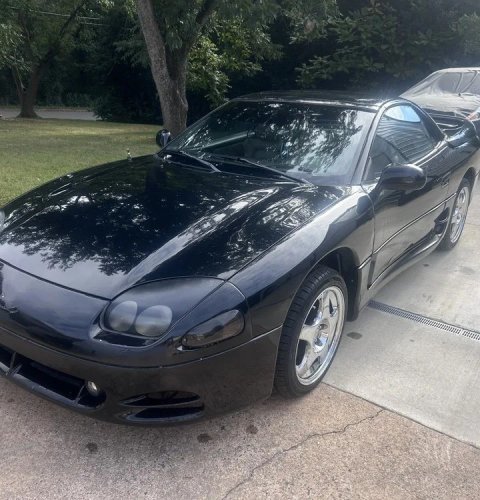
Every era of performance cars has its unsung hero. These are the underdogs that sport the kind of engine that doesn’t always get the recognition it deserves, but still earns respect where it matters most: on the strip.In the 1990s, while big-block V8s and Japan’s most famous straight-sixes were hogging the spotlight, a humble 2.0-liter four-cylinder was quietly building its own legacy.This engine didn’t live in halo cars, nor could it be seen in Hollywood blockbusters. However, it resided somewhere better, in everyday coupes and rally machines that punched far above their weight. Just ask any gearhead who lined up against one back then, and they will tell you that this little turbo four was nothing to underestimate. Mitsubishi’s Turbo-Four That Punched Above Its Weight: Meet The 4G63T via Bring A TrailerWhen Mitsubishi set out to engineer a high‑performance 2L four‑cylinder, they didn’t just slap a turbo on and call it a day. No, Mitsubishi built something much more incredible. They built a bomb‑proof powerhouse that would go on to slay much larger engines.Introduced in the early 1980s as part of the Sirius engine family, the 4G63 was born for performance. The turbocharged variant was introduced in 1987. Known as the 4G63T, it debuted in the Galant VR‑4. This turbocharged engine served as the foundation for the rally‑bred Lancer Evolution dynasty.via Bring A Trailer 4G63T Engine Specs So, what exactly made this engine so special? Well, it all comes down to its rugged cast‑iron block, an aluminum DOHC head, forged steel internals, and oil squirters built for longevity and serious boost. Over its lifespan, spanning Evo I through Evo IX, the motor underwent significant evolution, featuring larger turbos, reinforced rods, and eventually MIVEC variable valve timing. 4G63T Inline-4 Turbo Applications Mitsubishi Galant VR-4 Mitsubishi Eclipse (1st and 2nd gen) Mitsubishi Lancer Evolution I-IX Mitsubishi Outlander Mitsubishi Space Runner/RVR Eagle Talon Plymouth Laser Overbuilt like few others, the 4G63T became legendary. It proved itself to be a rally homologation engine tough enough to outclass V8s, yet agile enough to dominate straight‑line battles in tuned DSMs. DSM Legends: How The Eclipse And Talon Took Down American V8s via Bring A TrailerNothing rattled the '90s muscle car scene like a turbocharged 4‑cylinder DSM lining up beside a Mustang or Camaro. The Mitsubishi Eclipse GS‑Turbo/GSX, Eagle Talon TSi AWD, and Plymouth Laser RS Turbo weren't just lightweight imports. No, with their turbocharged 4-cylinder engines, these imports were threats to the American muscle scene.via Bring A TrailerWith the stout 4G63T engine under their hoods, these compact coupes punched way above their class. And every time they pulled up to the line, they chipped away at V8 supremacy in straight‑line sprints. Their secret weapon was all-wheel-drive traction that gave them blistering launches, often leaving bigger V8s scrambling for grip. Add in a turbo that loved to be pushed, and it didn’t take much for a DSM to run deep into the 13s or even 12s with simple bolt-ons. Suddenly, cars built in Illinois were embarrassing icons from Detroit on drag strips across America.via Bring A Trailer DSM Turbo Trio Specs According to Hagerty, the creation of the Eagle Talon and the Plymouth Laser came from Mitsubishi’s partnership with Chrysler, which needed small sporty cars in its lineup. Chrysler dealers got the Talon and Laser, while Mitsubishi sold the Eclipse. While the trio sported different badges with different marketing plans, under the skin, they were nearly identical.Together, the Mitsubishi Eclipse, Eagle Talon, and Plymouth Laser defined the DSM era and gave American V8s something they hadn’t seen before. And that was a pack of compact, turbocharged underdogs that could hit way above their weight. A Look At The Rally Dominance Of The 4G63T In The Lancer Evolution And Galant VR-4 via Bring A TrailerAs any true gearhead knows, the 4G63T’s legendary status didn’t start with the Evo. No, it earned its iconic status with the Galant VR‑4. The Galant VR-4 was Mitsubishi’s rally-bred prototype that laid the groundwork for motorsport dominance.via Bring A Trailer Rally Specs: Galant VR-4 Vs. Lancer Evolution 1 When it launched in 1987, the Galant VR‑4 packed AWD and the 4G63T engine delivering up to 195 hp. This engine setup created a street-legal sedan that could do 0-60 in about 7.3 seconds and hit 15.6-second quarter miles. In the mid to late '80s, this was certainly technology ahead of its era.Then, in 1992, Mitsubishi distilled every bit of that rally performance into the Lancer Evolution I. The Evo was designed to meet Group A homologation rules.Mitsubishi took the 4G63T engine and boosted it to 250 hp with a torque punch of 228 lb‑ft for the Evo I. This Mitsubishi creation was also paired with aggressive tuning, lighter weight, and AWD firepower. It sprinted to 60 mph in roughly 5.7 seconds. While its top speed was limited to around 112 mph in Japan, the deregulated export and import versions could reach closer to 144 mph.On the rally stage, this combo of lightweight, turbo boost, and four-wheel traction made the 4G63T-powered Evo a weapon. From tight corners to gravel hairpins to long straights, none of it fazed the little turbo four that dared to stand toe to toe with far bigger engines. Here's Why The 4G63T Is Still Overshadowed By The 2JZ And RB26 Today via Bring A Trailer JDM Turbo Legend Specs Part of it comes down to marketing and mythology. The 2JZ-GTE, with its iron block and twin turbos, became immortalized in the Toyota Supra Mk4, a car that went from tuner favorite to Hollywood icon thanks to The Fast and the Furious.via Bring A TrailerMeanwhile, Nissan's RB26DETT powered the Skyline GT-R, a machine wrapped in forbidden-fruit mystique for American enthusiasts who could only dream of driving one legally until the 25-year import rule kicked in.Both engines had perfect storm conditions. They were halo cars, possessed global motorsport dominance, and earned pop culture spotlights that turned them into living legends. By comparison, the 4G63T maintained a more humble presence. The Eclipse, the Galant VR-4, the Evo, and a couple of badge-engineered Plymouths and Eagles. It was a workhorse more than a halo symbol. According to DSport Magazine, tuners loved its iron-block durability and 1,000-hp potential. However, it simply never got the same cultural spotlight as Toyota's 2JZ-GTE or Nissan's RB26DETT.Today, the 4G63T is remembered as an underdog's weapon. It's revered by those who rebuilt DSMs and Evos in their garages, but overshadowed in the broader car world by engines whose reputations went global.At the end of the day, the 4G63T was the people’s engine. It's one that gave everyday gearheads a shot at real performance, whether on the rally stage or the Friday night strip. It may live in the shadows of Japan’s more glamorous legends, but for those who know, the 4G63T isn’t just an underdog. It’s proof that with solid engineering, the right platform, and a trusty wrench in the hands of a true gearhead, a killer can be built.Sources: Mitsubishi, Hagerty, Motor Reviewer.