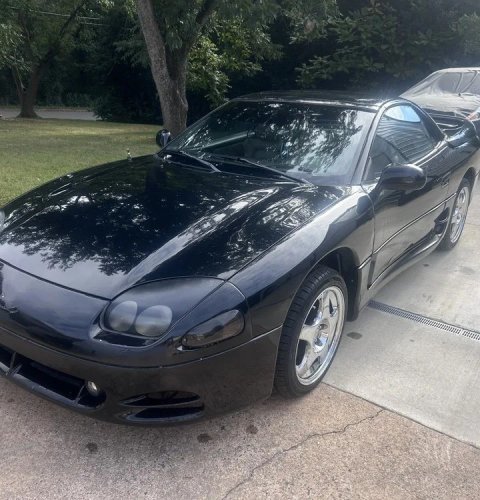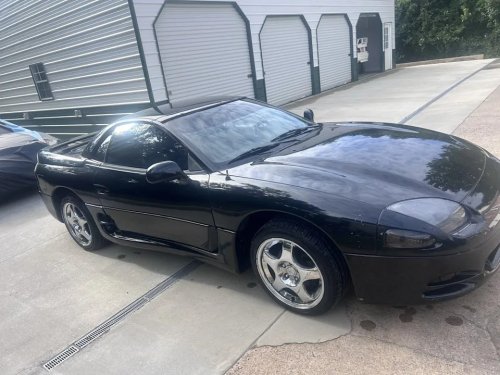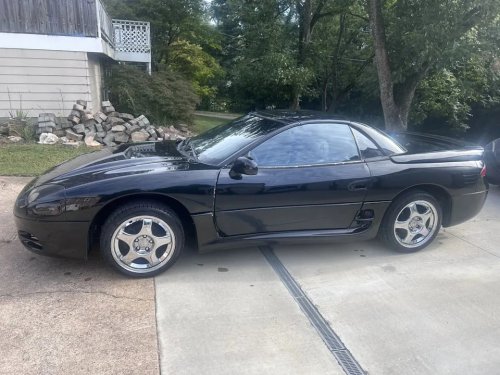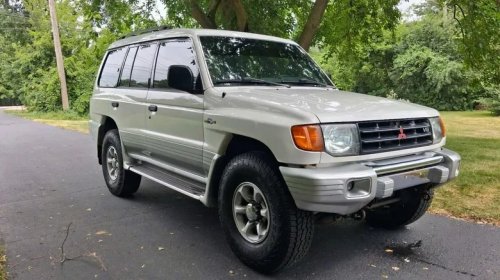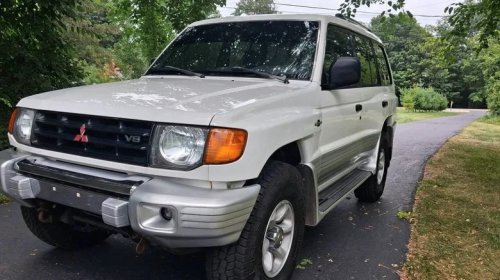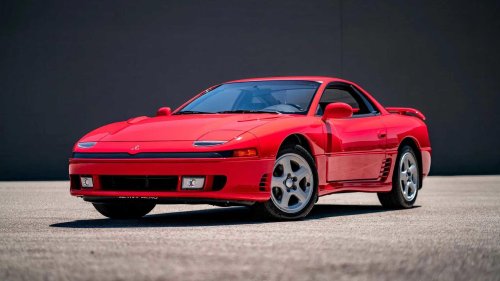
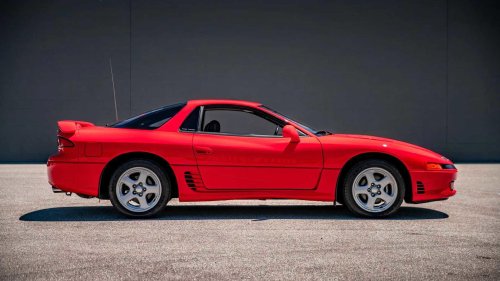
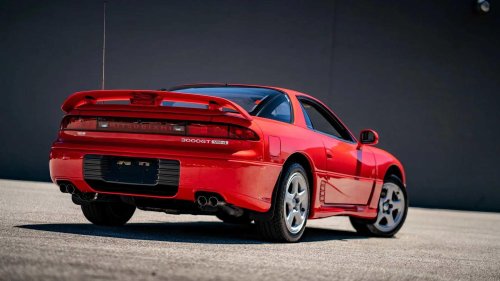
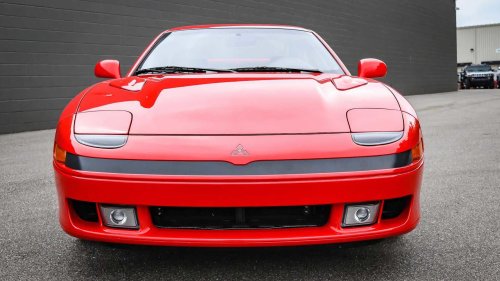
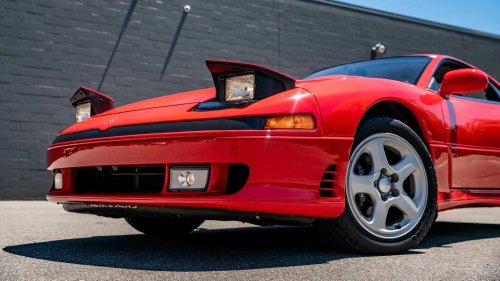
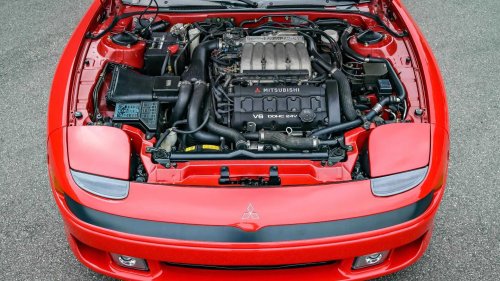
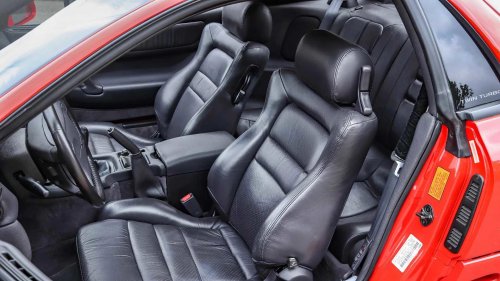


















Drop the word "nineties" and the acronym "JDM" into any conversation among gearheads and watch faces light up. This was the era when Japan rewrote the automotive rulebook – delivering high-performance versions of unassuming sedans that could humble dedicated sports cars once considered untouchable.These Japanese cars didn't cost a fortune, rarely broke down, and deployed technology that, at the time, sounded better suited to a moon mission than a Sunday cruise. Once the secret got out that these cars were giant killers in disguise – amplified by films like The Fast and the Furious prices for special Evos, Imprezas, and Supras soared into the stratosphere.Yet one advanced sports car from this golden age never quite captured the same devotion. Critics accused it of being too complicated in its pursuit of speed, and its aggressive factory styling clashed with the understated sleepers and rally replicas defining the era. As a result, it's been largely overlooked, and prices remain far lower than similarly equipped peers. For those seeking something different – or simply a more affordable entry into the world of '90s Japanese performance – this one deserves a closer look. The Mitsubishi 3000 GT Is A Budget Supercar Killer With A Manual Transmission Bring A Trailer While Skylines, Imprezas, and Evos typically dominate conversations about Japanese performance cars, another all-wheel-drive machine was quietly rewriting the rules. The Mitsubishi 3000 GT – known as the GTO in Japan – was a muscular sports car that aimed to challenge rivals like the Mark IV Toyota Supra by packing rally-bred technology beneath its sleek bodywork. A sports car and rally car hybrid sounds like a brilliant formula, but if period reviews are any indication, the 3000 GT never quite won everyone over. Mitsubishi Combined A Sports Car With A Rally Car Bring A Trailer Perhaps Mitsubishi had created the 3000 GT's own worst enemy is the company's Evo rally cars for the road, as well as the ultra-cool sleeper Galant, because these were already finely-tuned machines. When the Mitsubishi 3000 GT arrived, it used a lot of similar tech, but with a slightly different concept. At this point, let's forget that the 3000 GT was also available as a front-drive sports car, with a naturally aspirated 222-horsepower V6 under the hood. The car that was the enthusiast's choice would always be the VR-4, which featured a twin-turbocharged 6G72 3.0-liter V6 engine that pumped out 300 horsepower and 308 lb-ft of torque.Bring A Trailer The VR-4 bit in the name stood for “Viscous Realtime 4-wheel drive,” relating to a full-time all-wheel-drive system, with a viscous coupling center differential. The car also has four-wheel steering, four-wheel independent suspension, and four-wheel anti-lock disc brakes – basically four-wheel everything. All this, and the Mitsubishi 3000 GT was also available with a five-speed or six-speed manual gearbox too. The 3000 GT Is A Budget Supercar Bring A Trailer Looking at it now, the 3000 GT had a lot of the features that wouldn't look out of place on a modern supercar – both the Nissan GT-R and the 2017 Ford GT have a twin-turbocharged V6, after all. Then there was the 3000 GT's “Active Aero System” that was made up of movable aerodynamic components at the front and rear that would change position at different speeds.At 50 mph, the front air dam dropped more than three inches at 50 mph, while the rear spoiler angle would simultaneously increase by 14 degrees. The front spoiler even had "active aero" written on it, too. The idea was to increase downforce and reduce turbulence in much the same way as a modern hypercar. There was also a very supercar-esque Active Exhaust System, which meant that at the touch of a button, the driver could switch between a louder or quieter exhaust note. There were also electronically controlled shock absorbers that were two-way adjustable for the driver. The 3000 GT Had One Hefty Disadvantage Over The Competition Bring A Trailer The problem for the 3000 GT, it seemed, or at least according to some motoring journalists, was that it couldn't quite decide if it wanted to be a true supercar chaser, or more of a beefy grand tourer better suited for covering long distances in comfort. These are luxurious cars filled with gadgets and plenty of chassis tech, but all this seemed to come at a price. That price was 3,860 lbs, which may not seem a lot these days, but it was a heavy car in the '90s. For this reason, reviewers said that while the 3000 GT gripped well, it felt bulky. The Mitsubishi 3000 GT Certainly Isn't Slow Bring A Trailer The huge power meant the 3000 GT could overcome its weight in a straight line, with enough thrust to hit 60 mph in 5.4 seconds (you'll also see some tests claiming under 5 seconds) and cover the quarter mile in 14.1 seconds. The top speed is 155 mph. In a straight line fight to 60 mph, the 3000 GT should hold on to an Acura NSX, and that is seen as a legit supercar, so it's fair to say that the Mitsu certainly isn't slow, and it would only get faster with age. The car soldiered on for almost ten years, between 1990 and 1999, with Mitsubishi constantly updating it and refining it, even introducing a Spyder version.There are three generations of the 3000 GT, with the active aero and pop-up headlights later being dropped, giving the car a smoother appearance, although a huge rear spoiler was an obvious addition for later cars. These third-generation 3000GTs had an improvement in power and torque to 320 hp and 315 lb-ft, meaning the sprint to 60 mph dropped to 4.8 seconds, taking the car up against the C5 Corvette. Buying A 3000 GT In 2025 Bring A Trailer Prices do vary for 3000 GTs depending on the year. Unlike with some cars, where buyers seek out the early, original models which have the classic styling, this is not true with the 3000 GT VR-4. The early cars tend to be cheaper than the later models, with average prices settling at $21,248 for 1991 cars. Cars from 1992 are even cheaper at $16,834, but then prices tend to go up. For example, a 1995 Mitsubishi 3000 GT VR-4 costs $26,599, and a 1996 car will set you back $27,812. The third-generation cars command the highest prices. A 1997 VR-4 costs $35,530, and a 1999 car has an average price of $45,211.Sources: Classic, Mitsubishi