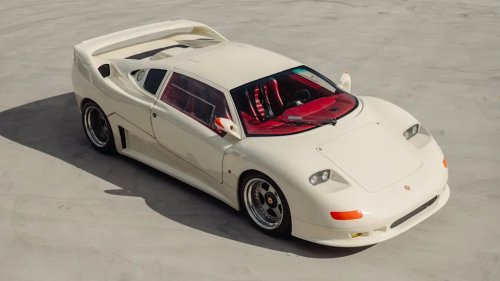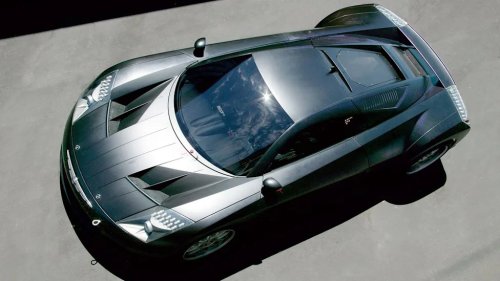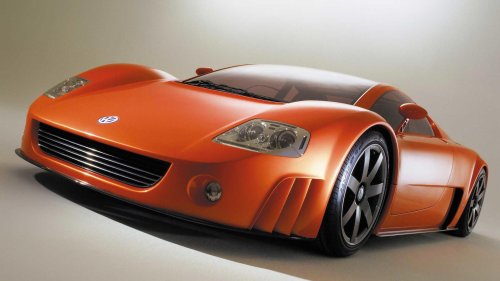
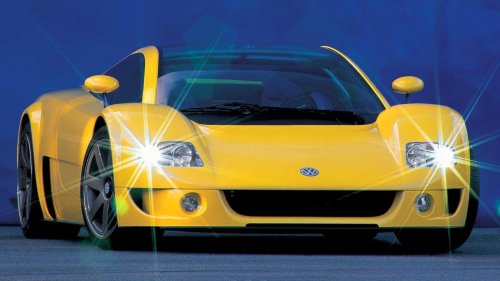
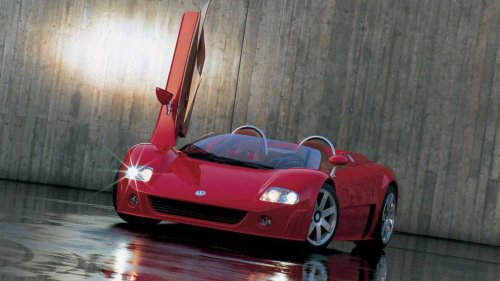
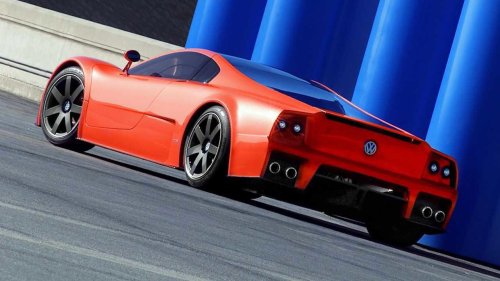
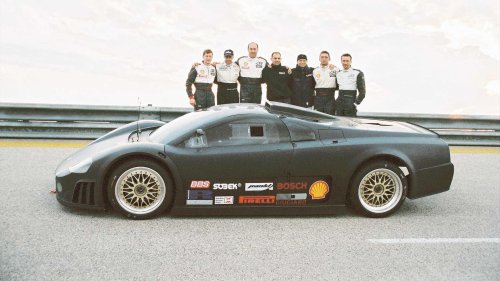
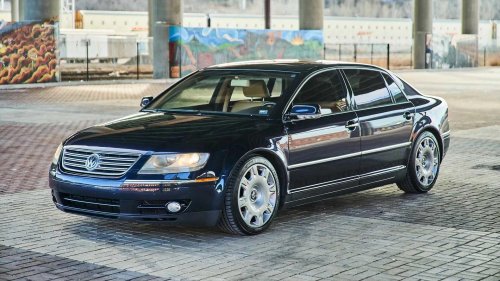
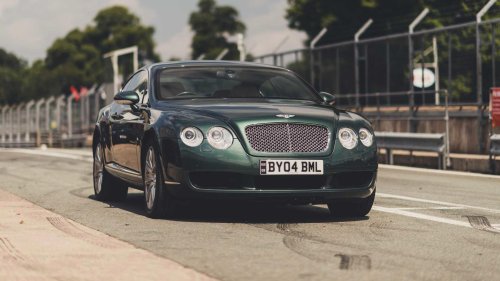
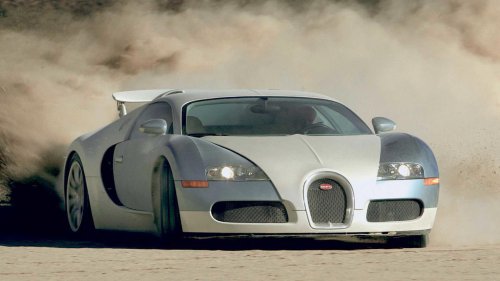


















Volkswagen is a brand that has definitely established its performance credentials over the past half century. Models like the Golf R and Golf GTI have been staples in the affordable performance car market, with these models offering enthusiasts an excellent combination of driving experience, practicality, and a relatively low cost of entry. These are the people's performance cars, for someone who values speed and fun as much as the comforts of a commuter car.This has always been VW’s approach to making performance cars, taking a mainstream model with all its creature comforts and making it a little more exciting. This has always been Volkswagen’s approach as a mainstream brand, focusing on the more affordable level of the market. This makes the decision to make a Supercars rather questionable, as it doesn’t quite fit VW’s affordable ethos. However, this didn’t quite stop the brand from pushing for the stars, with VW’s W12 Nardo supercar. Volkswagen’s First Supercar via MotorTrendTo understand the Volkswagen Group’s decisions in the late 1990s and early 2000s, it is key to understand the man behind them, Ferdinand Piech, VW’s chairman from 1993. Piech took over the VW Group after heading Audi for multiple years, turning the brand from a relatively unknown marque to a true Mercedes and BMW competitor. Piech fully intended to do the same at Volkswagen, with two of his key goals when taking the role as chairman being to improve VW’s quality and expand the brand into new market segments.This resulted in VW buying multiple performance brands to add to its product umbrella, such as Bentley, Lamborghini, and Bugatti. This approach extended to VW itself, as the brand wanted to showcase its engineering prowess by creating none other than a supercar, the Nardo W12. Another goal of this project was also to showcase that Volkswagen could build an engine befitting of a flagship, the W12. The W12 Nardo: A World Rivaling Supercar Via: HD CarsThe first version of the VW Nardo was unveiled at the 1997 Tokyo autoshow, dubbed the W12 Syncro, a term VW used for its four-wheel-drive system that would later be rebranded to 4motion. It featured a naturally aspirated 5.6-liter W12 engine made by combining two 2.8-liter VR6 Volkswagen engines already in production. This allowed the engine to produce 414 hp, mated to a six-speed manual transmission. While this may not sound like much power for a 12-cylinder engine, it actually outperformed the V12 engines used by both Mercedes-Benz and BMW in their flagship models, such as the S-Class and 7-Series.The exterior of the W12 Syncro was painted in a striking yellow color with the body designed by famed design house Italdesign, resulting in a very sleek and athletic-looking supercar. The following year, VW would release another iteration of the W12 concept, now losing its roof to become a roadster and ditching the all-wheel-drive system, as well as receiving a red paint job.HD Cars The more famous version of the W12 was showcased in 2001, now called the Nardo, in reference to the famous test ring located in Italy. This new version is the one that’s best remembered, with Volkswagen extensively reworking the powertrain. Nardo Performance and Specs via Motor1The 5.6-liter engine of the old Syncro concept was now bored out to 6.0 liters, boosting the power up to 591 hp and 458 lb-ft. This version of the concept also stuck with the decision to ditch the all-wheel-drive system, opting for rear-wheel drive to reduce the weight. This allowed the Nardo to achieve a 0 to 60 mph time of just 3.5 seconds, and a recorded top speed of 221 mph.If the Nardo had been put into production with these performance figures, it would have been one of the fastest production supercars of the time, far outclassing the likes of the Ferrari F50 and Lamborghini Murcielago. It even would have held its own against the crop of 2000s hypercars like the Ferrari Enzo and Porsche Carrera GT. World Records Via: VolkswagenAs the name suggests, the W12 Nardo had one goal: to tackle the Nardo test ring. This is a 14-mile test ring located near the town of Lecce in Italy, where the Nardo would attempt to tackle the all-class record for distance traveled in 24 hours. The W12's attempt would take place in early 2002, with the Nardo covering a total distance of 4,809 miles over the 24-hour period, averaging 200.6 mph during the run, a record that the Nardo W12 holds to this day. How the W12 Found Life in Unexpected Places Bring A Trailer As we know, the Nardo W12 never made it into production, and perhaps it was unclear if it was intended to. Volkswagen intended for the Nardo to be a test-bed for the W12 engine, which did make it into production in multiple models across Volkswagen’s brand umbrella.Notably, the Bentley Continental, Audi A8, and VW Phaeton, with all models sharing the same platform. However, it's the Phaeton that exemplifies that a large executive Volkswagen was perhaps a little more opulent than the brand’s badge could carry. The Phaeton was an infamous flop, despite having the same features you could find on any BMW or Mercedes, and its naturally aspirated W12 producing a very competitive 414 horsepower, which was later bumped to 444 horsepower. The Continental GT was a far more fitting platform for the engine, which Volkswagen upgraded with twin-turbochargers to produce 552 horsepower in early models, and over 600 horsepower in some of the last iterations of the car.Bentley Volkswagen's W12 engine would remain in production until 2024, remaining as a flagship engine reserved only for the highest-trimmed Bentley models such as the Continental, Bentayga, and Flying Spur. Throughout its production run, the powertrain received praise for its smooth and plentiful power delivery. The engine was ultimately discontinued as emission regulations became more stringent, and producing the old W12 engine was less justifiable.The Volkswagen Group ultimately replaced this flagship engine with a smaller twin-turbocharged V8 that now occupies the flagship role in Bentleys and Audis. As for Volkswagen, following the departure of Ferdinand Piech as the head of the brand, the company never again made outlandish, expensive cars, with Volkswagen now sticking true to its name and focusing on making actual affordable cars, with the brand's largest engine on offer being the VR6 engine available in the Atlas, truly half of what the mighty W12 engine once was.BugattiVolkswagen would ultimately never receive a supercar, but the Volkswagen group did use the W-design engine in the Veyron. Of course, that was famously an 8.0-liter, quad-turbo W16 engine churning out over 1,000 horsepower. This propelled the Veyron to a top speed of 253 mph, making it the world's fastest and most acclaimed car, taking the previously held crown from the McLaren F1 with sheer force, while remaining as refined and as luxurious as the world's most opulent luxury cars.This model would ultimately achieve the goal set out by Ferdinand Piech when he took control of Volkswagen, marking the staying power of the automotive powerhouse that the Volkswagen Group has become.Sources: Hagerty UK, Goodwood , Volkswagen, Italdesign