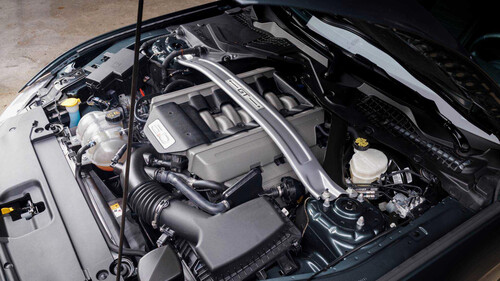
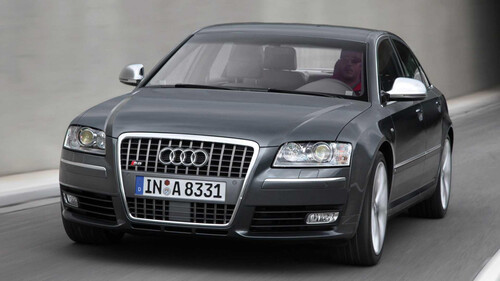
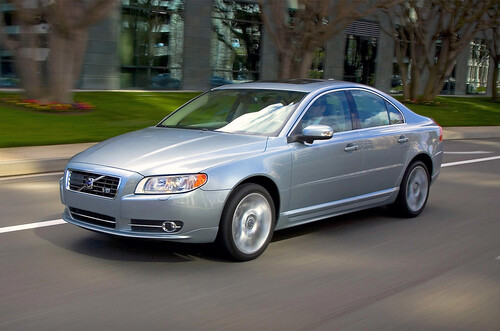
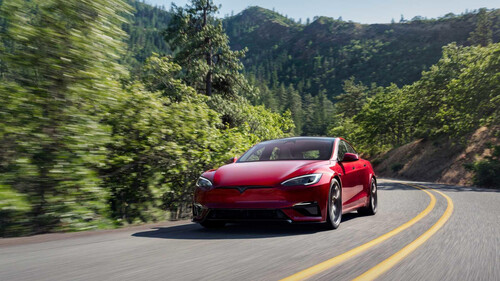
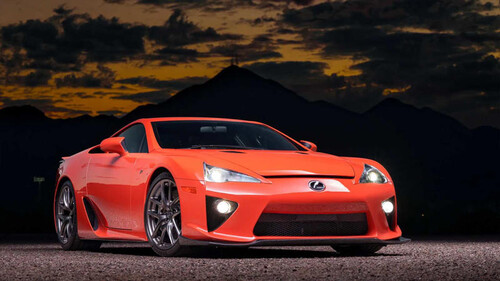
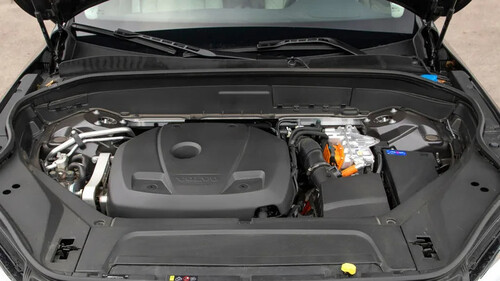
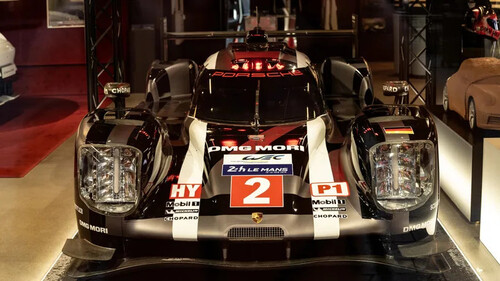
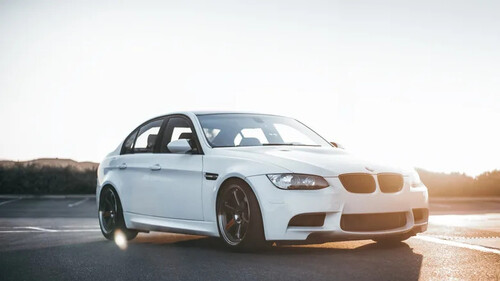
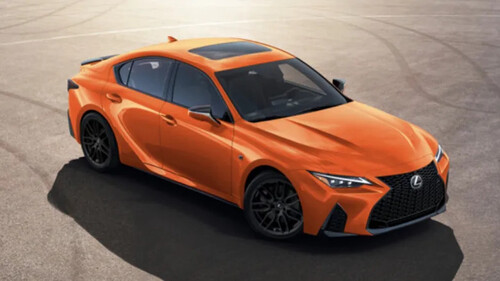
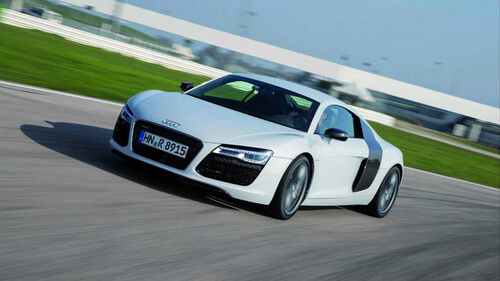
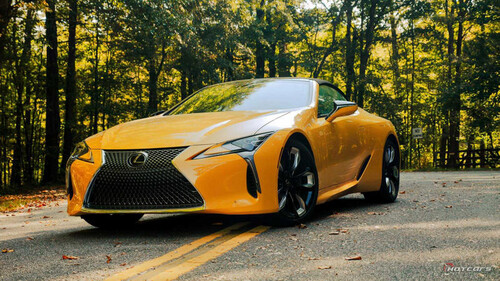
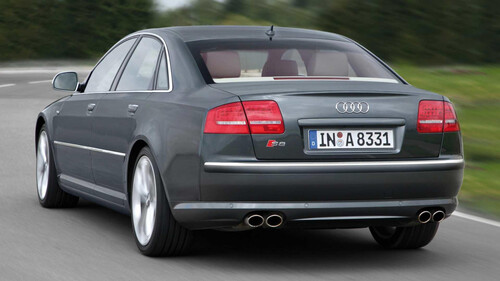
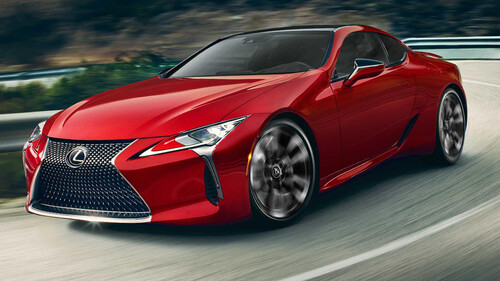
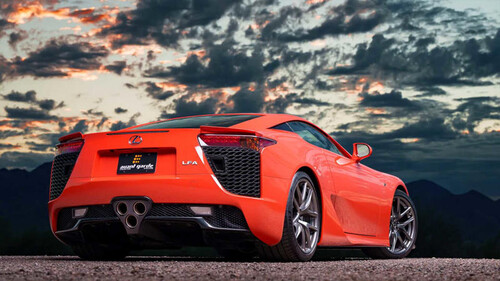
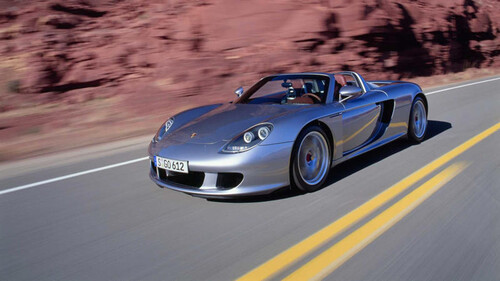
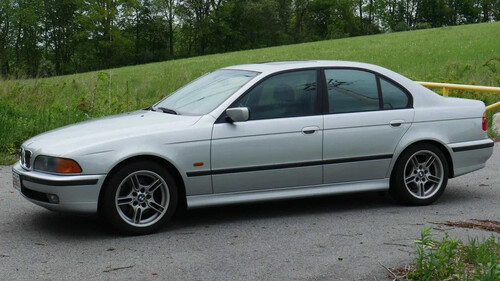
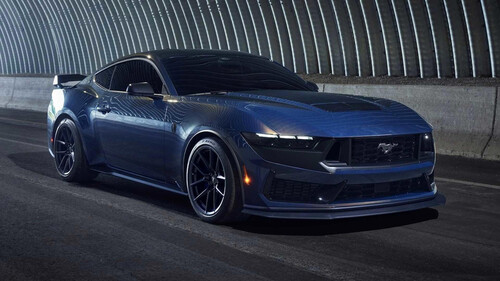
As cars change before our eyes, the cost of a supercar soundtrack is increasing rapidly. Lexus LF-A prices are in seven-figure territory, ditto the Porsche Carrera GT. Some collectors are paying six-figure premiums to have their favorite Lamborghini or Ferrari V12 engine bolted up to a gated six-speed manual. These are all machines that have earned a place in the history books, in part, for signature soundtracks burned into the ears of the enthusiast masses.Cool, but what if you’ve only got $20,000 to spend? Turns out, that price point opens the bidding on some of the most memorable engine soundtracks in modern motoring history, if you know where to look. Read on for our best suggestions to access a one-of-a-kind soundtrack for twenty grand or less – give or take a few bucks for exhaust and intake mods to taste. Audi S8 / S6 V10 An Actual Supercar Engine Can Be Yours For $20,000 2008 Audi S8 V10 engine overheadThe thing about a V10 engine is that nothing else quite sounds like one. Giving an engine two cylinder banks with five cylinders apiece creates a distinctive tone that’s neither V8 nor V12. From that basis, engineers can literally validate hundreds of variations of exhaust and intake plumbing to fine-tune the experience. The most famous V10 soundtracks are probably the Lexus LF-A and Porsche Carrera GT, but you won’t find those anywhere near this price range. If you happen to find a $20,000 Dodge Viper, it's probably in several pieces, and they don’t sound particularly ‘supercar’ with a factory exhaust.The Lamborghini Gallardo and Audi R8 are other V10 contenders, but too pricey for our list. Thing is, you could get a copy of this engine in the relatively small number of Audi S6 and S8 luxury performance sedans sold in the USA back in the mid-2000s, sort of. Though the V10-powered sedans ran a luxury-derived version of the racy supercar V10, the numbers (and sound effects) were still something memorably exotic. Today, these machines can be had for $20,000 or less today, all day long.The factory exhaust and intake setup for the sedan models was relatively quiet, with distinct changes applied to keep mid-range torque high and the engine peaceful enough for rocket-sedan duty. In their factory setup, neither was a 'tunnel car', with more of the V10 soundtrack coming from the intake up front than the quad-tipped pipes out back. The lower redline capped the soundtrack off before the sound effects got too wild. To wake up the audio experience, you’ll probably want to budget for some aftermarket exhaust upgrades to taste. E60 BMW M5 A Super Sedan With An Engine For The History Books 2006 BMW M5 V10 (E60)Look, buying a $20,000 E60 BMW M5 is probably a very bad idea for the average shopper. It’s also a great starting point to access an engine and soundtrack forever planted in history as the ultimate product of an era where screaming revs and peaky power curves defined BMW’s M cars. If you’re up for the challenges of keeping a high-mileage E60 ticking, you’ll find the cheapest copies on the used market today come in right around this price point.The V10 engine in this application uses Formula 1-derived technologies of the era; maintenance and repair costs can be spectacular (never mind fuel), and the electronics are particularly complex. With ten individual throttle bodies special current-sensing spark-plugs that allowed for per-cylinder knock detection, this was arguably the closest a four-door car had ever come to being powered by an F1 engine. The 100-horsepower-per-liter experience of ten cylinders and 8,250 revs delivered an explosive naturally-aspirated power curve (and soundtrack) that would never be seen again with four doors. Ford Mustang (1999-2004) Performance-Improved Cylinder Heads Helped This Affordable Soundtrack Shine 2000 Ford Mustang GT front, three-quarterFord’s modular V8 engine has a long and storied history of evolution and improvement that laid the foundations for some of the highest-performing Ford Mustang variations ever built. Today, earlier copies can be had for a steal, and they’re easy to care for and maintain with a huge knowledge base for new owners to tap into. Even better? They respond impressively well to exhaust modifications where the soundtrack is concerned.Find a copy in a 1999 or newer Mustang GT, and you’ve got a 4.6-liter V8 from an era where Ford was pushing the modular engine to new heights, thanks in no small part to the latest breathing upgrades and valvetrains. This modern, compact V8 had a single overhead camshaft with 2 valves per cylinder, putting it somewhere between earlier pushrod V8 engines and more modern quad-cam V8s from Europe and Japan. It was modern for its segment at the time, when the Camaro and Firebird twins were still using traditional pushrod V8 engines. From 1999, ‘Performance Improved’ cylinder heads were fitted alongside a new intake manifold and camshaft design to speed gasses in and out of the combustion chambers even more quickly, bumping power and sound effects in the process.Ford credited the new heads, revised cams, and updated intake for the 35‑horsepower increase. Independent flow‑bench testing shows PI heads flow better than the original design, but that there was room for more: aftermarket ported versions of the PI heads could add 90 horsepower, according to enthusiast sources. A few bucks' worth of quality headers and exhaust parts, if not already installed by the previous owner, will really wake up the sound. This overhead-cam V8 had a sweeter, warmer, more euro-esque growl than competitors’ pushrod engines. If you’re looking for great sound effects on a highly reasonable budget from a V8 engine that’s easy to live with, the last generation of 4.6-liter V8 Mustangs deserves some attention. 2008-2011 Mercedes C63 AMG This Ferocious V8 Soundtrack Defined An Entire Era of AMGs Mercedes-Benz-C63_AMG-2008-3Here’s another era-defining engine that did duty under the hoods of an entire generation of some of the fastest AMG models in its era. A heavily modified version of this engine also served supercar duty in the Mercedes SLS. The lowest cost of entry for the legendary 6.2-liter M156 V8 engine was the C63 AMG, which debuted initially in 2008. Today, the cheapest second-hand copies on the market are landing in the high-teens. The M156 V8 engine proved that AMG was one of a few automakers that really, really ‘got’ exhaust notes in the peak of the all-motor era. The signature crackling, barking exhaust sound is a European remix of classic big-displacement orchestra, appropriate for the first engine wholly-developed in-house by AMG and not based on a reworked, tuned-up Mercedes-Benz engine.If you’re shopping for a used C63 AMG in this price range, you’re likely looking at a high-mileage unit from early within the first generation V8 era, which comes with a caution: some owners have had issues with cylinder head studs that corrode and stretch over time, causing pricey engine trouble. Thankfully, the owner’s community solved the problem with an upgrade of their own. You probably won’t need to budget for an exhaust system upgrade on this car; It’s satisfyingly loud, both inside and out, right off the showroom floor. 2005-2011 Volvo S80 This Compact, Free-Breathing V8 Has A Unique Soundtrack Waiting To Be Unlocked 2006 Volvo S80 V8 front, three-quarterIn the 2000s, the Volvo S80 was a quiet, comfortable, and entirely reasonable luxury sedan, though some models packed a technically fascinating engine under their hoods. A Volvo-designed, Yamaha-built 4.4-liter V8 was the star of the show. The 60-degree, 32-valve all-aluminum unit made 311 horsepower and 325 lb-ft of torque and amounted to the only V8 engine Volvo would ever sell. Today, a V8-powered S80 can be had for around $10,000 all day long, leaving you plenty of budget left over for reconditioning and modifications as required.It was also the only transverse-mounted V8 in a modern luxury sedan, with that 60-degree cylinder bank angle keeping this uniquely compact V8 slim enough to fit sideways under the hood. The master tuners at Yamaha used the quad-cam, 32-valve architecture and compact bank angle to maximum effect where the soundtrack was concerned: this was a smooth-running engine with a remarkably sweet sound that wouldn’t be out of place in a Hollywood car chase scene. Yamaha made special adaptations to both intake and exhaust manifolds to enhance the engine's voice in the mid-range, and despite a tastefully-restrained volume level, the underlying auditory character of this compact V8 was warm, smooth, melodic, and nearly almost Italian sounding with the right exhaust setup.Sources: Audi, Mercedes-Benz, Volvo, BMW.