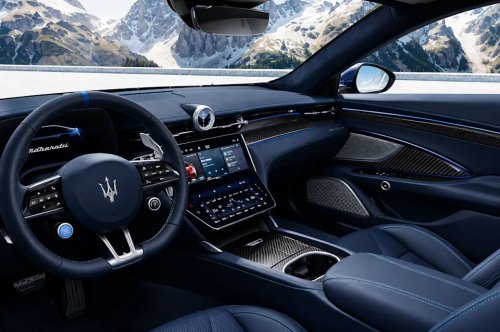
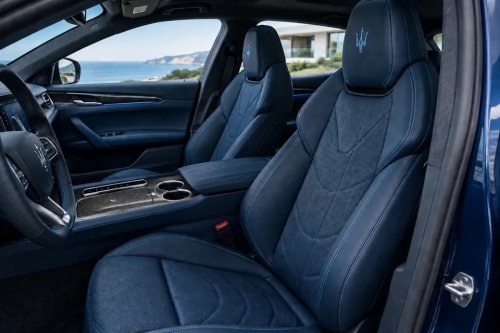
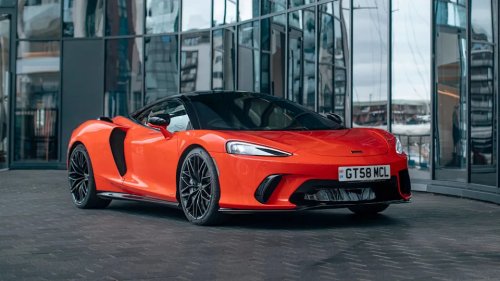
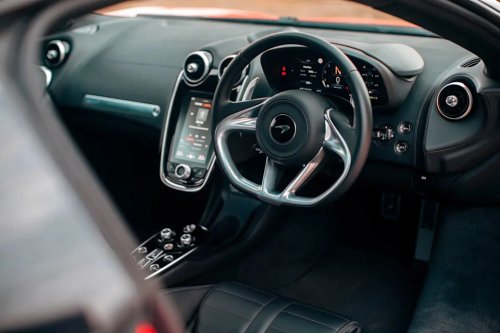
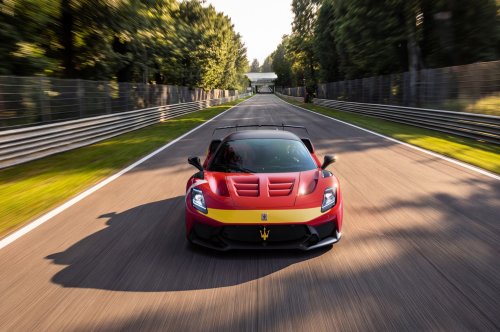
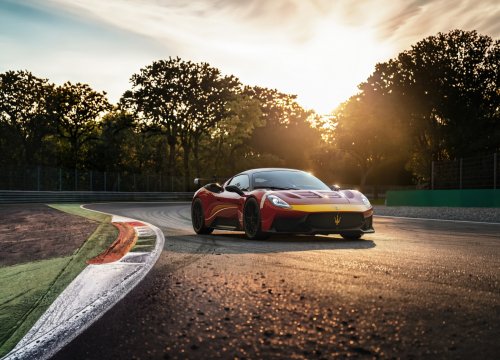
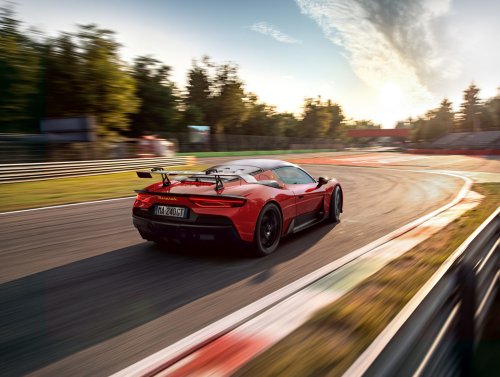
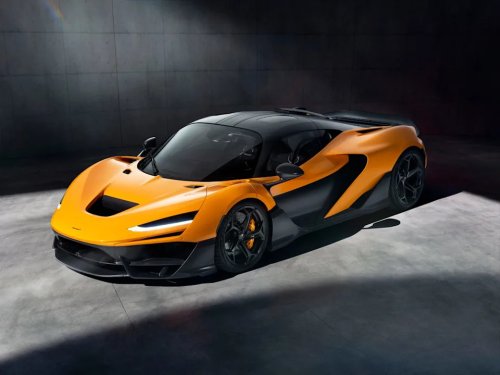
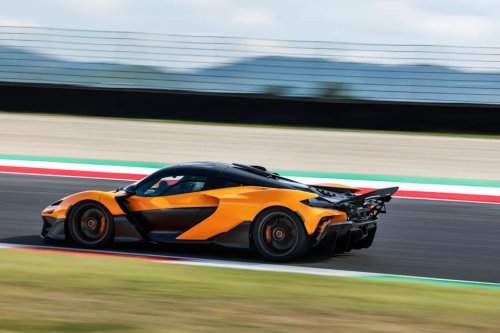
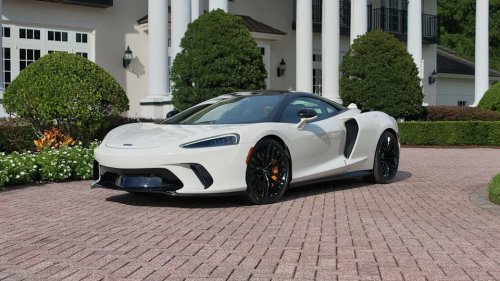
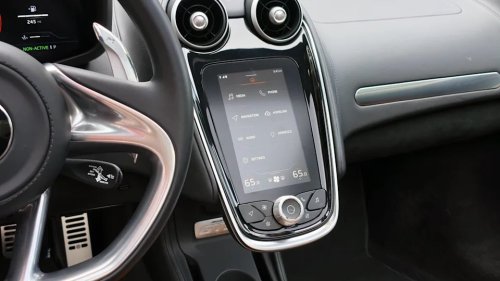
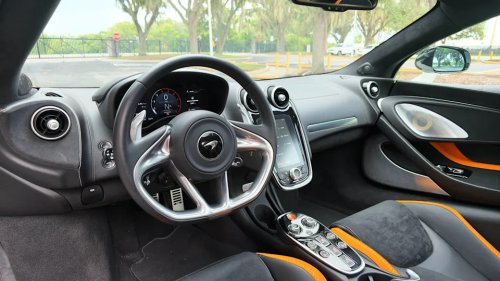
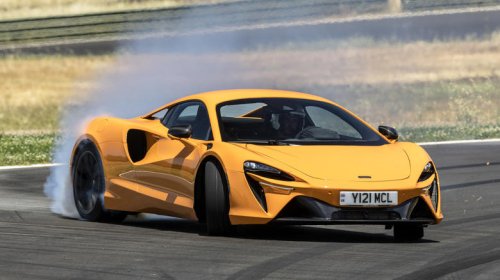
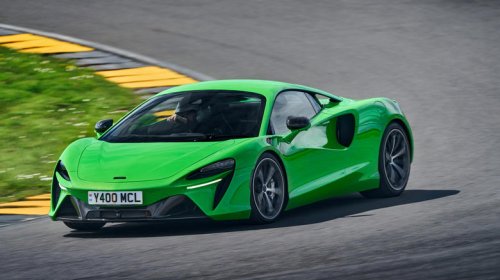
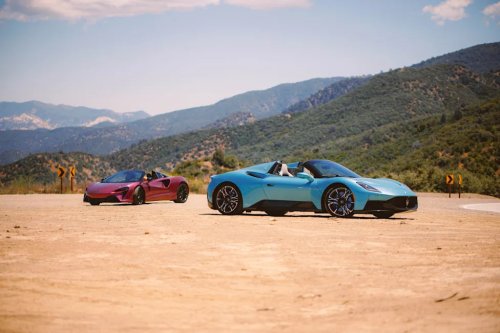
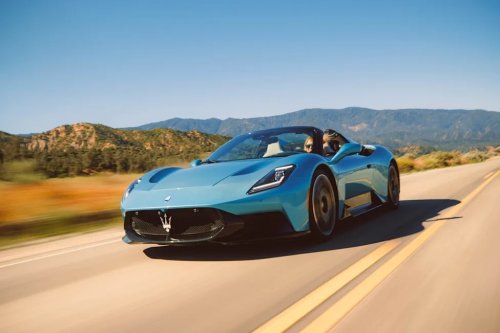
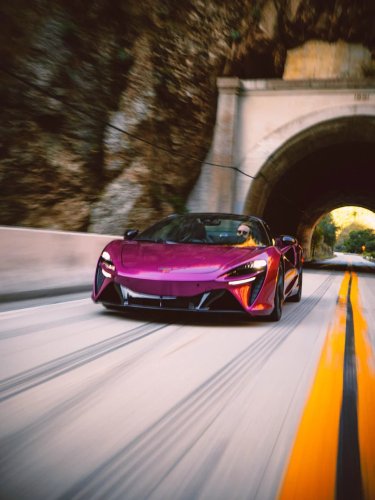
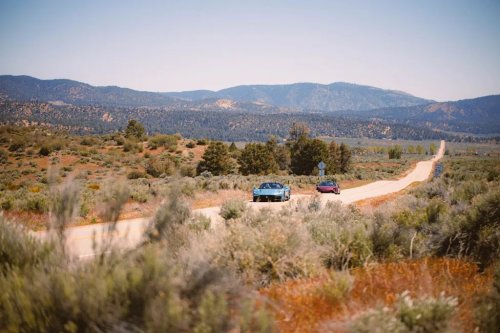
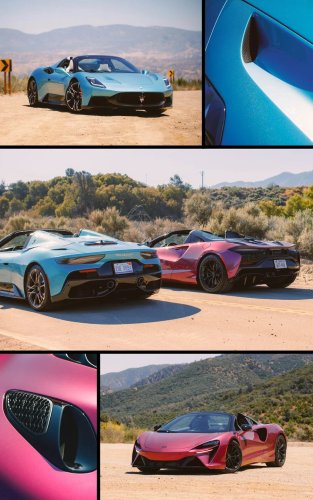
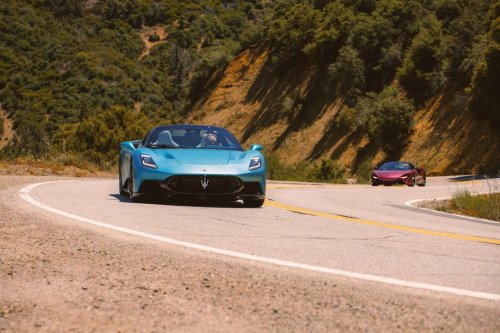
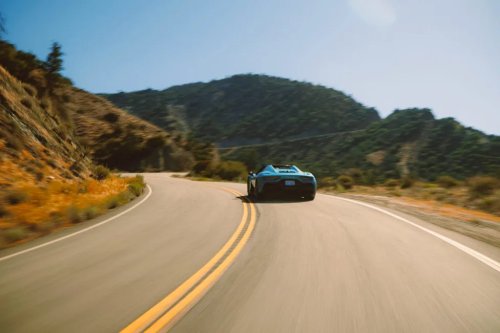
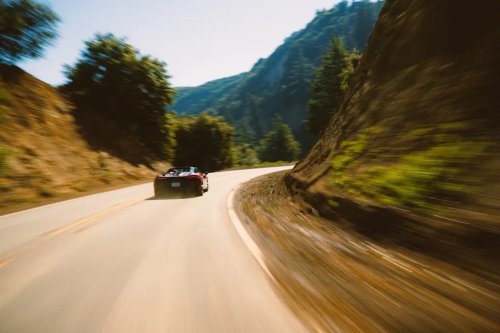
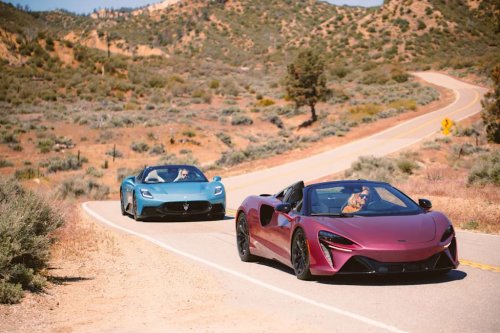
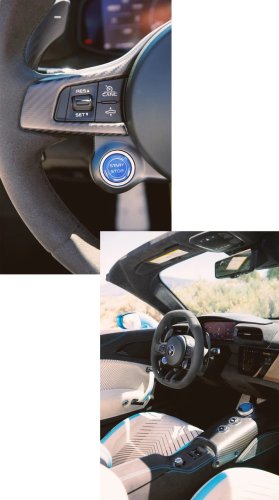
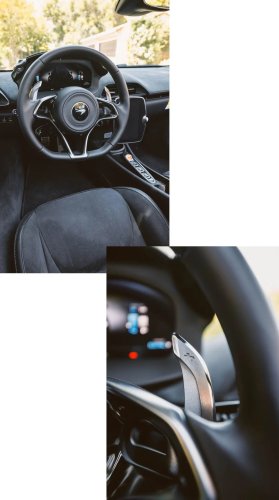
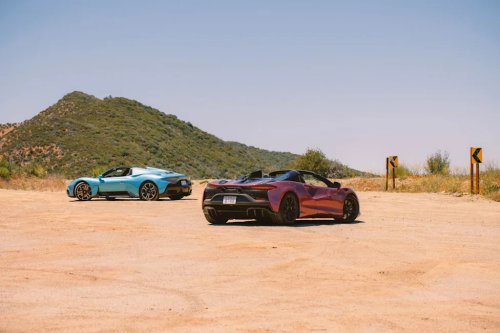
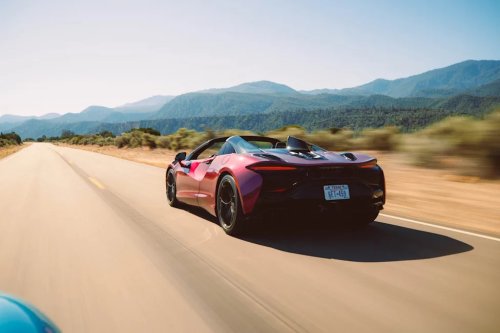
Maserati MCPura vs. McLaren Artura Jonas Jungblut (Jonas Jungblut)Electrification is arriving at almost every level of the auto industry, including the very top. The Maserati MCPura is one of the most beautiful supercars of this era, but it's also one of the last ones that doesn't have to carry the weight of a high-voltage battery or the additional complexity of an electric motor. Instead, there's a ripping twin-turbo V-6 engine, power to the rear wheels, and an old-school elegance where form and function meld in a stylish fusion, especially in the open-topped Cielo version you see here. Could this be peak analog supercar?The McLaren Artura Spider takes the other, more modern path, integrating a high-tech and highly potent hybrid powertrain with design that plays on many of the themes familiar from McLarens over the last 15 years. Despite the very different approaches, the prices for both are very similar. So let's get to the very serious business of determining which deserves garage privileges when your ship comes in.The Contenders:Jonas Jungblut (Jonas Jungblut)2026 Maserati MCPura CieloAdvertisementAdvertisementBase price: $281,000As-tested: $347,160It doesn't get any more straightforward than this when it comes to roofless Italian supercars in 2026. Maserati fits its power-dense Nettuno 3.0-liter twin-turbo V-6 right behind the cabin. An eight-speed, paddle-shifted dual-clutch transmission transmits power through either a mechanical limited-slip diff, or as on our test car, an optional $2650 electronically controlled LSD. There's no hybrid system involved, just a whole lot of boost and Maserati's signature twin-spark-plug pre-chamber combustion tech. Peaks of 621 hp and 538 lb-ft of torque are enough for a claimed 2.9-second run to 60 mph. The only performance add-on our MCPura lacked was the $11,500 option of carbon-ceramic brakes.Jonas Jungblut (Jonas Jungblut)2026 McLaren Artura SpiderBase Price: $285,700As-tested: $330,600AdvertisementAdvertisementMcLaren also chooses a 3.0-liter twin-turbo V-6 for the engine powering its junior supercar, but one with a electric motor to give a seriously potent electric boost. The combined power output sits at a Maserati-eclipsing 690 hp. Yet, surprisingly, despite the e-motor's contribution, the Artura has less peak torque at 531 lb-ft. Without the electrical side of the powertrain, the McLaren would be well short of Maserati, given that the small axial-flux motor that sits within the housing for the eight-speed dual-clutch transmission makes 94 hp and up to 166 lb-ft in its own right. The Artura even has a somewhat pokey EV mode, good for an EPA-rated 11 miles when the 7.4-kWh battery pack is fully charged.One other surprise is weight. Hybridization normally carries a chunky mass penalty, but when it comes to the quoted dry curb weight for each car, the Artura's 3212 pounds makes it over 300 pounds lighter than the 3565-pound pure-combustion Maserati.Jonas Jungblut (Jonas Jungblut)Where We TestedLockwood Valley Road in Ventura County, California, is officially closed to through traffic. Flooding a couple of years ago washed out about 100 yards of pavement, but it's actually passable in dry conditions should you be adventurous enough to traverse the gap on a temporarily built dirt shoulder. The road itself is well worth the effort, with 26 miles of beautiful pavement to be experienced in peace. A few wide-open straights leave space to enjoy trips to the redline, while climbs up and down big hills and small mountains give the perfect opportunity to experience chassis balance on challenging corners and hairpins. The road logically passes through Lockwood Valley, an old borax mining area with views of Mount Pinos, the highest peak in Ventura County, in the distance.Jonas Jungblut (Jonas Jungblut)On the RoadWhen the Maserati MC20 launched four years ago it was kind of a big deal. Maserati hadn't made a supercar since the MC12, the Ferrari Enzo–derived homologation special that was limited to just 50 examples. Now renamed, but otherwise barely touched, the MCPura stands alone in the world of Maseratis, as well as in today's hybrid-heavy world of supercars. While the McLaren adopts its typical dead-serious attitude of going about the business of going fast, the MCPura appeals more to the grand-touring-minded.Jonas Jungblut (Jonas Jungblut)The Maserati is a little softer than the McLaren in nearly every respect, but it still kicked ass when I wanted it to. The single best feature is easily the rowdy Nettuno V-6 powerplant. With the top down, the engine never stops talking, and while the turbos require some revs to come to the boil, I can't nominate a car that brings you along for the spooling process in a better auditory fashion than the MCPura. Letting off throttle was just as entertaining, air rushing back with a loud stu-tu-tu. A V-8 thrum would admittedly be nice, but I appreciate a theatrical V-6 nearly as much, and the MCPura's engine delivers endless charisma. The only thing it needs is a ridiculous exhaust, because this stock box fails to enthusiastically announce its riotous intentions to passersby.Hearst Owned (Hearst Owned)AdvertisementAdvertisementOn the flip, the most alarming initial impression was the MCPura's brake pedal. It's spongy and entirely un-supercar-like around town. Past the initial bite point, the tuning starts to make sense with firmed-up responses, and it is also where the standard steel brakes offer greater feedback. I know from previous experience that the pedal is oddly wooden and devoid of feel with the carbon-ceramics, but the regular brakes felt progressive and naturally modulated once I had pushed past the initial spongy tip-in.Unfortunately, the steel brakes are also prone to fade. I experienced this a couple of times when trying to keep pace with the Artura. This was indicated first by the smell of hard-worked pads, then a lack of effectiveness and not a lengthening pedal. Also, to my surprise, the MCPura's front Michelin Pilot Sport 4S tires would heat up to the point of creating understeer at a similar rate. This was happening at pretty high speeds—it could be managed by compound upgrades or simply driving the car within its happy zone.When you're in that balanced place, the MCPura is downright joyous. Chassis engineers have nailed the braking balance into corners, making trailing the rear end and bending it to your will an instinctive, easy process. The rear end could be snappy when I got hard on the power before the rear tires had warmed up. But, once in a groove, I found I could trust the rear axle to deal with earlier and harder throttle applications.Jonas Jungblut (Jonas Jungblut)The MCPura's Sport and Corsa drive modes were best suited to California canyon roads. The Maserati's adaptive dampers never got too stiff or bouncy, hewing to that GT-like personality. The transmission's manual mode was essential for a road like Lockwood Valley, as the automatic shift programing doesn't hold gears or grab downshifts when slowing especially competently. Personally, I'm fine with being in charge, and the column-mounted, carbon-fiber paddles bring plenty-quick shifts from the dual-clutch, making it easy to keep the V-6 in the meat of its powerband.AdvertisementAdvertisementConsidering how happy the MCPura is to be driven like a supercar, its best trick is simply how easy and sedate it is taking on normal tasks. The carbon-fiber monocoque is rigid and the cabin loud enough to mean its driver never forgets they are in an Italian supercar. But I felt I could take it on a four-plus-hour drive with very few complaints. I'd be a little more annoyed doing the same in the Artura. But what the McLaren gives up in refinement is worth it for what happens when you put your foot down.McLaren found itself in hot water during the initial Artura launch. From feedback that the new car wasn't hard core enough to some well-publicized reliability woes with the new hybrid powertrain, the brand's junior supercar caught plenty of critical flak. When the Spider came out two years later, McLaren took great care to address those concerns, with most of the same updates passed to the coupe at the same time. The end result is a car that, while still lacking the maniacal V-8 of the more expensive 750S, can proudly stand on its own.Hearst Owned (Hearst Owned)The McLaren's hybrid V-6 powertrain is nothing like the engine in the Maserati. The MCPura is peaky and requires effort to extract performance. The Artura Spider delivers speed effortlessly. Both engines see peak power hit at 7500 rpm, but the McLaren's sensation of torque from its hot-V turbo setup is pure buttery smoothness the whole way up there. The Maserati needs to be revved out, while the Artura can be short-shifted with seemingly little penalty. That electric motor fills in the deficits of the V-6, making the McLaren feel faster at practically every step. The Artura's quoted 0-to-60 time of 3.0 seconds is a tenth off Maserati's claim, but there isn't a single circumstance where the McLaren presents as slower. It is, after all, both lighter and more powerful than the MCPura.Jonas Jungblut (Jonas Jungblut)There's a certain instrumental purity to the McLaren V-6's sound as the revs rise upward to the engine's 8500-rpm redline, 500 rpm more than the Maserati's. Both the extra room in the tachometer and sound crescendo at the top of the range were appreciated over the MCPura, although the sensation of briefly banging against the Artura's rev limiter in auto transmission mode before the gearbox shifted up felt a little contrived in the context of this engineering marvel of a powertrain. I'd have the Maserati's engine for a casual blast through the mountains for its sound alone, but there's no denying McLaren has a big leg up when it comes to transparent performance and is only a quarter step behind in drama.AdvertisementAdvertisementMcLaren makes up for that experiential deficit, and then some, the first time you turn the wheel. There's nothing all that objectionable about the MCPura's steering, but it can't compete with the electrohydraulic rack in the McLaren. With the wheel properly devoid of buttons, my hands had as direct a link to the Artura's front tires on the road as any modern performance car offers today. It's a part of the experience that never stopped being wonderful, from tootling through LA congestion to charging hard into a corner on a mountain road. The Maserati's steering is damn good among electric steering racks, but switching from it to the McLaren's is like slipping on a pair of 20/20-vision goggles and seeing the road in an entirely new light.Jonas Jungblut (Jonas Jungblut)Plus, as friendly as the MCPura Cielo is on any surface, the Artura Spider does it better with its Proactive Damping Control technology. I was only able to trip the car up in particularly bumpy braking zones, but its competence and forgiving nature was outstanding. Grip levels were higher than I remember from the old McLaren 570S, thanks to upgrades including wider front tires. I was confident to carry speed in long sweepers and trust the Pirelli P Zero rubber to stay glued. Add to that a brake pedal that felt perfectly connected in terms of both weight and feedback, and I found myself easily driving the Artura harder with greater ease than the Maserati. I suspect the advantage would widen considerably should a racetrack be involved, but even on road the difference was obvious.In the CabinThe McLaren's driver-focused characteristics are complemented by its spectacularly driver-focused interior. You sit lower than you do in the MCPura by a noticeable margin, but it's not any harder to slide in or out of the Artura's comfortable sport seats. Visibility forward and back is another huge boon of the Spider. The Maserati can feel a bit confining with larger A-pillars, whereas the cab-forward design of the McLaren made me feel like an integrated part of the car.Jonas Jungblut (Jonas Jungblut)Maserati totally wins when it comes to in-car tech, though. Most supercar makers force you to deal with their arcane and bespoke infotainment systems, but the MCPura simply uses the same UConnect 5 setup as any other Stellantis vehicle. It just works, and that's a huge stress reliever when you're piloting a quarter-million-plus-dollar car through a traffic catastrophe in LA. McLaren's system in the Artura is a nice upgrade over its previous software, but it still falls into the category of "weird and complicated supercar tech suite."AdvertisementAdvertisementThe one big ease-of-life aspect McLaren nails that Maserati completely fails at is convertible roof operation. Maserati forces you to make a couple of clicks on the touchscreen before holding down on a small tile the whole time the roof is going up or down. Inevitably, you'll start the roof operation before Android Auto or Apple CarPlay has fully booted up, which automatically kicks you out of the top operation screen, causing the car to complain that the roof is partially closed and forcing another couple clicks back to the top operation command center.Jonas Jungblut (Jonas Jungblut)McLaren smartly just puts a switch in the dome-light area that requires no thought or attention to use, particularly helpful if you're trying to quickly get the top up while moving. Thankfully, both cars have roll-down rear center windows that allow engine and exhaust noise to filter directly into the cabin, even if you have the top up.Bang Per BuckThere's nearly a whole C8 Corvette worth of options applied to this MCPura Cielo, and the largest chunk of that cost is the $21,510 AI Aqua Rainbow paint it's rocking from Maserati's Fuoriserie program. Also enormously expensive is the Maserati Trident in AI Aqua being placed on the tonneau for $11,390. This touch is a Fuoriserie option, as is the Fuoriserie logo in white ($1270) on the rear fender. Those 20-inch Cyclonic wheels in a diamond-cut finish cost $4000, and black-painted brake calipers are another $1380. The bright-blue theme continues inside with the Fuoriserie AI Aqua upholstery option that costs $8730. The heated seats are only $580, but the plenty nice-sounding Sonus Faber audio system is $4600. An interior carbon-fiber package totals $5300, while the ADAS package costs $4600. Lastly, the electronic limited-slip diff costs $2650. Plenty of money can be saved here by skipping the Fuoriserie bits, but I could never mount an argument against this paint.The Artura Spider has just under a Civic Type R's price in options. So in other words, its extras are quite modest when compared to the Maserati. The MSO Shibuya Spirit exterior paint is a reasonable $9800, and a Stealth Black exterior pack adds another $3300. Ten-spoke forged wheels cost $5100, and finishing them in black is another $1800. Its interior is full of black Alcantara as part of the Performance Theme that runs $9700. A Technology pack costs $7600, and the sport exhaust that you definitely want is $5300.And the Winner Is . . .Jonas Jungblut (Jonas Jungblut)These are two exceptional supercars that are markedly different from one another. I can wholeheartedly say that one or the other could be the better choice depending on what the use case is. Fancy dinners where curb appeal is king and the occasional canyon blast would suit the Maserati, while the Artura would cater to the more serious supercar buyer who might even consider tracking it. It also has the added bonus of being able to escape the neighborhood or cruise through city streets in total silence should you wish to move along under the radar.AdvertisementAdvertisementI would be grabbing the keys to the Artura Spider in almost every circumstance, making it the winner here. The MCPura is a brilliant car and the standout highlight in the current Maserati lineup. But, unfortunately for Maserati, the Artura does nearly all the daily-driver tasks just as well and feels a little bit better in almost every respect when exercised the way it's meant to be.Both are true supercars. I walked away from my last hard drive in the Maserati exhausted but vibrating with energy. The McLaren left me shaking my head at just how capable it is, while not giving away an inch of integration between man and machine. It was one hell of a day at the office.Jonas Jungblut (Jonas Jungblut)More Specs2026 Maserati MCPura CieloPowertrain: 3000 cc V-6, twin-turbochargedAdvertisementAdvertisementPower: 621 hp @ 7500 rpmTorque: 538 lb-ft @ 3000 rpmTransmission: Eight-speed dual-clutch, rear-wheel drive0-60 mph: 2.9 secWeight: 3565 pounds (dry)2026 McLaren Artura SpiderPowertrain: 2993 cc V-6, twin-turbocharged, electric drive motorPower: 690 hp @ 7500 rpm (system peak)Torque: 531 lb-ft @ 2250 rpm (system peak)Transmission: Eight-speed dual-clutch, rear-wheel drive0-60 mph: 3.0 secWeight: 3212 pounds (dry)You Might Also LikeIf You Can Only Own One Car, Make It One of TheseThese Are the Most Popular Cars by State
















 +68 others