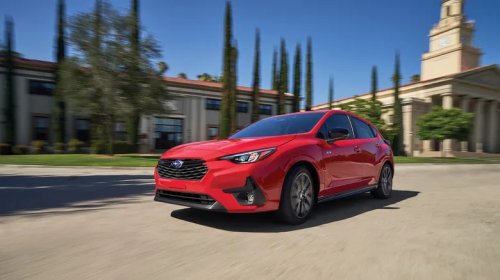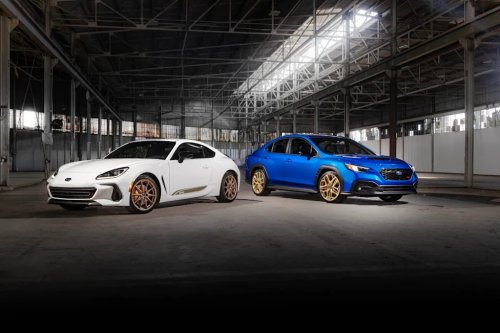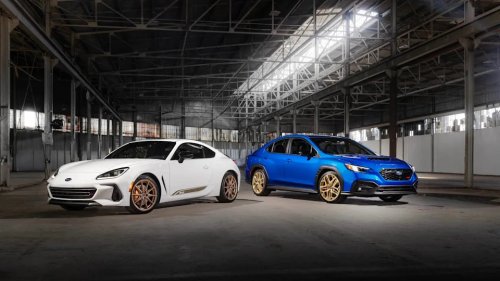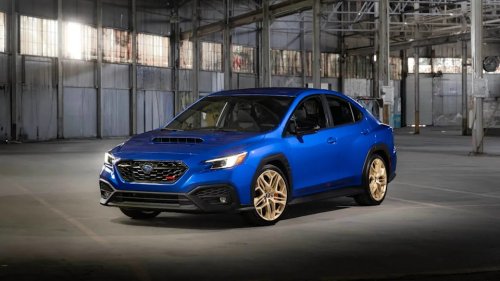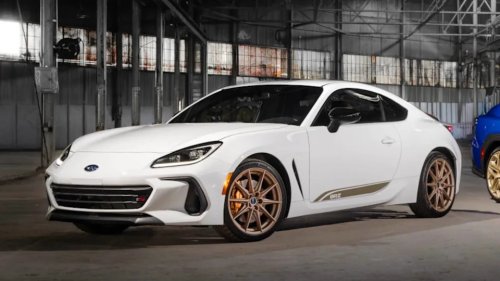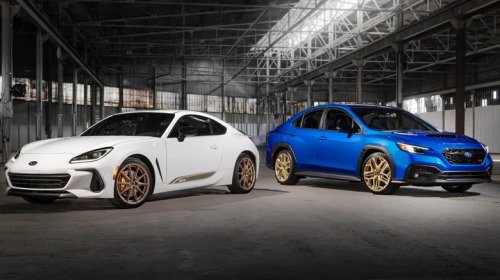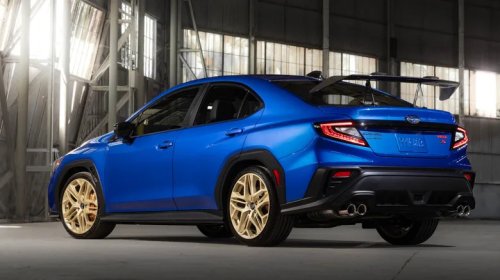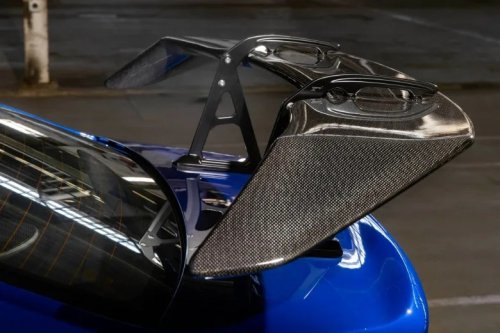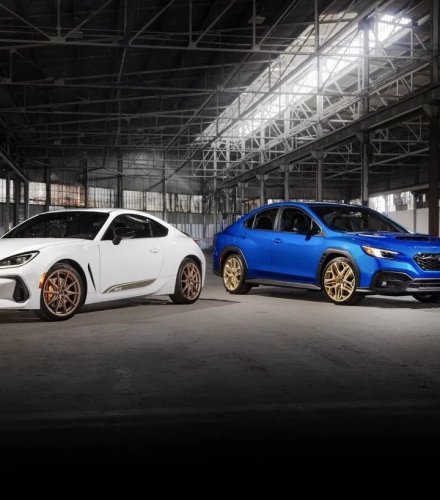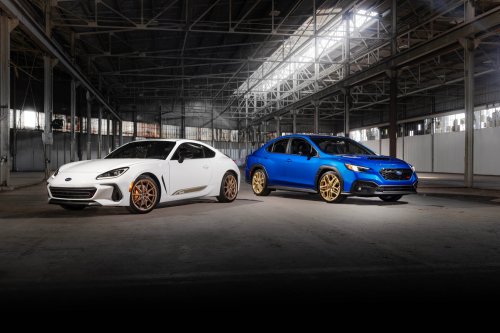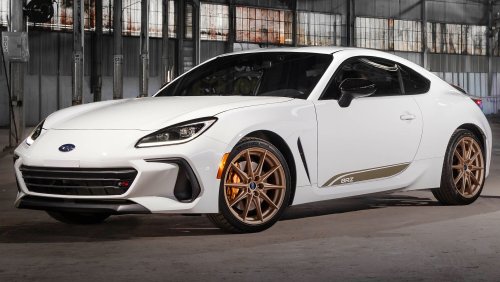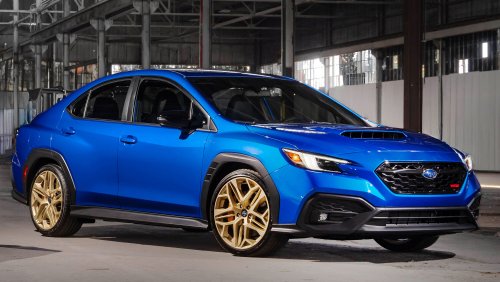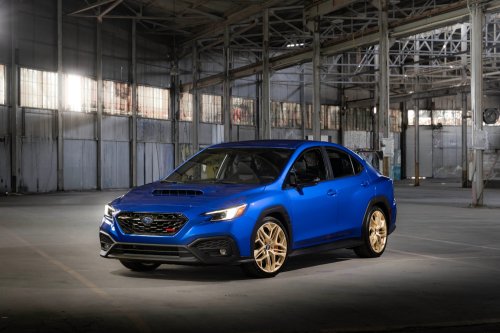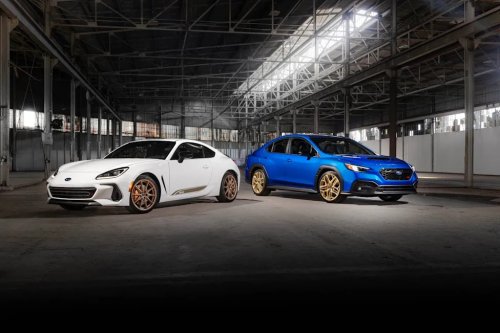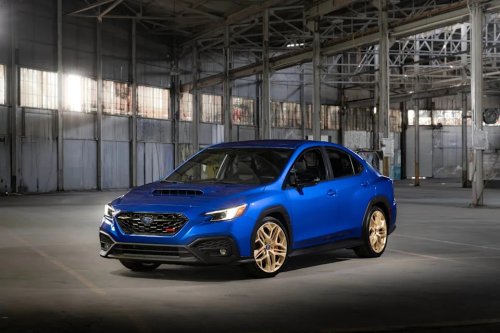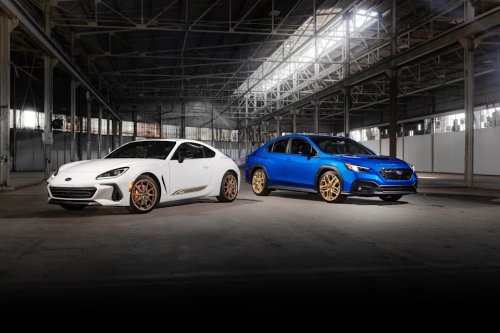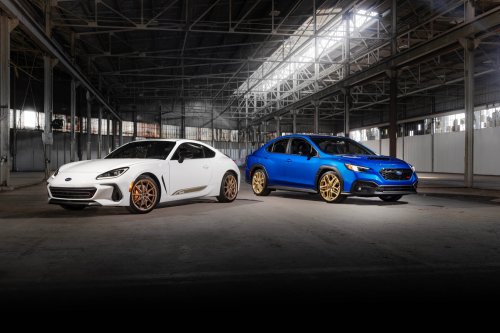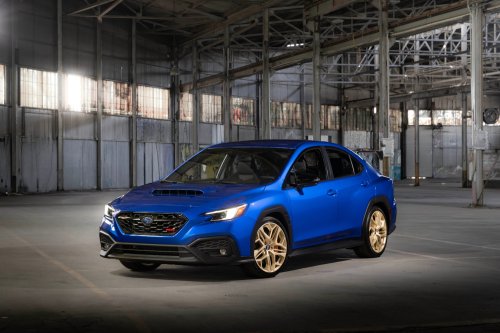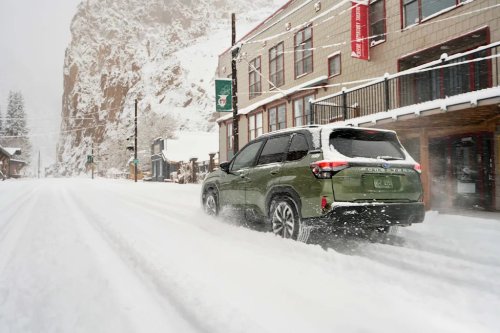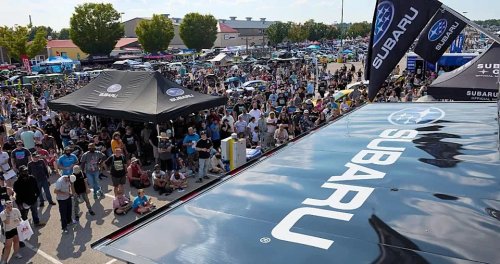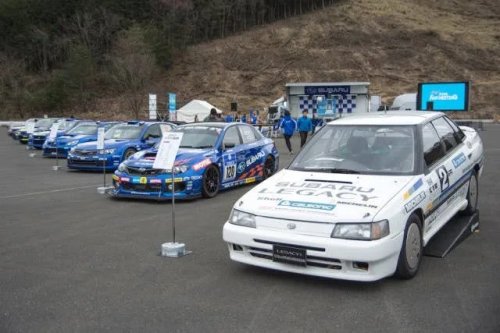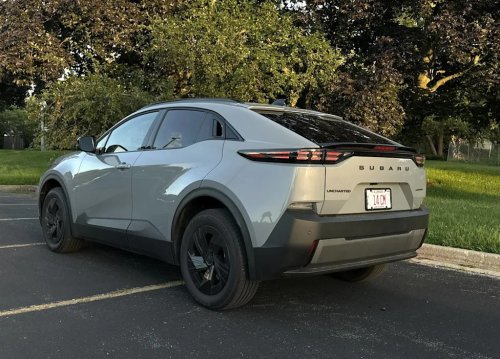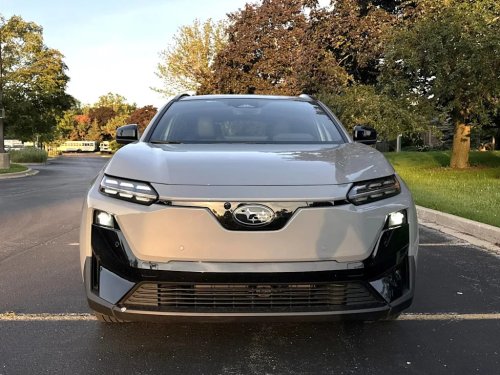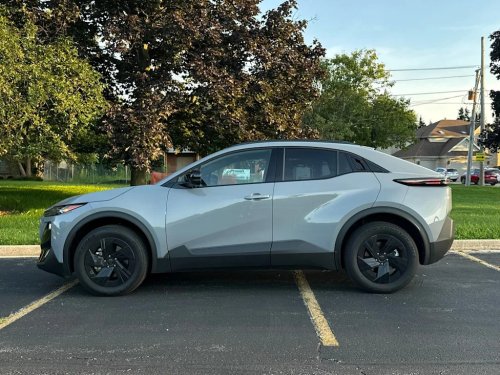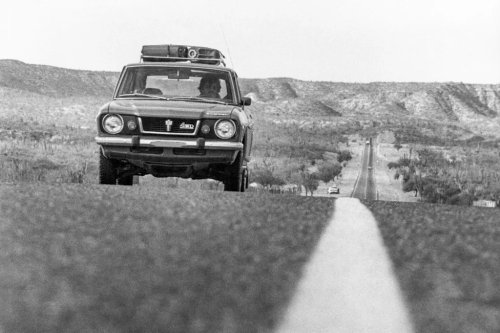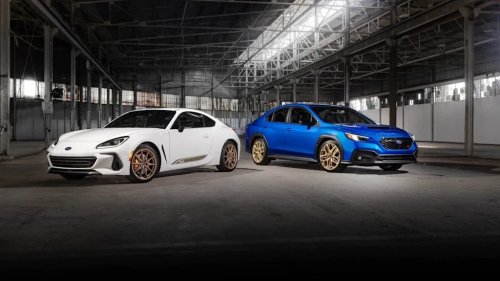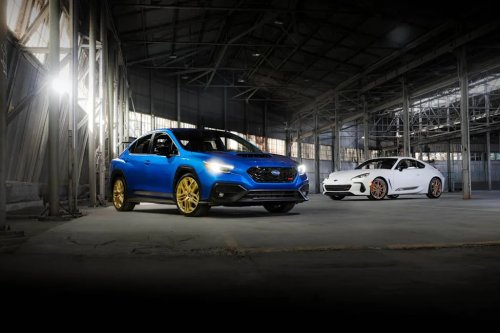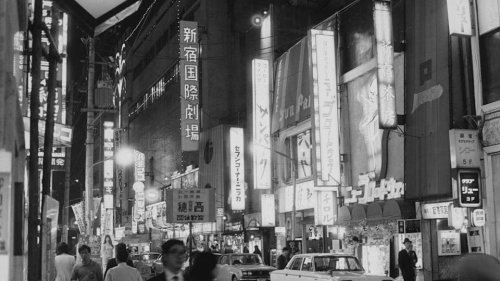
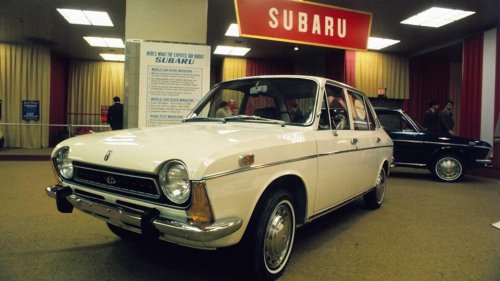



















Autoblog and Yahoo may earn commission from links in this article.It’s what makes a Subaru, a SubaruThough the ads claim that love is what makes a Subaru, a Subaru, gearheads know that it's Subaru's all-wheel-drive system that gives its vehicles its distinct personality and appeal. With the exception of the rear-drive BRZ two-door sports coupe, every car in Subaru's lineup is built around the brand’s signature Symmetrical All-Wheel Drive. Over the course of decades, the Subie fanbase has united two unique groups: hardcore tuners chasing rally-inspired performance in their burble-tune WRXs and STIs, and outdoorsy types who don’t mind a little dirt and mud getting to the trail. All in all, its cult following is so devoted, Consumer Reports ranked Subaru the number-one overall brand and number three in Owner Satisfaction.Although youngsters who play with their COBB tuners like iPhones swear that their Subie’s legendary AWD system was developed by engineers in service to legendary drivers like Colin McRae on a muddy rally stage in Finland countryside, the signature tech has a different origin story. Before Subaru created vehicles like the Legacy and WRX, a Japanese power company turned to Subaru to create a comfortable, reliable vehicle to navigate rough terrain. What started as an experiment from a small request has ultimately turned into the legacy of one of Japan’s most well-known automakers.Werner Stoy/FPG/Archive Photos/Getty ImagesView the 2 images of this gallery on the original articleThe Power CompanyThe year was 1969. NASA and Apollo 11 put men on the moon, the first episode of Sesame Street aired, the first brick was thrown at Stonewall and over half a million people made their way to upstate New York for Woodstock. Like the United States, Japan was also changing as a fully industrialized nation. By the end of the sixties, Honda, Kawasaki and Yamaha were dominating the world’s motorcycle market. Sony, Toshiba and Panasonic electronics made their way into American homes, and the high-speed Shinkansen had already transported over 100 million passengers between Tokyo and Osaka.AdvertisementAdvertisementHowever, much of those leaps and advancements needed one thing: electricity, and post-WWII Japan was using a lot of it. As a result of the island nation’s rapid industrial growth, Japan doubled its energy consumption every five years until the 1990s. Specifically during 1960-1972, a period marked by rapid industrialization, Japan’s energy consumption grew faster than its gross national product. No one knew this phenomenon better than Tohoku Electric Power; the power company responsible for electrifying much of the Tohoku region in northeast Japan. Their line workers were tasked in traversing the region’s hilly, mountainous terrain to repair and inspect power lines.At the time, Tohoku Electric had a fleet of four-wheel-drive-equipped vehicles, which included J40-series Toyota Land Cruisers; vehicles that were very capable of traversing the region’s rugged and snowy terrain. Although the J40 is a widely-celebrated vehicle today, in 1969, Tohoku Electric workers deemed it too uncomfortable and inefficient, especially in the winters, as their heaters weren’t up to task and their canvas tops would allow cold air to leak in. Seeking a solution for their dilemma, a manager for Tohoku Electric contacted a Subaru dealer in Miyagi Prefecture to ask if they could order one of their vehicles, the front-wheel-drive FF-1 wagon (sold as the Subaru Star in the U.S.) with four-wheel drive; a special request that they took seriously.Getty ImagesView the 2 images of this gallery on the original articleSubaru didn’t invent AWD, but they democratized itAt the time, all-wheel-drive, or four-wheel-drive wasn’t exactly a foreign concept to the auto industry. Before Subaru, AMC and Audi helped popularized it, these kinds of drivetrains were strictly the domain of trucks or dedicated, hardcore Jeep-like 4x4s such as the Jeep CJ, Ford Bronco, the original Land Rover and the International Scout. Unlike today, where nearly every new car is a crossover SUV; ordinary motorists back in the 60s and early 70s primarily drove sedans, as 4x4s were reserved for actual “sporting” activities and off-road duties.AdvertisementAdvertisementIn the 60s, all-wheel-drive passenger cars did actually exist, however, they were a very niche segment that was out of reach for most motorists. Decades before AMC introduced the Eagle and Audi launched the Ur-Quattro, a little company in England called Ferguson Research was hard at work developing an ordinary “super-safe” family car that had a permanently engaged four-wheel drive system that helped cars keep traction in any road condition. They developed the Ferguson Formula, a ready-made four-wheel drive system built for manufacturers to stick onto regular production cars.Due to its cost, the only manufacturer that actually implemented them was British sportscar manufacturer Jensen. Between 1966 and 1971, they made the FF, a slightly elongated version of its Interceptor grand tourer, which was the first road-going passenger vehicle to incorporate both AWD and anti-lock braking technology. Despite its advancements, the FF wasn’t a sales success. Its MSRP was 30% more than the Interceptor and other sports cars at the time, and as a result, about 330 Jensen FFs were made. Ferguson would later showcase the Ferguson Formula in specially converted Ford Mustangs, though Ford, nor any American automaker would actually buy their AWD systems.SubaruView the 2 images of this gallery on the original articleThank Nissan for Subaru’s AWD.Nonetheless, Subaru took on the challenge of fulfilling Tohoku Electric’s special order, which was fairly easy due to built-in engineering advantages of the vehicle they chose. The Subaru FF-1 was an improved version of the 1000, an important vehicle in the brand’s bloodline. It was its first front-wheel drive vehicle and the first Subaru sold with an engine that would define the brand under the hood for decades to come: a longitudinally mounted, horizontally opposed four-cylinder “boxer” engine.AdvertisementAdvertisementMounting the flat-four the way that Subaru did (the long way) meant that it was much easier for Subaru engineers to convert the front-drive FF-1 into four-wheel drive. At the time, Nissan owned about 20% of Subaru, who helped develop prototypes with a hodgepodge of Nissan parts. By 1971, eight four-wheel drive FF-1 prototypes were produced, which they created by connecting a driveshaft from the back of the Subaru’s gearbox to a driver-operated transfer case, then to a rear differential and axles sourced from a Nissan 510 Bluebird (Datsun 510), to power the rear wheels. In addition, the 4WD FF-1s got upgraded suspension with about an inch higher ride hight for better ground clearance.SubaruAdvertisementAdvertisementView the 1 images of this gallery on the original articleOf the eight prototype wagons they produced, five were sold to Tohoku Electric, while three were purchased by an agricultural government agency in Nagano prefecture. Though they saw actual work, Subaru was so proud of their creations, they showed off one of their converted FF-1 wagons next to a standard Subaru FF-1 1300G at their booth at the 1971 Tokyo Motor Show. To show off the new drivetrain, Subie parked the special wagon on top of a mirror that allowed show visitors to examine its components at the rear.Ultimately, Subaru’s 4WD experiment was successful, and had ultimately convinced the brass at Fuji Heavy Industries (Subaru's parent company) to seriously consider mass producing these kinds of vehicles. In 1972, the Leone (or DL/GL in the States) station wagon became the first Subaru to offer factory four-wheel drive, an optional extra that would come to the United States beginning in the 1975 model year. Subaru’s 4WD technology would evolve from part-time, on-demand four-wheel drive technology in the 70s, to a full-time AWD setup in the 1980s, eventually evolving into the brand's Symmetrical All-Wheel Drive system in 1986. In 1996, Subaru of America ceased offering AWD as an optional extra, making Symmetrical AWD a standard feature across its entire U.S. vehicle lineup.SubaruView the 2 images of this gallery on the original articleEpilogueTo preserve this part of its history, Subaru bought the last remaining 4WD FF-1 prototypes used by Tohoku Electric in 2008, which it restored and displayed at events around Japan. Unfortunately, in the 2011 Tohoku earthquake and the tsunami, the last surviving 4WD FF-1 was reported to be destroyed. Although a physical representation of what helped create the modern-day Subaru may not be with us, the legacy (pun not intended) of this vehicle can be found with nearly every Subaru vehicle on the road today. What started as a simple idea from a power company who wanted a different kind of four-wheel drive vehicle has created a vehicle that made the template in which nearly all modern Subarus are made.AdvertisementAdvertisementWhile Subaru currently pivots toward a future of electrified SUVs, it’s worth remembering that its entire brand identity wasn’t entirely forged by high-octane rally legends or by L.L. Bean-esqe outdoorsy types, but by a bunch of shivering utility workers in northeast Japan. Forget the gold wheels and blue paint; the real reason we have Symmetrical AWD is that Tohoku Electric Power Company employees were sick of their drafty Land Cruisers and wanted a heater that actually worked. Although Subie’s marketing department insists that "Love" is what makes a Subaru, a Subaru, the truth is much different.This story was originally published by Autoblog on May 13, 2026, where it first appeared in the Features section. Add Autoblog as a Preferred Source by clicking here.