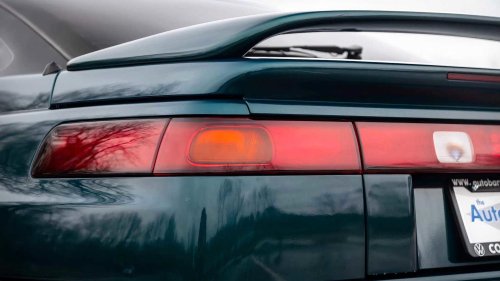
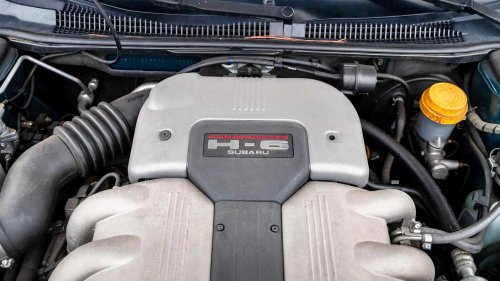
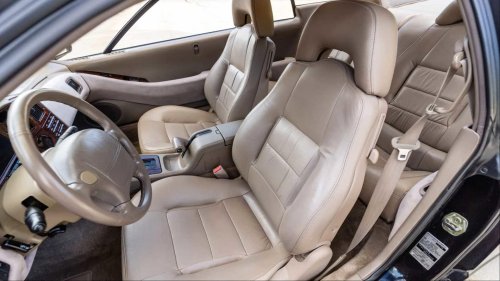
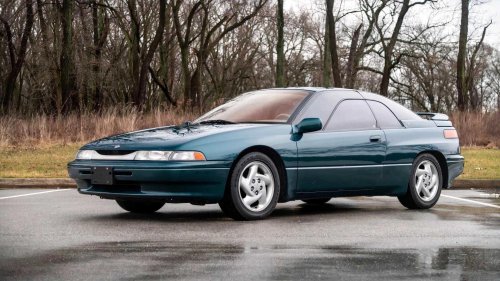
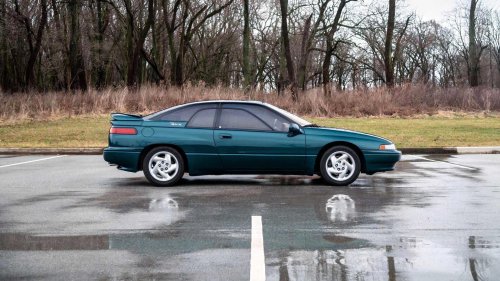
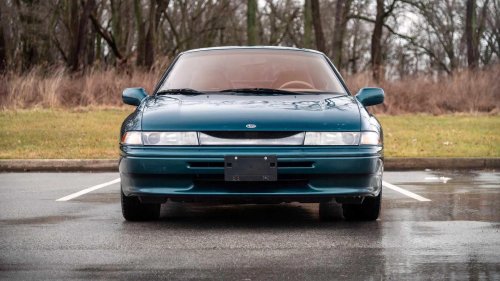
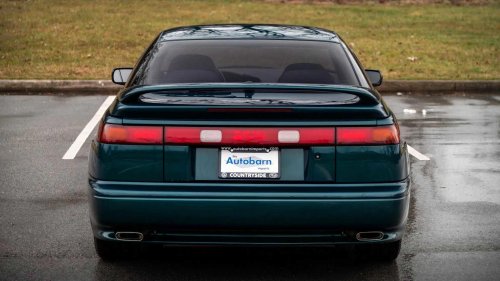
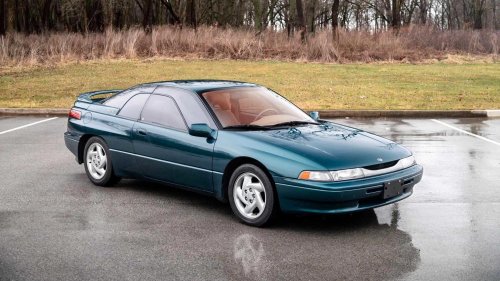
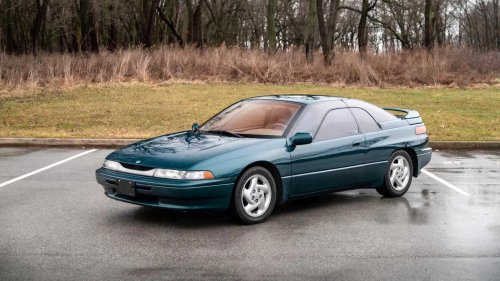
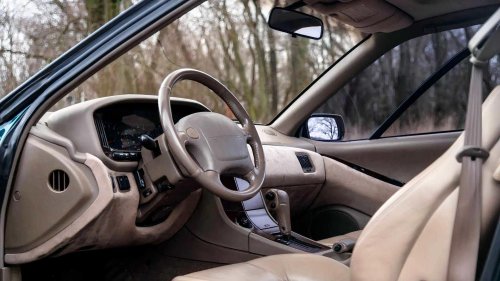
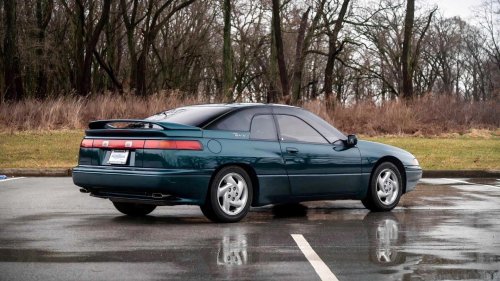
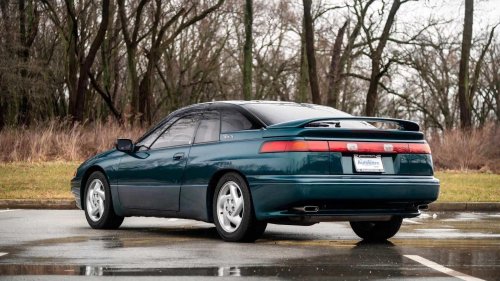
In 1991, Subaru handed one of the world's greatest car designers a blank check and asked for something extraordinary. He delivered. The problem was the market wasn't ready, the timing was catastrophic, and the car carried a badge most people still associated with cheap wagons. It sold in tiny numbers, died quietly in 1996, and got forgotten. Now the collectors who actually understand what they are looking at are hunting it down with the same intensity other enthusiasts reserve for Supras and RX-7s. Japan Was On Fire, And Every Automaker Knew It Nissan The late 1980s turned Japanese performance into a full-scale arms race, and every major automaker was spending accordingly. The objective wasn't subtle: don't just match the Europeans on price; beat them on prestige. Every major Japanese brand had a plan. One of them was about to build something that made every other plan look modest.The Japan bubble economy of the late 1980s was running at full tilt, and the automakers were pouring money into cars that would become iconic. Honda launched the NSX as a Ferrari-baiter and meant every word of it. Toyota's Supra was evolving into a genuine flagship. Nissan came with two halo cars at once, the R32 GT-R and the 300ZX. Mitsubishi came out of nowhere with the 3000GT VR-4. For the first time, Japanese performance wasn't competing on price. It was competing on prestige, and the shift was permanent. The Price Of Running With The Big Dogs Bring a Trailer Back in the 1980s, the name Subaru meant one thing: cheap and practical. The lineup backed that up at every price point. That was exactly the problem. No halo car, nothing performance-focused, and with every passing year the gap between Subaru and the rest of the field was getting wider. The brand went all-in. One car. No corners cut; no budget capped. What came out was capable of redefining what the Subaru name could mean to enthusiasts, and it started with the hire of the most famous automotive designer in the world.The engineers on this project refused to compromise, and the development record shows exactly what that meant. A bespoke engine built around a single car, never shared with another model. An AWD system more sophisticated than anything the company had produced before. Nothing about this was lifted from the existing lineup.Bring a TrailerThe EG33 was something Subaru had never built before and never built again. A 3.3-liter flat-six with dual overhead camshafts, four valves per cylinder, and sequential multi-port fuel injection, producing 230 horsepower and 228 pound-feet of torque. The largest and most powerful engine Subaru had ever put in a passenger car, developed exclusively for this project, carried over to nothing that followed. The car launched automatic-only, not because Subaru preferred it that way, but because no gearbox in the company's lineup at the time could handle 228 lb-ft from the EG33. The Chassis They Refused To Cut Corners On Bring a Trailer Subaru's engineers took the AWD system from the XT and rebuilt it into something far more capable rather than starting from scratch. What they ended up with was more sophisticated than anything the company had attempted before. Getting the integration right was a genuine challenge, and they cleared it. A Japan-only variant called the Version L added four-wheel steering for 1991 and 1992, with approximately 1,904 units built. It was the kind of detail that summed up the entire project: Subaru wasn't building to a budget; they were building to a vision. The entire package held an excellent drag coefficient of 0.29 similar to the XT it replaced. That is a remarkable figure for a car that was wider, longer, and heavier, and it took Subaru's engineers fighting for every fraction to achieve it. Meet The Subaru SVX, Giugiaro's Japanese Masterpiece Bring a Trailer The car is the Subaru SVX, born from the brushstrokes of Giorgetto Giugiaro of Italdesign, the man who put his name on masterpieces like the VW Golf, the Lotus Esprit, and the time machine itself, the DeLorean DMC-12. He created the concept, and Subaru's in-house designer Madoi Takashi refined it into the production-ready model.When it launched, the SVX was a masterpiece of its era, not just for its design, but for everything the package stood for: the power, the torque, and the performance. It did exactly what it was built to do. It redefined what the name Subaru meant. The Design That Stopped People Cold Bring a Trailer The defining feature was the glass-to-glass canopy: an aircraft-inspired greenhouse that extended from windshield to rear window with no visible interruption, with each side door featuring a window-within-a-window where only the lower section rolled down. The inspiration came straight from a fighter jet cockpit, the same unbroken canopy that wraps around a pilot mid-flight, transplanted onto a four-seat Japanese GT. The 1989 show car used a single molded glass bubble that was too heavy for production, so Subaru developed an entirely new metal-to-glass bonding process to achieve the same visual effect at a usable weight. The Number That Should Have Made It A Legend Bring a Trailer The SVX launched in the US in July 1991 as a 1992 model, with a base price of approximately $24,445 for the L trim and approximately $28,000 for the top-spec LS-L with the touring package. Those figures made it the most expensive Subaru ever sold, approximately $8,000 to $11,000 higher than any previous model in the lineup. Subaru SVX Specs The EG33's 230 hp put it in the same conversation as the Mitsubishi 3000GT and Nissan 300ZX on paper. In the showroom, though, it was still a Subaru, and that badge carried a decade of practical wagons and economy cars into every conversation the SVX was trying to have. Figures online suggest that by the time production ended in December 1996, the top-spec LSi had climbed to approximately $36,740.So Why Did Japan And America Both Walk Right Past It?Bring a Trailer Even after building something that good, both markets walked away. The asking price was too steep for the badge, and the timing couldn't have been worse. The sticker sitting higher than a base Porsche in the showroom was enough to stop the conversation before it started. Nobody cared about the package under the hood, what they cared about was the price, and the Porsche comparison was the last thing people wanted to hear. That took a lot of things out. The Price Tag That Killed The Conversation Dead Bring a Trailer The asking price immediately created a credibility problem. Subaru had no history in the luxury or performance segment, and asking approximately $24,445, more than a base Porsche 944, for a car wearing the same badge as a GL wagon was a hard sell. Enthusiasts who were open to the price were stopped by the transmission. The 4EAT automatic was sourced from the Legacy and was never designed to handle this much torque. Loaded with 228 lb-ft from the EG33, early units suffered systematic high clutch failures, defective torque converter clutches, and inadequate fluid cooling. Before factory revisions arrived in late 1994, few SVXs made it close to 100,000 miles without a costly transmission rebuild. The Market That Was Already Moving On Bring a Trailer The SVX was conceived during Japan's bubble economy and hit dealer lots just as that bubble collapsed into a global recession. In Japan, the situation was compounded by government dimension regulations. The SVX was the first Subaru to exceed Japan's exterior size limits, which obligated buyers to pay higher annual road tax, and engine displacement above 2.0 liters triggered additional tax costs. Subaru had forecast sales of 10,000 units per year. US sales reached approximately 5,280 in 1992 and fell to approximately 3,859 in 1993. Total US sales across the entire production run reached 14,257 cars, with approximately 24,379 sold worldwide. A front-wheel-drive variant was offered in the US for 1994 and 1995 to lower the entry price, but it did little to move the needle. Why Collectors Are Finally Paying What It's Actually Worth Bring a Trailer It took years for the market to catch up to what the SVX actually was. Once it did, the prices moved. The numbers tell a specific story, and it's one anyone watching the JDM collector market will recognize. The market catching up was the blessing for the model, not so much for the collectors. By the time they realized what was inside, the value had already gone through the roof. The only thing they could do was check their accounts, and if they had it, pay what it was asking for. The numbers make that story concrete. What The Numbers Actually Reveal Bring a Trailer The SVX's collector trajectory tells two distinct stories. Between 2019 and mid-2024, values more than doubled: a good condition car worth roughly $8,000 in 2019 had reached approximately $16,800 by the summer of 2024. That peak did not hold. Values have since corrected roughly 10 percent and returned to approximately 2022 levels. As of May 2026, a good-condition LSi is approximately an $8,000 car and an excellent example runs just over approximately $15,000, while the base L trim sits at approximately $6,700 for good condition and approximately $13,400 for excellent. For context, equivalent-era rivals—the Supra, RX-7, 300ZX, and 3000GT—have moved deep into five-figure and, in some cases, six-figure territory. What You're Really Buying In 2026 Bring a Trailer Only 14,257 SVXs reached the US, and transmission failures at peak depreciation removed a meaningful number from circulation permanently. The 4EAT problem is well understood now and solvable. A separate transmission cooler or an upgraded aluminum radiator addresses the primary failure mode, and the community has documented manual swaps using compatible Subaru gearboxes. What remains is a grand tourer with a flat-six no other car ever used, a Giugiaro-designed canopy that required Subaru to invent its own manufacturing process, and a production run of five years that left fewer than 25,000 examples worldwide. The market ignored it once. The people who know what they are looking at aren't about to make the same mistake twice.

















 +47 others