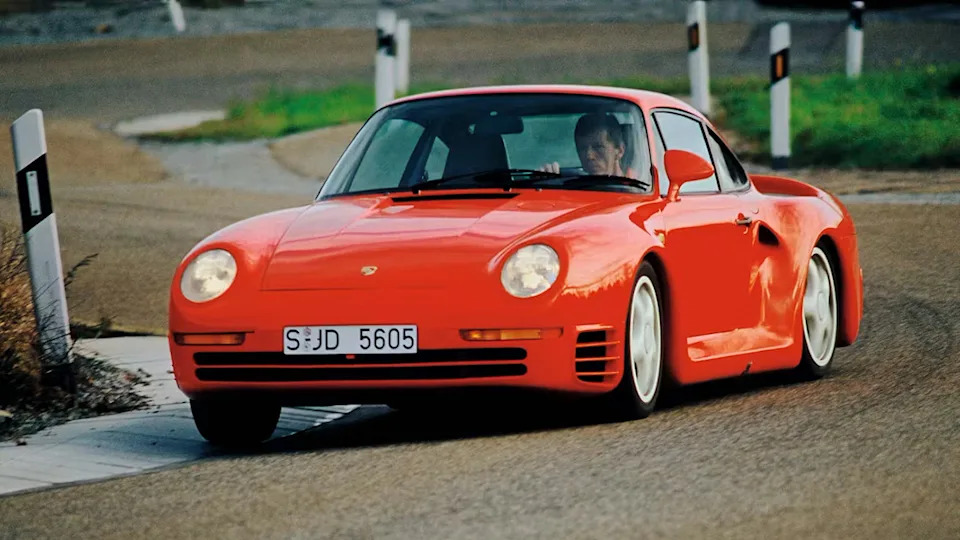
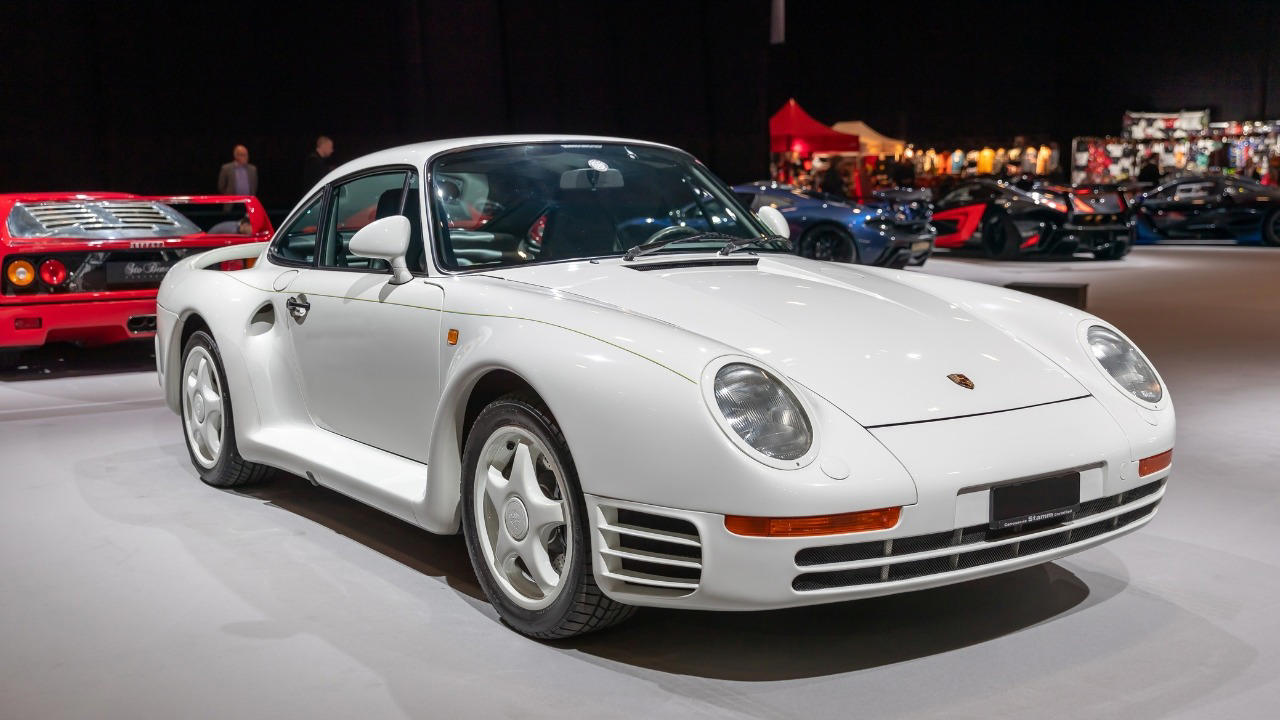
The Porsche 959 system that forced supercar rivals to rethink awd performanceThe Porsche 959 arrived during the 1980s as a technological shockwave that completely changed expectations for high-performance cars. While most supercars of the era focused almost entirely on raw horsepower and rear-wheel-drive layouts, Porsche introduced an advanced all-wheel-drive system that transformed how performance, stability, and speed could work together at extreme levels. Porsche engineered the 959 to challenge traditional supercar thinking When Porsche developed the Porsche 959, the company was not simply building another fast exotic machine. Instead, Porsche approached the project as an engineering showcase designed to push the boundaries of traction, aerodynamics, and high-speed stability in ways competitors had not fully explored. At the center of this revolution was Porsche-Steuer Kupplung, commonly known as the PSK all-wheel-drive system. Unlike traditional AWD systems that distributed power in fixed ratios, the 959 could actively vary torque delivery between the front and rear wheels depending on traction conditions and driving inputs. This gave the car an unprecedented level of adaptability for a supercar during the 1980s. The PSK system changed how power could be controlled at high speed The Porsche 959 demonstrated that all-wheel drive could improve performance rather than simply increase stability in poor weather. Under the engineering direction of Porsche, the PSK system continuously monitored traction and redistributed power dynamically, allowing the car to maintain grip during aggressive acceleration and high-speed cornering. At a time when many rear-wheel-drive supercars struggled to manage growing horsepower levels, the 959 showed that intelligent power distribution could make performance both faster and more controllable. The system reduced wheelspin, improved launch performance, and gave drivers greater confidence when pushing the car near its limits. Rivals realized AWD could become a true performance advantage Before the arrival of the Porsche 959, many manufacturers viewed all-wheel drive as unnecessary weight for sports cars. High-performance engineering remained focused on minimizing drivetrain complexity and maximizing rear-wheel-drive purity. However, Porsche’s success forced rivals to reconsider those assumptions. The PSK system proved that advanced AWD technology could enhance acceleration, handling, and real-world usability simultaneously. As performance figures continued climbing across the supercar industry, manufacturers began recognizing that rear-wheel-drive layouts alone could struggle to manage increasing power outputs safely and effectively. The 959 blended technology and usability in a new way One of the most revolutionary aspects of the Porsche 959 was its ability to combine extreme performance with surprising everyday usability. Under Porsche engineering philosophy, the AWD system helped create a car that remained stable and predictable in a wide range of driving conditions. This approach separated the 959 from many exotic rivals that were often temperamental and difficult to control at the limit. The car demonstrated that advanced electronics and drivetrain management could improve both performance and driver confidence without eliminating excitement. Modern supercars still reflect the 959’s engineering influence Today, the influence of the Porsche 959 can be seen across the modern supercar landscape. Many high-performance vehicles now rely on sophisticated all-wheel-drive systems to handle massive horsepower figures while maintaining traction and stability. Manufacturers throughout the industry eventually adopted concepts pioneered by Porsche during the 959 program. What once seemed radical in the 1980s has become a standard performance strategy for modern hypercars and advanced sports cars. The Porsche 959 became more than just a fast 1980s supercar The Porsche 959 is remembered not only for its speed but for fundamentally changing how engineers approached high-performance drivetrains. Its advanced AWD system proved that traction management and intelligent power distribution could become essential parts of elite performance engineering. For enthusiasts and historians alike, the 959 represents a turning point where technology began shaping the future of supercars as much as horsepower itself. That lasting influence More from Fast Lane Only Unboxing the WWII Jeep in a Crate 15 rare Chevys collectors are quietly buying 10 underrated V8s still worth hunting down Police notice this before you even roll window down



















 +7 others