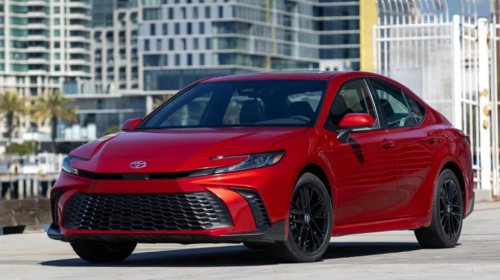


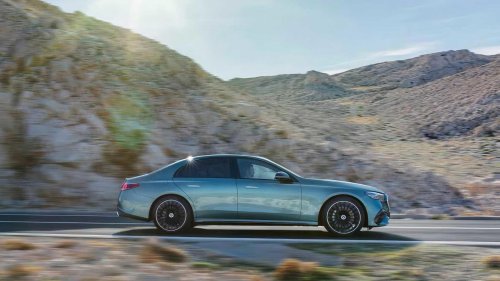
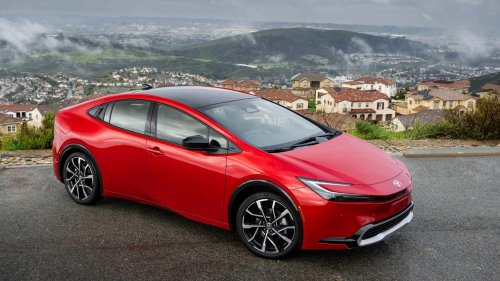
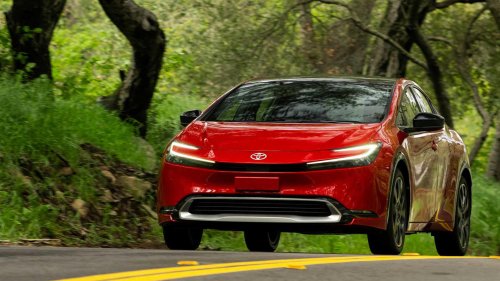
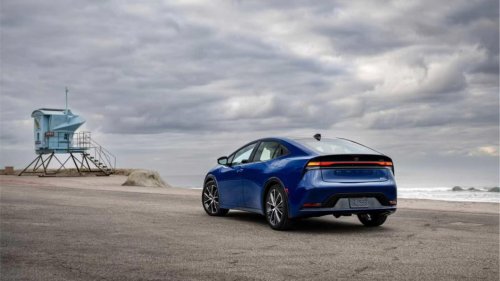
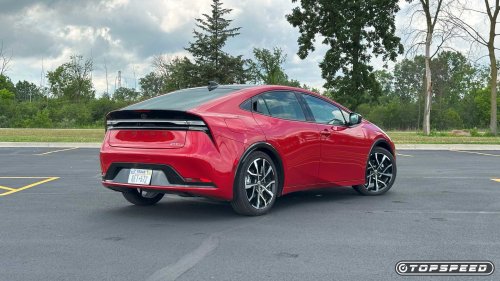

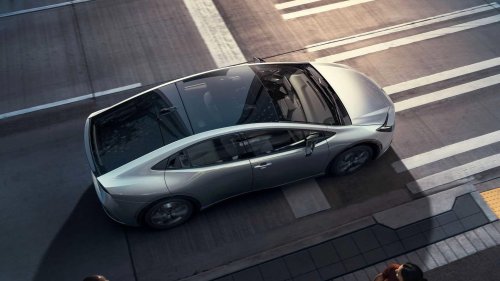
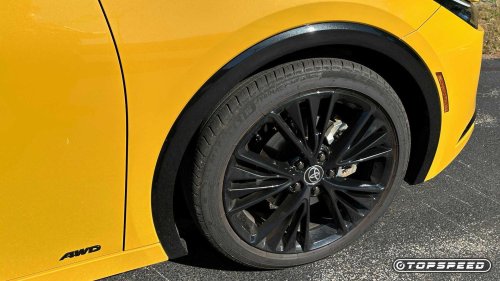
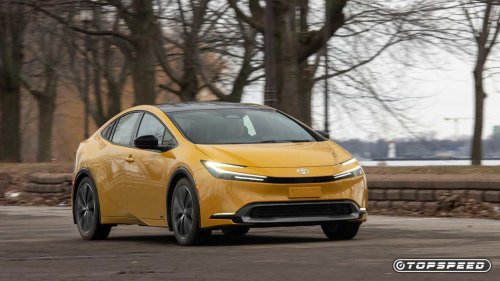
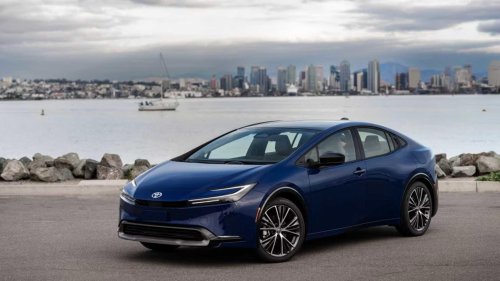
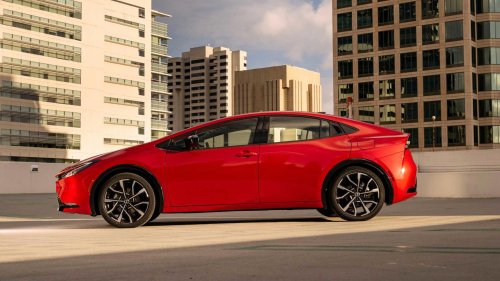
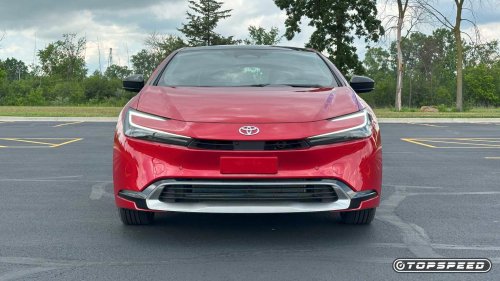
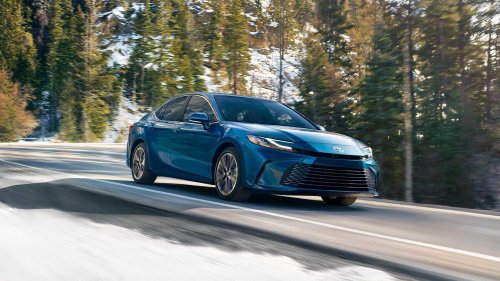
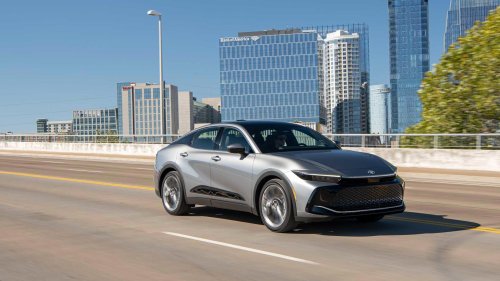
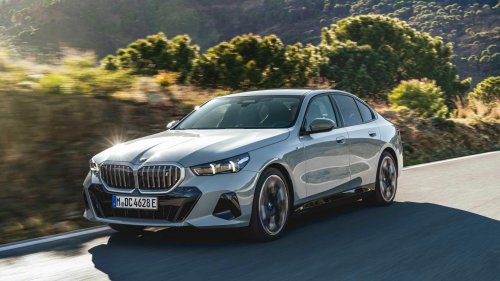






















The sedan has not completely lost its desirability, even in today's world of crossovers dominating the sales charts, inhabiting suburbia, and populating social feeds with their kayak-laden comb overs. Where crossovers and SUVs are in demand as family-vehicles, sedans are still popular as personal conveyances for commuting or evenings out at elegant events. One of the main reasons is that they’re easier and more comfortable to drive, especially at those times when cargo versatility isn’t a primary concern.Year-round dependability is an increasing concern, though, but buyers that leaned toward crossovers and SUVs because of it are finding that they may not have to give up their cozier sedans for their office treks, even when the weather conspires against them. AWD inherently adds weight, and weight is the primary adversary of fuel economy, which explains the proliferation of AWD hybrids. And some of them hardly bat an eye with the addition of extra drive wheels. What An AWD Hybrid Sedan Can Do For You ToyotaAt the root stage, buying a hybrid is similar to investing in the stock market—it’s all about risk and reward. You can go all in on saving annual fuel costs by going EV, but then you worry about coming to a dead stop at the most inopportune time. You can go half way, but then you may end up spending a lot on home equipment and still filling up on fuel because you didn’t plug in last night. Or, you can play it safe and let the system work its magic while you just operate the way you always did.SubaruAll-wheel drive is kind of similar—you do without it and maybe consider parking the car during extreme-weather events, or you count on it getting you through all but the worst of snow-days and live with higher fuel bills day in and day out. Combine the two, and it sort of becomes a no-brainer, as they almost balance each other out. Factor in the lower-profile, sleeker body of a sedan and now you’re thinking that maybe the family SUV doesn’t have as many advantages as you thought. Why MPG and AWD Matter In Today’s World Raysonho @ Open Grid Scheduler / Grid Engine, CC0, via Wikimedia CommonsMarketing has taught buyers to associate AWD with confidence, year-round usability, and added security during bad weather, and hybrids with lower fuel-economy, plug-and-play efficiency and the ability to go longer distances on the same amount of fuel. The combination is one of the few examples in today’s world of truth in advertising, which doesn’t make it the perfect solution to surviving climate change with dwindling natural resources, but it’s an unobtrusive way to weather the storm.SubaruThe world is changing, and probably the best consumers can do is adapt, rather than try to reverse the changes. Remember, you can’t change the wind, but you can adjust your sails to take advantage of it. The modern challenge isn't simply to build a more efficient AWD hybrid, but one that delivers strong hybrid fuel economy while still giving buyers the AWD capability they desire. In most cases, a hybrid AWD small vehicle will always out-efficiency a hybrid AWD big vehicle, which is where sedans show their worth. Why Sedans Are Still Considered The Logical MPG Leaders Bring A TrailerBody style sometimes matters more than sales trends. A sedan’s lower roofline creates less frontal area, hitting the rush of wind head-on, and reduced ride height typically improves aerodynamic flow. That’s not to say crossovers can’t be efficient (many are impressive), but physics usually favors the little guy with the sleeker build, and cars have inherently better aerodynamic efficiency than SUVs. With that base, engineers can get to work calibrating the software and hardware to make them more efficient.MercedesSedan design naturally supports efficiency, with lower drag coefficients helping to stretch the distance before adding more fuel by reducing the energy required to move that vehicle at a sustained speed. The other variable is weight. Crossovers and SUVs are heavier than their similarly sized sedans, with body height adding proportional weight. Factor in the added AWD hardware, and you get heavier still. It therefore follows that an efficient powertrain, like a hybrid, becomes even more efficient when the shape and weight of the vehicle are reduced. The 2026 Toyota Prius AWD Shows You Don’t Have To Give Up Fuel Economy For AWD EPA Rated At 54 MPG Combined The 2026 Toyota Prius AWD leans into the strengths that a) made it the face of hybrid efficiency; b) satisfy the desire for year-round confidence; and c) make sedans appealing. With an EPA-rated combined fuel-economy rating of 54 mpg, it is the most efficient non-plug-in vehicle in the marketplace. It added AWD for the 2022 model year with the addition of an electric motor on the rear axle, and it conveys an attractive compact sedan bodystyle (though technically, it’s a notchback).ToyotaThe acclaimed new Toyota Prius silhouette (fresh for 2024) is low, sleek, and inherently aerodynamic, setting it apart in a market that today is mostly driven by commanding height to signal progressive lifestyles. Today’s Prius follows the Prius tradition of maximizing efficient function without the constraints of form. The irony lies in its appearing less quirky among its peers, as rivals and even other Toyotas adopt a look and shape that makes the Prius stand out less from the mainstream. How The 2026 Toyota Prius AWD Preserves Sedan Driving Experience With Hybridization ToyotaOne of the 2026 Toyota Prius AWD’s greatest strengths may be how little adaptation it requires from its owner, any time of year. You fuel it as you would your 1999 Ford Focus, drive normally as you would your 2010 Honda Accord, and allow the hybrid AWD system to work its magic like a 2025 Toyota Camry. That familiarity is a powerful selling point today, as more market segments open up to plug-in electrification, charging uncertainty, and technology overload. The Prius AWD allows its drivers to just drive, any time of year.ToyotaAnd then, its finely calibrated hybrid AWD system allows it to go farther on a gallon of fuel than any other vehicle in the market. It proves that you don’t have to increase mass to get year-round sure-footedness, and that cleaner air-flow around the vehicle matters not just to efficiency, but also toward making the interior quieter, calmer, and cozier. Crossover popularity isn't disappearing anytime soon, but the Prius AWD quietly demonstrates that a traditional car format still has its place in society. How The 2026 Toyota Prius AWD Reconciles AWD Demand With High MPG Craig Cole | TopSpeedAll-wheel drive and high MPG traditionally exist in constant conflict—not terrible, win-at-all-costs type conflict, but in a finely-tuned weight scale where the minutest of changes is instantly noticed. Consumers rightfully assume that choosing one means compromising the other, with efficient AWD hybrids remaining a narrow market subsegment that either prioritizes year-round performance or efficiency. But the 2026 Toyota Prius AWD proves that balance doesn’t have to be a catastrophic, life-altering choice.Nicole Wakelin/TopSpeedRather than treating AWD as a fuel-economy liability that buyers reluctantly accept, the 2026 Prius AWD integrates traction capability into an efficiency-first framework. Its AWD-e system doesn’t follow the traditional complex mechanical setup, where steel rods connect all wheels to the transmission, but simply adds an electric motor on the rear axle and lets a computer decide when each gets power. The result is a car that embraces AWD functionality without abandoning the headline fuel-economy numbers that have defined the Prius name over the past quarter-century. How The 2026 Toyota Prius AWD Efficiency Works ToyotaThe 2026 Toyota Prius AWD goes about its efficiency as Prius always has—through disciplined engineering. At the center sits Toyota’s hybrid architecture (not coincidentally evolved from the first Prius), blending gasoline and electric power in a way designed to minimize energy waste. The gasoline engine handles sustained propulsion demands, while electric assistance supplements acceleration and smooths out low-speed driving, reducing fuel consumption in both instances.Nicole Wakelin/TopSpeedRegenerative braking plays its familiar role, recovering energy that would otherwise disappear as heat during deceleration. Where it gets interesting is that creating AWD electrically, rather than mechanically, is actually better for efficiency. Yes, there’s still a penalty in putting power out to all four wheels, rather than two, but when it comes to deceleration, the Prius AWD’s rear motor helps recapture more energy that the car can later use to power the wheels. How The 2026 Toyota Prius AWD Delivers Surprisingly Good MPG Guillaume Fournier | TopSpeedCompared with other systems that use AWD to enhance performance (either at the track or on loose surfaces), the 2026 Toyota Prius AWD remains singularly committed to efficiency and delivers traction only when it's needed. Arguably, all AWD systems distribute torque in such a manner, but conventional systems still require all wheels to remain connected to the powertrain, sapping energy, whereas the Prius AWD simply lets the rear wheels coast when they aren’t needed (to power through a snowy parking lot or intersection puddles, for example) and recaptures energy, instead of draining it. How Much Does It Cost To Drive The 2026 Toyota Prius AWD Versus A Compact Hybrid SUV? A front three-quarter shot of the 2026 Toyota Prius parked in front of waterThe 2026 Toyota Prius AWD’s mission is clear: deliver AWD capability without diluting the Prius’s core promise of efficiency. One of the reasons it works is that it’s a compact sedan—sleeker, with less frontage, and lower to the ground to better manage aerodynamics. When you compare it to a similarly sized SUV (even an aerodynamically optimized one), the Prius returns better numbers, though they take into account electric AWD, rather than a mechanical system, and its corresponding reduction in weight and ownership costs. The 2026 Toyota Prius AWD Efficiently Refines AWD Sedan Expectations ToyotaAs an AWD sedan, the 2026 Toyota Prius achieves the longest driving distance among its peers with a combination of build, powertrain efficiency, all-weather capability, and an unwavering desire to stretch a gallon of gas as long as it will go. It benefits from a bodystyle and drivetrain that are inherently more efficient than the crossover and SUV styles that are increasingly in demand among family buyers, and then aerodynamically optimizes that shape into one of the slipperiest on the market.Craig Cole | TopSpeedIts AWD system uses a single motor on the rear axle, rather than the traditionally complex systems of driveshafts and differentials, with the added benefit of overall weight reduction. Plus, its compact footprint makes it an ideal cruiser around town or in stop-and-go traffic. If it isn’t big enough or luxurious enough or even fast enough, there are alternatives, but it should be noted that once you go beyond the boundaries of the Toyota stable, combined fuel economy drops off very quickly. The 2026 Toyota Camry AWD Resonates Better With North American Family Shoppers ToyotaThe Toyota Camry took what the Prius handed and took it to another level, becoming one of the more revered, if not the most revered, hybrid sedans in North America, with its combination of quality, efficiency, and size. It adopted AWD with the generational change in 2025, and carries on as a hybrid-only model for 2026. The Prius leans harder into aerodynamic efficiency, but the Camry probably uses efficiency better for overall market satisfaction, with a sterling range from its bigger fuel tank. Like the Prius, the Camry varies little between FWD and AWD models. The 2026 Toyota Crown Has A Comfortable, Elevated, Upscale Take On Hybrid Efficiency ToyotaLike the Camry, the 2026 Toyota Crown is a hybrid-only model, but unlike the Camry, it doesn’t have a 2WD variant. The Crown is closely tied to the Camry and its Lexus ES cousin, and it sort of occupies the middle ground between the two—a little bit mainstream, a little bit premium, but still a whole bunch efficient, though it doesn't chase the same efficiency ambitions as the Prius. Its stance also places it on middle ground between sedan and crossover, though it leans more toward sedan. The 2026 BMW 530i xDrive Is An AWD Sedan For Buyers Unwilling To Sacrifice Driving Engagement BMWThe 2026 BMW 530i xDrive approaches the AWD hybrid sedan formula from the completely opposite direction of Prius and the other Toyota hybrid AWD sedans. Where the 2026 Toyota Prius AWD is efficient, cozy, and electrically simple, the AWD 2026 BMW 5 Series sedan prioritizes luxury, performance, and complexity. Still, its turbocharged four-cylinder mild hybrid powertrain is justifiably efficient for the sedan’s size and performance intentions.