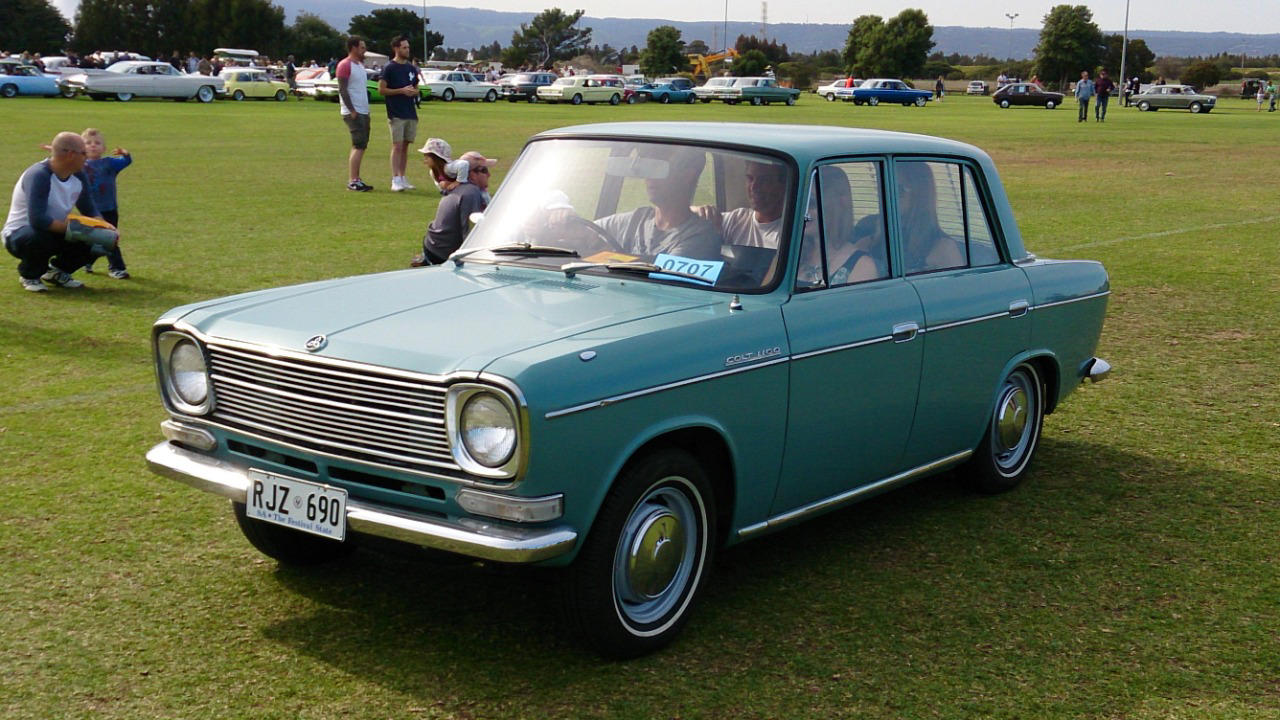



















The 1968 Mitsubishi Colt 1100 flew under the radar and stayed thereThe 1968 Mitsubishi Colt 1100 arrived at a moment when Japanese compacts were starting to gain global attention, yet it never became a hero car in the way some rivals did. It slipped quietly into showrooms, did its job with surprising competence, then just as quietly gave way to the next Colt generation. That low profile is precisely what makes it interesting today, because behind the anonymity sat a cleverly evolved sedan and a fastback that occasionally punched far above their weight. From first mass sedan to forgotten middle child The Colt 1100 was not a clean-sheet model. It was the second stage of a program that had already given Mitsubishi its first mass-produced four-door sedan, the Colt 1000, which marked the company’s move into serious volume car building. According to model histories, the 1000 opened the line and the 1100 succeeded it from 1966, before a later New Colt 1200 replaced the 1100 in 1968. That handover helps explain why the 1100 feels like a brief stopover in Colt history. The basic body and layout came from the 1000, but Mitsubishi used the opportunity to refine the formula rather than reinvent it. The company was learning fast, and the Colt line provided a test bed for better engines, gearing and packaging that could be slipped into the same compact footprint. Dimensionally, the 1100 stayed close to its predecessor. The sedan body stretched to 3,905 m, or 153.7 inches, which kept it in the sweet spot for domestic buyers who wanted four doors and usable rear seats without the bulk of a larger saloon. The overall layout was conventional, with a front-mounted engine and rear-wheel drive, but Mitsubishi treated that conventionality as a platform for incremental gains rather than a limit. The quiet engineering leap from 1000 to 1100 The most obvious change from Colt 1000 to Colt 1100 sat under the bonnet. Where the original car used a one-litre engine, the 1100 adopted a four-cylinder pushrod unit of 1,088 cubic centimetres. That modest increase in capacity gave the sedan more flexibility in everyday driving and, importantly for marketing, a higher claimed top speed. Earlier tuning had produced lower gearing that left the 1000 with a top speed of 125 km per hour, or 78 m per hour. The 1100’s engine and gearing combination pushed that figure to 135 km per hour, quoted as 84 m per hour. That change might sound academic today, but in the mid 1960s it meant the Colt could cruise more easily on new expressways and felt less strained at higher speeds. Mitsubishi also trimmed mass where it could. In the evolution of the Colt 1000, factory figures note that Somehow the weight dropped by 40 k, to 800 kg, or 1,764 pounds, while the gearing changes pulled top speed down to 125 km per hour. Those numbers highlight how carefully the engineers were juggling performance, weight and gearing rather than simply chasing headline power. The 1100 then took advantage of that groundwork by pairing the slightly larger engine with the compact, relatively light body that had already been honed. The engine’s KE44 designation tied it to Mitsubishi’s growing family of small four-cylinder units. The pushrod layout kept costs and complexity down, which suited a car that was meant to be an affordable family sedan rather than a halo product. Yet the 1100’s figures show that Mitsubishi was squeezing as much flexibility as it could from that simple hardware, using capacity and gearing to give the car a more relaxed gait than the 1000 without sacrificing the thrift that buyers expected. The fastback that tried to be a giant slayer If the standard Colt 1100 sedan was a quiet achiever, the fastback version tried much harder to stand out. Mitsubishi created the Colt 1000F and 1100F as sleek hatch-like coupes that sat alongside the sedans, and enthusiasts often single out these cars as the most interesting early Colts. Later commentary describes the Colt Fastback Super Sports as the best of the early Colt range, a car that earned a reputation as a giant slayer in rallies that mattered, with the performance to reach more than 100 miles per hour and acceleration figures that put it in a different league from the base sedans. Within that fastback family, the 1100F gained a more focused variant. One source refers to a model Known as the 1100F SS, which developed 76 brake horsepower at 6500 rpm. The SS version lost only three brake horsepower compared with the full rally specification engine, which shows how closely the road car mirrored the competition tune. That level of output from a small-capacity pushrod four gave the lightweight fastback brisk performance and a much more eager character than the workhorse sedans. The motorsport link was more than just brochure talk. Another account notes that The Colt that came third outright in that year’s Southern Cross developed 76 brake horsepower at 6500 rpm. The same description points to Twin SU carburettors and a high lift camshaft as key ingredients in that rally engine’s specification. Those details underline how aggressively Mitsubishi was willing to tune the Colt 1100’s basic architecture when it went chasing results. That effort paid off on rough stages. In the broader Colt family, 1100Fs finished third and also first and second in class at the 1968 Southern Cross Rally. Reports from that time describe the suspension as sturdy, with a ride that could be bouncy and inclined to pitch, a combination that might have been tiring on smooth roads but clearly suited the punishment of rally stages. Road testers who sampled the higher performance Colt 1100 variants picked up the same theme. One period-style summary of the Fastback Super Sports highlights how the car’s torque and horsepower combined to produce a nippy yet strong-feeling package, with a maximum torque rating of 59 pound feet at 3800 rpm. That blend of torque and modest weight gave the Colt a liveliness that its plain styling did not immediately advertise. Styling, packaging and the New Colt shadow Visually, the Colt 1100 never shouted for attention in the way some European or American contemporaries did. The sedan’s three-box outline was tidy but conservative, and the fastback’s curved roofline, while more dramatic, still sat within the restrained idiom of late 1960s Japanese design. Mitsubishi updated the styling as the line evolved, but these changes were incremental rather than radical. One clue to that evolution appears in period advertising. A surviving Japanese-market ad for a 1968 Mitsubishi Colt 1100 sits alongside commentary that In May the 1500 became the New Colt, receiving the same body modifications described in the Colt 1200 section, including rectangular headlights. The mention of the Colt 1200 and its shared styling changes shows how Mitsubishi treated the Colt family as a rolling program of updates rather than isolated models. That approach had a side effect. As facelifts arrived and the New Colt branding spread across larger-engined variants, the 1100’s own identity blurred. Buyers walking into a showroom would see a mix of Colt badges, capacities and trim levels, some wearing the latest front-end styling and others still carrying earlier details. In that environment, the 1100 sedan risked becoming the car that sat between the more aspirational 1200 and 1500 models and the cheaper 1000, without a clear story of its own. The packaging, however, remained smart. The sedan’s compact footprint and relatively low weight made it easy to thread through tight streets, while the fastback offered a more practical load space than its sporty profile suggested. Mitsubishi’s own historical material on the Colt line notes that an engine rated at 58 PS represented a meaningful jump over the 51 PS produced by the earlier Colt 1000, and that combined with a lighter body to deliver a significant increase in driving performance. Those figures refer to another Colt variant, but they show how the company viewed the relationship between power, weight and usability across the range. Why the Colt 1100 never became a household name Given the engineering effort and the rally success, the Colt 1100’s anonymity might seem puzzling. Several factors help explain why it never broke out of the shadows, especially outside Japan. Timing was one issue. By the late 1960s, the global small car conversation was dominated by European names and, increasingly, by a few standout Japanese models that captured export attention. The Colt 1100 arrived just as Mitsubishi was still building its dealer networks and export strategies, which meant that even a competent product could not instantly match the visibility of more established rivals. Branding was another. Later retrospectives on the Colt nameplate point out how versatile the badge became. Over time Mitsubishi applied Colt to sedans, fastbacks and other body styles, including models referred to as Colt 1000F, Colt 1100F and Colt 11-F, and continued to use that branding until the early 1970s. That breadth helped the company, but it also risked turning Colt into a generic label rather than a sharply defined product in the minds of buyers. The car’s own positioning also played a part. The 1100 sedan was neither the cheapest Colt nor the most powerful. It served as a middle option for buyers who wanted a little more flexibility than the 1000 offered but did not feel the need to move up to a larger engine. In markets where income levels were tight, many customers simply bought the least expensive car that met their needs. In markets where image mattered more, they gravitated to more prestigious or better known nameplates. Even the fastback’s rally exploits did not fully translate into showroom glamour. The Southern Cross Rally results and the 1100F SS specification show that Mitsubishi could build a genuinely exciting version of the Colt, but those variants were rare and often tied to specific markets. For most people, the Colt 1100 they saw was a modest sedan on steel wheels, not a gravel-spitting contender with Twin SU carburettors and a high lift camshaft. Driving character and everyday reality Contemporary descriptions of the Colt 1100’s driving manners suggest a car that did its job without fuss. The sedan’s suspension tuning, shared with the broader Colt family, produced a ride that could feel firm and occasionally choppy, particularly on rough surfaces. The same sturdy suspension that helped the 1100F cope with rally stages also meant that the car did not float or wallow, a trait that some drivers appreciated and others found tiring. The steering and controls reflected the era. Manual gearboxes were the norm, and the 1100’s gearing, combined with its modest torque, encouraged drivers to work the lever to keep the engine in its sweet spot. The quoted maximum torque of 59 pound feet at 3800 rpm for the higher performance variants hints at an engine that came alive in the mid-range rather than off idle, which matched the character of many small Japanese fours from that period. In everyday use, the Colt’s compact size was a real advantage. The 3,905 m overall length made parking straightforward, and the upright glass area provided good visibility. Interior materials were simple but durable, reflecting the priorities of a car built to a price. Where some rivals tried to mimic larger luxury models with heavy chrome and plush fabrics, the Colt kept things honest and functional. Fuel economy figures from that time are not always consistent across markets, but the combination of a small-capacity engine and relatively low weight would have made the Colt 1100 cheap to run. That attribute mattered in Japan, where fuel costs and taxation structures favored cars with smaller engines, and it also appealed to export buyers looking to cut running costs without dropping into the smallest size class. A car that mattered more than its reputation suggests Looking back, the Colt 1100’s low profile can obscure its role in Mitsubishi’s development. The car sat at a crossroads where the company was moving from niche manufacturer to serious player, using the Colt line to refine its understanding of mass production, export demands and motorsport as a development tool. The engineering story, from the 1,088 cubic centimetre engine to the careful balance of gearing and weight, reveals a manufacturer that was learning how to extract the most from modest hardware. The rally program, with its 1100F SS and 76 brake horsepower engines, showed that Mitsubishi could compete effectively when it chose to push the platform. The Southern Cross Rally results, with 1100Fs finishing high overall and dominating their class, provided proof that the basic design was tougher and more capable than its quiet appearance suggested. At the same time, the Colt 1100 illustrates the limits of incrementalism in a market that often rewards bold statements. The car’s styling updates, such as the adoption of rectangular headlights on the New Colt derivatives, kept it current but did not create a clear visual break that would lodge in public memory. The badge strategy, which spread the Colt name across several capacities and body styles, diluted the individual identity of the 1100. For enthusiasts and historians, that combination of technical interest and low public awareness is part of the appeal. The Colt 1100 offers a window into a formative period for Mitsubishi, when the company was quietly building the skills that would later underpin more famous models. It also serves as a reminder that not every important car is a headline act. Some do their work in the background, flying under the radar while carrying a manufacturer through a crucial phase of growth. Today, surviving Colt 1100s and 1100Fs tend to be cherished by a small circle of dedicated owners rather than traded as blue-chip collectibles. Their value lies less in auction prices and more in the story they tell about how a relatively simple compact sedan, refined step by step, could evolve into a surprisingly capable machine. The Colt 1100 may have stayed in the shadows, but the traces it left in Mitsubishi’s engineering and motorsport history are clear to anyone who looks closely. That quiet legacy fits the car’s character. The Colt 1100 was never a show-off. It was a practical, thoughtfully developed compact that occasionally surprised those who underestimated it, whether on a gravel rally stage or in the hands of a driver who discovered how much performance Mitsubishi had managed to extract from 1,088 cubic centimetres and a chassis originally designed for a one-litre sedan. In a world that often celebrates only the obvious icons, the Colt 1100 stands as a reminder that some of the most interesting stories sit just out of the spotlight. More from Fast Lane Only Unboxing the WWII Jeep in a Crate 15 rare Chevys collectors are quietly buying 10 underrated V8s still worth hunting down Police notice this before you even roll window down