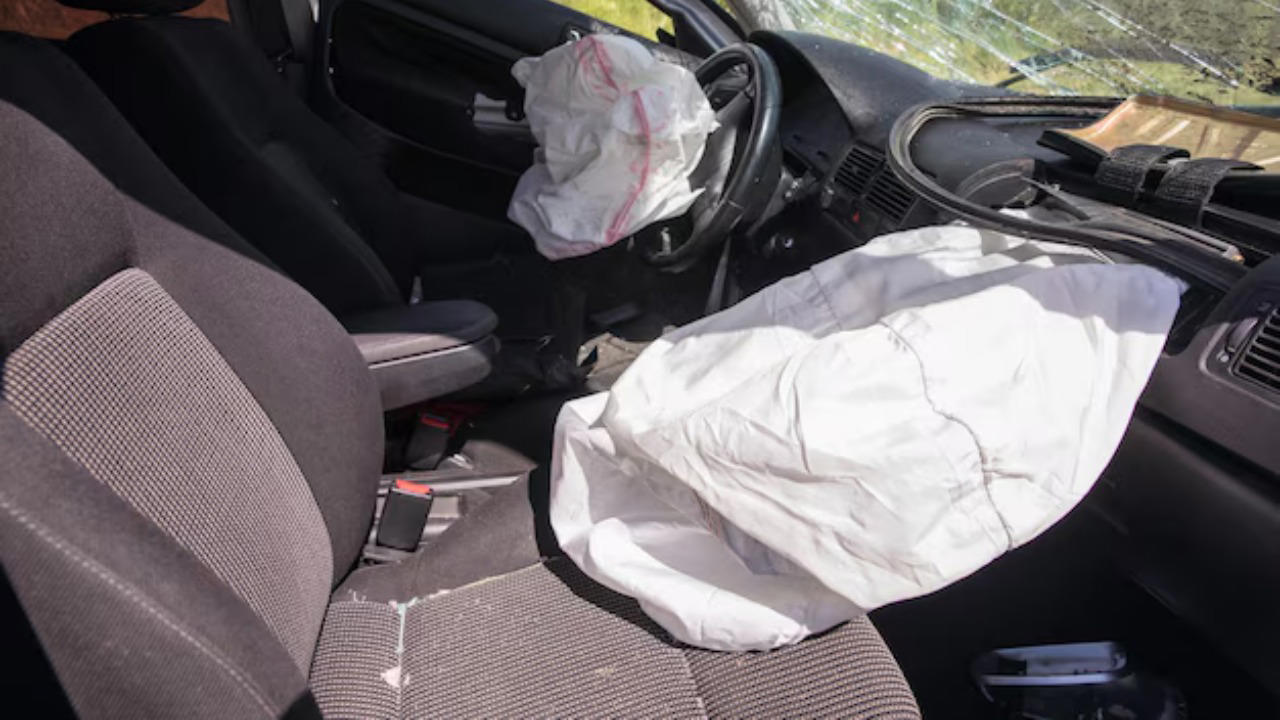
Current and former Mitsubishi drivers across the United States are being invited to claim cash and other benefits tied to alleged defects in airbag control units. The settlement program, which stems from the multidistrict proceeding In Re: ZF-TRW Airbag Control Units Products Liability Liti, could translate into direct payments and safety-related support for qualifying owners and lessees. For many households, that means a chance to recover hundreds of dollars in costs tied to vehicles they may still be driving or have already sold. The litigation targets airbag control units supplied by ZF-TRW and installed in certain Mitsubishi models, which plaintiffs say can fail in a crash. Mitsubishi denies those allegations but has agreed to fund a negotiated package of cash benefits and inspection protections rather than continue to fight the case through trial. The result is a structured program with firm deadlines, defined eligibility rules, and a limited pool of money that will not reach drivers who ignore the notices. How the Mitsubishi airbag case led to a settlement fund The legal dispute sits inside the broader In Re: ZF-TRW Airbag Control Units Products Liability Liti, a consolidated proceeding that pulled together claims that certain airbag control units could fail to trigger airbags in specific crash conditions. Within that larger case, a separate track focused on Mitsubishi vehicles that allegedly carried the affected units. According to the official settlement site, the agreement is designed to resolve claims on a nationwide basis for a defined group of Mitsubishi owners and lessees, referred to as Class Members. Public summaries describe the Mitsubishi Airbag Control Unit Litigation as a negotiated resolution worth $8.5 million. One detailed report on the Mitsubishi Airbag Control Unit Litigation explains that Mitsubishi agreed to a $8.5 m class action settlement, described elsewhere in the same context as $8.5 million, to address allegations that certain cars were equipped with defective airbag control units. The technical supplier ZF-TRW is referenced in the case caption, but the settlement that concerns Mitsubishi owners focuses on the automaker’s role in selling vehicles that allegedly contained the units at issue. What the Settlement provides for Class Members The agreement is structured to offer both cash and non-cash relief to people who fall within the definition of the settlement class. Official materials state that the Settlement will provide cash compensation and other benefits to Class Members who submit valid claims. On the main settlement page, under the heading “What does the Settlement provide?”, administrators emphasize that qualifying drivers can seek reimbursement for certain out-of-pocket costs, as well as access to inspection and repair programs tied to the airbag control units. Those details appear in the section that explains what the Settlement offers to Class Members on the dedicated Mitsubishi portal. Separate reporting on the Mitsubishi Airbag Control Unit Litigation indicates that the total package is valued at $8.5 million and that individual drivers may receive up to $250 per vehicle, with some sources describing additional payments of up to $750 in specific circumstances such as qualifying accidents. One consumer-focused breakdown notes that drivers could collect $250 per vehicle from the $8.5 m fund, with a potential $750 bonus if the vehicle was involved in a qualifying incident linked to the alleged defect. Another account, framed under the phrase Mitsubishi Offers Owners Each $1,000 in Defective Airbag Settlement, describes scenarios where payouts could reach $1,000 for certain Mitsubishi car or SUV owners, although the exact figure depends on documentation and claim type. Who is eligible and how to check a vehicle Eligibility in the Mitsubishi program is not automatic for anyone who has ever driven the brand; it is limited to current and former owners and lessees of specific models and years identified in the court papers. According to the official explanation of Class Members, the settlement covers certain Mitsubishi vehicles that were equipped with the ZF-TRW airbag control units at the heart of In Re: ZF-TRW Airbag Control Units Products Liability Liti. A detailed notice aimed at current and former owners and lessees explains that both current and former owners are included, as long as they meet the class definition and submit claims consistent with the rules set out in the agreement. To remove guesswork, the administrators have created an online tool that allows drivers to check whether a specific car is covered. The frequently asked questions explain that to check whether a driver has a qualifying vehicle, they can enter the Vehicle Identification Number on the official VIN lookup page that is linked from the main frequently asked questions section. The same FAQ clarifies that Mitsubishi denies all claims and allegations of wrongdoing in the lawsuit and that the Court has not decided who is right. Instead, the parties agreed to settle and avoid the uncertainty of trial, which is why the program is open even though there has been no finding that the vehicles are defective. Deadlines, legal rights and how to file a claim The settlement is not open-ended, and drivers who want money must act within the formal schedule set by the court. The primary notice on legal rights explains that to obtain cash compensation under the Settlement, Class Members need to submit a valid claim form by the deadline listed in the court-approved notice. In the same section on legal rights and options in the Settlement, administrators state that claim forms must be submitted online or postmarked by May 23, 2026, for those seeking cash compensation, and that there are separate deadlines to submit a request for exclusion and to file any objection. Those timelines are spelled out in the section that describes legal rights and options for Class Members. Drivers who do nothing will not receive any payment, yet they will still be bound by the Settlement and will give up the right to sue Mitsubishi separately over the claims in this case. The long-form notice, accessible through the main frequently asked questions page, explains that people who wish to opt out must send a timely request for exclusion, while those who want to stay in the class but disagree with some aspect of the deal must file an objection with the Court by the stated deadline. The same FAQ confirms that the Settlement Class excludes Mitsubishi, its affiliates and subsidiaries, and their officers and directors, which means those entities cannot file claims under the program described in the frequently asked questions. Practical steps Mitsubishi drivers can take now For drivers who suspect their vehicle might be affected, the most practical starting point is to gather documentation. That includes the Vehicle Identification Number, purchase or lease records, and any receipts for repairs that might relate to the airbag control unit. The official Mitsubishi portal for the Settlement, which can be reached through the dedicated address for Mitsubishi claims, provides links to the claim form, the long-form notice, and the detailed settlement agreement. The agreement itself, labeled mitsubishi-airbag-control-unit-litigation-settlement-agreement and dated Nov in the document header, includes a section titled Settlement Cash Benefits that explains how money will be distributed after deducting expenses for settlement and claims administration and Settlement Class Counsel fees. More from Fast Lane Only Unboxing the WWII Jeep in a Crate 15 rare Chevys collectors are quietly buying 10 underrated V8s still worth hunting down Police notice this before you even roll window down
















 +5 others