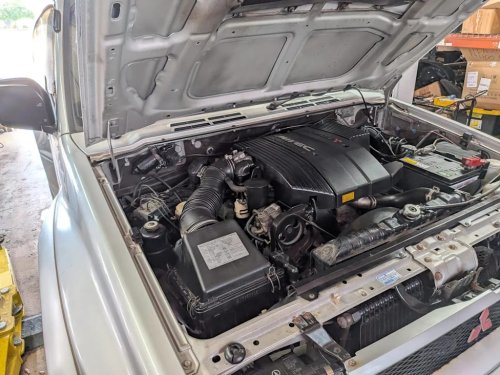
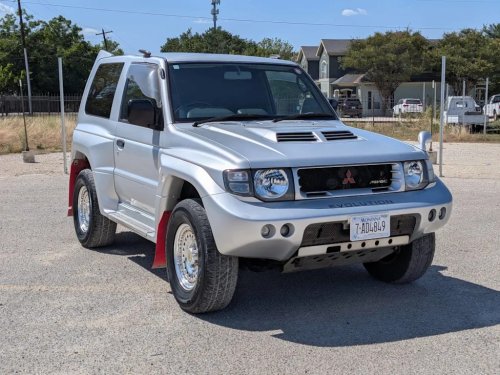
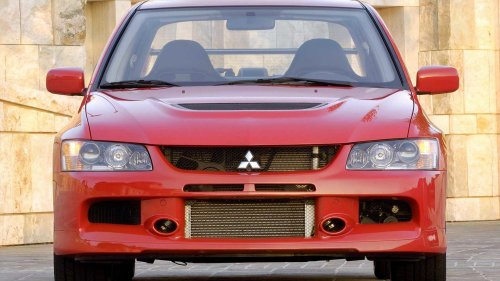
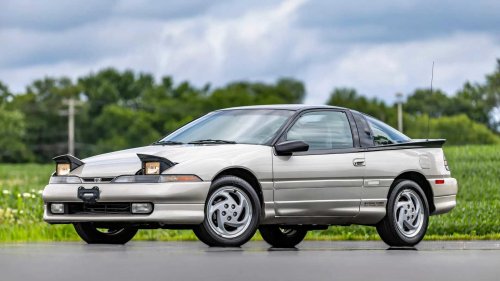
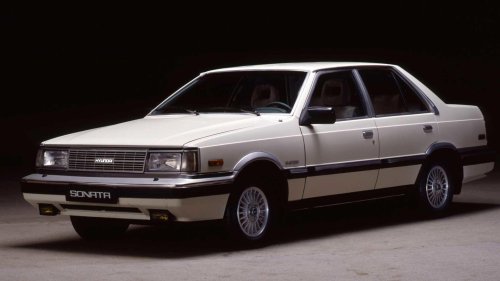
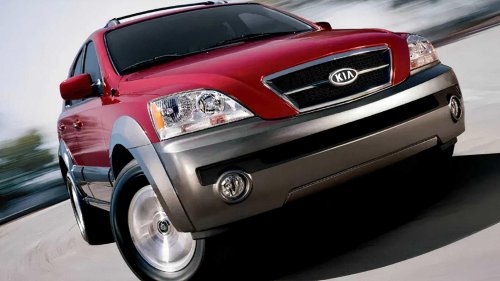
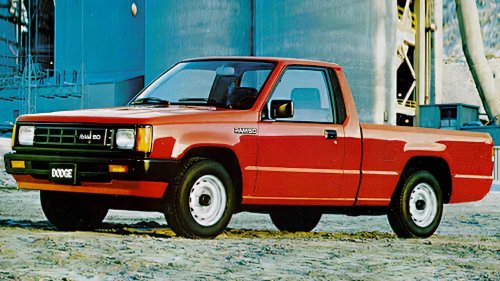
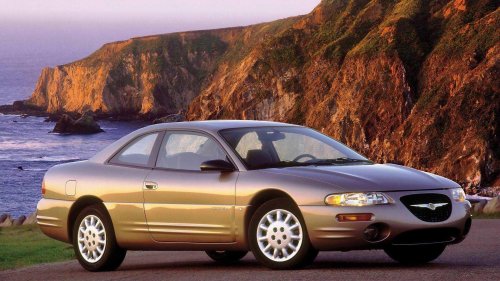
It's hard to believe now, but Mitsubishi used to be an absolute powerhouse in the automotive industry. In the 1980s and 1990s, Mitsubishi's World Rally Championship success and the Lancer Evolution were just icing on the cake. The brand's power didn't even come from bulletproof SUVs like the Montero. It came from its design and production ability, as well as working with other automakers. A great example of that is the four-cylinder Mitsubishi Sirius engine, also known by the internal designation 4G6, which was in production from 1980 to 2013 in the mainstream and is still in production in China.We can't even list every car here because the 2.0-liter version alone appeared in, as far as we can count, 48 vehicles across six brands. Yet this isn't an engine that's much talked about outside the turbocharged versions used in the Lancer Evolution. Yet, it's been used in a version of one of America's most popular pickup truck nameplates and helped Hyundai go from zero to one of the most important car brands on the planet. These are just the entertaining highlights. Mitsubishi Lancer Evolution 2006 Mitsubishi Lancer Evolution MR frontWe need to talk about the Lancer Evolution, which shines a light on the 4G63 engine, one of the pioneers of modern turbocharged performance powerplants. However, it started in the Lancer in 1980, 12 years before the Evo arrived. The Lancer Evolution launched in a 2.0-liter specification with a turbo and 247 horsepower arriving at 6,000 rpm, while its 228 pound-feet of torque arrived at 3,000 rpm. When the Lancer Evo IX debuted in 2009, the engine had gained variable valve timing and was producing 287 hp. It was the last Evo model to use a variation of the Sirius.However, the Lancer and the Sirius engine date back to the first generation, launched as a tiny Kei car for Japan. The Sirius engine was available alongside the Orion and Saturn powerplants, but it was the most powerful, turbocharged, and capable of 158 hp. Mitsubishi moved from three engines for the non-Evo Lancer in 2007 to its fuel- and emissions-efficient MIVEC (Mitsubishi Innovative Valve timing Electronic Control system) range. Eagle Talon 1990 Eagle Talon TSi AWDHere is where we introduce Diamond-Star Motors, a weird period in automotive history when Chrysler and Mitsubishi entered into a joint venture together in a crazy mix of corporate cultures. It lasted 10 years (1985–1995) before Chrysler sold its equity stake in Mitsubishi, but produced some truly dull cars as well as the epic Mitsubishi 3000GT / Dodge Stealth, which was the same overengineered sports car with different badges. The Eagle Talon falls somewhere in between as a rebadged Mitsubishi Eclipse sports coupe.The Talon becomes interesting when you realize that the 4G63T of Mitsubishi Lancer Evo fame was an option when it arrived in 1990. The most entertaining of the early Eagle Talon models were built after May 1992, using the Evo's exact engine with lightened rods and a lightened crankshaft. Unfortunately, the Eagle brand is a footnote in automotive history, lasting only from 1988 to 1998 as Chrysler's attempt at European-style enthusiast cars. Hyundai Sonata 1985 Hyundai SonataHyundai used the Sirius engine so much that it called the powerplant the Hyundai Sirius, starting with a naturally aspirated 2.0-liter version in 1985 for the Sonata. Hyundai used the engine right up until the fifth-generation 2004 model, mixing it towards the end with a V6 engine option that the automaker developed in-house. It wasn't just the engine that Mitsubishi provided to Hyundai because the second-generation Sonata used the Mitsubishi Galant platform. This is going to come as a surprise to anyone old enough to remember how unreliable the early Hyundais were. An explanation is likely that Hyundai was building the engines and platform under license, meaning Mitsubishi didn't assemble them. Kia Sorento 2003-2006 Kia Sorento Front Angle ViewHyundai took over the newly bankrupted Kia in 1998, so it's no surprise that Mitsubishi was brought in to help with a new model. The first-generation Kia Sorento arrived in 2002 with a large range of engines as Hyundai was making headway in designing and building its own units. Various V6 engine displacements were available, as well as Hyundai's first in-house-designed diesel engine. However, the entry-level trim used the 2.4-liter Sirius II engine – a thoroughly unexciting engine that was perfect for a cheap car, as long as it was built properly. It was also used in the Sonata.ram 50Before the Dodge Dakota came the Ram 50. It's a delightfully Japanese compact truck because it's technically a rebadged Mitsubishi Mighty Max, a version of the Mitsubishi L200/Triton truck for the US. As our partners over at HotCars describe it, the Dodge Ram 50 is as close as you'll get to JDM in cowboy boots. Ford and Chevrolet already had Japanese compact trucks with their own badges (Mazda and Isuzu, respectively).The Ram 50 arrived in 1979 as the Dodge D50 and was at its quirkiest after the 1983 facelift, with a set of four rectangular headlights and an optional sports stripe package. There was even a Power Ram 50 version, which just meant the model was fitted with all-wheel drive. A particularly funky option was a fiberglass canopy over the truck bed, with a foam-rubber mattress fitted underneath.The first generation was available with a 2.0-liter Sirius engine, while the second generation added a 2.4-liter version. However, the powerplants were naturally aspirated, so the 3.0-liter V6 was preferable for the second generation, or the 2.3-liter turbocharged diesel engine. With the wide range of engines, power ranged from 93 hp to 142 hp when the Ram 50 was retired in 1993. Chrysler Sebring 2000 Chrysler Sebring Coupe Front Angle ViewThe first generation of Chrysler Sebring was a reasonably priced yet handsome car in its time, particularly the coupe version. It was a Chrysler design with engineering input from Mitsubishi, then built at Mitsubishi's plant in Illinois as part of the Diamond Star Motors arrangement. When the next generation arrived in 2000, things had gotten messy. Chrysler was now DaimlerChrysler, the Sebring coupe was a Mitsubishi Eclipse with Chrysler-designed bodywork, and it was still built in Illinois.However, the sedan and convertible used Chrysler's JA platform and were built in Michigan. The 2.4-liter Sirius engine was available, as well as one of Mitsubishi's Cyclone V6 engines. DaimlerChrysler wrung everything they could out of the second-generation Sebring sedan, including licensing manufacturing of the sedan to the Russian automaker GAZ, which sold it as the GAZ Volga Siber. However, Mitsubishi appears to be uninvolved with the Siber, as it used Chrysler engines. That was for the best for Mitsubishi, as despite Vladimir Putin's endorsement, it flopped, selling only 9,000 cars over two years, well short of the planned 40,000.

















 +10 others