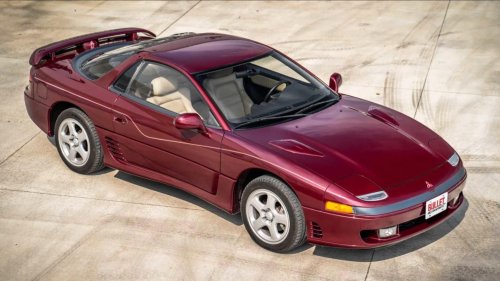
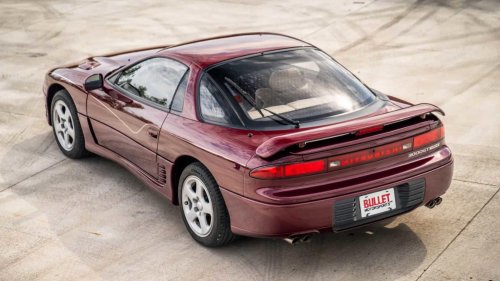
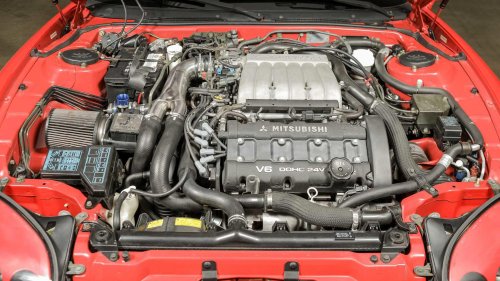
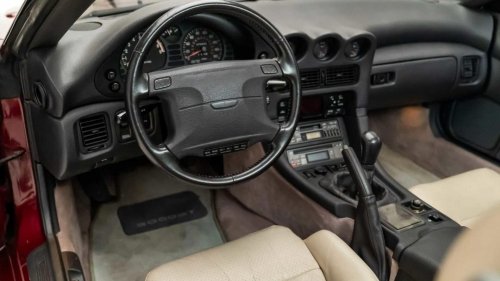
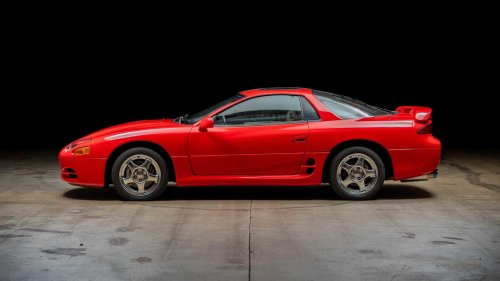
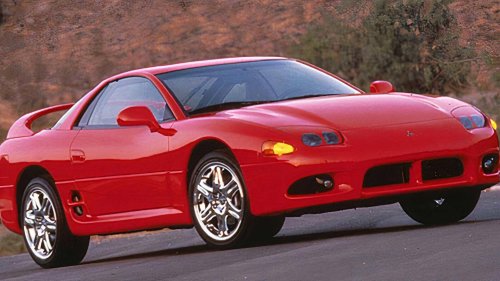
When it comes to buying a used performance car, the amount of choice out there is simply insane. From practical options like the BMW M5 sedan, to less practical options like an imported TVR Tuscan, or even something in between like a Subaru BRZ, there's something that'll tickle everybody's pickle. If you're partial to some form of classic JDM hero though, good luck sorting through all the different options. The halo models tend to be the Nissan Skyline or Toyota Supra, though other nameplates like the Mazda RX-7 are also highly regarded.As a result, all of these cars tend to cost a fortune on the used market, which is an issue only escalating as rarity and nostalgia steadily cause their value to head northwards. Those on a tighter budget do have another option to consider, though, given the way things are going, the timeline for getting one cheap looks to be getting ever narrower. The Mitsubishi 3000GT Was Built To Show Its Tailights To Its Rivals Bring a TrailerThe model in question is the Mitsubishi 3000GT VR-4, the Japanese brand's range-topping sports car. Having first debuted in 1990, the 3000GT was designed to go up against the likes of the Nissan 300ZX and Toyota Supra. While the base version came with a naturally aspirated 3.0-liter V6, the VR-4 was built to leave no stone unturned when it came to outright performance. The V6 was treated to a pair of turbochargers as Mitsubishi looked to race ahead of its Japanese rivals, with these components increasing the engine's peak output from 160 horsepower to 300. In 1994, the engine was upgraded to kick out 320 hp, which could push the VR-4 to 60 mph in comfortably under six seconds.Those after a more involving driving experience could have the twin-turbo V6 mated to a five-speed manual gearbox, though a four-speed automatic unit was also available. As of the car's 1994 revision, a six-speed manual transmission replaced the five-speed. You had to make do with a restricted 280 hp figure if you opted for the auto. The 3000GT VR-4's lightning acceleration was assisted by the system that afforded it its name, a full-time four-wheel drive setup that meant the power could be shared between all four wheels, as opposed to just the rears like its close rivals. This meant its pure grunt, which eclipsed the 300-hp Nissan 300ZX twin-turbo and matched the Toyota Supra Turbo of the era, could be more effectively used. There Was So Much More To Mitsubishi's Halo Car Than That Bring a TrailerThe tricks don't end there, as the 3000GT was every bit as technologically advanced as its period rivals. Japanese performance cars designed during the 1990s used forward-thinking technology to get ahead of their European rivals, and the 3000GT VR-4 took a couple of particularly awesome approaches. Firstly, the agility of the machine was assisted by an active rear-wheel steering system, which helped induce extra rear-end rotation through the corners to help improve mid-turn pace. In addition, the car was awarded electronically adjustable shock absorbers, which could tune the suspension on the fly to deal with whatever road surface you were dealing with. This helped make the car more approachable, as well as faster on a variety of roads.The innovations didn't end there either, as the 3000GT VR-4 was one of the earliest road cars to feature active aerodynamics. The front and rear spoilers could alter their positions in real time to either increase downforce or reduce drag, depending on where the vehicle was driving, to enhance performance across a range of conditions. The list of performance-boosting features was impressive, and it seems that collectors are finally waking up to the value of the 3000GT VR-4. Looked-After 3000GT VR-4s Are Getting Expensive Bring A TrailerUsed 3000GT VR-4s have remained pretty cheap over the last couple of decades, primarily as the model has struggled to achieve the same popularity as the likes of the legendary Skyline GT-R or Supra. Things have begun to take off in recent times though, as illustrated by Hagerty's Valuation Tool. Mint examples of the car have increased by an eye-opening 31.3% across the board over the last 12 months, with the less powerful pre-1994 machines valued at $67,500, while the later ones will demand over $85k from your wallet. Non-concours level cars have also seen considerable increases over the same period, though these range between a more modest 10-20%.For the most part, if you want a good one, you'll have to aim to spend around $30k these days. Should values of the car continue to rise the way they have over the past year, it's unlikely you'll get away with spending that for too much longer. So, while the Mitsubishi isn't exactly cheap, compare it to the prices paid for other Japanese gems of the era — $100,000 and up isn't exactly uncommon for an early NSX or twin-turbo Supra — and the VR-4 still looks underappreciated. Higher-Mileage Examples Offer A Pathway To Affordable Ownership Bring a TrailerWhile finding a high-end specimen for less than $30k is now a tough ask, that doesn't mean those with stricter budgets have to bury their dreams of owning a 3000GT VR-4. Cars with north of 100,000 miles on the clock can be had for around $15k, though you'll need to make sure you check out the car's service history to ensure it's been well maintained during its life. Otherwise, you'll be handing over a decent chunk of your savings for a cool-looking paperweight.Plus, due to the 3000GT's relative obscurity at this point, some amazing deals can slip through the net. A good example is an early 1992 car sold through Mecum Auctions, which sold for $23,100 despite having only 55,000 miles on its odometer. It had also been garaged throughout its life, ensuring its underside and bodywork were impressively clean for a 34-year-old machine. Considering how quickly the values of such examples are climbing though, the number of such cases slipping through the net is likely to tighten up in the coming years. The Complicated Sports Car Can Be Costly To Keep Optimal Bring A TrailerWhile the 3000GT VR-4's list of features is undoubtedly impressive, this does mean that the car can be expensive to keep running at its peak. The parts needed to keep the active aero and four-wheel steering can be hard to source these days, which naturally adds a premium when the time comes for securing spares. The engines are also pretty demanding, and maintenance can be tricky, given they're shoved in a rather cramped engine bay. Engines that haven't been consistently serviced are likely ticking time bombs, as the thirsty twin-turbo setup needs frequent oil and spark plug changes to remain running on top form.Beyond this, checking the manual transmission is important, as it's known to grind considerably in second gear as they age. A full rebuild is needed to cure this problem, which can cost upwards of $2,000. Various electrical issues are known to rear their heads too, which can cost a fortune if tracking down the source of the issue takes longer than hoped. Any old performance car will cost a fair bit of money to keep in optimal condition, but one as complicated as the 3000GT VR-4 can be frustratingly expensive if you end up with one that has been neglected.Decent examples are pretty reliable for the most part, as RepairPal reports you'll only need to spend an average of $487 a year to keep them sweet. Run into problems with the various active systems peppered around the car, however, and this value will quickly start rising. The 3000GT Never Reached Legendary Status MitsubishiGiven all the advanced engineering the 3000GT VR-4 boasts, it may seem strange that it never reached the heights of other Japanese performance cars of the time. There are a couple of key reasons for this, with the first being how it drove. While all its active tech was, and remains, impressive, it didn't help how the car felt. All the extra bits made the 3000GT VR-4 heavy, and it lacked the poise of its rivals. Plus, its steering was described as lacking feel, which only added to the heavy and floaty handling balance.In addition, the 3000GT VR-4 was difficult to work on. Remember that tight engine bay we mentioned earlier? Well, modifying the engine was practically impossible due to that, which led tuners to head down the 300ZX or Supra route instead. This meant the 3000GT was rather neglected in the ultra-popular world of JDM modifications. This was despite the car having an American cousin, the Dodge Stealth. The Stealth was identical to the 3000GT, and was established as part of Mitsubishi's close working relationship with Dodge, which helped it expand its American operations. The same issues with the car persisted though, and it was likely too complicated and awkward to run for most Dodge buyers.Still, judging by the increasing value of the model in 2026, it seems that it's now being held in higher regard. It may have lacked the modularity to be popular in its day, but its ambitious design and impressive on-paper performance, with a dash of JDM nostalgia, mean it's now becoming a sought-after classic. You'd better strike while you still can.



















 +72 others















![Smart, Continuing post-Labor Day Green Deals hub - EVs, power stations, tools, smart devices, more [Updated]](https://cdn.topcarnews.net/thumb/id/aHR0cHM6Ly9pMC53cC5jb20vZWxlY3Ry-ZWsuY28vd3AtY29udGVudC91cGxvYWRz-L3NpdGVzLzMvMjAyNi8wOS9MZWN0cmlj-LUVjb0Zsb3ctQW5rZXItZXVmeS1TZWd3-YXktTmF2aW1vdy1MYWJvci1EYXktSHVi-LUZJLmpwZz93PTE1MDAmYW1wO3F1YWxp-dHk9ODImYW1wO3N0cmlwPWFsbCZhbXA7-c3NsPTE/16c16d62c32c03f486c198130cd2a06e.jpg?t=20260926&post_id=61223)
![Smart, Continuing post-Labor Day Green Deals hub - EVs, power stations, tools, smart devices, more [Updated]](https://cdn.topcarnews.net/thumb/id/aHR0cHM6Ly9lbGVjdHJlay5jby93cC1j-b250ZW50L3VwbG9hZHMvc2l0ZXMvMy8y-MDI2LzA4L0xlY3RyaWMtWFByZXNzMi1M-b25nLVJhbmdlLVN0ZXAtVGhydS1DcnVp-c2VyLWUtYmlrZS5qcGc/5023f4fb066b673df34f11a76e904784.jpg?t=20260926&post_id=61223)
![Smart, Continuing post-Labor Day Green Deals hub - EVs, power stations, tools, smart devices, more [Updated]](https://cdn.topcarnews.net/thumb/id/aHR0cHM6Ly9lbGVjdHJlay5jby93cC1j-b250ZW50L3VwbG9hZHMvc2l0ZXMvMy8y-MDI2LzA5L0Fua2VyLVNPTElYLUxhYm9y-LURheS0yMDI2LVNhbGUtRkkuanBn/f80792f755efb216a8c13c6607648f6f.jpg?t=20260926&post_id=61223)
![Smart, Continuing post-Labor Day Green Deals hub - EVs, power stations, tools, smart devices, more [Updated]](https://cdn.topcarnews.net/thumb/id/aHR0cHM6Ly9lbGVjdHJlay5jby93cC1j-b250ZW50L3VwbG9hZHMvc2l0ZXMvMy8y-MDI2LzA4L1NlZ3dheS1OYXZpbW93LUxh-Ym9yLURheS0yMDI2LVNhbGUtRkkuanBn/99962c5b1a76745747610aa804c8eb1f.jpg?t=20260926&post_id=61223)
![Smart, Continuing post-Labor Day Green Deals hub - EVs, power stations, tools, smart devices, more [Updated]](https://cdn.topcarnews.net/thumb/id/aHR0cHM6Ly9lbGVjdHJlay5jby93cC1j-b250ZW50L3VwbG9hZHMvc2l0ZXMvMy8y-MDI2LzA5L0Fua2VyLWV1ZnktU29sb0Nh-bS1TMzQwLXNvbGFyLXNlY3VyaXR5LWNh-bWVyYS00LndlYnA/990b279b6f5227d4f9c7776da983d76a.webp?t=20260926&post_id=61223)
![Smart, Continuing post-Labor Day Green Deals hub - EVs, power stations, tools, smart devices, more [Updated]](https://cdn.topcarnews.net/thumb/id/aHR0cHM6Ly85dG81dG95cy5jb20vd3At-Y29udGVudC91cGxvYWRzL3NpdGVzLzUv-MjAyNi8wOC9BcHBsZS1Qb2xpc2hpbmct-Q2xvdGgtMjAyNi1uZXctbWRlbC5qcGc_-cXVhbGl0eT04MiZhbXA7c3RyaXA9YWxs-JmFtcDt3PTE2MDA/38fcbe039eee8dc96edf946ca5fdb371.jpg?t=20260926&post_id=61223)
![Smart, [Updated] Continuing Labor Day Green Deals hub - EVs, power stations, tools, smart devices, more](https://cdn.topcarnews.net/thumb/id/aHR0cHM6Ly9pMC53cC5jb20vZWxlY3Ry-ZWsuY28vd3AtY29udGVudC91cGxvYWRz-L3NpdGVzLzMvMjAyNi8wOS9MZWN0cmlj-LUVjb0Zsb3ctQW5rZXItZXVmeS1TZWd3-YXktTmF2aW1vdy1MYWJvci1EYXktSHVi-LUZJLmpwZz93PTE1MDAmYW1wO3F1YWxp-dHk9ODImYW1wO3N0cmlwPWFsbCZhbXA7-c3NsPTE/16c16d62c32c03f486c198130cd2a06e.jpg?t=20260926&post_id=60924)
![Smart, [Updated] Continuing Labor Day Green Deals hub - EVs, power stations, tools, smart devices, more](https://cdn.topcarnews.net/thumb/id/aHR0cHM6Ly9lbGVjdHJlay5jby93cC1j-b250ZW50L3VwbG9hZHMvc2l0ZXMvMy8y-MDI2LzA4L0xlY3RyaWMtTGFib3ItRGF5-LVNhbGUtRkkuanBn/11ffd29cc9979cf246185a331db81c3b.jpg?t=20260926&post_id=60924)
![Smart, [Updated] Continuing Labor Day Green Deals hub - EVs, power stations, tools, smart devices, more](https://cdn.topcarnews.net/thumb/id/aHR0cHM6Ly9lbGVjdHJlay5jby93cC1j-b250ZW50L3VwbG9hZHMvc2l0ZXMvMy8y-MDI2LzA5L0Fua2VyLVNPTElYLUxhYm9y-LURheS0yMDI2LVNhbGUtRkkuanBn/f80792f755efb216a8c13c6607648f6f.jpg?t=20260926&post_id=60924)
![Smart, [Updated] Continuing Labor Day Green Deals hub - EVs, power stations, tools, smart devices, more](https://cdn.topcarnews.net/thumb/id/aHR0cHM6Ly9lbGVjdHJlay5jby93cC1j-b250ZW50L3VwbG9hZHMvc2l0ZXMvMy8y-MDI2LzA4L1NlZ3dheS1OYXZpbW93LUxh-Ym9yLURheS0yMDI2LVNhbGUtRkkuanBn/99962c5b1a76745747610aa804c8eb1f.jpg?t=20260926&post_id=60924)
![Smart, [Updated] Continuing Labor Day Green Deals hub - EVs, power stations, tools, smart devices, more](https://cdn.topcarnews.net/thumb/id/aHR0cHM6Ly9lbGVjdHJlay5jby93cC1j-b250ZW50L3VwbG9hZHMvc2l0ZXMvMy8y-MDI2LzA5L0Fua2VyLWV1ZnktU29sb0Nh-bS1TMzQwLXNvbGFyLXNlY3VyaXR5LWNh-bWVyYS00LndlYnA/990b279b6f5227d4f9c7776da983d76a.webp?t=20260926&post_id=60924)