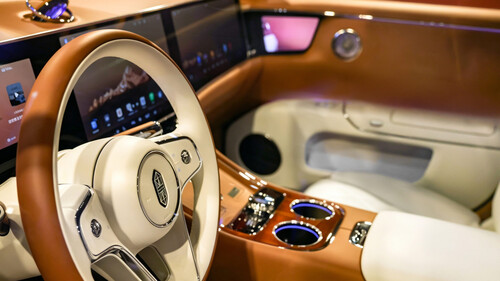
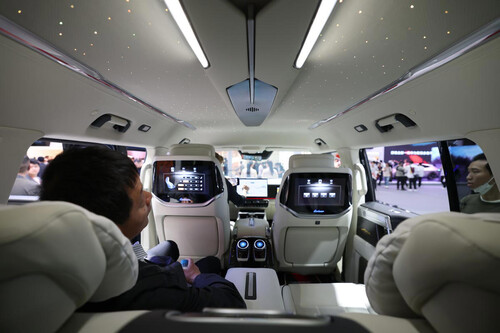
TCL is producing automotive intelligent displays and smart cockpit systems for vehicle manufacturers. Credit: TCL Understand China EV’s Market Real-time notifications when critical EV data is released All important data in one place 2,000,000+ data points Become a member Consumer electronics giant TCL is pushing deeper into China’s automotive supply chain with the launch of a highly automated smart cockpit manufacturing facility in Shenyang, betting that expertise developed in televisions, displays, and consumer electronics can be applied to one of the fastest-growing segments of the EV industry, reports IThome. Operated by Yuxin Zhixing Technology (Shenyang) Co., Ltd., a joint venture between TCL Industries and Brilliance China, the facility has officially entered production after a development cycle that began with project signing in late 2024. Construction started in March 2025, trial production was achieved in December 2025, and full-scale manufacturing commenced in June 2026. The factory covers more than 25,000 square meters and is equipped with 10 SMT production lines and 20 final assembly lines dedicated to automotive intelligent displays and smart cockpit products. According to TCL, the “black light” factory operates with an automation rate exceeding 85%. Automated systems handle material loading, component placement, online inspection, and unloading processes. A complete final assembly line can operate with just three technicians overseeing production. Automated production systems account for more than 85% of factory operations. Consumer electronics expertise enters the vehicle cabin The facility produces a range of automotive display products, including instrument clusters, center infotainment displays, passenger screens, rear entertainment displays, roof-mounted displays, and integrated smart cockpit systems. Among the products showcased during the launch was a detachable rear-seat “Magic Screen” (车载妙控屏), allowing passengers to independently control climate, entertainment, and vehicle settings from the rear cabin. The product reflects a broader trend across China’s EV market, where rear passenger areas are increasingly being developed into digital interaction spaces rather than conventional seating zones. As software-defined vehicles adopt larger displays and multi-screen cockpit architectures, display manufacturing capabilities developed in smartphones, tablets, and televisions are becoming increasingly relevant to automotive suppliers. Rather than building complete vehicles, technology companies such as TCL are expanding into automotive hardware, software, and supply chains for cockpit components. Rear-seat displays emerge as a new smart cockpit battleground The detachable display concept aligns with a wider industry shift toward connected cockpit ecosystems. Huawei’s HarmonyOS-powered MagLink ecosystem supports tablet-based expansion screens across multiple HIMA alliance vehicles, while Xiaomi recently expanded rear-cabin display functionality through its HyperOS intelligent cockpit architecture. Geely-backed Meizu has similarly integrated smartphones, audio systems, AI services, and vehicle controls through its Flyme Auto ecosystem. These developments have increased demand for automotive-grade displays, touch interfaces, and cockpit electronics that support increasingly complex in-cabin experiences. For suppliers, the opportunity extends beyond traditional instrument clusters and infotainment screens to a growing range of passenger-facing display hardware. TCL showcased a detachable rear-seat Magic Screen during the launch of its automotive cockpit business. Filling a supply-chain gap in Northeast China The Shenyang facility is currently the only dedicated automotive intelligent display manufacturing plant in Liaoning Province. Its location provides regional automakers with a local source of smart cockpit hardware that previously relied heavily on specialised electronics manufacturing clusters in southern China. Producing display modules and cockpit systems closer to vehicle assembly plants can shorten logistics routes and reduce transportation requirements across the supply chain. The factory also adds a new automotive electronics capability to Northeast China’s established vehicle manufacturing base. Built across from BMW’s historic Shenyang operation The location carries particular significance for Brilliance China. During the launch ceremony, Brilliance China Chairman Zhang Yue noted that the facility was intentionally built opposite the site associated with BMW’s original investment in Shenyang in 2003. More than two decades later, Shenyang remains one of China’s most important hubs for premium vehicle manufacturing. Earlier this year, BMW Brilliance began volume production of the long-wheelbase BMW X3 at its local manufacturing base, continuing the city’s role in premium vehicle production and localised model development.