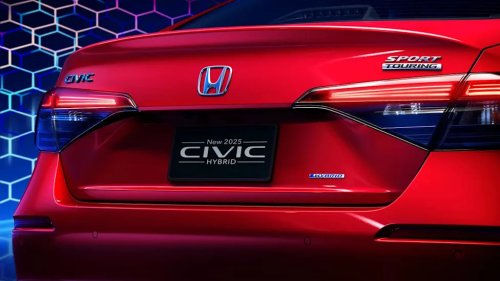
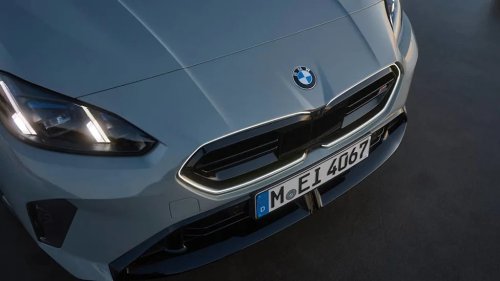
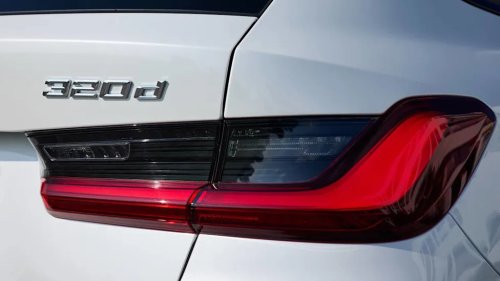
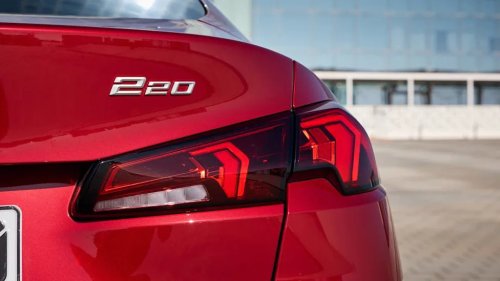
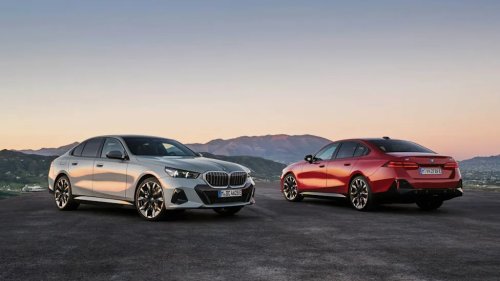



















Autoblog and Yahoo may earn commission from links in this article.What’s Behind a Name?Whether you find them to be silly or meaningless, the names of cars are supposed to evoke something. A Mustang helps picture an image of speed and freedom, an open road, the wind in your hair and a V8 soundtrack you can feel in your heart. On the other hand, an SUV names something like a Forester, Telluride or Palisade is intended to mentally place you deep into the wilderness, where you imagine traversing somewhere that’s three counties from the nearest paved road. At the same time, a Civic sounds like a dependable, responsible choice for a civic-minded person. The thing is, mainstream mass-market cars get names. Real names. Names that tell a story, paint a picture, or at the very least, give the car a personality that a buyer can connect with on a human level. However, if you walk into a BMW dealership, things become different. The salesperson there might talk you into test driving the 540i xDrive M Sport, and somewhere between the i and the xDrive you’ve lost the thread entirely and started wondering if you accidentally wandered into a Xerox showroom.AdvertisementAdvertisementHowever, the names behind luxury cars are not an accident, nor is it a failure of imagination. Once you understand the logic behind it, it’s actually one of the smartest pieces of brand strategy in the entire automotive industry. It explains a lot about why a BMW feels like a BMW, why a Mercedes feels like a Mercedes and why the name on the hood matters more than anything else in the luxury segment.HondaView the 2 images of this gallery on the original articleWhy Regular Cars Have NamesBefore breaking down the luxury approach, it’s worth understanding why mainstream cars get names and what they actually do. When Ford names a car the Explorer, they’re attempting to make the consumer’s imagination work for them. The name is intended to tell you, the potential customer, what the car is about before you’ve seen a single spec sheet. For an SUV like the Explorer, the name already evokes a feeling of adventure, of rugged capability and the outdoors. You don’t need to know specific details like the wheelbase or the towing capacity to know what it is intended for; the name does that kind of heavy lifting instantly and it does it with intention.This strategy works like a charm for mainstream brands like Ford or Chevrolet because they’re selling a broad audience on a car that evokes a feeling, an in-road to a specific lifestyle, and/or a kind of identity that they already do not have. No matter the name, they all come loaded with implicit character, even if that character is sometimes “I need to get to work reliably and park easily at Costco.” For mainstream brands, the name carries the car, while the badge of the automaker behind it is secondary. However, for luxury brands like BMW or Mercedes, it’s the complete opposite and that distinction is everything.BMWView the 2 images of this gallery on the original articleThe Brand Is the NameHere is the core reason behind why BMW, Mercedes-Benz, Audi, Lexus, and their luxury bretheren have largely abandoned real names in favor of alphanumeric codes: in the luxury segment, the brand is the product. When someone says “I drive a Mercedes,” the word “Mercedes” is doing all of the work that “Mustang” or “Explorer” does for mainstream buyers. Already, the name Mercedes triggers the kind of neurons that signals that the driver is a person of taste, success and a certain standard of living. The brand name already tells a story about who you are without saying anything else. The model designation, whether it be the C-Class, the E-Class, the GLE, or even the entry-level A-Class is almost secondary information because it tells you which Mercedes, not what a Mercedes is.AdvertisementAdvertisementIn a 2002 interview with the Orlando Sentinel, then-Cadillac product director John Howell reasoned that its then-recent switch to alphanumeric names was to focus consumer attention on the top-line brand. He told the paper that while it was okay to not know every Cadillac, what matters is if you know it’s a Cadillac. “We’d like people, when asked, to say, ‘I drive a Cadillac,’ ” he said. “Most people couldn’t name the full set of 3-Series models, but they know it’s a BMW, and they’ll go to the dealer and find it.”Think about it this way. If BMW had named its cars the way Ford does, you might love your “Bavarian” or your “Autobahn,” or whatever they dreamed up. You’d tell people you drive a Bavarian. And when it came time to replace it, you might start cross-shopping the Bavarian against similar competitors. Instead, you tell people you drive a BMW, and when it’s time to replace it, you go back to BMW. The brand loyalty is rock solid because the brand, not the model, is the thing you love.BMWView the 2 images of this gallery on the original articleHow The System Actually WorksTo understand what these alphanumeric names actually signals, we have to break it down to show the nuances packed into something that sounds like alphabet soup. BMW’s alphanumeric naming system is one of the oldest and most imitated in the industry, and once you understand it, it becomes incredibly easy to decode, and can feel almost elegant in its logic. The foundation of BMW’s modern naming structure was laid in 1972 with the introduction of the 520i, and the basic skeleton has remained intact ever since. AdvertisementAdvertisementDecoding BMW’s nomenclature is actually really simple. The first number tells you which “series” the car belongs to, and the series scale runs roughly from smallest to largest and cheapest to most expensive. The 1 Series and 2 Series are BMW’s entry-level models, its lowest price sub-compact premium car, which is aimed at buyers who want a clear entryway into the BMW brand and badge. The 3 Series is its compact executive car; the car that arguably defined what a sports sedan should feel like for an entire generation of BMW enthusiasts the world over. The 5 Series is its mid-size executive car, while the 7 Series is the full-size flagship sedan; the car that CEOs and world leaders get driven around in. Rounding it out is the 8 Series, a big two-door grand tourer. The bigger the number, the bigger the car, the bigger the price, and the more statement it makes in a parking lot.The two digits that follow used to tell you the engine displacement, or engine size. In former times, the 530i used to be equipped with a 3-liter engine; usually an inline-six cylinder. A 520i used to represent a 5-series with a 2-liter inline-four motor. This was a relatively simple solution, but recently, turbocharged engines have increasingly become the norm, allowing BMW to make big power with smaller engines, which made the system go out of whack. Today, those two digits are relatively meaningless, though they signal higher or lower power output rather than actual engine displacement. In short, having a 540i no longer means a 4.0-liter engine; it just means you have more power than your colleague with a 520i. The bigger the number, the more power it has, meaning that it commands a higher price.BMWView the 2 images of this gallery on the original articleThe letters at the end fill in the rest of the picture. An “i” suffix means petrol. A “d” means diesel. An “e” denotes a plug-in hybrid. “xDrive” means all-wheel drive. “M” — either as a prefix or in a standalone M model designation — means the car has been through BMW’s Motorsport division and transformed into something considerably more exciting and considerably more expensive than the standard model. In addition, the X prefix means SUV, while the Z prefix is reserved for its roadster. An i prefix on a standalone model means a fully electric vehicle — the i3, i5, i7, and so on.AdvertisementAdvertisementOnce you get the jist,, the whole system becomes almost readable at a glance. A BMW M340i xDrive Sedan tells you everything: it’s a 3 Series, it’s been through the M treatment, it has all-wheel drive, and it’s pretty expensive.BMWThe Class Hierarchy Is the PointIn essence, the function of the naming system adopted by luxury marques is to clearly communicate status both to the buyer and to everyone else on the road. In the BMW system, the distance between a 1 Series and a 7 Series or a 320, 330 or 340 is not just the size of the car or engine; it’s social signaling that is also measured in dollars. Anyone who knows the system can tell at a glance whether the BMW in the next lane is an entry-level model on a 36-month lease from the Ultimate Summer On Sales Event, or a statement of some serious wealth. In traffic, a 7 Series is a much stronger signal than a 1 or 2 Series, even though they are both BMWs.Its compatriot, Mercedes, uses the same playbook. An S-Class in your neighbor’s driveway means something very specific, and it doesn’t require a name like “Prestige” or “Imperial” or “Executive” to communicate it. The letter alone does the job; those who know Mercedes know that the S-Class is the top dog of its sedan lineup, and everyone knows what driving one really meansThat’s the genius of the system, it creates an internal hierarchy that creates a definitive separation that can only be read by those in the know. The more you know about the brand, the more information those letters and numbers contain. A casual observer sees a BMW. An enthusiast sees an M5 Competition and understands immediately what they’re looking at and what it costs. The name on the trunklid is a code, and that code is a way of denoting that the similar-looking car next to you is something to look up to, even if you already have a BMW, Mercedes or any other luxury car yourself.AdvertisementAdvertisementThis effect can be best illustrated through pop culture, specifically rap music. In his legendary 1997 track “Imaginary Players,” Grammy award-winning rapper Jay-Z made an example of this hierarchical distinction best in the song’s outro, where he boasted about driving a 4.6-equipped Range Rover, as opposed to those faking their perceived status in lower-priced 4.0-equipped Ranges. In his words, asking what the “difference between a 4.0 and a 4.6” was a dumb question, as to him, it’s “30 to 40 grand.”This story was originally published by Autoblog on Jun 3, 2026, where it first appeared in the Features section. Add Autoblog as a Preferred Source by clicking here.