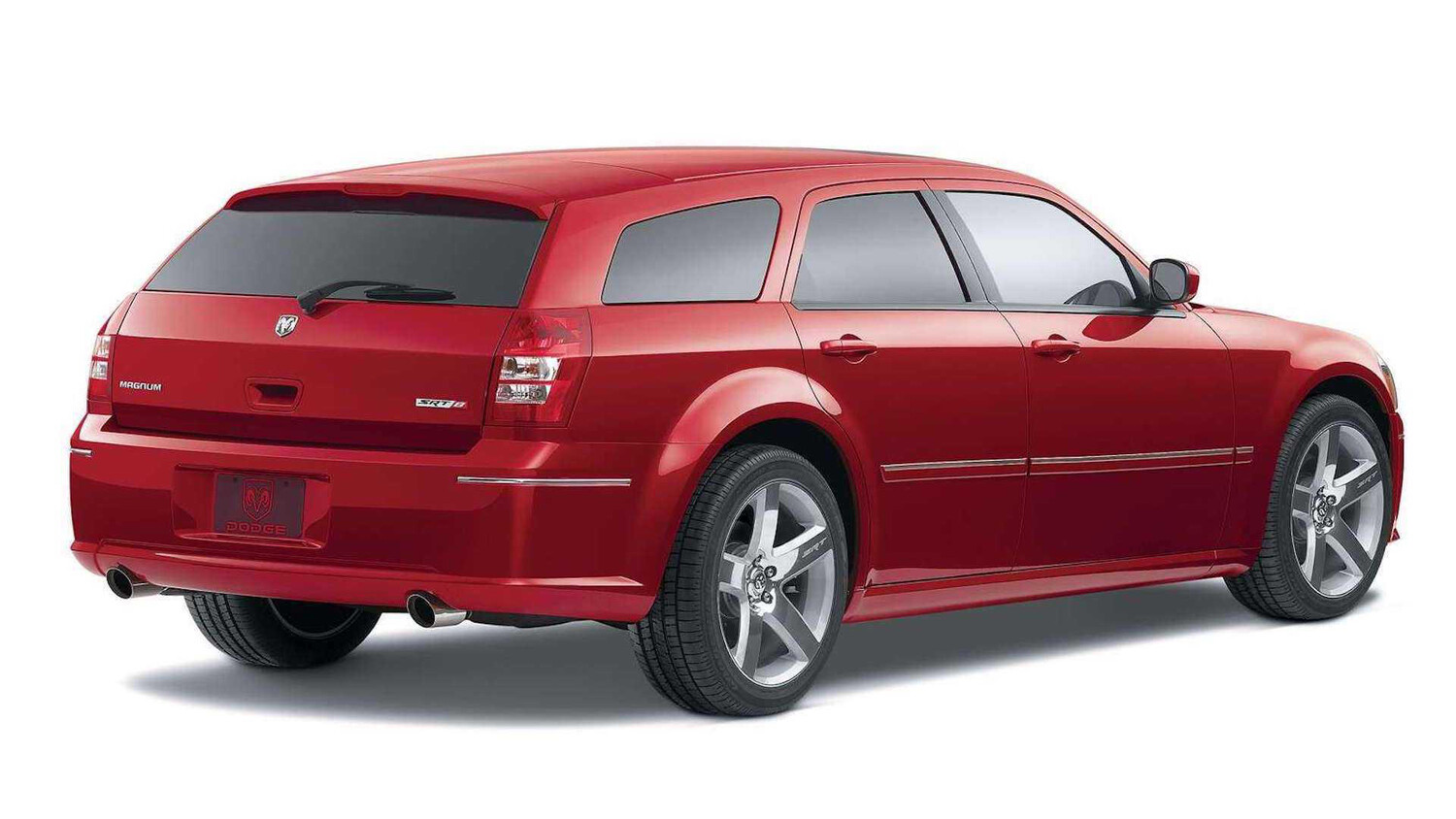
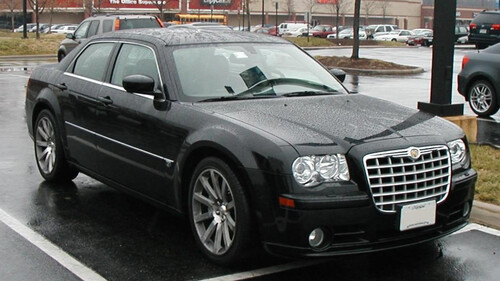
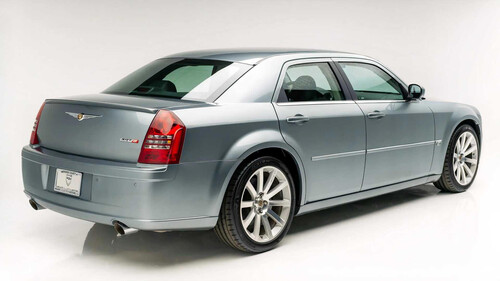
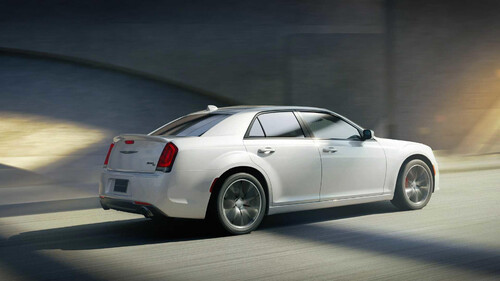
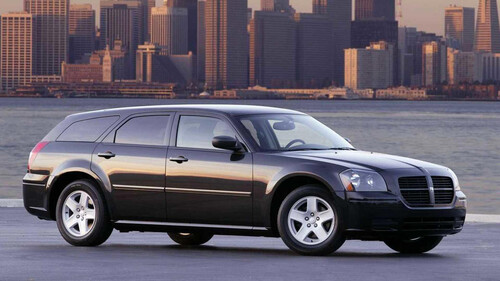
If you’re walking along a line of cars in a used vehicle lot and come across a Chrysler 300C SRT-8, what do you see? Is this just an old Chrysler trying to be relevant in a different world? Is it a vehicle with a shape that doesn’t seem to blend in? Or is it a full-size Hemi sedan with enticing rear-wheel drive, Brembo brakes, and no less than 425 horsepower, just waiting to get back on the road? This particular Chrysler comes from a rare breed of early-century American muscle sedans, and it’s currently sitting in an interesting value pocket.You can pick up a good car in the mid-teens, with higher mileage examples even lower. But the very best examples may be starting to show what can happen when nostalgia, usable performance, and Hemi legend start to overlap. The Forgotten Full-Size American Muscle Era ChryslerIn the mid-2000s, Detroit was gearing up for a significant horsepower arms race, and as manufacturers flexed their muscles, they came up with vehicles like the Chrysler 300C SRT-8. This car was a very confident derivative of the baseline Chrysler 300, which already had plenty of big-sedan attitude through that blocky profile and club-bouncer-like positioning. The company already made available a 5.7-liter Hemi for the base 300C, but the SRT-8 package certainly made the entire formula much sharper.The SRT-8 was not just a 300C with bigger wheels and bolder badges. Instead, it now had a 6.1-liter Hemi V8, a five-speed automatic with AutoStick, Brembo four-piston brakes, 20-inch wheels, performance seats, SRT-tuned stability control, and a lower, even more assertive stance. Buyers were getting genuine straight-line speed from something that was still a reasonably priced American sedan, with some muscle-car theater, lots of interior room, and an unapologetically American attitude. The 300C SRT-8 may have represented Chrysler at its flashy and confident best back then, and even today, it represents something quite compelling. The 6.1 Hemi 300 Was The Bargain That Slipped Through Chrysler Chrysler's naturally aspirated 6.1-liter Hemi V8 was the star of this car's show. It rated at 425 hp and 420 lb-ft of torque, could get to 60 mph in about 4.9 seconds, run the quarter mile in 13.2 seconds at 109 mph, and came with a governed top speed of approximately 170 mph. Those numbers were quite impressive for what was essentially a very big full-size sedan that could easily carry five adults with a trunk full of luggage.Current nationwide references suggest that 2006 Chrysler 300 SRT-8 sedans are changing hands for between $9,000 and $12,000 in private-party transactions, and you'd probably expect to find cars of this age with mileage between 80,000 and 136,000. On the auction circuit, there's quite a spread of recent examples.In May 2026, a 29,000-mile 2006 Chrysler 300 SRT-8 sold for $16,500 at Bring A Trailer, and another with 20,000 miles on the clock brought in just over $21,000 a year earlier. An exceptional 1,000-mile 2006 example reached $39,000 several years ago. Those examples seem to be representative of the whole market in miniature, and you can certainly find ordinary driver-grade vehicles for an affordable sum. However, clean low-mileage examples are creeping up there and the very best examples already live in a different lane. 6.1 Versus 6.4 And Why Earlier Makes A Lot Of Sense Chrysler Purists will know that there are two different Hemi engines in this conversation, in the form of the 6.1-liter and 6.4-liter versions. The later 6.4-liter 392 Hemi is stronger on paper and was introduced with the second-generation vehicle for the 2012 model year. According to Chrysler's spec sheets, that engine returned 470 hp and 470 lb-ft of torque with premium fuel as the recommended choice.But even though the 6.4-liter version produced 45 hp and 50 lb-ft more than the earlier one, it was not automatically better. The earlier 6.1-liter version has its own appeal in the marketplace because it has a somewhat simpler character with slightly less refinement. The 6.4-liter cars may be quicker and more modern, but they may also trade in a slightly different price band, especially if the mileage and condition of the two candidate cars are comparable.The 6.1-liter engine can also carry a nostalgia advantage, as this was the engine that helped establish SRT sedans in the performance conversation. Smart buyers may still choose the 6.1-liter over the 6.4 because it can still deliver the original SRT sedan experience for typically less money. The Service Reality and What Smart Buyers Check First Stellantis A Chrysler 300 SRT-8 may only turn out to be a bargain if a previous owner has been attentive. While the 6.1 Hemi has a good general reputation, it's not bulletproof and may start to display some telltale signs of previous neglect. Perhaps the most important warning sign is the notorious "Hemi tick," which may represent an exhaust leak, but can sometimes point toward valve train trouble. Hemi experts identify roller lifter failure and camshaft damage as big risks to consider within the modern Hemi family, although the 6.1 may avoid some of the later complexity problems linked to cylinder deactivation.When looking closely at a used 300 SRT-8, check for exhaust manifold leaks, as fixes can become costly due to labor intensity. RepairPal suggests that a Chrysler 300 exhaust manifold gasket replacement could cost between $255 and $357, while a full exhaust manifold replacement could range between $566 and $668 before taxes and other related repairs.It's also important to have a close look at the five-speed automatic. After all, the torque produced in a car like this can certainly place the W5A580/NAG1-based transmission under strain. Ideally, a previous owner will have been attentive to their maintenance and wouldn’t have subjected the vehicle to regular hard launches. As far as running costs are concerned, the EPA lists the 2006 SRT-8 at 13 MPG city, 18 MPG highway, and 15 MPG combined, while insurance is likely to be higher than a base V6 sedan as well. Why The Sedan Never Had The Magnum's Cult Premium Dodge Some people want to compare the 300C SRT-8 with the Dodge Magnum SRT-8, but they really are two different propositions. The 300C SRT-8 had a more traditional body style, while the Magnums were performance wagons, and they went on to generate their own type of cult appeal. The Magnum SRT-8s were also quite limited in number, and today, may be relatively scarce.The difference in cultural appeal may present the Chrysler as undervalued, but it does have the same broad LX-era muscle sedan spirit, with 6.1 Hemi appeal and performance-era SRT credibility. It lacks the Dodge badge that rose in stature due to that Charger, Challenger, and Hellcat-era success. But since the Chrysler sits at a slightly lower level, it creates an additional opportunity. And as the 300C SRT-8 was never trying to be a Charger but something more mature, it generates its own kind of everyday appeal. Now May Be The Best Window To Buy NetCarShow There are still people who dismiss a first-generation 300 as just an old used Chrysler, but plenty of others are starting to look at this car differently. Clean, low-mileage examples, especially unmodified ones, may suddenly be seen as separate from average cars. And auction data confirms that buyers are willing to pay more for good service history, sensible mileage, and originality.While that does not make these cars speculative from a collector's point of view, it may shine a good light on clean, documented, mostly stock examples. Buyers clearly need to be careful not to pick the wrong example, or the repair bill could quickly erase the bargain, but otherwise, the risk-reward picture could look convincing.It's also important to remember that this type of car is never coming back. Chrysler ended production of the 300 after the 2023 model year, with the farewell 300C featuring a 485-hp 6.4-liter Hemi, which was a limited-run farewell to the nameplate. But while that more powerful version may have been the ultimate 300, the 6.1 SRT-8 still has a clear place in the overall story.In summary, the Chrysler 300C SRT-8 is an interesting proposition. It represents a still-affordable, full-size American muscle sedan with real 425-hp performance, SRT hardware, and relative affordability. And the 6.1-liter version occupies a particularly sweet spot in this general market, causing the smartest Hemi buyers to look twice at a car that's plenty powerful, usable, distinctive, and still attainable.