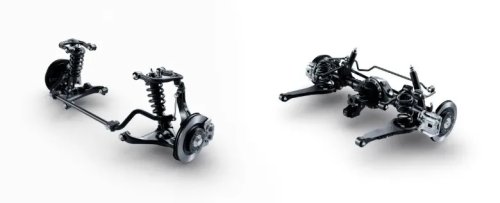




















Before rally wins and turbocharged Lancers, Mitsubishi had a sports car that barely anyone remembers. It came before the Evo. Before the all-wheel-drive craze. Back when rear-wheel drive was still king, and Japanese performance cars were bold, boxy, and brutally effective.This car didn’t make the same headlines as the Skyline GT-R or the Supra. It never got a Fast & Furious cameo. But it had all the right ingredients: a turbocharged engine, aggressive looks, and tech years ahead of its time. And yet, it never made it to American shores in its purest form. The Mitsubishi Starion GSR-VR Is A Forgotten Group B Legend 1987 Mitsubishi Starion GSR-VR static photoThe Mitsubishi Starion GSR-VR was born in the early 1980s. Mitsubishi launched it as the top-tier version of the Starion lineup, aimed at Group B homologation before the class was canceled. It debuted in Japan and other select markets in 1984, positioned as a high-performance flagship. At a time when Mitsubishi was still growing its motorsport identity, the GSR-VR was the sharp end of its spear.While the regular Starion models already had a reputation for solid performance, the GSR-VR took things further. It featured advanced components for its time, including a lightweight body, upgraded turbocharging, and enhanced suspension. It was meant to be Mitsubishi's answer to other rising Japanese performance names like the Mazda RX-7 and the Nissan 300ZX.The GSR-VR stood out with its wider body and aggressive stance. Mitsubishi designed it with rally and track use in mind. It had flared wheel arches, a bold front fascia, and aerodynamic touches that gave it a commanding presence. This was a car built to perform and look the part while doing it.Despite its potential, the GSR-VR never went into full motorsport service due to the sudden end of Group B rallying. Still, it remained a legend among those who knew what it was. It lived in the shadow of better-known cars but offered performance that could rival many of them. Mitsubishi's Iconic Rally And Sports Cars Through The Years 1970s: Mitsubishi Lancer 1600 GSR - Built for the Safari Rally; tough, light, and reliable; Early sign of Mitsubishi's rally ambitions. 1982: Mitsubishi Starion - Rear-wheel-drive turbo coupe; Performance-focused with international motorsport intentions. 1984: Mitsubishi Starion GSR-VR - Group B homologation special (not raced); Turbocharged, widebody, track-ready. 1985–1988: Mitsubishi Galant VR-4 - Turbocharged, AWD sports sedan; Basis for early Lancer Evos; strong rally record. 1992–2007: Mitsubishi Lancer Evolution I–IX - AWD, turbocharged, rally-born icons; Dominated WRC in the late '90s with Tommi Mäkinen. 1996–1999: Mitsubishi 3000GT VR-4 (GTO) - High-tech grand tourer with AWD, twin turbo, and active aero; More road-focused, but a halo car for Mitsubishi performance. 2008–2016: Mitsubishi Lancer Evolution X - Final Evo generation; larger, more refined; Maintained turbo AWD formula but dropped rally program. Lancer Evo Turbo Engine, Widebody, And Nimble Suspension Appreciating Classics Mitsubishi Starion GSR-VR Key Specs Source: MitsubishiUnder the bonnet, the Starion GSR-VR carried a 2.0-liter turbocharged inline-four engine, designated the G63B. This was the same engine family that would later power the early Lancer Evolutions. In the GSR-VR, it made around 200 horsepower and over 200 lb-ft of torque, impressive numbers for its era and size.What made the GSR-VR special wasn't just the power but how it handled. It used a MacPherson strut front suspension and an independent rear setup, both tuned for sharp dynamics. It had limited-slip differentials and a close-ratio manual gearbox that gave it serious track credibility. The chassis balance leaned toward oversteer, rewarding skilled drivers.Braking was handled by four-wheel disc brakes, and Mitsubishi offered optional ABS – a rare feature in the early '80s. The car sat on performance-tuned springs and dampers, with a ride height designed for aggressive cornering. Its quick steering and low weight made it agile and responsive.Inside, the GSR-VR was spartan but focused. The dashboard featured digital readouts in some versions, and the seats were heavily bolstered for spirited driving. Every detail emphasized control, feedback, and speed. A Forbidden Fruit In The US via Topclassicarsforsale.com Mitsubishi chose not to bring the GSR-VR to the United States. Instead, it offered milder Starion versions through its dealer network and via Chrysler as the Conquest. The decision stemmed from a mix of emissions regulations, market strategy, and cost considerations. The GSR-VR’s hardware simply didn’t align with what Mitsubishi thought American buyers wanted.Instead of wide-body, high-boost excitement, U.S. buyers got a detuned, heavier version. Enthusiasts in Japan and some parts of Europe got the real deal, while Americans were left with something less raw.Only a limited number of GSR-VRs were ever built. Some estimates suggest fewer than 2,500 units. That rarity has made them collector's items in Japan and among die-hard fans worldwide. Their scarcity in the U.S. only adds to their mystique.The irony is that American car culture might have embraced the GSR-VR if it had been offered. The 1980s saw a rise in interest in Japanese performance, and the GSR-VR had the chops to impress. But timing and regulations worked against it. Today, it’s a classic that most U.S. drivers never even knew existed. America Got The Starion With A Larger Engine, But It Was Slower Via Mecum Auctions Chrysler Conquest TSi Key Specs Source: ChryslerThe closest Americans got to the GSR-VR was the Chrysler Conquest TSi. It was essentially a rebadged Mitsubishi Starion, offered through Chrysler’s dealership network. While it carried some of the performance DNA, it lacked the sharper edge of the GSR-VR.The Conquest TSi featured a turbocharged 2.6-liter engine instead of the 2.0-liter G63B. This engine, while torquey, was heavier and didn’t rev as freely. It made about 145 to 188 horsepower depending on the year and trim, falling short of the GSR-VR's numbers.Visually, the Conquest TSi had a similar wide-body look, especially in later models. It looked fast, but it wasn’t as focused in its tuning. The suspension was softer, and the car leaned more toward grand touring than sharp handling. It was still a capable machine, just not as raw.Sales of the Conquest TSi were modest. It had a niche following but never became a mainstream hit. Still, it left a mark as one of the more unique offerings from Chrysler during the 1980s. To a certain extent, the slow sales of the Conquest TSi proved that Mitsubishi was right taking the decision not to bring the GSR-VR stateside.