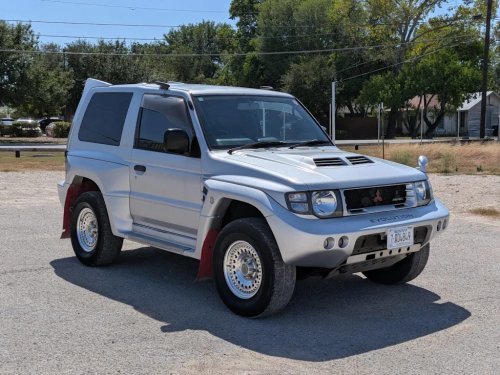
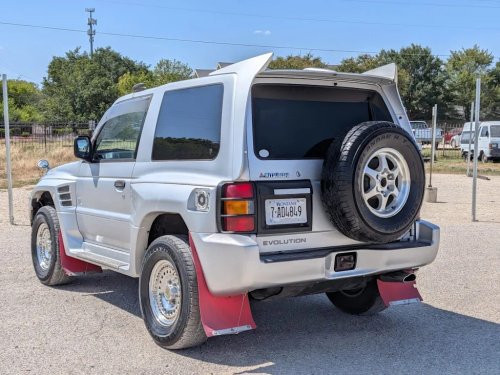
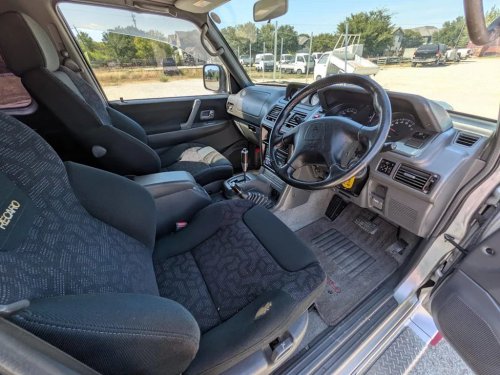
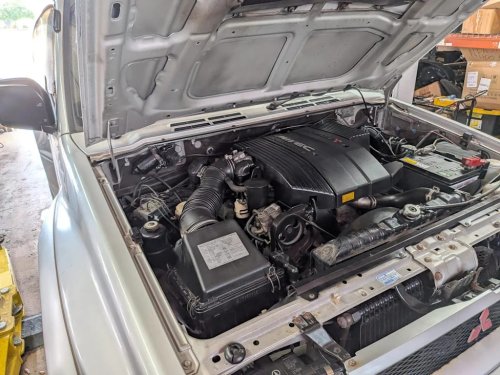
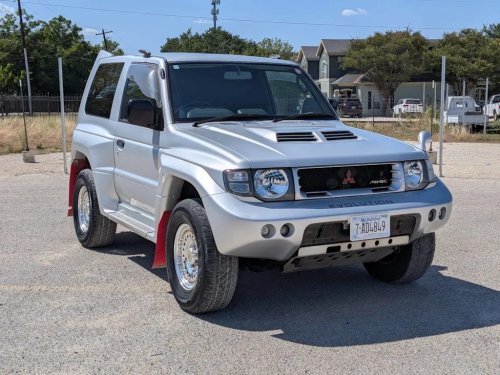
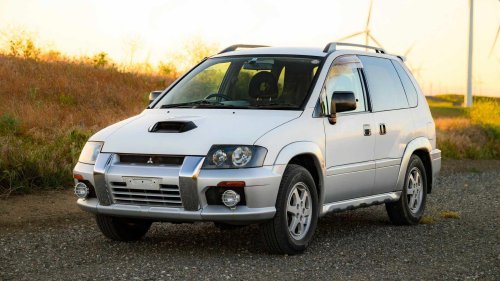
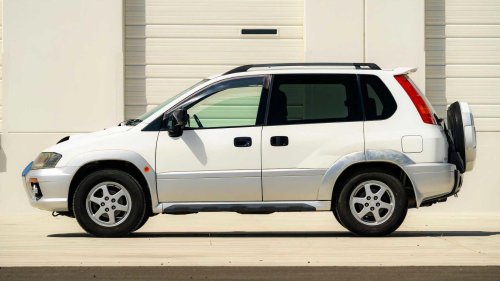
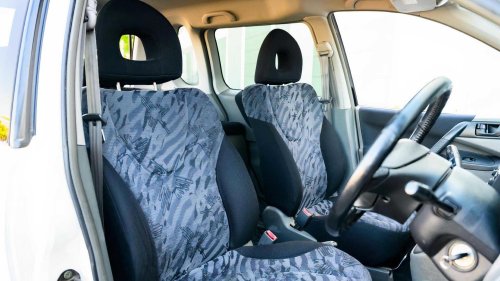
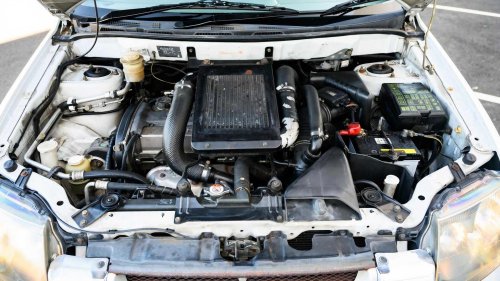
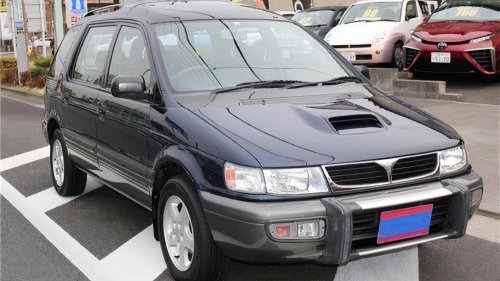
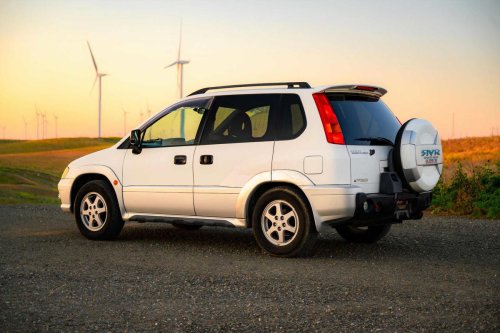
Japanese cars were growing in popularity throughout the '60s, '70s, and '80s, offering models that blended the best that Europe and America had to offer, just with added reliability and affordability. The Datsun 240X offered the looks of a Ferrari GTO with modern mechanicals and a competitive price tag, while the R32 Nissan Skyline GT-R took inspiration from the Porsche 959 to create a usable, everyday supercar in an everyday coupe body.But while all this was mightily impressive, Japan really found its niche somewhere else. While rallying had been dominated by the turbocharged all-wheel-drive monsters from Europe, such as the ur-Quattro and Lancia Delta Integrale, the country's carmakers decided that it could do the whole hurtling through forests thing even better. Suddenly, rallying was being flooded by boosted sedans and coupes from Japan, and they were winning everything. Alongside these WRC cars, we mere mortals were being treated to rabid cheap sedans that had all-wheel drive and could see off virtually anything on a twisty road. There were no models more famous than the Subaru Impreza WRX and Mitsubishi Evo in this category.But with all this success on road and track, the Japanese carmakers were also doing something else at the time. That is, creating cars for every other niche imaginable, and some that you couldn't imagine before they arrived. This meant creating tiny sports cars for inner cities, weird retro vans for delivering sushi, and sticking rally car tech into regular wagons just to see what would happen. The JDM car you are about to see falls into the latter category, but this is a minivan – perfect for picking up groceries, taking the kids on a camping trip, or blasting down a gravel track. If The Mitsubishi Evo Was A Mini Van It Would Be The RVR Sports Gear X3 Cars and Bids The first Mitsubishi Lancer Evolution arrived in 1992. It may have looked like a small, fairly inconspicuous sedan, but this was a straight-up rally car for the road. To create this iconic model, Mitsubishi took the lightweight Lancer and fitted it with the 4G63-type intercooler turbo 2.0-liter DOHC engine and AWD drivetrain from the original Galant VR-4. This tiny sports sedan has 244 horsepower at 6000 rpm. The Evo, as it soon became known, went through ten models (arriving in the USA officially in 2003) until the end of the line with Lancer Evolution FE (Final Edition) in 2015.What a lot of people don't know is that there was a JDM minivan fitted with Evo hardware. This was a niche model, with fold-down seats to turn it into a mini camper van, a roomy interior, and plenty of storage and cubbyholes. In other words, if your husband or wife told you to get rid of the Impreza WRX or Evo and come back with something sensible, you would buy a Mitsubishi RVR Sports Gear X3. The RVR Sports Gear X3 Is A Minivan Sleeper Cars and Bids Outwardly, there is not much to give the game away. The RVR Sports Gear X3 does have chunky plastic wheel arches painted a different color and a bonnet scoop, but quite frankly, what Japanese car didn't have that in the '90s? Open the hood, and things become more interesting with the RVR Sports Gear X3.Here, you will find the famous 4G63 turbocharged 4-cylinder engine, closely related to the unit that powered the Galant VR-4 and the majority of Evo models over the years. In the RVR Sports Gear, this engine is rated at 227 horsepower and 253 lb-ft of torque. Output is channeled via all-wheel drive and a 5-speed manual transmission. A Closer Look At The Mitsubishi RVR Sports Gear X3 Cars and Bids The second-generation RVR we see here arrived on the Japanese market in 1997, with the first generation never officially sold in America. There were two variants available, either the standard family runaround or the more rally-inspired Sports Gear. The AWD Sports Gear was perfectly designed for anyone who wanted to go skiing in one of Japan's many resorts, with plenty of space for gear and a roof rack, with the added benefit of a powerful turbocharged engine. There were loads of standard features, including 16-inch wheels, fog lights, a rear spoiler, and roof rails, plus clever thinking such as a sliding rear door and movable, fold-flat seats to make it more practical. The Comparisons Between The Mitsubishi Evo And The Mitsubishi RVR Sports Gear X3 Cars & Bids The RVR Sports Gear uses the same basic engine as the Evo, but with a few differences. For starters, while potent, the power is down on the corresponding Evo that was being sold in the late '90s at the same time as this van. This would have been the Evo V, which has 276 horsepower.Not a huge amount is known about the RVR Sports Gear, mainly because it was never sold outside of Japan, but there is some good information on the Grassrootsmotorsports.com forum. One owner says that it is a derivative of the Evo engine, but uses a smaller turbo, milder cams, and weaker rods. The RVR Sports Gear also has a top-mounted intercooler. That said, the engine can be updated to more of a full-blown Evo spec for more horsepower if desired. While many RVR Sports Gears were automatic, a few left the factory with a five-speed manual. It's hard to say exactly how quick the RVR in Sports Gear trim is, but independent sources quote the manual as hitting 60 mph in 6.5 seconds. Then There Is The Other Mitsubishi Evo Minivan Japan-partner.com Mitsubishi also made another Evo minivan in the mid-'90s. The elaborately-named Mitsubishi Chariot Resort Runner GT is an obscure JDM minivan that shares its architecture with the Lancer Evolution I to III. It has full-time all-wheel drive with a viscous center differential, with the option of a rear LSD, and a suspension similar to a Galant VR-4's.Arguably, the mundane body makes it even more of a sleeper than the RVR. The 2.0-liter intercooled turbo 4G63T engine with 227 horsepower and 213 lb-ft of torque for the five-speed manual models. There was also a four-speed manual version. According to one well-respected magazine, the brakes came from a naturally aspirated Mitsubishi 3000 GT. The RVR Sports Gear X3 Is A Bargain In 2025 Cars & Bids The Mitsubishi RVR Sports Gear X3 is not a model you see very often for sale in the US, but every now and again, one or two crop up. In 2024, a very tidy-looking example went up for sale on Cars and Bids with 107,500 miles on the clock. This car sold for a very reasonable $6,166. Also, in 2024, another RVR Sports Gear X3 sold on the same site for $6,766. Mitsubishi Chariot Resort Runner GTs that have been sold through import companies seem to fetch around the $6,000 mark, too. For comparison, a Mitsubishi Lancer Evolution IV (1996 to 1998) sells for an average $21,542, according to Classic.com, with Evo Vs fetching $33,328.



















 +34 others