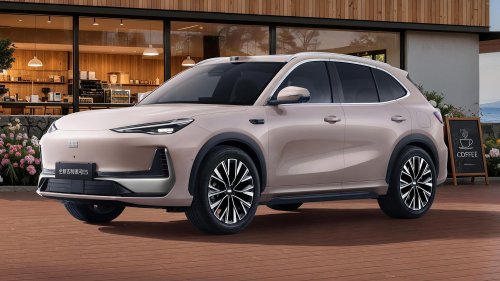
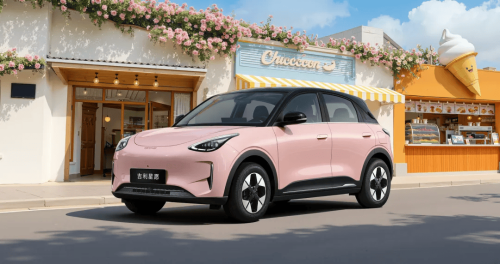
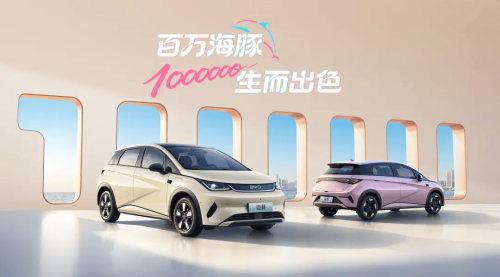
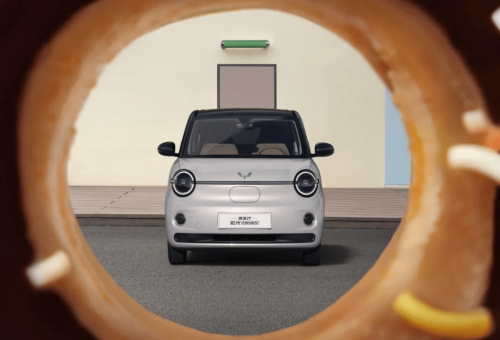
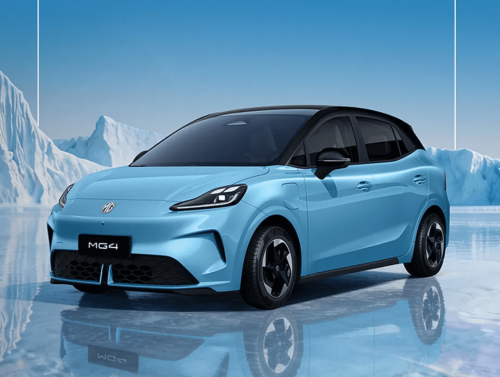
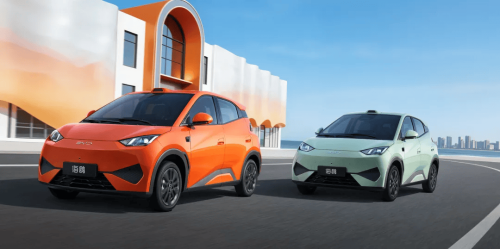
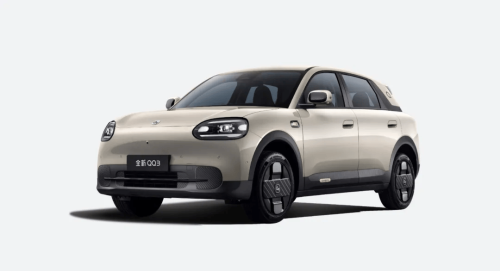
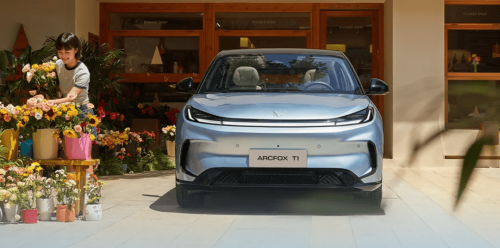
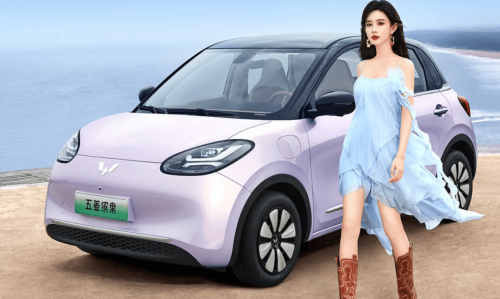
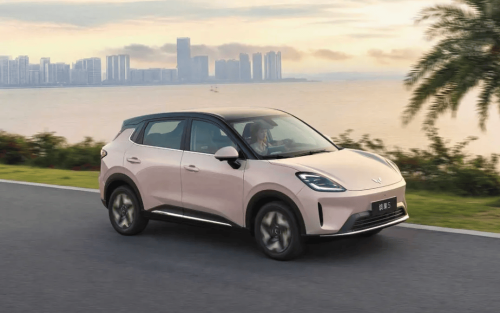
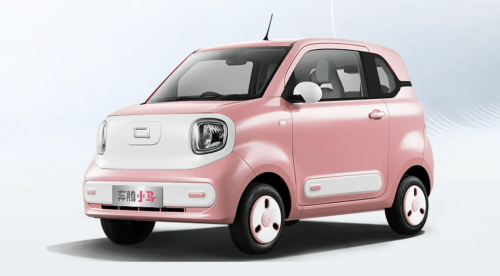
ChinaEV Home has already published several “April Top 10 Sales” analysis reports. Looking across segments such as SUVs, sedans and large three-row SUVs, one trend has become increasingly clear: sales are concentrating around leading products. The gap between the No.1 model and the runner-up widened further in April, while models ranked outside the Top 5 generally saw a steep drop-off in sales. The same pattern is now evident in the “mini hatchback EV” category. The Geely Xingyuan, which ranked first overall across all vehicle categories and also topped the sedan segment, naturally led the mini hatchback category as well. Compared with March, Xingyuan widened its lead over second place by nearly 20,000 units in April — almost equivalent to the combined sales of the third-ranked Wuling Hongguang MINI EV and the seventh-ranked Arxfox T1. Meanwhile, most other models on the chart — particularly those ranked lower — recorded notable month-on-month declines compared with March. These details suggest that market concentration is accelerating. It also aligns with ChinaEV Home’s broader observation of the auto industry: the market may be entering a consolidation phase, with a pronounced “Matthew Effect” in which dominant players capture an increasing share of demand. Such structural shifts are likely to place mounting pressure on smaller automakers outside the leading group. It is also worth noting that the previously strong-selling Leapmotor Lafa5 and firefly both temporarily dropped out of the Top 10 rankings. The former sold 4,707 units in April, while the latter delivered 4,973 units. Their performance remains relatively stable, but it also illustrates how even modest fluctuations can significantly alter rankings in today’s rapidly changing market environment. At the same time, none of the current Top 10 models can be considered completely secure. Given the pace of market change, future reshuffling could become even more dramatic than expected. PS: Data sourced from CPCA public retail sales figures. No. 1 Geely Xingyuan: 34,727 Units Geely Xingyuan maintained strong momentum in April, with sales rising 12.19% month-on-month to 34,727 units, further cementing its position as China’s overall passenger vehicle sales champion. One advantage over rivals is that Geely launched the annual facelift early, back in October 2025, meaning the model is already in a stable sales cycle and buyers face little concern about imminent product updates reducing resale value. Geely Xingyuan In terms of incentives, the Geely Xingyuan currently starts at RMB 65,800 ($9,100) after limited-time promotions. According to online sources, some dealers are also offering discounts of up to RMB 4,000 ($550), making it highly competitive within the compact EV segment. Overall, Xingyuan’s ability to maintain the top position is largely driven by stable word-of-mouth recognition. This reflects a broader market trend: as the industry moves into consolidation, consumers are becoming increasingly conservative and gravitating toward products with proven sales volumes and established reputations. From one perspective, the Geely Xingyuan has effectively taken over the market role once occupied by the Nissan Sylphy. No. 2 BYD Dolphin: 14,218 Units BYD Dolphin ranked second in the mini hatchback category, with April sales reaching 14,218 units, down 17.77% month-on-month. Although it retained the runner-up position, its absolute sales volume still lagged far behind the Geely Xingyuan and remained on a downward trajectory. BYD Dolphin This comes despite substantial retail incentives. Some dealerships are reportedly offering cash discounts of RMB 16,000 ($2,200), bringing the entry price down to RMB 83,800 ($11,600). At the same time, BYD remains one of the few automakers still offering seven-year low-interest financing plans, including for the Dolphin, alongside “zero down payment” options, giving the model relatively strong financing competitiveness. Even so, Dolphin’s declining sales suggest it is facing intensifying competitive pressure, while the rapid emergence of new A-segment sedans is also diverting potential buyers away from the hatchback segment. Another factor is timing: the BYD Dolphin is approaching its annual facelift cycle, and the upcoming next-generation model could potentially reverse the trend. No. 3 Wuling Hongguang MINI EV: 13,229 Units Wuling Hongguang MINI EV experienced an even steeper decline in April, with sales falling 21.28% month-on-month. Even so, its 13,229-unit result was enough to secure third place in the Top 10 mini hatchback ranking. Wuling Hongguang MINI EV The performance is understandable given that Wuling launched the 2026 model-year MINI EV in April, placing the product in a transition period between old and new versions, which likely affected deliveries. Wuling also rolled out multiple promotional policies for its core model, including trade-in subsidies of up to RMB 4,000 ($550) and coverage of half the vehicle purchase tax. The 2026 Wuling Hongguang MINI EV also received product upgrades, including standard fast-charging capability and the safer “Shenlian Battery” pack. Considering its long-standing reputation and meaningful hardware improvements, the MINI EV’s sales potential may still extend beyond current levels. That said, competition remains intense. No. 4 MG4: 13,189 Units MG4 ranked fourth in the segment with monthly sales of 13,189 units, down 5.84% month-on-month, only slightly behind the Wuling Hongguang MINI EV. However, the two vehicles target different segments. The MG4 already falls into the compact hatchback category and carries a higher price positioning. MG4 Viewed from another angle, MG4’s strong ranking also helps explain why the Wuling Hongguang MINI EV has been under pressure: larger hatchback models are now being priced close to traditional microcars. Another key point is that after the industry slowdown in February, MG4 sales have largely recovered to late-2025 levels, highlighting the model’s strong market resilience and brand appeal. In terms of market policies, the MG4 starts at RMB 65,800 ($9,100) after subsidies, while the 530 km long-range version is priced from RMB 89,800 ($12,400). MG also offers low down-payment financing and trade-in incentives, which have clearly supported sales performance. No. 5 BYD Seagull: 9,864 Units Fifth-ranked BYD Seagull sold 9,864 units in April, representing another noticeable drop from the second-tier group of models that sold between 10,000 and 15,000 units monthly. Its 31.54% month-on-month decline was the second steepest on the chart, trailing only the Wuling Bingo S. BYD Seagull However, the Seagull also launched its annual facelift in April, with adjustments to both product specifications and promotional policies. Combined with consumer hesitation ahead of the update, sales fluctuations were expected. The biggest talking point surrounding the updated Seagull is its optional equipment strategy. BYD’s “God’s Eye” driver assistance system is no longer included free of charge, with buyers of the top trim now required to pay extra for the feature. As the updated model has only recently launched, dealer discounts remain limited. The current starting price is RMB 69,900 ($9,700), while buyers can still access seven-year low-interest financing policies. No. 6 Chery QQ3 EV: 8,494 Units Chery QQ3 EV was the only all-new model on the list, with April marking its first full delivery month. Entering the Top 10 with 8,494 units in its first full month suggests the model already possesses meaningful market appeal. Chery QQ3 EV Pricing has also been aggressive. At launch, Chery introduced limited-time fixed pricing ranging from RMB 58,900 ($8,100) to RMB 78,900 ($10,900). However, aside from its styling design, QQ3 EV offers only two range configurations — 310 km and 420 km — which do not stand out significantly among rivals. Whether the vehicle can sustain market recognition through perceived quality and user experience remains to be seen. No. 7 Arcfox T1: 7,589 Units Arxfox T1 ranked seventh with monthly sales of 7,589 units, down 13.06% month-on-month. After the industry downturn in January and February, Arxfox T1 sales recovered somewhat in March and April, but the April decline relative to March is not an encouraging sign. Arxfox T1 At the current pace, meaningful improvement may be difficult unless the brand increases incentives or launches an annual facelift at the right time. According to online information, Arxfox T1 is priced between RMB 62,800 ($8,700) and RMB 87,800 ($12,100), with some dealers offering limited-time discounts of RMB 3,000 ($410). Financing policies remain relatively weak, mainly limited to low down-payment options at 15% and 60-month installment plans, trailing leading brands such as BYD. As a result, it may prove challenging for Arxfox T1 to return to the “monthly sales above 10,000 units” level seen in late 2025, let alone its December peak of 17,000 units. No. 8 Wuling Bingo: 7,512 Units Two similarly named models delivered sharply contrasting performances in April. Eighth-ranked Wuling Bingo sold 7,512 units, posting the strongest month-on-month growth on the list at 63.59%. Wuling Bingo Like other models recovering from February’s market slowdown, Wuling Bingo followed a particularly steep rebound curve. If this growth rate continues, its May sales could exceed 10,000 units and move it back into the upper half of the segment rankings. Interestingly, Wuling Bingo is still selling the 2025 model-year version, with no facelift introduced yet. After subsidies, the vehicle currently starts at RMB 51,800 ($7,200), giving it relatively strong competitiveness. Wuling’s promise to fully subsidize purchase tax costs may also be one reason for its market traction. No. 9 Wuling Bingo S: 5,883 Units Ninth-ranked Wuling Bingo S recorded the sharpest month-on-month decline among April’s Top 10 models, falling 44.27% to 5,883 units. Bingo S targets a higher market position, with a starting price of RMB 66,800 ($9,200), or RMB 63,800 ($8,800) after trade-in subsidies. It also offers seven-year low-interest long-term financing. Wuling Bingo S The 2026 Bingo S added a new 525 km long-range variant, clearly strengthening the product package. However, sales still dropped from more than 10,000 units in March to below 6,000 in April, suggesting the model may have been impacted by competition or insufficient competitiveness in pricing and financing terms. No. 10 Bestune Pony: 5,846 Units The final model to enter the Top 10 mini hatchback ranking was the Bestune Pony, which sold 5,846 units in April, down 11.44% month-on-month. This is another micro EV focused on short-distance urban commuting, with an official price range of RMB 34,900 ($4,800) to RMB 45,900 ($6,300). Bestune Pony Dealers are also offering discounts ranging from RMB 5,000 ($690) to RMB 7,000 ($970), which can reduce the effective starting price to as low as RMB 19,900 ($2,800) after stacking incentives. That gives the model meaningful pricing power in the market. Even so, the decline in monthly sales suggests that even in the micro EV segment, consumers increasingly prefer larger brands and higher-volume products, with market share continuing to consolidate around leading models. Bestune Pony once achieved monthly sales of around 13,000 units in November 2025, but sales have trended downward since then. Although there has been some recovery after February this year, the pace of growth remains limited. Given the current competitive landscape, retaining its No.10 position in future rankings could prove difficult.



















 +29 others