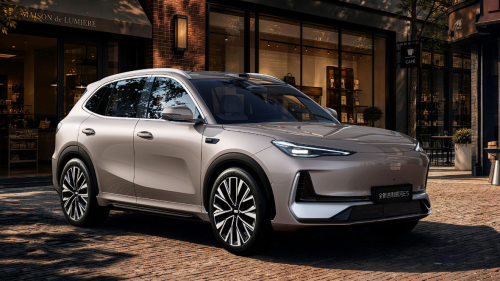
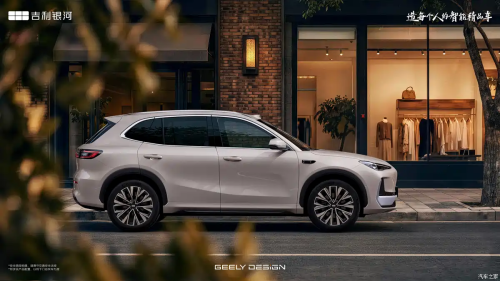
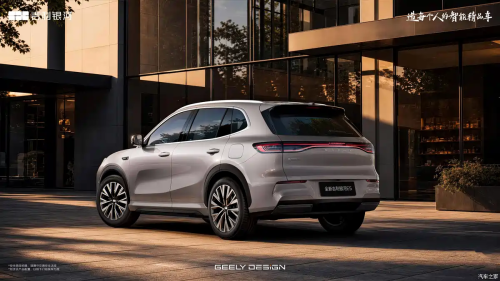
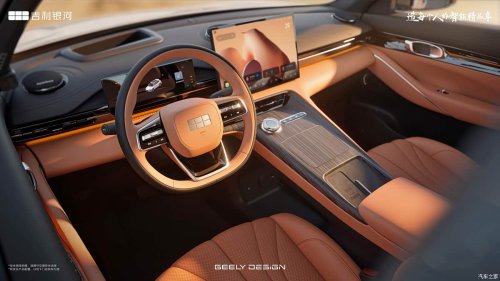
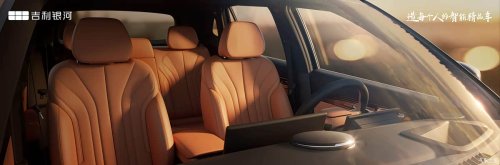
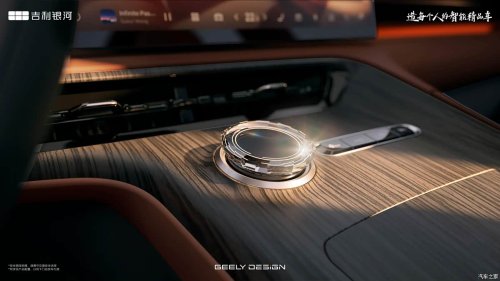
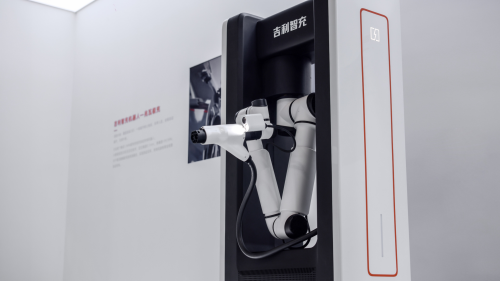
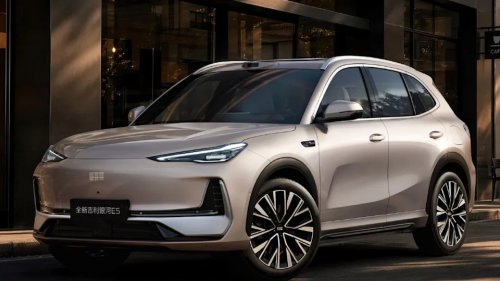
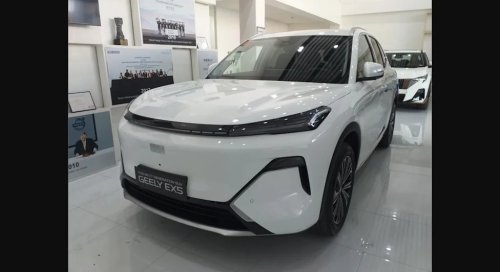
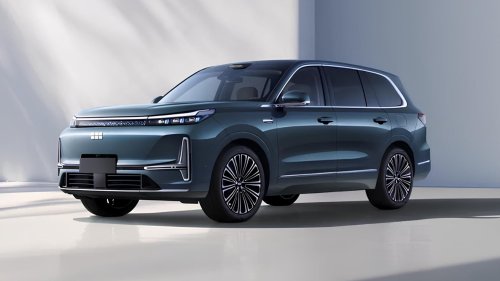
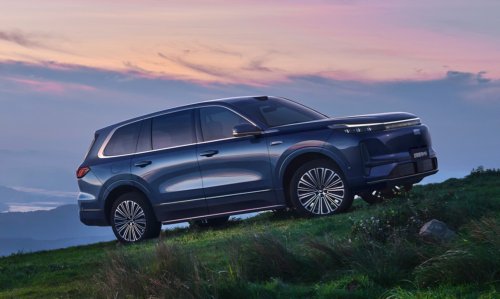
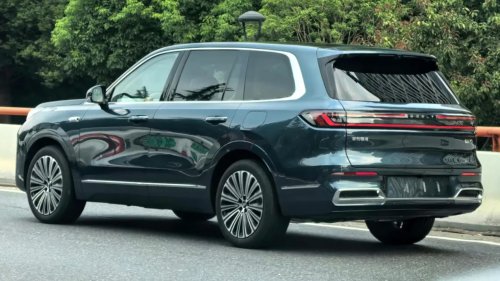
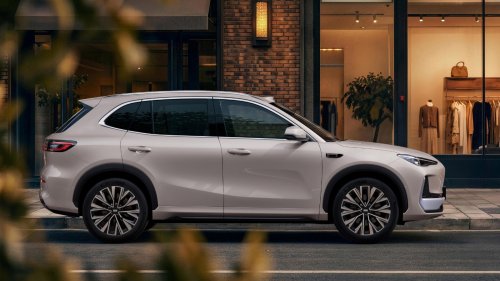
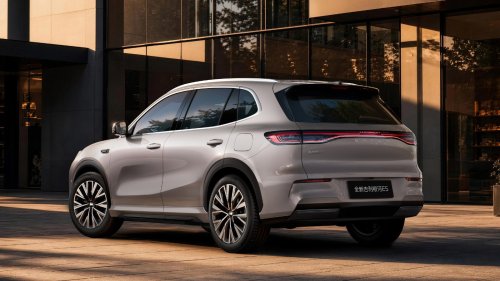
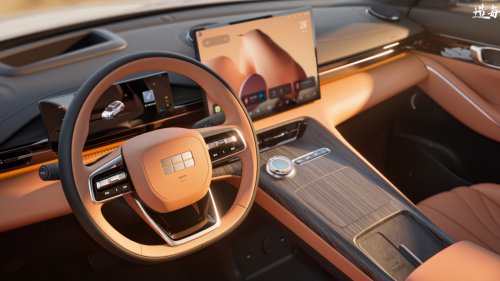
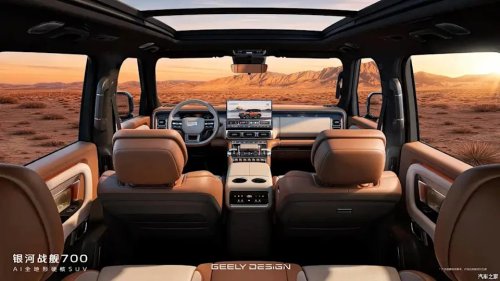
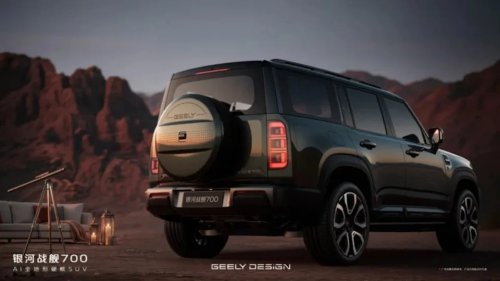
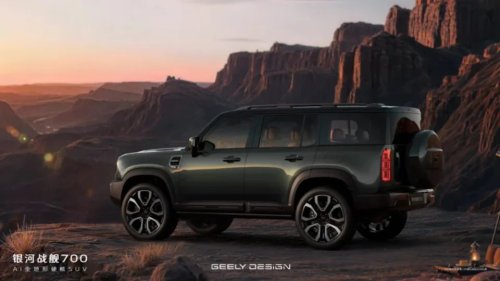
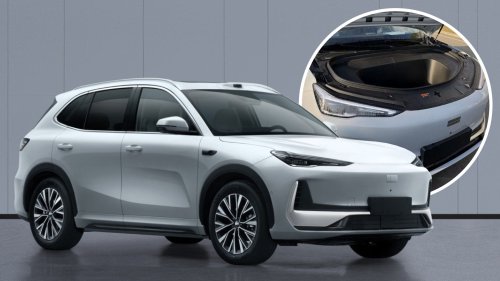
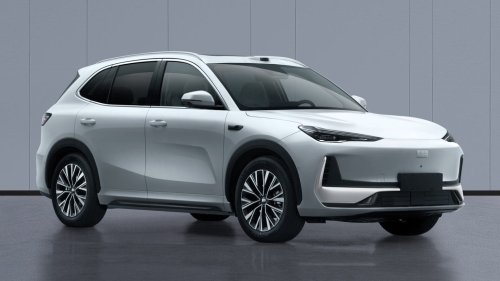
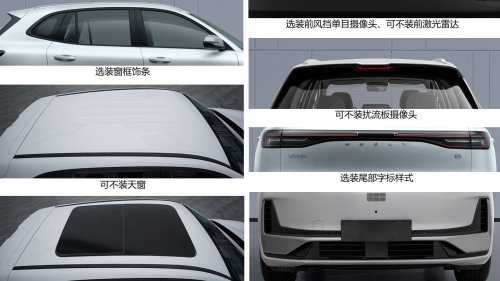
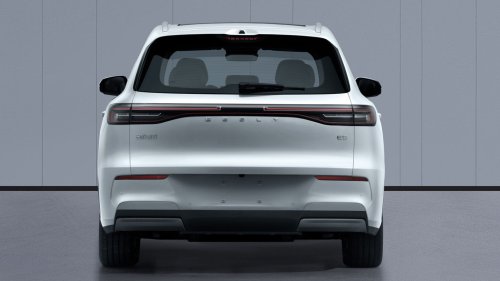
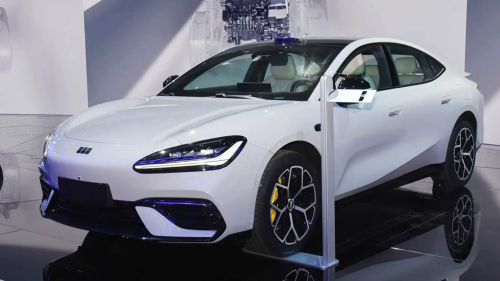
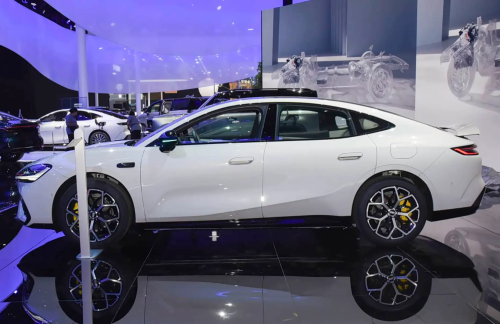
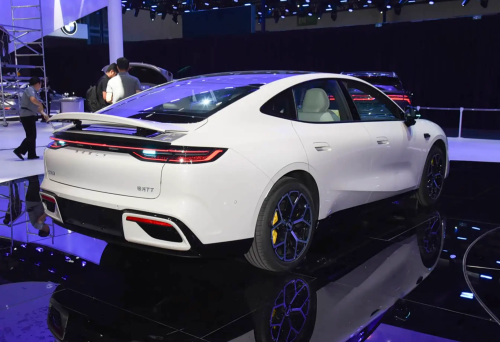
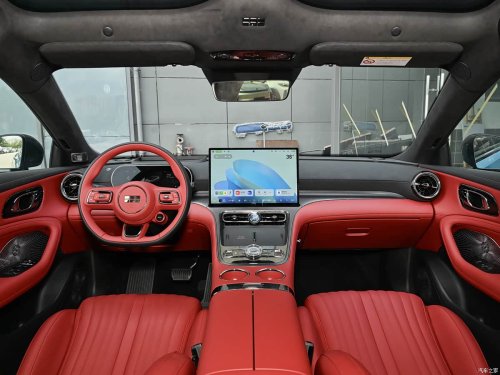
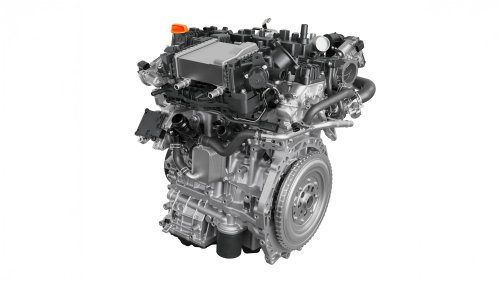
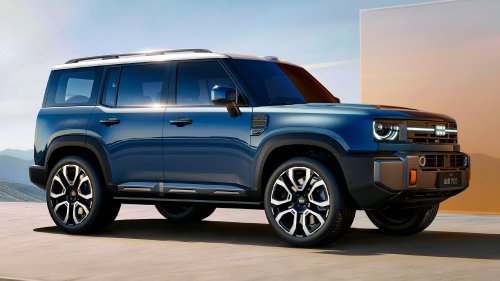
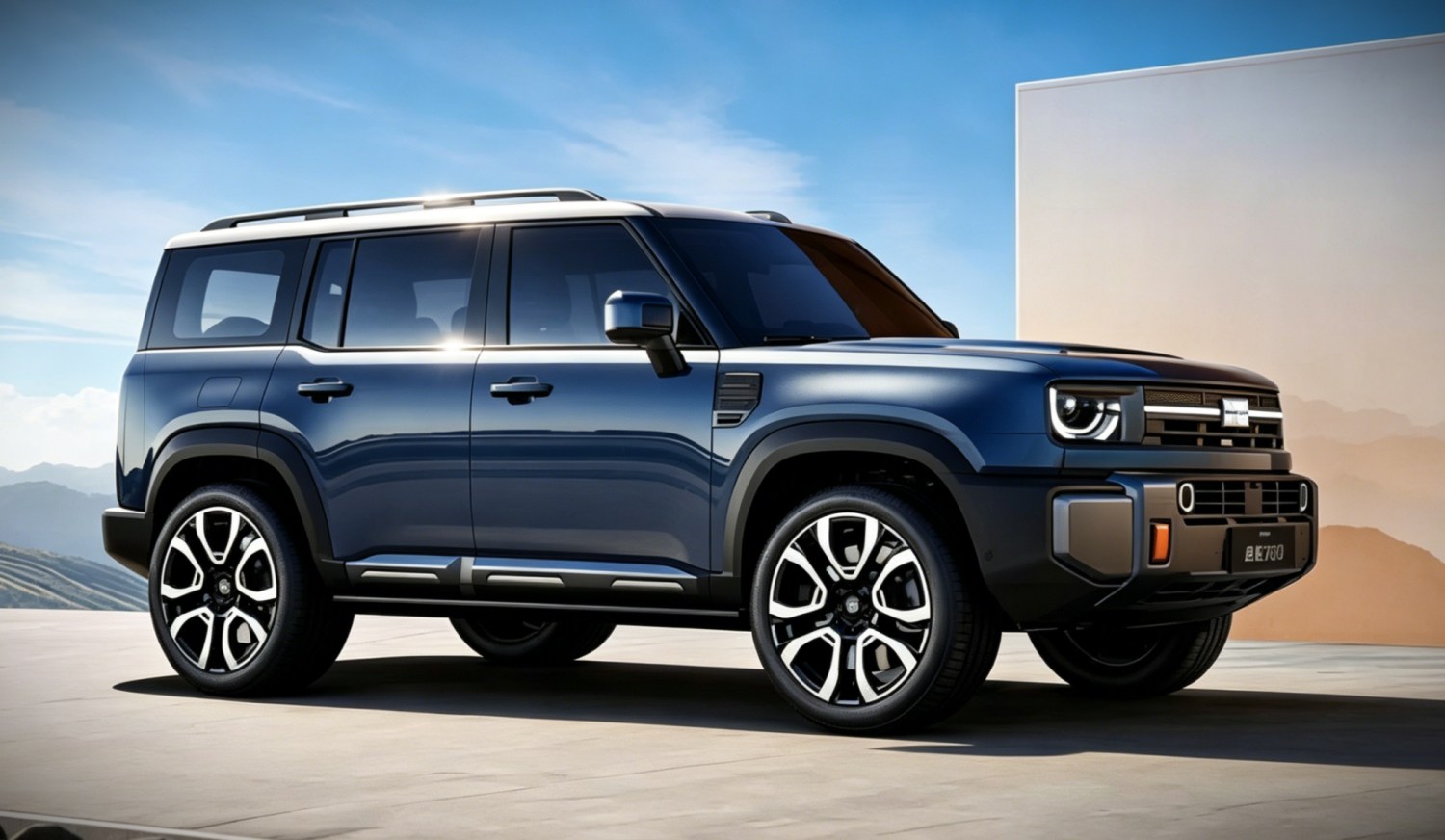
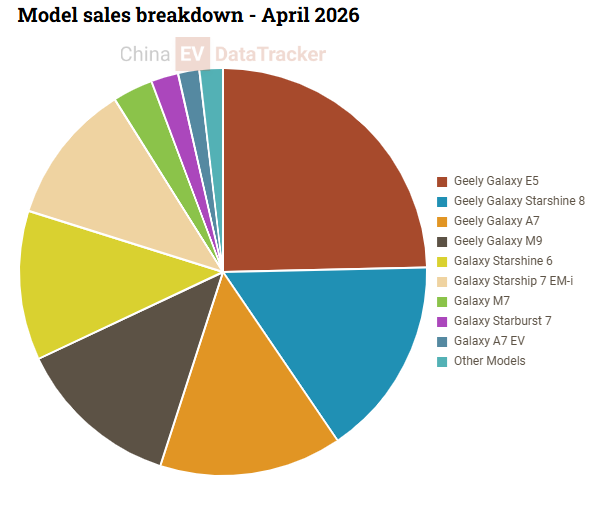
Geely has confirmed the Cruiser 700 will use a three-motor four-wheel-drive system. Credit: Geely Understand China EV’s Market Real-time notifications when critical EV data is released All important data in one place 2,000,000+ data points Become a member Geely Galaxy’s upcoming Cruiser 700 plug-in hybrid SUV will debut the company’s native new-energy off-road architecture, a platform developed around electrified powertrains rather than adapted from an existing combustion-engine chassis. Geely first previewed the model in March as its answer to traditional off-road SUVs such as the Land Rover Defender, while production-test vehicles were later photographed in China ahead of launch. Publicly released information confirms the architecture combines a three-motor four-wheel-drive system, active hydraulic suspension, front and rear double-wishbone suspension, an integrated-frame body structure, and torsional rigidity exceeding 40,000 N·m/deg. A recently examined Geely patent, CN118769884A, provides additional insight into how the rear axle of such a system could manage traction when using two independently driven electric motors. How a dual-motor rear axle differs from a conventional differential In a traditional mechanical four-wheel-drive vehicle, a differential allows the left and right wheels to rotate at different speeds while cornering. A dual-motor electric axle approaches the problem differently. Each wheel can be driven directly by its own motor, allowing wheel speeds to be controlled electronically without requiring a conventional differential gearset. This arrangement offers fast torque-vectoring capability and precise wheel-speed control. However, it introduces a different challenge. If one wheel encounters a low-grip surface and begins spinning, the torque generated by its motor cannot automatically be redirected to the wheel with traction. The patent outlines a solution that links the two rear drive shafts via a fluid-coupled locking mechanism positioned between them. Each motor drives its corresponding wheel through an independent reduction gearset. Between the two coaxial drive shafts sits a coupling assembly comprising two interlocking sections. One section contains a chamber filled with damping fluid, while the other incorporates an impeller rotating within that fluid. A viscous-coupling concept adapted for a dual-motor EV axle Under normal driving conditions, the rotational speed difference between the two shafts remains small. Fluid resistance is therefore limited, allowing the wheels to rotate at different speeds during cornering without significant interference. When a large speed difference develops, such as when one wheel loses traction, the impeller increasingly agitates the damping fluid. The resulting viscous resistance opposes the speed difference between the shafts and enables part of the available torque to be transmitted across the coupling. Conceptually, the arrangement resembles a viscous limited-slip differential, though its architecture differs from that of conventional off-road drivetrains. Instead of being integrated into a mechanical differential assembly, the coupling links two independently powered electric drive shafts. This allows the axle to retain the torque-vectoring advantages of a dual-motor layout while adding an automatic torque-sharing function when wheel slip occurs. Unlike brake-based traction systems that reduce wheelspin by applying braking force to the slipping wheel, the patent proposes a direct torque-sharing path between the two shafts. The locking response can also be adjusted by the damping fluid’s characteristics, potentially allowing different calibrations for road use and demanding off-road environments. Why this approach matters Many electrified off-road vehicles rely on software-controlled braking interventions to simulate differential-locking functions. Geely’s patent points toward a hardware-based solution that could operate automatically when a significant speed difference develops between the rear wheels. The approach is particularly relevant for the Cruiser 700 because Geely has already confirmed the vehicle uses a three-motor four-wheel-drive system. A fluid-coupled locking mechanism could potentially help combine the responsiveness of independent electric motors with the traction benefits traditionally associated with mechanical locking differentials. While Geely has not disclosed the exact internal design of the Cruiser 700’s production rear axle, the patent provides one of the clearest indications so far of how the company’s new off-road architecture may handle torque distribution in low-traction conditions. Geely Galaxy model sales in China. Credit: China EV DataTracker Galaxy brand context The Cruiser 700 is expected to become one of the most technically ambitious vehicles in the rapidly expanding Geely Galaxy lineup. In April 2026, the Geely Galaxy E5 was the brand’s best-selling model with 5,876 units sold, followed by the Starshine 8 with 3,778 units and the A7 with 3,455 units. The M9 recorded 3,103 units during the month, according to China EV DataTracker.



















 +18 others