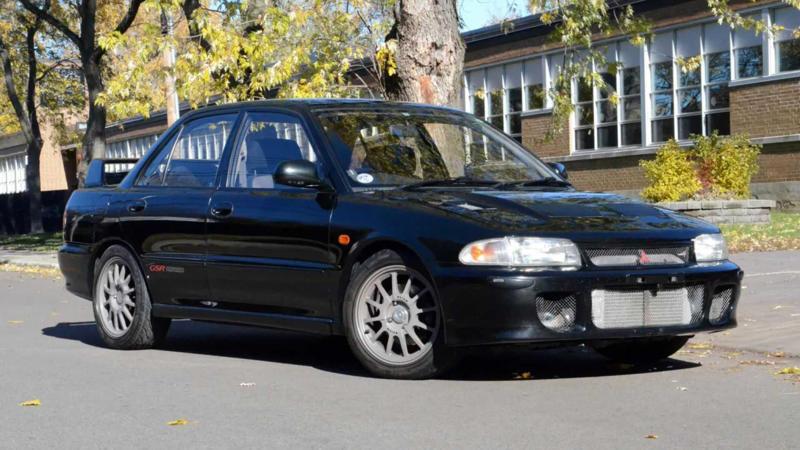
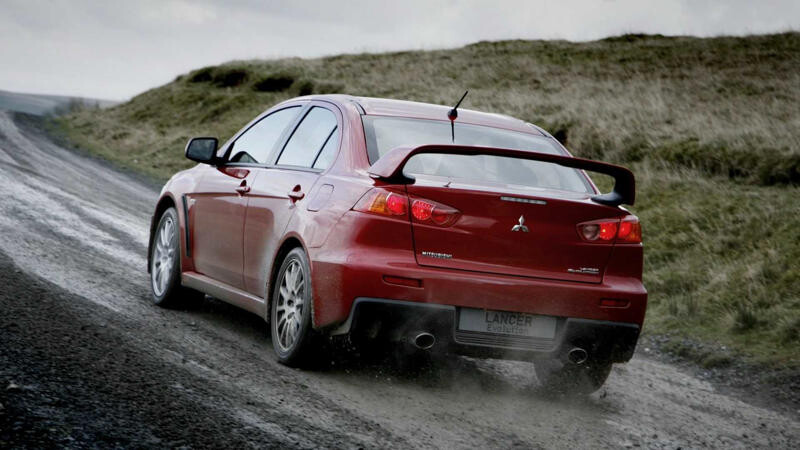
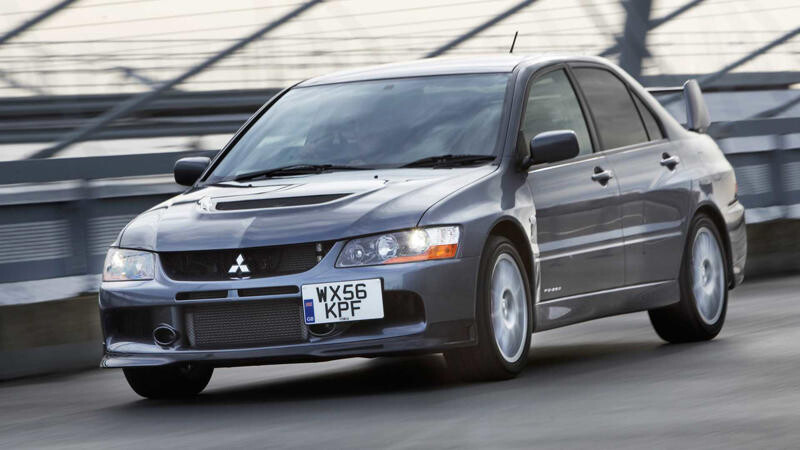
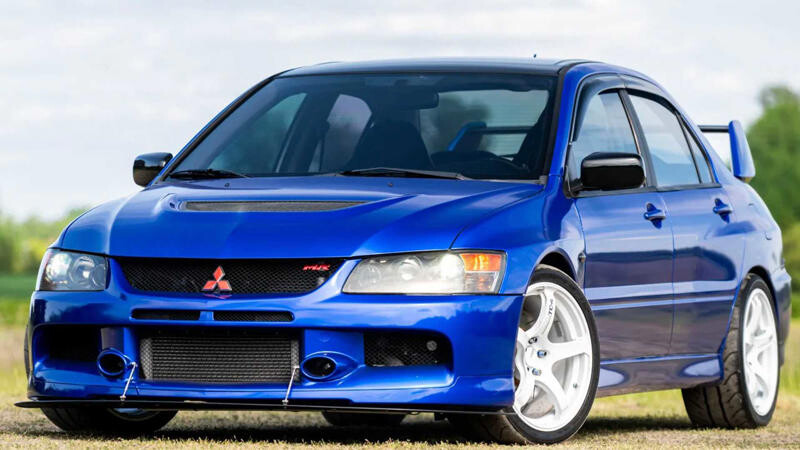
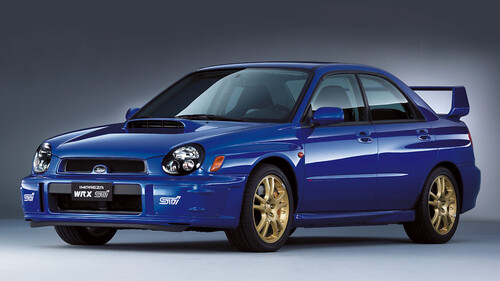
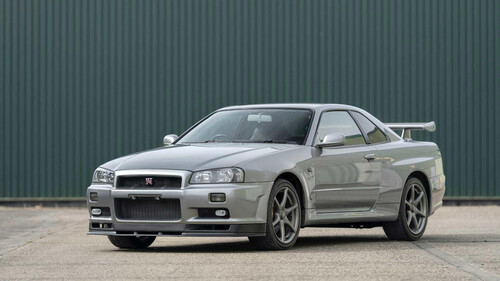
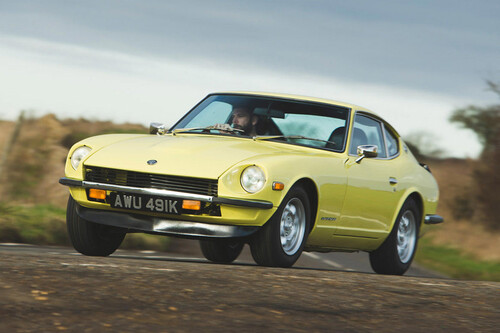
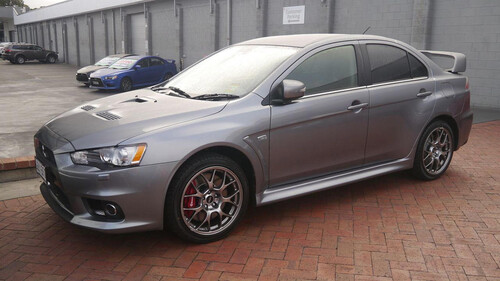
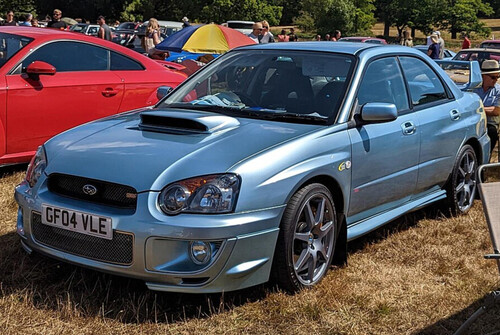
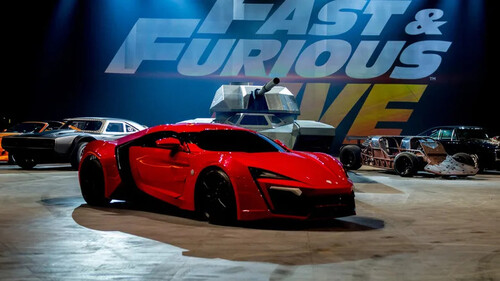
With over six million Mitsubishi Lancer units sold between 1973 and 2008 alone, the Lancer has to be one of the most important compact cars ever built. But its sales figures alone are not the only legacy of the Mitsubishi Lancer, although the standard Lancer happened to be a very reliable everyday sedan. The Mitsubishi Evo, a legacy model also known as the Lancer Evo, a vehicle known for being a supercar killer, was born out of the legend of the Mitsubishi Lancer.A year after the Mitsubishi Lancer was released, the Lancer 1600GSR overcame extreme conditions to win the Safari Rally in 1974. Between 1996 and 1999, the Lancer Evo swept four straight Drivers' Championship titles through Tommi Mäkinen, with Mitsubishi winning a Manufacturers' Championship title in 1998. It built on this to become a global icon in the tuning culture of the Japanese domestic market, taking the Lancer far from its humble beginnings across ten generations. Since then, the practical compact economy car has grown into one of the most respected performance vehicles in automotive history. History And Background Bring a trailer Mitsubishi started production of the Lancer from 1973 until 2024, spanning ten generations. Worldwide, Mitsubishi ended production in August 2017, but kept it running till 2024 in Taiwan. For its WRC rally efforts, Mitsubishi switched in the early 1990s to a smaller car so it could compete against the Lancia Delta Integrale, the legendary Italian thoroughbred that had won six consecutive WRC Manufacturers' titles for the Italian manufacturer, Lancia, between 1987 and 1992. To defeat the Delta Integrale, Mitsubishi produced what eventually became the Lancer Evo I. Mitsubishi took the 2.0-liter 4G63T engine with its aluminum DOHC head and "bomb-proof" cast-iron block from the 1987 Galant VR-4 and put it in the Lancer.On the road in its 1989 variant, it typically produced a peak power output that ranged between 195 and 237 horsepower, but in the WRC, it was tuned to approximately 300 horsepower due to FIA restrictor regulations. From 1992, when Mitsubishi moved it to the smaller car, the engine became a stable part of the Lancer Evo from the Evo I to the Evo IX. In the Evo I, the engine produced between 240 and 250 horsepower. By the time the engine had evolved into the Evo III, it was producing 270 horsepower. The engine got rotated in 1996 with the Lancer Evo IV to add 10 horsepower, and that was the peak output power of the lineup till the engine left the lineup in 2007 with the Evo IX. At this point, with the Evo’s evolution and dominating the WRC, the Lancer had become both a motorsport legend and a defining name among JDM cars.The 2001 Lancer Evo VII was featured in the Fast and Furious franchise in the 2 Fast 2 Furious and Tokyo Drift movies. At this time, the Lancer had been discontinued by Mitsubishi, but a return of the Lancer Evo is still just a dream, as Mitsubishi engineer Kaoru Sawase put it. When the Mitsubishi Evo eventually entered the United States in 2003 with the Evo VIII, it was such an exceptional vehicle that it got the Automobile magazine's 2003 Automobile of the Year award. Performance And Specifications MitsubishiThe Evo I was a Mitsubishi sports car, the high-performance of the Lancer trim. This was the first-generation Mitsubishi Lancer Evo, and it used Mitsubishi's 4G63 engine, an engineering marvel, which was a 2.0-liter four-cylinder engine that incorporated a TD05H-16G-7 turbocharger and a large front-mounted intercooler to produce 244 hp and 228 lb-ft of torque. It had a top speed of 142 mph, and only 5,000 units were sold. In the second generation, Mitsubishi improved the exhaust system and boost of the Mitsubishi Evo II, increasing its output to 252 hp. The company also tweaked the suspension and chassis. The next evolution occurred in the third generation, the Evo III, where Mitsubishi included a higher compression ratio and a 16G turbocharger to shoot peak power output up to 270 hp. This was the beginning of the consecutive WRC drivers' championship titles the Evo won between 1996 and 1999 with Tommi Mäkinen.Mitsubishi In the Evo IV, Mitsubishi rotated the engine of the sports car in the engine bay to improve weight distribution by 180 degrees. This revision of the same 4G63T engine improved its output to 276 hp, although enthusiasts widely considered this an underestimation of the vehicle's actual power output. By the Evo V, the Lancer got flared wheel arches for larger wheels and a wider track, introducing Brembo brakes. Every Lancer Evo from the VI to the IX in 2005 produced for the Japanese domestic market followed the Japanese manufacturers' gentlemen's agreement and didn't advertise more than 276 hp. The Evo IX (the last time a Mitsubishi Evo used the 4G63T engine) used the same platform as the previous generation, but Mitsubishi updated the active yaw control of this Lancer to "super active yaw control," including MIVEC variable valve timing for the first time. Mitsubishi introduced a new all-aluminum 4B11T 2.0-liter turbo four-cylinder engine into its Evo X sports cars. This engine power hit a peak of 291 hp from the 2009 model year, producing 0–60 mph times of anywhere from 4.5 to 4.7 seconds. The Lancer Evolution Final Edition, released in 2015, used a 303-hp engine, produced a top speed of 155 mph, and was individually numbered. Models And Variants Mitsubishi On the standard US lineup, Mitsubishi offered the Lancer in the ES, LS, GT, and SE trims. A Sportback hatchback body style was later added in 2010. From 2009 to 2015, a Ralliart trim that used a turbocharged 237-hp engine and an AWD configuration was offered. On the other hand, Mitsubishi offered the Lancer Evolution in the Evo GSR and RS trims. The RS trim was the base version, which featured no radio, no power windows, steel wheels, and no A/C, and was intended for rally teams. On the fully equipped GSR, the Mitsubishi Lancer Evo came loaded with a sound system, air conditioning, and sport bucket seats.Via: Bring a Trailer Mitsubishi offered the Lancer Evolution X in the MR trim. This trim came with the 6-speed Twin Clutch Sportronic Shift Transmission (TC-SST) and magnesium alloy shift paddles that were mounted on the steering wheel. The GSR trim used a 5-speed manual. In the UK, the Lancer Evo was offered in a few FQ variants, including the FQ-300, which used a 291-hp engine, the FQ-330, fitted with a more powerful 324-hp engine, the FQ-360, using a 354-hp engine, and the FQ-400, fitted with a 403-hp engine. For the 2015 Final Edition, Mitsubishi produced only 3,100 Lancer Evo units worldwide, 1,000 of which were limited to Japan, and 1,600 units were sent to North America. Driving Experience And Character Mitsubishi Driving the Mitsubishi Evo X's 2.0-liter turbo has a refined and linear feel compared to previous generations. With approximately 12 kilograms saved with the engine's aluminum construction and MIVEC variable valve timing on both intake and exhaust valves, it's no surprise this Lancer Evo creates that signature point-and-shoot driving experience as well as earlier boost. When you compare this Evo and the Subaru WRX STI’s handling, the Evo corners quicker than the STI. The problem comes when the Evo hits its limit, because its Super All-Wheel Control system brakes individual wheels automatically to maintain grip, and when you’re at the back of the wheel, it feels as if it's taking over control of the car, unlike the Subaru Impreza WRX/STI.This rivalry, which started in 1992, has reviewers picking the Evo because of the amount of assistance the driver gets from its raw AWD technology, while the STI still feels more like a pure driver's car. The 4G63T engine Mitsubishi used on the first nine generations of the sports car is a favorite for JDM tuners since it can handle up to 400 and 600 hp on stock internals. However, the Lancer’s cabin is unremarkable compared to its performance. Current Market And Buying Guide Via: Bring a TrailerFor the last two generations, a Mitsubishi Lancer Evolution sells for approximately $37,000, based on auction data. A single 1999 Mitsubishi Lancer Evolution VI RS Tommi Makinen Edition with 12,000 miles sold for $65,000 in New Zealand in January 2026. In 2025, a 2015 Mitsubishi Lancer Evolution Final Edition with about 49,000 miles on it was sold for $21,650. However, most Final Editions have been snapped up by collectors. This makes even high-mileage units hard to find. Other X models can be found for over $30,000. On average, the 1996 and 1997 Evo IV typically go for between $16,000 and $23,000. By the time you cross into the 1998 Evo V versions, expect to spend a significant premium, with some GSR examples being sold for as much as $34,500 and even $47,463.Before buying a Lancer Evo, check service records and evidence of proper maintenance on the turbo and AWD system very diligently. Despite its huge sales figures and general reliability, the Mitsubishi Evo has had problems and recalls over the years. The 2004–2007 Lancer Evolution models got recalled because the passenger side airbag could explode, so affected models got a free airbag inflator replacement. For the 2014 and 2015 models, the problem was with the right parking brake cable, with the 2014 models including a Power Steering Leak. This issue could lead to leaks, fire risk, and increased steering effort. Other issues included problems with the Clutch Master Cylinder and the Clutch Feed Pipe. It's also very common to find heavily modified examples. These are very desirable due to performance, but they’re much harder to insure and usually mask hidden wear. In the end, clean, stock, or lightly modified third to tenth generation Mitsubishi Evo examples tend to offer the best balance of value and usability.Source: Classic.com, Mitsubishi, Autoevolution, Bring A TrailerFAQQ: Is Mitsubishi bringing back the Lancer?As of 2026, there are no such movements, but recently, Mitsubishi engineer Kaoru Sawase, who’s considered the godfather of the S-AWC all-wheel-drive system, said there’s a dream within Mitsubishi for the Lancer Evolution. There’s the possibility that it could feature electrification technology or a plug-in hybrid powertrain. However, there’s been no commitment to production.Q: What is the difference between the Lancer and Evo?Both vehicles are based on the same platform and share the same DNA; however, the key differences involve the power output, drivetrain (the standard Mitsubishi Lancer featuring a front-wheel-drive system, while the Lancer Evo uses an all-wheel drive system), and a stiffer suspension on the Lancer Evo. On the standard Lancer, Mitsubishi uses a naturally aspirated engine, while the Evo uses a turbocharged engine as standard.Q: How much is a Mitsubishi Evo worth?Values vary significantly by generation and condition. For a Mitsubishi Lancer Evo, expect to pay between $10,000 and $15,000. From the second to the fourth generation Evo, expect to spend anywhere from $16,000 to just over $24,000. However, low-mileage examples can cost up to and even over $30,000. While some Evo V models could cost $20,000 or below, expect to spend over $30,000 on average for one in good condition. From the VI generation, expect to spend over $55,000 for the Tommi Mäkinen Edition. The average cost of the VII, VIII, IX, and X generations is between $30,000 and $40,000, with some examples selling for almost $70,000.Q: What years did the Evo come to the US?Mitsubishi first brought the Lancer Evolution to the United States in 2003 with the Evo VIII. Automobile magazine immediately awarded it the 2003 Automobile of the Year. Mitsubishi continued selling the Lancer in the US till it ended the Lancer Evo line with the X. The first seven generations of the Lancer Evo were not officially available in America; however, they were sold in European and Japanese domestic markets.Q: Is the Mitsubishi Lancer Evolution a good car?Yes. For the money, the Mitsubishi Lancer Evolution is regarded as one of the greatest performance sedans ever built. Across generations, the Lancer has excelled. The Lancer won multiple WRCs, including the on-road version winning automotive awards in the US, and the Lancer Evolution X being deemed in Japan as one of the most advanced AWD systems in the world at launch, winning Car of the Year. Interior quality aside, it is a reliable vehicle. However, the turbo engine tends to require keen attention. Also, ensure you check the recall history of the car before buying.