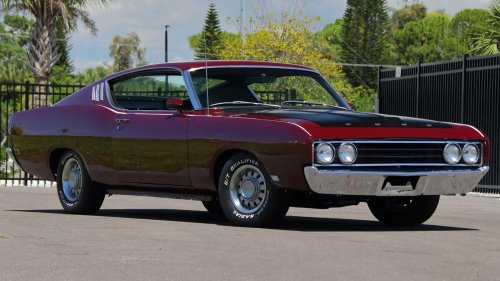
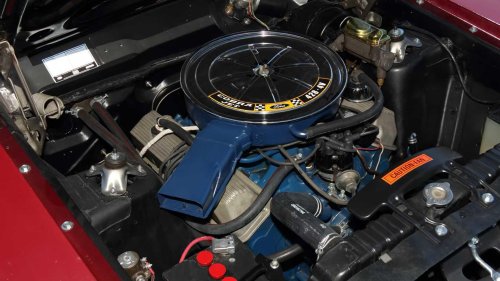
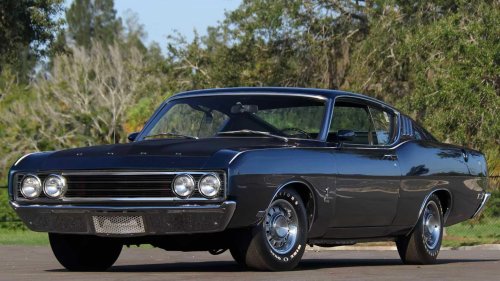
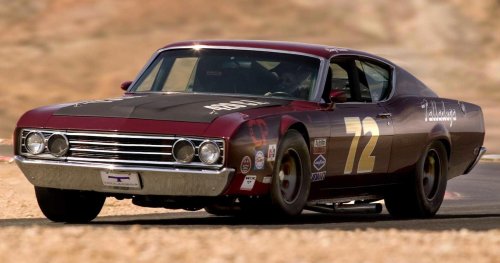
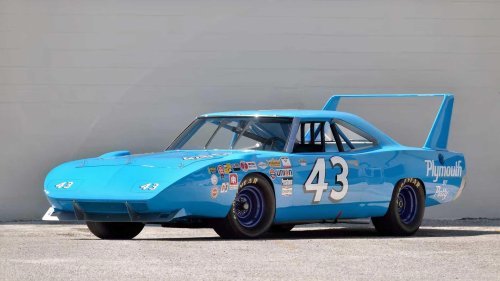
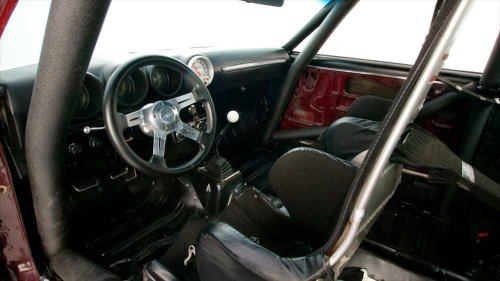
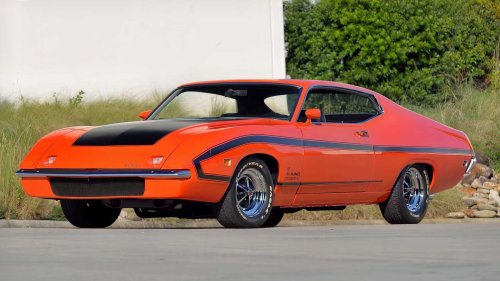
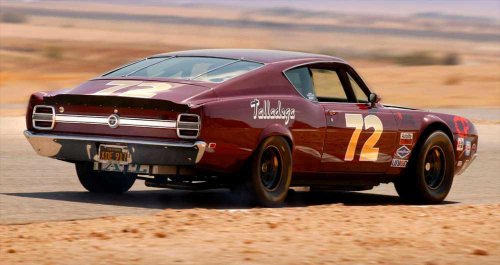
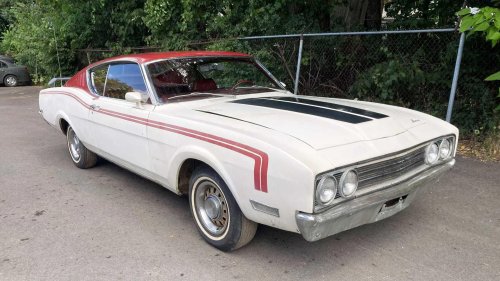
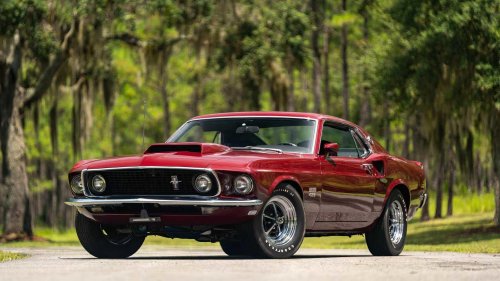
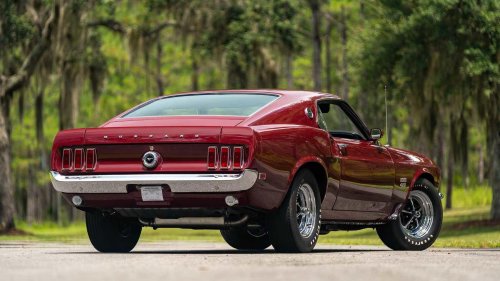
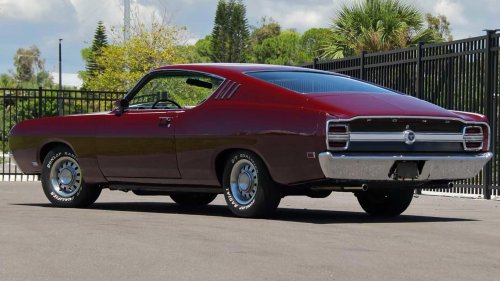
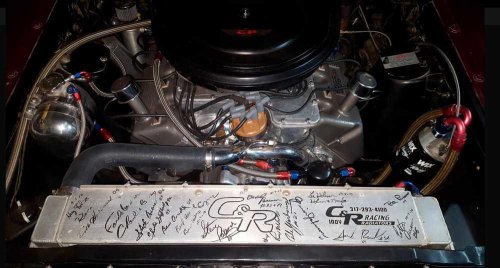



















In the 1960s, Detroit lived by a simple rule: "Win on Sunday, sell on Monday." But Ford took this literally, engineering a homologation special so aggressive it was eventually banned from NASCAR for being too hardcore. Ford built this NASCAR-derived road car to be sold through dealerships to the public, and it was street legal.Despite its pedigree, the car's specialized nature made it difficult to sell to the average commuter at the time. Today, it remains rarer than the legendary Mustang Boss 429. While its value has soared among collectors, it remains a "bargain" compared to its seven-figure Boss siblings. This is the story of the Ford that dominated NASCAR and tried to sell it to regular buyers. UPDATE: 2026/02/19 13:27 EST BY HANK O'HOP We've updated this article with more information on the Ford Torino Talladega, including performance comparisons with the standard Torino GT and Mercury Cyclone Spoiler II as part of Ford’s broader NASCAR aero strategy. Additional context was provided on the Dodge Charger Daytona and Plymouth Superbird as direct responses to the Talladega, along with a table comparing the Plymouth to the Torino. Furthermore, we've also added information about the Torino King Cobra. Built For NASCAR: The Origins Of The Ford Torino Talladega Via: Mecum AuctionsThe Ford Torino Talladega existed for one reason: to win on NASCAR’s fastest superspeedways. In the late 1960s, the "Aero Wars" pushed manufacturers to prioritize wind-tunnel efficiency over traditional styling. Because NASCAR rules required "homologation," Ford had to produce at least 500 street-legal versions to use the design in professional racing.Via: Mecum AuctionsThe mechanical package focused on durability. Every road-going Talladega featured the 7.0-liter (428 cu in) Cobra Jet V8. It produced a factory-rated 335 hp and 440 lb-ft of torque. While these numbers were impressive, the engine was tuned for high-speed endurance rather than peak street performance. The drivetrain was strictly heavy-duty, utilizing a 4-speed manual or a C6 3-speed automatic transmission and a Ford 9-inch differential with 3.25:1 gears. At roughly 3,700 lb, the car was built to withstand the physical stress of sustained high-RPM driving.The most significant changes were aerodynamic, typical for the cars from the Aero Wars era. Ford engineers extended the front nose by five inches and installed a flush grille to eliminate the "air pocket" found on standard Torinos. They also used a narrowed, "rolled" rear bumper on the front to act as a rudimentary air dam. To legally lower the car for competition, Ford reshaped the rocker panels, allowing the body to sit closer to the track while meeting NASCAR’s ride-height requirements. These modifications significantly reduced drag and improved high-speed stability. Subtle Differences Via: Mecum AuctionsFord produced between 750 and 754 units in 1969 to satisfy the sanctioning body. This limited production makes the Talladega much rarer today than many high-profile muscle cars. Essentially, Ford sold a street-legal homologation special that closely mirrored its NASCAR platform.Compared to a regular 1968–69 Torino GT, the Talladega was far more than a trim upgrade. While the standard Torino GT focused on traditional muscle-car proportions and available 302, 390, and 428 powertrains, it retained a conventional front fascia and upright grille. The Talladega’s reshaped nose, flush grille treatment, sealed hood gaps, and revised bumper design were developed specifically to reduce aerodynamic drag at sustained high speeds. According to Hemmings, these changes reduced the coefficient of drag significantly compared to the standard Torino body.The aerodynamic gains translated directly to track performance. The Talladega was capable of exceeding 190 mph in NASCAR competition trim on superspeedways like Daytona and Talladega, which was absurd and something standard-bodied intermediates struggled to approach without similar wind-tunnel refinement. Even in street form, the Talladega’s 428 Cobra Jet V8 provided strong real-world acceleration (about 5.5-seconds to 60 MPH), with magazines of the time placing quarter-mile performance solidly in the mid-to-high 14-second range.The key distinction was efficiency. The Talladega required less throttle input to maintain top-end speed compared to a standard Torino, which meant lower engine strain over long-distance oval runs, which is what made it so effective in 1969. Too Fast For NASCAR Mecum AuctionsThe Ford Torino Talladega achieved immediate dominance during the 1969 NASCAR season. Driven by legends like David Pearson, the car secured 26 victories, propelling Pearson to his third Grand National championship. The Talladega’s aerodynamic profile provided a measurable advantage; its extended nose and flush grille reduced drag significantly, allowing it to maintain higher speeds on superspeedways with less engine strain. On tracks like Talladega and Daytona, the car consistently clocked lap times that left non-aero competitors struggling to keep pace. Ford Torino Talladega Vs. Superbird MecumFord’s aero breakthrough forced Chrysler to respond rather aggressively. The Dodge Charger Daytona and Plymouth Superbird were developed directly to counter the Talladega’s dominance. Both Mopars adopted elongated nose cones and towering rear wings after Ford demonstrated that reduced drag and improved stability were the future of superspeedway racing. Without the Talladega setting the benchmark in 1969, the Charger Daytona and Superbird likely would've never evolved into the legends they became, and that's another reason to be thankful for the Talladega's existence.Mecum Auctions This success forced a rapid escalation in the "Aero Wars." Dodge initially countered with the Charger 500, which failed to beat Ford, leading to the radical Dodge Charger Daytona and the Plymouth Superbird. These rivals featured massive rear wings and pointed nose cones. While these "Winged Warriors" were faster, the Talladega’s refined shape remained a consistent threat. By 1970, the speeds on high-banked ovals were approaching 200 mph, raising serious safety concerns regarding tire durability and driver protection. The King Cobra Was About To Take Things To Another Level Via Mecum AuctionsThe winged Mopars were a growing threat that dominated Superspeedways. Ford wasn’t just ready to take the aero wars to the next level; it’d already begun the development of the evolutionary successor of the Talladega, the Torino King Cobra.The King Cobra wasn’t exactly Ford’s copy of the Charger Daytona or Plymouth Superbird. It did, however, take a similar approach to increase aerodynamics. The body was modified to help it slip through the air better than the Torino Talladega. While no towering wing was added out back, the nose was reshaped into a cone to help it cut through the air better at top speeds.Ford built three of the Torino King Cobras, all of which had 429 Cobra Jet engines under the hood. Unfortunately, we never did see them enter competition, and there’s no telling what the true potential of these unsung aero heroes really was. NASCAR's Ban On Aero Cars In 1971 Mecum Auctions NASCAR officials, fearing that these "extreme aero specials" created an unfair advantage and made standard production cars obsolete, intervened to restore parity. For the 1971 season, the sanctioning body implemented a rule change that effectively ended the era of aero cars. See, aero-special vehicles were restricted to an engine displacement of just 305 cubic inches (5.0 liters), while standard bodies could still run the massive 427 and 429 V8s. This displacement penalty made the Talladega uncompetitive overnight. Ford’s creation proved that aerodynamics were the future of racing, but its success was so absolute that NASCAR had to change the rules to save the sport from its own speed. The Mercury Cyclone Spoiler II: Ford’s Parallel Aero Strategy Bring A TrailerThe Talladega wasn't Ford’s only homologation weapon. Mercury introduced the Cyclone Spoiler II as part of the same NASCAR aero program. Like the Talladega, the Spoiler II featured an extended nose with a flush-mounted grille and reshaped front sheet metal designed to cut through the air more cleanly at racing speeds. It was built specifically to satisfy NASCAR’s production minimums and allow Mercury teams to compete with the same aerodynamic advantages.Mechanically, the Spoiler II shared the Cobra Jet V8 and heavy-duty drivetrain components used in the Talladega. Production numbers were similarly limited, making it one of the rarest Mercury muscle cars of the era. Today, values for the Cyclone Spoiler II closely track those of the Talladega, with Hagerty's valuation tool suggesting a concours-spec example being worth in excess of $100,000.Together, the Talladega and Spoiler II reveal that Ford’s NASCAR strategy extended beyond a single badge. It was a coordinated aerodynamic campaign across multiple divisions aimed squarely at winning on superspeedways. Rarer Than The Boss 429: Why The Torino Talladega Didn’t Sell Mecum AuctionsBut while various special edition Mustangs are often cited as the ultimate Ford collectible, the Torino Talladega is rarer than a Mustang Boss 429. Ford produced approximately 750 to 754 Talladegas during its single-year homologation run in 1969. In contrast, the Boss 429 saw a total production of 1,358 units across 1969 and 1970, with 859 units built in 1969 alone. Despite the Torino being a more common nameplate in Ford’s general lineup, the Talladega variant was a strictly limited niche product designed to satisfy NASCAR's rulebook rather than retail demand.The Talladega’s specialized engineering made it a difficult sell on dealership floors. Its "function over fashion" philosophy resulted in an extended, drooping nose and a lack of traditional muscle car trim, which confused average showroom buyers. Additionally, the Talladega used a manual transmission on the track, but most of the ones built for the public were optioned with 3-speed automatics.Marketing was sparse because Ford’s priority was track performance, not volume sales. Consequently, many Talladegas sat unsold for months, as consumers preferred the aggressive, recognizable styling of the Mustang or the standard Torino GT. Quite simply, the Talladega was a muscle car that was too extreme to sell for dealerships.Mecum Auctions Culturally, the Talladega lacked the "halo" branding that sustained the Boss 429. The Mustang was already a pop-culture icon, whereas the Talladega was viewed as a specialized tool for professional racers. While the Boss 429 became a legendary street brawler, the Talladega’s legacy remained tied almost exclusively to the high banks of superspeedways. This purely motorsports pedigree, combined with its polarizing aesthetics, ensured it remained a rare, underappreciated outlier in the muscle car era. What The Ford Torino Talladega Is Worth Today Via: Mecum AuctionsIn the current market, the Ford Torino Talladega offers a distinct value proposition: it is rarer than the Mustang Boss 429 but significantly more accessible.As of 2026, a 1969 Talladega in "Good" condition averages approximately $68,300 according to Hagerty, with pristine, concours-level examples reaching into the $118,000 to $130,000 range. In stark contrast, a Boss 429 in comparable condition frequently commands over $212,000, with top-tier auction sales recently exceeding $500,000. This price gap persists despite the Talladega’s lower production volume of roughly 750 units compared to the Mustang's 1,358.Mecum Auctions Talladega valuations are driven by specific factors that appeal to "Total Performance" era purists. Value is heavily dictated by the presence of the matching-numbers 428 Cobra Jet engine and the originality of its unique aero components, such as the extended nose and flush grille. Documentation, or evidence of NASCAR-adjacent provenance, can cause prices to spike. For instance, a well-documented prototype once achieved a record $132,000 at Barrett-Jackson, highlighting the premium placed on historical significance.The Boss 429 benefits from massive brand recognition and pop-culture exposure. The Talladega remains a niche favorite for race-heritage specialists. It appeals to collectors who prioritize wind-tunnel history and the "Aero War" legacy over street-brawler aesthetics. Currently, market trends show Talladega values are stable with a steady upward trajectory. As more enthusiasts recognize its role as a pivotal, purpose-built aerodynamic weapon, this "NASCAR for the street" is increasingly viewed as an undervalued alternative to its more famous stablemates.Sources: Ford, NASCAR, Mecum, Hagerty, Barrett-Jackson, Classic.