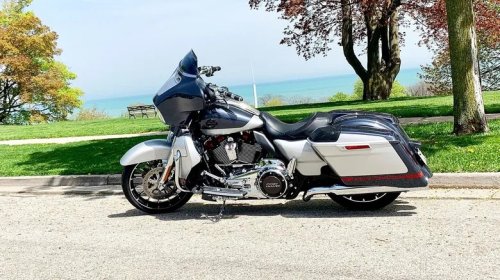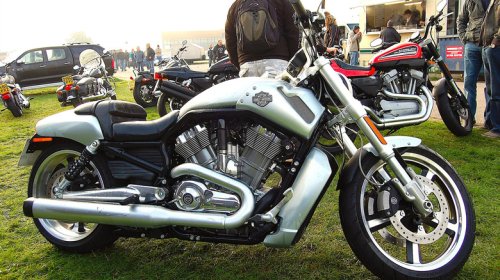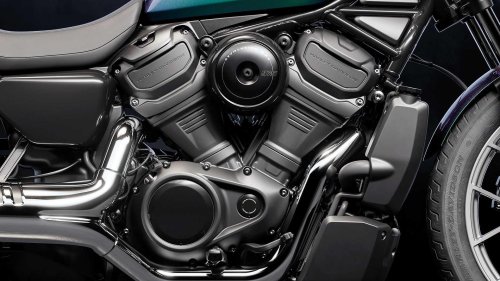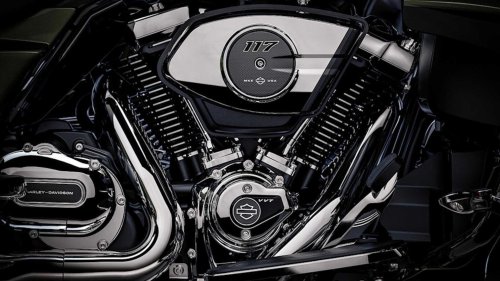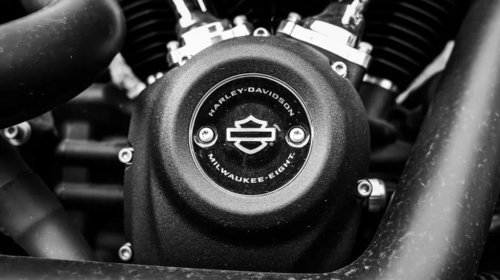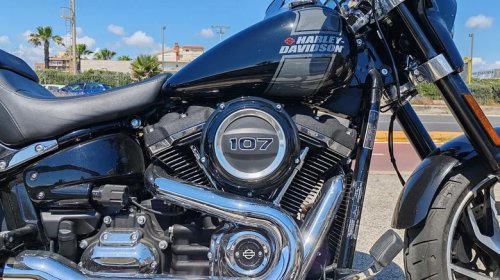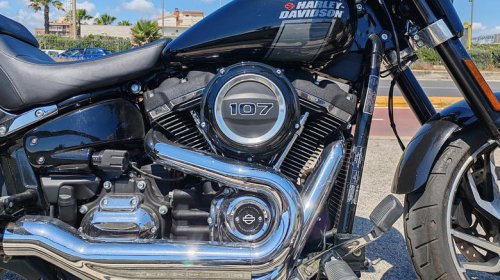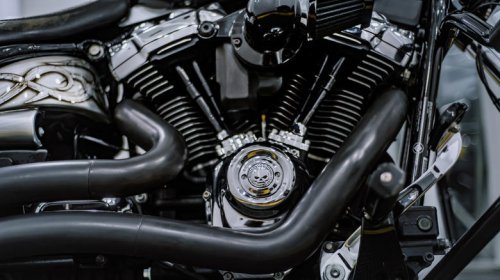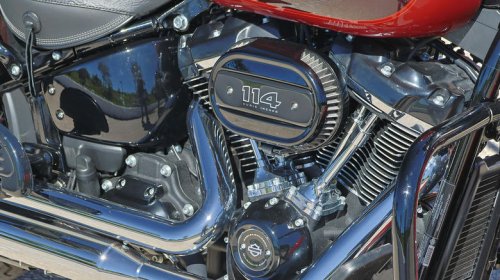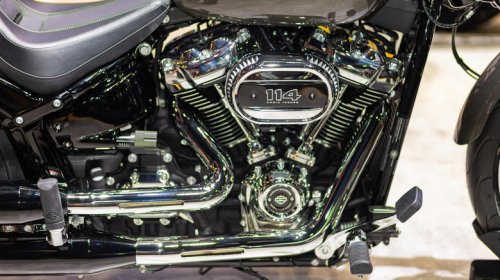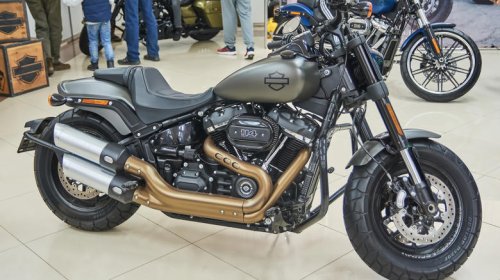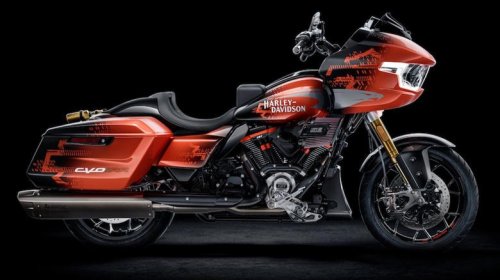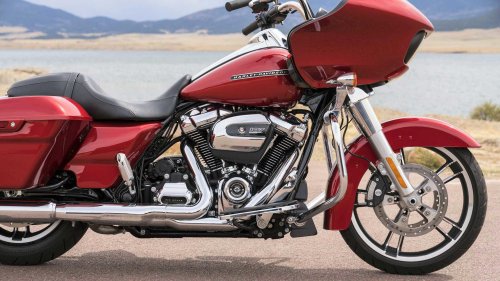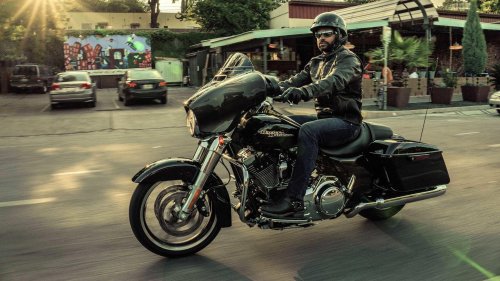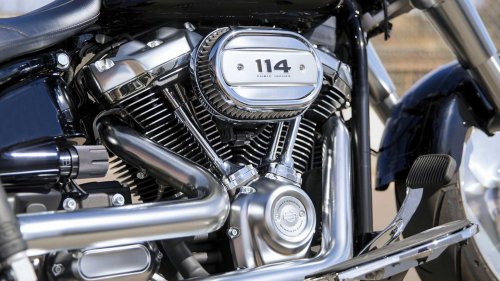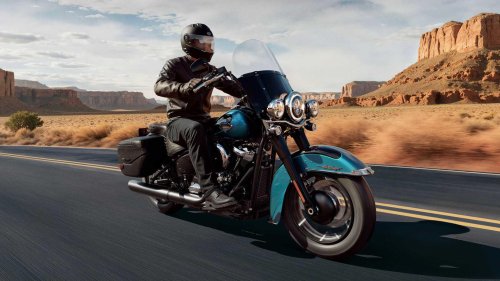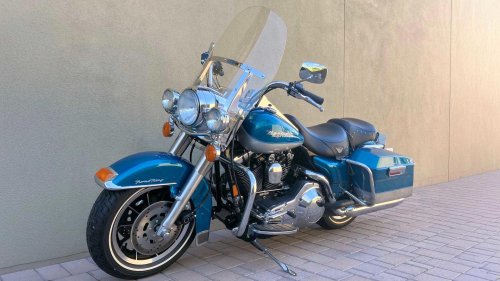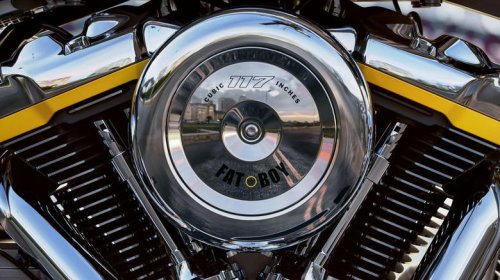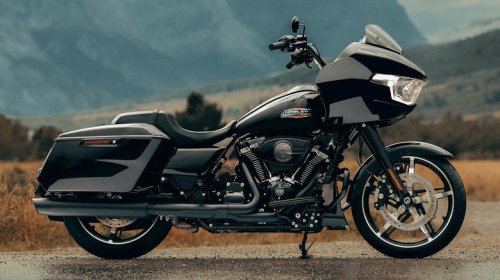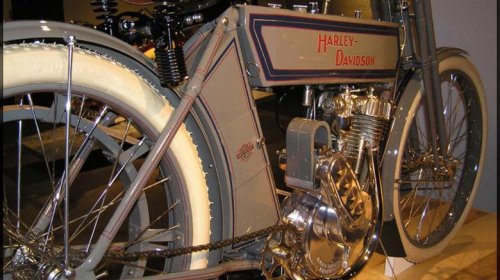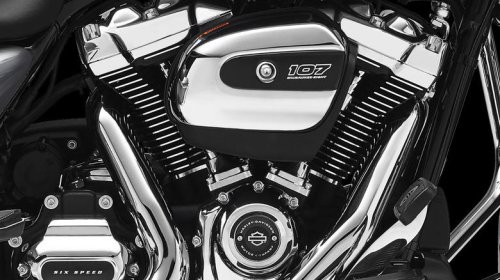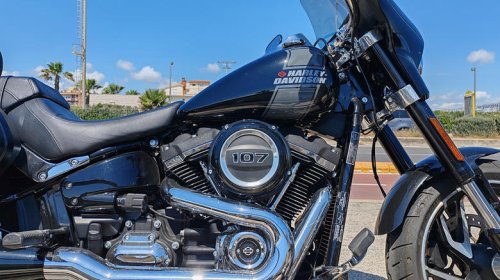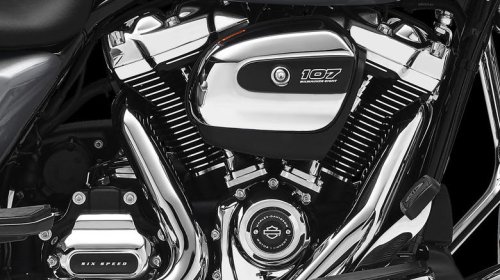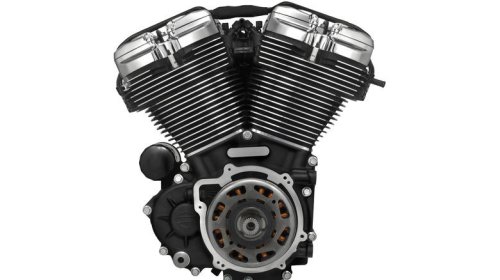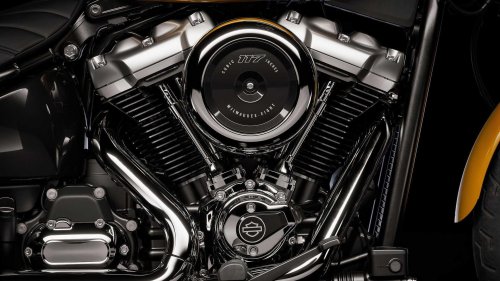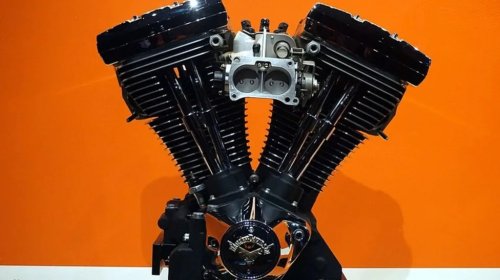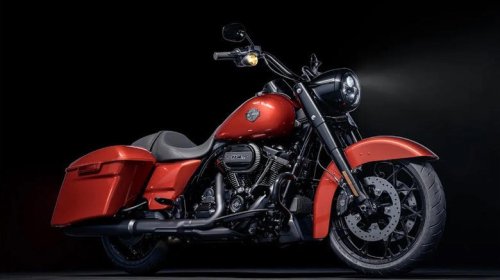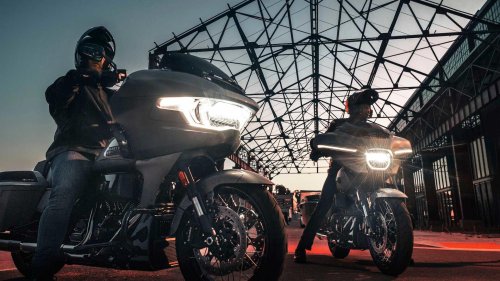
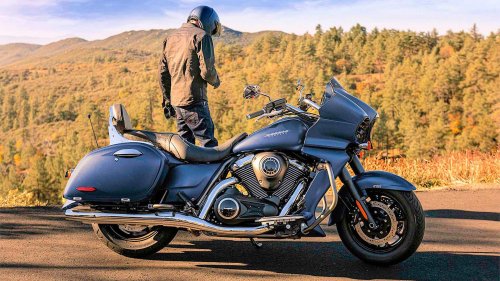
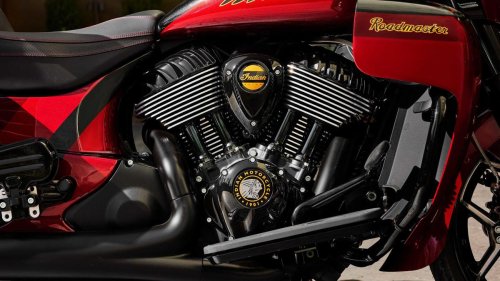
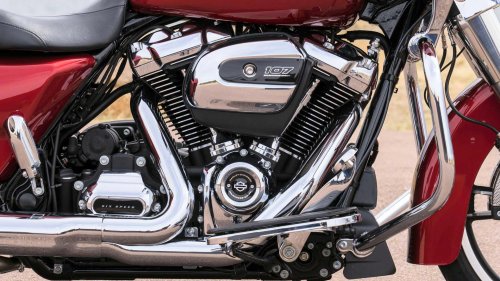



















Cruiser motorcycles and large engines go hand in hand. That gets you the lazy, effortless torque of a large-capacity engine, the stress-free lope at highway speeds, and the ability to carry a lot of weight in varying conditions. It isn’t any wonder then that cruisers and derivatives of the genre (like touring motorcycles) usually flex mighty mills. There used to be a capacity war in the 2000s when everyone wanted to have the title of the largest displacement production engine in the world, but that was won handily by the Triumph Rocket 3. Since then, displacements have hovered below 2 liters.In recent times, though, they have been slowly creeping back to that mark over the years, as technology progresses, and manufacturers learn ways to extract more performance out of larger displacement while reducing emissions and fuel consumption. Harley-Davidson is one of the manufacturers that has taken giant strides forward in engine tech, and its Milwaukee-Eight series of engines is a shining example of how the company holds on to its traditional values that endear it to its fans while still progressing. Its crown jewel is the latest and greatest Milwaukee-Eight 121. UPDATE: 2026/04/05 We have updated the article with more information on Harley-Davidson's obsession with V-twin engines. Harley-Davidson’s Obsession With Big Twin Engines Harley-DavidsonBefore we talk about the Milwaukee-Eight 121 engine, we need to talk about Harley’s obsession with big twins. For the motor company, bigger displacement isn’t just about winning spec sheet battles or flexing against rivals. It goes much deeper, even with the others and enthusiasts holding these big twin engines in higher regard than those smaller V-twins in the Sportsters. When it comes to Harley-Davidsons, it’s the big twins that separate the serious from the rest. Harley-DavidsonBut why does it matter so much? For multiple reasons, the first of which is character. V-twin cruiser engines are massive, so much so that a liter-class cruiser is considered small or entry-level. These engines have big pieces moving around, and unlike performance-first inline-fours, big twins use large pistons, thick connecting rods, and heavy flywheels. The pistons also move with a gusto in the cylinder, which gives the big twins a unique throbbing character and sound signature. Harley-DavidsonThe next big reason is torque. You can extract power from an engine with more air, compression, or engine speed, but for cruisers, you simply need more displacement. And don’t forget, Harleys are inherently heavy pieces of machinery, often weighing several hundred pounds over a standard bike. To move this much mass with confidence, the engine needs to focus its output on strong low-end torque, not high-end power, which is exactly where long-stroke V-twin engines come into the picture. And the Milwaukee-Eight 121 is made to deliver on both these fronts. The Biggest Harley-Davidson Engine In 2026 Is The Milwaukee-Eight 121 Old School Meets The New Cool Harley-DavidsonAt its debut, the Milwaukee-Eight series of engines ranged from 107 cubic inches (1,753 cc) to 117 cubic inches (1,917 cc). Today, that has expanded to the Milwaukee-Eight 121 (1,982 cc), which powers the CVO model Harley-Davidsons. It is important to note that there are two versions of this engine, the Milwaukee Eight 121 VVT that powers the CVO Street Glide and CVO Road Glide, and the Milwaukee Eight 121 HO that powers the CVO Road Glide ST.They both have the same displacement but their focus differs somewhat, which means the power and torque curves, and the peak outputs, differ a little. There also exist crate engines that are available as an upgrade: the Screamin’ Eagle Milwaukee-Eight 131 and 135. However, for the purposes of this article, we are considering only production engines present in products from the factory as standard. The Twin Twins Differences Between The Milwaukee Eight 121 VVT and HO Harley-DavidsonThe 121 engine is a relatively high-compression engine, with an 11.4:1 compression ratio. It remains a long-stroke engine, and it certainly looks old school, with the cooling fins on the cylinders. These are functional, not mere design elements like those on the engine of the Suzuki Boulevard M109R. The heads are water-cooled, with the liquid first going to the rear cylinder head, then to the front, for better cooling. The water cooling also focuses on the section around the exhaust valve ports, since that is the part of the engine that has to deal with the most heat. Harley-Davidson has also included tech like rear cylinder deactivation to reduce fuel consumption, emissions, and heat.The differences between the two versions of the Milwaukee-Eight 121s mainly revolve around performance. The M-8 121 VVT focuses on a broad torque spread, meaning you get peak power and torque a little lower in the rev range. Riding becomes easier – you don’t have to change gears as often, since this engine will pull cleanly from as low as 1,000 RPM. This breadth of torque means that you get better fuel efficiency, lower emissions, and a better tank range. The CVO Road Glide ST focuses on absolute performance since it has sporting intentions. That is why it ditches the VVT in favor of higher peak torque and power figures. But look carefully, and you’ll notice that they arrive higher in the rev range. This is thanks to a more aggressive cam profile and an intake and exhaust that are more free-flowing than the stock ones. So it allows the engine to shift all the air it needs to generate that extra power. As a domino effect, it allows it to rev higher, to a redline of 5,900 RPM. With a wide open throttle and the engine spinning in its sweet spot, there is no doubt that the HO will outrun the VVT. But in all other scenarios, the VVT will be easier to live with. Milwaukee-Eight 121 VVT And HO Specifications Harley-Davidson Milwaukee-Eight 121 Competition Milwaukee vs. Everyone Else Kawasaki There are a surprising number of competitors for the Milwaukee-Eight 121. Even more surprising is the sheer variety of layouts the competition has. The Japanese have a couple of large V-twin engines that approach the displacement of the 121. The first of those is the engine that powers the Suzuki Boulevard M109R. This engine went on sale in 2006, but in some ways is more modern than the Harley engine. It is fully liquid-cooled and has a shaft drive.That enables an enormous amount of power, which puts it right on par with the M-8 121 HO. However, it lacks a sixth speed for its transmission, and it doesn’t have modern conveniences like a by-wire throttle or traction control. The other large Japanese V-twin is the one that powers the Kawasaki Vulcan 1700 Voyager. This doesn’t really offer much fight to the Harley engines, with an output of 82 horsepower and 107 pound-feet.Indian Motorcycle A better Japanese competitor would be the 1,833 flat-six from the Honda Gold Wing. It puts out nearly 125 horsepower and 125 pound-feet and can be had with a dual-clutch automatic gearbox as well. BMW weighed in recently with its own competitor in the R 18. In the usual BMW style, it is a boxer twin – but it is water-cooled, like the high-performance boxer twin in the GS series of motorcycles. It displaces 1,802 cc, has variable valve timing on the intake valves, and generates 91 horsepower and 116 pound-feet of torque. That leaves us with Indian Motorcycle.The American giant has two engines that can be compared to the 121. The closest to the M-8 121 VVT is the Thunderstroke 116 that powers the Roadmaster Elite. This air-cooled V-twin generates 92 horsepower and 126 pound-feet of torque. Closer in performance to the M-8 121 HO is Indian’s liquid-cooled PowerPlus engine. Its 1,768 cc V-twin is good for 122 horsepower and 128 pound-feet and powers the Challenger Elite. The Milwaukee Eight Series: The History A Leap Forward For The Brand Harley-Davidson To fully understand how significant the Milwaukee-Eight engine is we need to know the history behind it. The Twin Cam series of engines debuted in 1998 and was nearly two decades old by the time the M-8 series replaced it. It had its fair share of updates that allowed it to keep up with the Joneses, and to be honest, the hardcore Harley fan was very happy with it. But by the time the 2010s rolled around, Harley-Davidson was catering to a global audience.This meant it needed to attract new buyers, and the Twin Cam’s output and refinement weren’t acceptable to those who were experiencing a Harley-Davidson for the first time. There was also the fact that by 2011, Polaris had purchased Indian Motorcycle, and the Thunderstroke 111 that debuted in 2013 was definitely better than Harley’s Twin Cam engines. Thus, the Milwaukee Eight series of big twin engines came to life, which the public got to sample for the first time in 2016-17. Notable Milwaukee-Eight Engines Milwaukee-Eight 107 Milwaukee-Eight 114 Milwaukee-Eight 117 Milwaukee-Eight 121